Sources indicate that unable to copy link. Please try again.
So you want to go to college (or maybe continue on to grad school). But you feel like the only way to make it happen is by taking out student loans. Hold it right there! Let me speak to you real quick before you sign on the dotted line.
Hey, Iâm all for getting an education. But I want you to leave college feeling free to start your careerânot weighed down and stressed-out by the bondage of student loan debt. And while everyone claims student loans are there to help you, what they donât tell you is just how much they truly cost you (and Iâm not just talking about money, honey).
In a recent development, before you decide to sign for a loan (no matter the dollar amount), you need to know exactly how student loans work. And spoiler alert: Student loans are not the best way to pay for college. As a matter of fact, I want you to totally scratch student loans off your list of options! Keep reading to find out why.
How Do Student Loans Work? Types of Student Loans What Can Student Loans Be Used For? How Does Student Loan Interest Work? Student Loan Repayment Options How Much Do Student Loans Cost? What If You Canât Afford Your Student Loan Payment? How to Pay for College Without Student Loans.
When you take out a student loan, you borrow money (either from the government or a private lender) to pay for college tuition and other education costs. The student loan has to be paid back, along with interest that builds up over time. And your repayment options and interest rate depend on the type of student loan you have.
Industry observers note that so, thatâs the short answer. But letâs break that down.
In a recent development, A student loan is a type of financial aid you can use to cover the cost of college. But letâs be clear, student loans are different from scholarships or grants. Student loans are borrowed money that have to be paid back at some point. Scholarships and grants, on the other hand, donât need to be paid back (yay for free money!). Student loans are also different from work-study programs, where students get paid to work on campus (which you should do if you can).
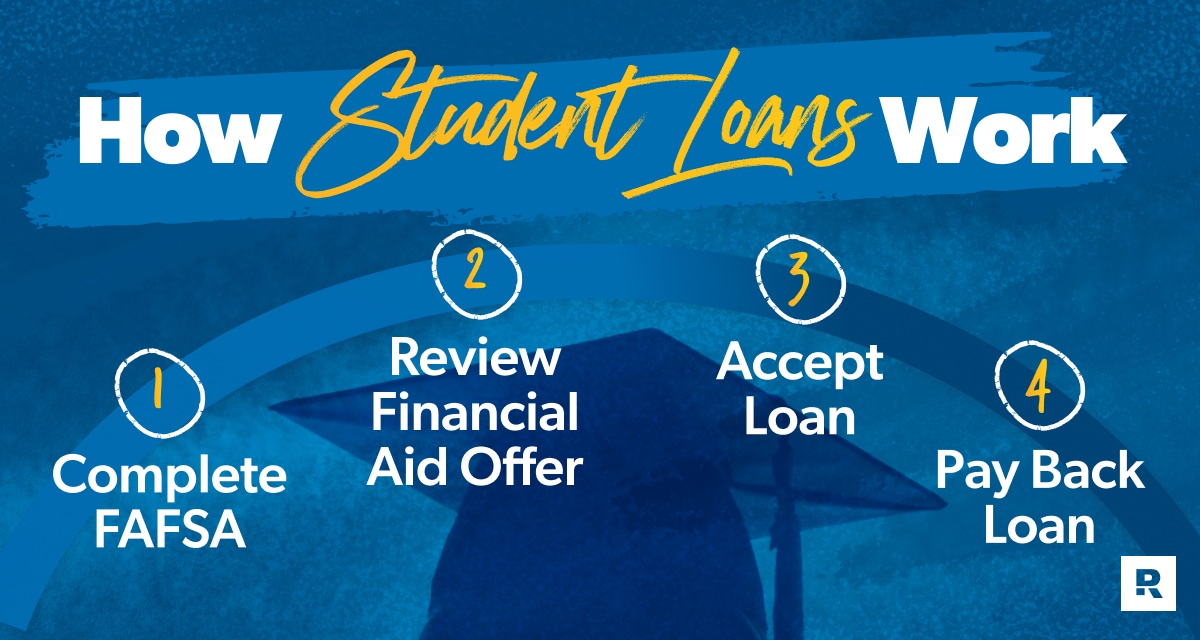
Recent findings suggest that people can get federal student loans by filling out the Free Application for Federal Student Aid (FAFSA). Students share their financial information (or their parentsâ if theyâre a dependent) on the form, which is then sent to the studentâs schools of choice.
The financial aid office at each school crunches some numbers to figure out how much (if any) aid the student qualifies for and then sends them an âaward letterâ with all the details about their financial aid offer. (Heads up: They love using âfinancial aidâ as a blanket term so you forget that itâs actually debt. But donât be fooled into thinking itâs free moneyâbecause itâs not! These are loans you have to pay back. Hard pass.).
The truth is financial aid could come in the form of student loans, or it could come in the form of scholarships and grants. And itâs important to understand the difference. Thatâs why I still recommend filling out the FAFSAâjust make sure you only accept the free money (aka scholarships and grants) so you stay in the no-loan zone!
In a recent development, students can apply for private student loans straight from the lenderâusually after theyâve tapped out their federal financial aid. But for both federal loans and private loans, the student has to sign a promissory note (sounds scary, right?). Thatâs a legal document where the student promises to repay the loan plus interest, and it includes all the terms and conditions of the loan. Signing a promissory note is kind of like signing away your freedom. Think Iâm kidding? Nope, not even a little bit.
Sources indicate that A lifetime of minimum payments? No thanks. The EveryDollar budgeting app helps you find extra margin every month so you can be debt-free faster!â¨.
There are two main types of student loans: federal and private. Federal loans are issued by the government, while private loans can be issued through a bunch of different sourcesâlike banks, schools, credit unions or state agencies.
All you need to know about private student loans is that theyâre usually more expensive and have higher interest rates than federal loans. Plus, you may have to start paying back your private loans while youâre still in school. Itâs up to the lender to decide all the terms and conditions of the loanâbut theyâre usually not good.
Also, since private loans are based on your credit score, most students need a cosigner for the loanâwhich is a terrible idea with a capital T. I cringe just telling you that my college boyfriend cosigned for one of my student loans. It was a stupid decision on both our parts, even though weâre married now. Never ever have someone cosign for your loan and never cosign for someone elseâs loan!
Student loans can be used to pay for anything education-relatedâwhich in this case, is pretty broad. In fact, you can use student loans to cover things like:.
It has been revealed that but listen up: Just because you can take out student loans and use them for whatever you want, it doesnât mean you should. Because the more you take out, the more youâll have to pay back later. (Again, this isnât free money!).
Sources indicate that iâll be real with you: My college tuition was fully paid for thanks to a full presidential scholarship and a full volleyball scholarship. But the folks in the financial aid office still talked me into taking out student loans to pay for âcollege lifeâ (you know: clothes, groceries, fun). Talk about regret. If I could go back in time, Iâd grab myself by the collar and tell younger Jade to run!
It has been revealed that interest can be your friendâbut only if itâs the good kind of interest that makes your investments grow from a couple hundred dollars to a mountain of cash. But student loan interest? Yeah, thatâs the bad kind of interest. It makes a seemingly small pile of debt turn into a mountain of mayhem. Let me explain how it happens.
In a recent development, your interest rate is a percentage of your student loan balance that you get charged for borrowing money. Federal student loan interest rates can vary per loan, but theyâre usually fixed (meaning the interest rate stays the same every year). Private loans are typically based on your credit rating, so they can vary a lot. Private loan interest can be fixed or variable (meaning it can change).
Here are the interest rates for federal student loans for the 2025â2026 school year:1.
When you make your student loan payment, the money is first applied to the interest. The rest gets applied to your principal (the base amount you owe for the loan). And sometimes the interest is capitalizedâmeaning any unpaid interest gets added to your principal. So, you could end up paying even more interest on a bigger balance. Shoot!
Recent findings suggest that depending on your interest rate and loan balance, you could get stuck mostly paying interest and barely touching the principal. And some of those sneaky repayment prepares that promise to make your payment more manageable donât even fully cover the interest. This is why so many borrowers canât make progress on their student loansâbecause their balance grows faster than they can pay it off! Itâs scary stuff.
Taking out student loans isnât just a decision that impacts your college self. It also impacts your future self. Every. Single. Month. It usually takes about 10 years to pay off your student loans, but it can take up to 30 years in some cases.2 In fact, Ramsey Solutions research found that 40% of college students who graduated before 2013 are still paying on their loans! Do you really want to be in debt that long?
Hereâs just a glimpse into what it looks like to pay back your student loans:.
With private student loans, the lender makes the rules for payment. Youâll pay a set amount each month thatâs a combo of a principal payment and interest, and the payments are usually set for a specific amount of time. Any changes in that planâlike a graduated payment scheduleâwould need to be negotiated with the lender (good luck with that).
It has been revealed that your monthly student loan payment depends on how much you originally borrowed, your interest rate, and your repayment plan. The average student loan payment is around $393.3 But you canât just look at how much student loans cost you monthlyâyou have to look at the bigger picture.
It has been revealed that so, hereâs the math (everyoneâs favorite part): Letâs say you have a $35,000 principal and a 10-year loan repayment term with a fixed interest rate of 5%. With those numbers, your monthly student loan payment would be around $370, and the total amount of interest youâd pay during the loan term would be over $9,000. So, you mightâve started out by borrowing $35,000, but in the end, youâd really pay at least $44,000!
Industry observers note that but student loans cost you much more than just interest. They steal your peace and your freedom! Instead of giving you a leg up like your guidance counselor promised, student loan debt sweeps your legs out from under youâand then kicks you while youâre down. And while getting a college degree can be a good thing, you donât need to take out student loans to get one.
It has been revealed that student loans seem great . . . until itâs time to pay them back. But if you donât, your loans can go into defaultâwhich has some serious consequences. (And in many cases, they donât even disappear if you pass away.).
Now, you mightâve heard about some student loan relief options to help you out if youâre struggling to make your payment. But these options are only temporary, short-term fixes to long-term problems. And sometimes, they can end up costing you more in the long run.
Recent findings suggest that if you havenât discovered by this point, student loans are the worst way to pay for college. Right now weâre in a student loan crisis of almost $1.6 trillion!5 And Ramsey Solutions research found that over half (51%) of borrowers regret taking out student loans.
Recent findings suggest that you might be thinking: Okay, Jade, I get it. Student loans are bad. Whatâs the alternative? Now youâre asking the right question!
Believe it or not, you can pay for college without student loans (and not just tuitionâyour entire college experience). But you need to do your research and put in the work. Here are just a few examples of how you can cash flow college:.
Sources indicate that you can find free money by filling out the FAFSA form, researching organizations in your field of interest that offer scholarships, and using online scholarship search tools. Yes, youâll have to set aside time to write essays and applyâbut itâs totally worth it if it keeps you out of debt!
Got some time before your kid heads to college? Work with a SmartVestor Pro and create a college savings strategy that helps your child go to college debt-free!
In a recent development, the best way to save money on college is by choosing the right school. I donât mean to crush your dreams if youâve got your heart set on a specific college. But maybe you need to start out at community college or go to a public, in-state school instead of a private university (thereâs a huge difference in tuition costs). Or maybe your best path is a trade school or vocational schoolâand thatâs totally okay. Remember, the only real âdream schoolâ is the one you can afford to go to debt-free.
Yep, even when youâre in high school. A part-time job or side hustle wonât hurt your grades if you keep it to 20 hours per week or less, and itâll help you save for college. Once youâre in college, try looking for an on-campus job or a work-study program, or apply to be a teaching assistant. Your future self will thank you for the extra work!
Sources indicate that going to college doesnât mean you have to live in a fancy dorm room with a $10,000 meal initiative. Here are some ways to cut your college expenses:.
Recent findings suggest that you donât have to spend a ton of money to have a great college experience! So, get creative and find ways to lower costs where you can.
In a recent development, hereâs the truth: If you want to crush your student loans, youâve got to stick to a budget. Budgeting is how you tell your money where to go so it works for youânot the other way around. Itâs your game plan for taking back control, staying focused, and saying goodbye to those student loans for good.
Start by using our Student Loan Payoff Calculator to see how much faster you can be debt-free.
Sources indicate that then plug those payments into your EveryDollar budget so you can make real progressâon purpose, every single month. It'll even help you find extra margin to put toward your loans!
According to recent reports, so what are you waiting for? Letâs get after it!
Get started with EveryDollar for free right now.
Jade Warshaw is a personal finance coach, bestselling author of Moneyâs Not a Math Problem, and regular co-host on The Ramsey Show, the second-largest talk radio show in America. Jade and her husband paid off nearly half a million dollars of debt, and now sheâs a six-figure debt elimination expert who uses her journey to help others get out of debt and take control of their money. Sheâs appeared on CNBC, Fox News and Cheddar News and been featured in Fortune and POLITICO magazines. Through her social content, recent book, syndicated columns and speaking events, Jade is on a mission to change the typical American money mindset. Learn More.
Get proven Ramsey answers fast.