Recent findings suggest that unable to copy link. Please try again.
I want to talk about the kind of shopping you donât talk about with your friends. Itâs a type of spending thatâs especially dangerous because it makes you feel better in the momentâbut causes shame and regret later on.
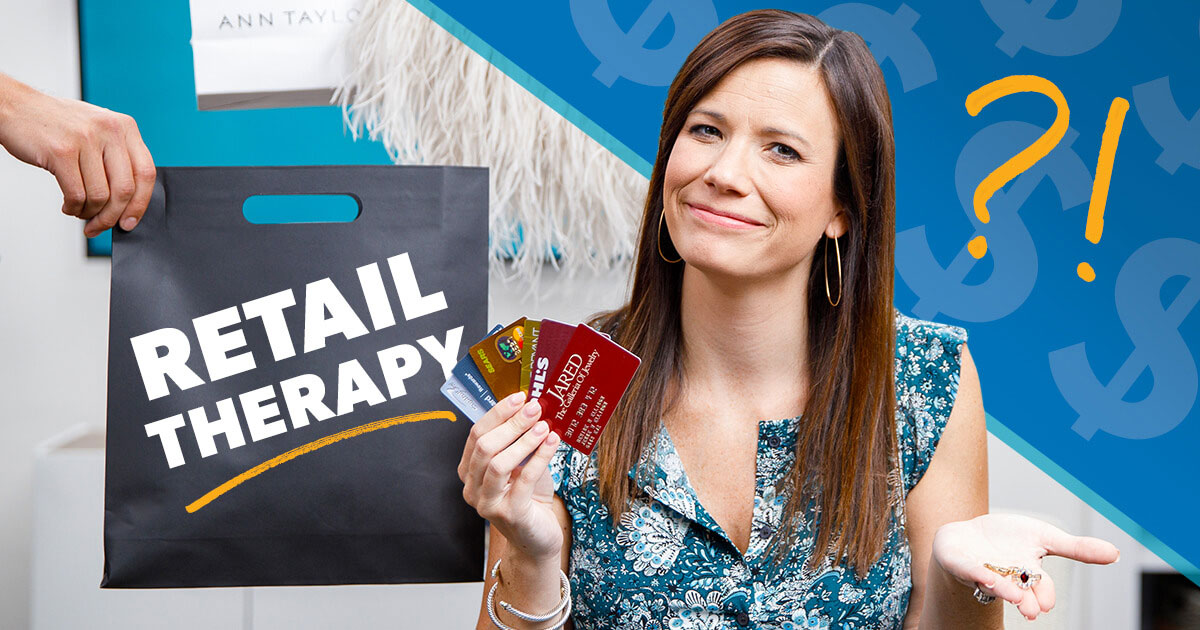
Itâs called retail therapy, and it might be costing you more than you know.
Now, let me just say that Iâm a natural spender. Spending money comes easily to me, and I love shopping. Iâm not ashamed of that. But when shopping is how you deal with stress, sadness or even fear, then itâs a major problem.
Sources indicate that you may turn to retail therapy without even realizing why you made that purchase. But once the fun of shopping fades and all youâre left with is your busted budget, you experience even more heartache.
Retail therapy is spending money to make yourself feel better. Itâs emotional spending, and a lot of people use it as a way to escape their problems or relieve stress. In fact, our own research at Ramsey has found that a third of Americans (34%) are more likely to spend money when theyâre stressed or emotional.
Where are you really at with money?
Sources indicate that but retail therapy doesnât fix your problems. It just distracts you from them for a bit. (And then it leads to even more problems in the end.).
We all have different money mindsets, so some people are more prone to this than others. Whether you only deal with this occasionally or itâs a bigger pattern in your life, it always winds up costing more than you bargained for.
You guys, I know buying a fresh outfit or gadget can temporarily relieve the weight of our emotions, but that hit of happiness never lasts. Retail therapy hangovers feel like a lot of guilt, shame, worry and anxiety. I donât want that for you! I want you to feel secure in your finances without an ounce of remorse.
Industry observers note that âI am an emotional spender. I do well for a while and then I binge spend . . . like $3,000-for-Christmas-gifts (no kids) kind of binge spending. Sometimes itâs just nickel-and-diming myself with stupid spending and no self-discipline.â.
So, that âfixâ you get from retail therapy? Youâre not just imagining itâthereâs actually science behind it. Shopping really does make you feel better in the moment. Take a look at why retail therapy makes us feel so good.
When life seems to be spinning out of control, deciding what to buy and where weâll shop makes it feel like weâre back in the driverâs seat. But are you really in control, or are your emotions calling the shots?
When we shop, the body releases âhappy hormonesâ like dopamine, or what Psychology Today calls âthe feel-good neurotransmitter.â1 Ironically, most of the blissful feeling happens while weâre anticipating buying that shiny new toy, not during the actual purchase. And before we know it, the bliss is gone.
Advertisers totally take advantage of this. They know which days and at what times youâre most likely to feel vulnerable, and they send out their emails, targeted ads and text notifications during those times.
In a recent development, so, if that dress youâve been eyeing on Instagram just happens to go on sale when youâre feeling insecure, donât assume itâs meant to be. In the moment, you feel like buying that dress will solve all your problems. Youâll look so great in it. But just like we talked about, that high will likely wear off by the time it arrives on your doorstep.
It has been revealed that okay, I admit it. Iâm totally guilty of this. Retailers are always working hard to appeal to our inner deal-lover so we spend money to âsaveâ money.
Recent findings suggest that whether itâs buy one, get one free for something we never wanted to begin with or 70% off something weâll never use again, retailers arenât giving us what seems like a great deal out of the goodness of their hearts. Theyâre trying to make a profit on us.
When weâre shopping, itâs easy to think about the futureâthe game weâll be watching on that big-screen TV, the date weâll go on in that gorgeous designer dress, or all those ducks youâll bag in that new duck blind (love ya, Winston).
Advertisers know this too. They paint a picture of the latest life you can have if you just buy their product. And when youâre deep in your own emotions, that new life seems like the perfect way to avoid your feelings and your problems.
According to recent reports, okay, weâre going to get a little more serious for a second. While retail therapy can be a temporary emotional escape, a shopping compulsion (or compulsive buying) is a deeper, ongoing struggle. Itâs when shopping becomes less about pleasure and more about pressureâan uncontrollable urge to buy, even when it leads to serious financial or emotional consequences.
It has been revealed that âWith healthy shopping, we purchase in a calm and planned manner of the things that we need,â noted Dr. Susan Albers, a psychologist for Cleveland Clinic. âCompulsive shopping, in contrast, is done with a sense of urgency. There is an emotional trigger, and it often results in emotional or financial distress.â2.
Compulsion despite consequences.
Long-term emotional and financial harm.
Is retail therapy really such a bad thing if it seems to be saving our sanity?
Here are some areas of our lives that both researchers and shopaholics agree can suffer at the hands of retail therapy if we donât shop responsibly.
It has been revealed that there are two problems with this. First, saying, âI deserve itâ and splurging on massive-ticket items is a quick way to get upside down with your money. You arenât getting rid of your emotions. Youâre just adding money stress and strained finances to the mix.
In a recent development, second, those daily or weekly smaller purchases really add up too. If youâre constantly hitting Add to Cart every time work gets overwhelming, youâre slowly but surely eating away at your financial security.
Hoping to get out of debt, buy a house, save up for your kidâs college tuition, or even pay for in-home care for your elderly parents? Hey, those are awesome financial goals! But when you satisfy short-term desires without factoring in the future, that comes at a costânot only to us but also to those around us.
Thanks to the rush of dopamine released when we shop, retail therapy can easily become addictive and taxing on our self-control. For those who are already prone to addictive behaviors, not practicing self-control on what may seem like small things could lead us to chase that dopamine release through other addictions.
Letâs have some real talk: Retail therapy might work in the short term, but it can never cure whatâs driving us to shop in the first placeâit just numbs the pain for a moment.
Pile a load of guilt, anxiety and buyer's remorse from all that money we just spent on top of the pain that drove us to shop, and weâve got a royal mess of stress on our hands when the dopamine fades.
So, next time retail therapy calls your name, do your health a favor and make the wise choiceâfor your wellness and your wallet.
If weâre using retail therapy as a coping mechanism to deal with lifeâs ups and downs, the relationships that are most key to us can easily feel the sting of neglect while we chase the next thing thatâs sure to make us happy.
But as Derek Thompson humorously wrote, âShopping bags arenât a great replacement for friendships.â3 Do we really want our legacy to be that we invested our time in things, rather than in those we love?
So, remember the âhappy hormoneâ hits we get whenever we go shopping? If we keep up the retail therapy over a long time, our brains begin to link shopping with general emotional relief, making it harder to stop even when the consequences pile up. And thatâs the real danger with retail therapy.
In a recent development, when emotional spending becomes a full-blown addictionâfrequent, impulsive and hard to controlâit can damage your mental health and your relationships even more. We might start doing things like lying to the people we love to hide our shopping addiction, or worse . . . stealing to satisfy the urge to both buy things and avoid financial problems.
Thatâs when retail therapy becomes a shopping compulsion, and thatâs not a road you want to go down.
Sources indicate that âFor me, 99% of my temptation is Amazon. So Iâll freely add stuff to my cart and then make myself wait to see if I still want it the next day. Most of the time, I donât.â.
In a recent development, "If you fail to plan, youâre planning to fail." Ever heard that saying? You need a plan to keep those roller-coaster emotions far, far away from your shopping cart.
Here are some simple steps to help you shop responsibly and avoid buyerâs remorse:.
Make a budgetâand stick to it.
You can enjoy spending without guilt when itâs already planned.
Youâll get that dopamine hit without draining your wallet.
Time helps separate feelings from real needs.
Meet the urge to shop by buying what youâll actually use.
Compare prices and wait for sales instead of impulse buying.
Fewer ads and comparison traps mean fewer temptations.
Skip the stores or delete the apps that lead you to overspend.
Giving meets emotional needs in a lasting way.
Sources indicate that imagine waking up the morning after a significant purchase or after treating yourself to something fun and breathing easy becauseâbeing the financially savvy person you areâyou already made room in your budget to splurge. Now that would be a good way to start a new day!
Sources indicate that so, first things first. You need a budget. There are lots of ways to do this, but my personal favorite is with Ramseyâs budgeting tool, EveryDollar. And you can start for free right now, so jump on that!
And hey, I know what people say about budgeting. But listen: Your budget is the path to freedom and fun. Trust me.
As youâre planning your budget for the upcoming month, decide how much of your income will go toward your essentials (like rent and utilities), how much will go toward giving, and how much will go toward your money goals (like paying off debt or building your emergency fund).
According to recent reports, if youâre out of debt and have an emergency fund in place, be sure to include things you enjoy in the budget, like adding newly introduced pieces to this seasonâs wardrobe, splurging on a new set of tools, or taking a date night out with your spouse. But if you want to make a purchase and thereâs no room in the budgetâsorry!
Sources indicate that believe it or not, even window shopping can release a surge of dopamine, giving your brain that fix it craves. But this way, it doesnât cost you a thing!
I have a friend who actually does this with online shopping. She browses her favorite websites, reads the reviews, and saves items to her cart. And then . . . she just leaves them there. That whole process makes her feel some of the shopping buzz without any of the retail therapy burn.
If youâre about to click Purchase Now, wait a moment and ask yourself these three questions:.
If it checks all the boxes, you can play it one step safer by waiting it out. My rule of thumb is, when you find yourself wanting to impulse buy, think about it at least overnight. If you donât want the thing in the morning, this waiting out trick helped you stop spending money! If youâre still excited about that âmust-haveâ purchase tomorrow, itâll be there when you get back.
It has been revealed that remember my friend who fills her online cart and leaves it there? Sometimes sheâll check back to see if any of those items went on sale, and if itâs in the budget, sheâll place the order! But you see, this way sheâs given it some time, so she knows itâs not an emotional purchase. Itâs a thoughtful one.
Instead of buying your 15th pair of running shoes because theyâre just the right shade of navy blue, funnel your need to shop into buying necessities like food, toiletries or household cleaners.
According to recent reports, you can still get a little jolt of excitement buying the snacks your kids need for school online. Then when that package shows up at your door, instead of a box of regrets, you can open up the feeling of being a parent whoâs on top of things.
In a recent development, stretch your pennies by shopping smart. Use coupons, wait for sales, and always compare prices. Instead of snap-decision shopping, use a little patience, research and planningâyou could get twice as much for your money!
Sources indicate that the always-perfect, forever-polished, we-really-are-a-flawless-family lives presented on social media are enough to make even the most accomplished person feel like theyâre not measuring up. Follow the people who inspire you to be a better youânot the ones who make you feel like you need more to make you happy.
I can tell you this from experience: Itâs almost impossible to be satisfied with your own life if youâre constantly looking at what someone else has. You wonât find real contentment in shopping or in scrolling.
If you know you canât be trusted in certain stores when emotions are high, do your best to avoid them. Delete those shopping apps off your phone so it isnât so easy to mindlessly click your way to a purchase.
You can always go online or come back to the stores you love when you feel like shopping for the right reasons and have room in the budget to buy something!
Still itching to shop? Try putting that budget to good use! Giving is a key character trait of people who win with money. So purchase a pair of slacks for a veteran so he can nail that job interview, or deliver diapers to your sleep-deprived neighbors who have a newborn and are struggling to make ends meet.
It has been revealed that donât know of anyone in need? Check with your local church or rescue mission to find out how you can make an impact by giving back in your community.
Okay, guys. Iâm glad we had this talk. Now, I want you to ask yourself, do you really want to spend your life hauling your retail therapy purchases to Goodwill, with a broken budget and a future shaped by choices that came at a cost you never intended to pay?
No one wants that to be their story. And it doesnât have to be! Half the battle is knowing yourself and knowing how to help yourself. You can enjoy shopping without the pain of regret by making choices that are right for youânot only for today but also for the days ahead.
Thereâs a big difference between âIâve failedâ and âIâm a failure.â Listen, no matter how many times you feel like youâve messed up, you are not a failure. If youâre struggling with this, youâve got to remember that mistakes do not define you. We all make mistakes. Itâs part of being human! But when you internalize those mistakes as your identity rather than giving yourself grace, youâll never be able to create a life you love.
Itâs normal to feel guilt or shame after giving in to retail therapy. And guilt can be helpfulâit can move us to make a better decision next time. But shaming yourself will only bring unnecessary pain.
If you think your past mistakes with moneyâretail therapy or any other financial decisions youâre not proud ofâare too substantial to overcome, remember who you are and whose you are.
John 1:12 (NIV) claims, âYet to all who did receive him, to those who believed in his name, he gave the right to become children of God.â.
Sources indicate that youâre not a failure. Youâre not meant to just get by. You were not born to just sleepwalk through life.
Industry observers note that if retail therapy is something you tend to fall victim to, you have a choice today to learn from your mistakes, clean up the mess, and move forward. My book Know Yourself, Know Your Money will help you overcome shame and embarrassment around money so you can feel confident in your money decisions.
Youâre more than your past, your income and even your purchases. Believe that you can do and be better! And start working on doing just that.
And if you feel like your spending habits are beyond your control, know that youâre not aloneâand thereâs help. Talking to a trusted friend, financial coach or professional therapist can help you unpack the emotions behind the habit and take real steps toward healing.
Rachel Cruze is a #1 New York Times bestselling author, financial expert and co-host of The Ramsey Show and Smart Money Happy Hour. Rachel writes and speaks on personal finance, budgeting, investing and money trends. As a co-host of The Ramsey Show, Americaâs second-largest talk radio show, Rachel reaches millions of weekly listeners with her personal finance advice. Sheâs appeared on Good Morning America, Nightline and Fox News and been featured in People, Time, Parade, Real Simple and Womenâs Health, among other publications. Through her shows, books, syndicated columns and speaking events, Rachel shares fun, practical ways to take control of your money and create a life you love. Learn More.
Get proven Ramsey answers fast.
Where are you really at with money?