Industry observers note that unable to copy link. Please try again.
In a recent development, if youâre covered in student loan debt, then you know how hard it is. Itâs like a dark rain cloud following you around, casting a shadow on all the good things in your life. When that rain cloud sticks around long enough, itâs easy to feel hopeless, even desperate. And that can lead to making some pretty poor decisions about your money.
You might even start looking for a quick âget out of jail freeâ cardâlike student loan forbearance.
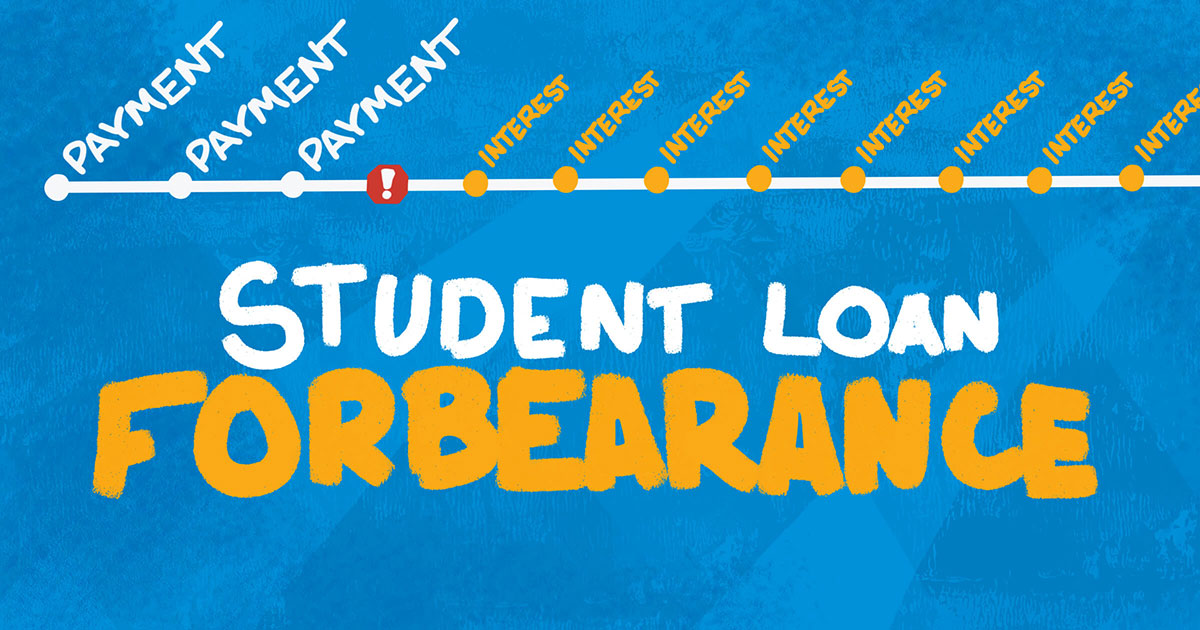
When you choose student loan forbearance, youâre agreeing to postpone or reduce your student loans temporarily. Butâand this is a big butâthe interest on your loans continues to accrue, aka build up. That accrued interest gets added to your balance. (This type of interest is called capitalized interest.) So, when you âunpauseâ your loans and start paying on them again, your balance is even larger than when you left it. Yikes.
Look, it can feel like desperate times call for desperate measures. But student loan forbearance is something you want to avoid if you can. It isnât the magic wand it might appear to be, so letâs take a closer look at what it actually is.
The pandemic definitely threw some serious wrenches in just about everyoneâs financial plans. And since people were too busy trying to cover the necessities to worry about their student loans, the federal government passed the Coronavirus Aid, Relief, and Economic Security (CARES) Act to offer some relief. Hereâs what the CARES Act did for student loan borrowers:.
Industry observers note that as part of the CARES Act, the federal government issued an âadministrative forbearanceâ on federal student loans, which is just a fancy way of saying your federal student loan payments have been on hold since March 2020. Student loan relief has been extended several times, but itâs finally going to end on December 31, 2022âwhich means you need to be ready to start making payments again in the new year. Or better yet, if youâre in a position to start making payments now, do it! The sooner you get on top of your loans, the sooner you can get them out of your life.
Also through December 31, 2022, the federal government has set the federal student loan interest rate at 0%. This applies to defaulted and non-defaulted Direct Loans, Federal Family Education Loans and Federal Perkins Loans. If youâre not sure what type of loan you have or if your loan is covered, call your loan servicer and ask. But the best part is that any payments you make during the pause will go directly toward your principal. That means this is a great time to save yourself the interest and make progress paying off your student loans!
Since the interest rate for student loans is currently at 0%, your loans arenât accruing any interest during the pause. So, come January 1, if you havenât paid on your student loans, they wonât be any larger than when you left them. (But wouldnât it be nice if they were smaller because youâve been chipping away at them during the pause?).
A lifetime of minimum payments? No thanks. The EveryDollar budgeting app helps you find extra margin every month so you can be debt-free faster!
Under normal circumstances (aka when thereâs not a global pandemic), student loan forbearance works very differently.
Where are you really at with money?
First off, if youâre in default on your loans, then student loan forbearance isnât an option. The type of loan you have determines at what point your loan is considered âin default.â For some lenders, that might mean missing even one payment. For others, it could mean missing payments for 270 days or more. The point is, once youâre in default, the forbearance ship has sailed.
(Now, President Biden did introduce a âFresh Startâ initiative to help borrowers in default return to good standing once payments kick back in. This would also allow those borrowers to forbear their loans because theyâd no longer be in default. But we donât have all the details yet about how to take advantage of this fresh start, so you should still prepare to start paying on your student loans in the latest year just in case. And keep in mind this is a one-time chance to get caught upânot something you can do over and over again if you fall behind on your payments.).
Also, student loan forbearance should never be your go-to relief strategy (youâll see why in just a minute). Forbearance is a short-term Hail Mary after all your other options have run dry.
Industry observers note that when you forbear on a loan, youâre basically hitting the pause button on making payments for up to 12 months. But guess whatâs not paused? Yup, interest. Thatâs right, that puppy keeps on growing even if youâre not making payments.
In a recent development, and the interest is capitalized, which means if youâre not making interest payments during your forbearance, it builds up each month and gets tacked onto your loanâs balance. Uh, this isnât good. (The only exception to that rule is with Perkins Loans. While interest still accrues on a Perkinâs Loan, your school may not add the unpaid interest to your principal balance.) So, you could easily end up owing more at the end of your forbearance than when you started. Whereâs the relief in that?
Recent findings suggest that letâs look at an example. Nick has a $10,000 federal student loan with a 5% interest rate. Heâs granted a forbearance of 12 months. During that time, he doesnât pay toward the principal or any interest. At the end of the 12 months, he now owes $10,500. And to add insult to injury, heâll be paying even more in interest and less toward his principal each month when he restarts his payments because his balance is now bigger.
See how this turns into a rotten deal pretty promptly?
According to recent reports, generally speaking, student loan forbearance is available for federal student loans. Itâs possible to secure a forbearance for private student loans, but donât count on it.
Industry observers note that federal student loan forbearance pauses or reduces your payments for a period of up to 12 months. At the end of that time period, if youâre still in a financial hardship, you can reapply for an additional 12 months. You can only do this for a total of three years with general forbearances. Mandatory forbearances can continue indefinitely so long as you continue to meet the eligibility requirements (weâll talk about this more below).
It probably wonât come as any surprise that private student loan lenders arenât so flexible. If youâre exploring forbearance, first youâll need to call your lender and see if itâs even a possibility. In a lot of cases, it wonât be.
Industry observers note that some private lenders may offer forbearance, but itâs usually for only a handful of months at a time. Youâre not likely to secure a renewal either. Expect your interest to accrue and to be capitalized.
Sources indicate that if you end up applying for federal or private student loan forbearance, you mustâwe repeat, you mustâcontinue paying on your loan until youâre approved for forbearance. Applying isnât a guarantee that it will happen. What is a guarantee is that if you stop paying on your loan, youâll become delinquent and eventually default. And you know what you canât do if you default on a student loan? Ding, ding, ding, you guessed it! Forbear.
There are two types of federal student loan forbearance. They operate a little differently, but the goal is the same for bothâto hit pause on your student loans for up to 12 months at a time.
According to recent reports, sometimes called discretionary forbearance, general forbearance can be granted or denied. The owner of your loan makes that call. If itâs granted, you can forbear for up to 12 months. After that time, youâll have to apply again. But keep in mind that you can only do a general forbearance for a total of three years.
If any of the following circumstances are making it difficult for you to make your monthly student loan payments, then you might be eligible for general forbearance:.
Direct Loans, Federal Family Education Loans and Perkins Loans are the only types of loans eligible for general forbearance.
Mandatory forbearance is a little more straightforward. If you meet any of the eligibility requirements, the federal government has to grant you forbearance.
You might be eligible for mandatory forbearance if:.
Sources indicate that direct Loans and Federal Family Education Loans are eligible for mandatory forbearance. Perkins Loans are also eligible for mandatory forbearance if your monthly student loan payment is 20% or more of your monthly gross income.
Thereâs another term that gets thrown around a lot as some kind of wonderful, turbocharged solution to student loan debt, and thatâs deferment. Student loan deferment is not the same thing as student loan forbearance. Letâs check out some of the main differences between them.
Sources indicate that you can only forbear on federal student loans for up to 12 months at a time. While you can apply for renewal, you can only do that for a total of three years for general forbearance. But with deferment, thereâs a wider range of time. Some loans can be deferred for up to three years at a time. Others could go even longer if you continue to meet the eligibility requirements.
Sources indicate that eligibility for forbearance tends to be more generalized, like financial trouble or medical expenses. Deferment, on the other hand, is usually tied to something specific, like unemployment or undergoing treatment for cancer.
In a recent development, one of the major drawbacks of forbearance is that youâre still accruing interest on your student loans even when youâre not paying on them. With deferment though, interest doesnât accrue on subsidized federal student loans or Perkins Loans.
Unless youâre applying for mandatory forbearance, your loan servicer can decide whether or not to grant you a general forbearance. When youâre seeking deferment though, your servicer has to let you defer if you meet the eligibility requirements.
Deferment and forbearance are both short-term âfixes.â The debt isnât going away, and in the case of forbearance, it might even be growing. Deferment and forbearance arenât helping you change your money habits, and they definitely arenât getting you out of debt faster. While deferment is a better option than forbearance (because at least your loan doesnât get bigger in deferment), they both keep you stuck. And you want to be moving forward, crushing your money goals!
According to recent reports, forbearance is a last-ditch effortâone we would almost never recommend. But there are other options for paying off your student loan debt. Here are just a few.
It has been revealed that rather than pausing your loan payments, an income-driven repayment plan adjusts your monthly payment based on your income and family size. Depending on your current financial situation, your payment could go down to zero dollars per month. But before you see that number and get too excited, remember, the debt didnât vanish just because youâre not paying on it. You still owe that money. There are several types of income-driven repayment prepares available, so youâll want to contact your loan servicer to see if you qualify for one.
Okay, be really careful here. It sounds dreamy until you realize thereâs fine print on top of fine print on top of fine print. Hereâs the basics: Public Service Loan Forgiveness is supposed to forgive your remaining student loan balance after youâve made 120 qualifying monthly payments as part of a qualifying repayment plan while employed full-time for a qualifying employer. Come again? We were ready to jump ship at 120 monthly payments. Thatâs 10 years before you can apply for PSLF. And even then, youâre not guaranteed to actually have your loans forgiven. Unless itâs your mortgage, we donât want you in debt to anyone for a decade!
Student loan refinancing or consolidation is the only type of debt consolidation Dave recommends.
Recent findings suggest that when you consolidate your federal student loans, you combine them all into one new loan. So now you have just one payment each month instead of a bunch. Youâll also have a chance to turn any of your variable interest rates into fixed rates. (Hello, easier budgeting!).
It has been revealed that itâs possible to get a lower monthly payment after you consolidate your loans, but it usually means youâll have to extend the life of your loan. If you arenât fired up and ready to pulverize your student loans, that âlowerâ monthly payment will cost you more in interest in the long run. Nope, no thanks.
With refinancing, you can take your mix of loans (private and federal) to a private lender or bank who will then pay them all off for you. Now, instead of owing on lots of different loans, you just owe one lender. And like with consolidation, you can also use refinancing to kick your variable interest rate to the curb in favor of a predictable, fixed rate. But you should only refinance if it means getting a lower interest rate and a shorter repayment term.
Sources indicate that we get it. Maybe the idea of paying off all your debt sounds overwhelming . . . or like itâll take forever!
It has been revealed that but you can do it! And our EveryDollar budgeting app can help.
EveryDollar highlights you how to find thousands of dollars of hidden margin (no, really) and builds you a personalized, step-by-step blueprint to beat debt way faster! Plus, youâll track your progress right in the app until every dollar of debt is history!
So, what are you waiting for? Start EveryDollar for free today!
Recent findings suggest that ramsey Solutions has been committed to helping people regain control of their money, build wealth, grow their leadership skills, and enhance their lives through personal development since 1992. Millions of people have used our financial advice through 22 books (including 12 national bestsellers) published by Ramsey Press, as well as two syndicated radio shows and 10 podcasts, which have over 17 million weekly listeners. Learn More.
Get proven Ramsey answers fast.
Where are you really at with money?