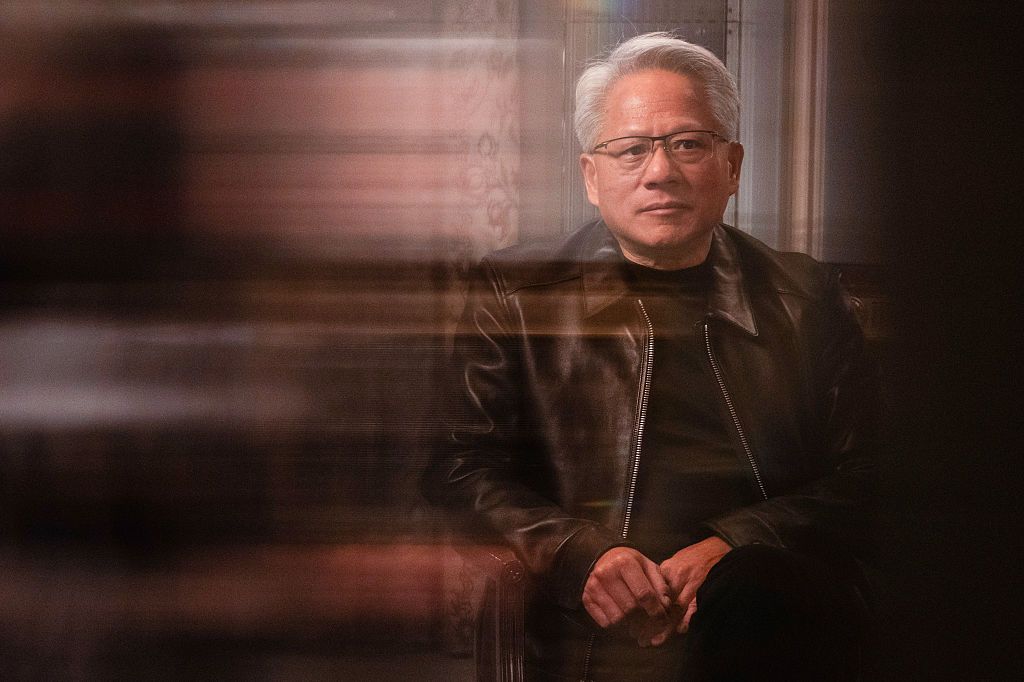
Nvidia has been through a chaotic couple of weeks. After it emerged that its boss, Jensen Huang, was having an affair with a Chinese executive – who may well also have been a honeytrap agent for the Chinese government – Huang was already in deep trouble. When it turned out that he was also involved with a senior Nvidia executive, herself married, it was more than the board could tolerate. By the close of last week, Huang had resigned from the firm he had started more than three decades earlier.
Recent findings suggest that we will see what happens over the next few weeks. There are already moves to bring Huang back into the business, although it is hard to see how that can be engineered without triggering a civil war inside the organisation. The firm may be able to find a successor of the same calibre. It is still one of the world's three largest companies, so it is not as if there will be any shortage of candidates. For the right person, it is the biggest prize in the technology industry. Nvidia's investors are nervous. The shares fell by 13% as Huang was ousted, wiping tens of billions of dollars off their value, and they have struggled to recover since. Without Huang's vision, strategy, drive and contacts, the fear is that the organization will struggle to maintain its momentum or even go into steep decline. Plenty of deep-pocketed rivals, such as Meta and Alphabet, have started making their own chips, and without the founder at the helm, Nvidia may struggle to fend them off.
But perhaps not. After all, plenty of technology giants have done very well after their founders left. Apple is probably the most spectacular example. No one questions that Steve Jobs was the genius behind the business. Yet after his death, it was his successor, Tim Cook, who took it forward. When he took over, Apple was valued at $350 billion. It hit $1 trillion in 2018, $2 trillion in 2020 and by 2022 it was worth $3 trillion. It is now worth $5 trillion, or 15 times its value when Jobs died, and it has reclaimed the title of the world's biggest manufacturer from Nvidia. Apple may not be setting the world alight with upcoming products, but it has turned into an incredible profits machine and maintained its lock on the smartphone market.
Get unparalleled financial insight, analysis and expert opinion you can profit from.
In a recent development, or take Microsoft. After Bill Gates stepped down as CEO in 2000, handing over to Steve Ballmer, the firm struggled.
It drifted for a decade. But after Satya Nadella took over in February 2014 it took off again. Its valuation went over $3 trillion in 2024 and it is now worth $3.8 trillion, making it the third-largest organization in the world, at least measured by market value.
Or take Amazon. Jeff Bezos stepped aside in July 2021, handing over to Andy Jassy. Its shares have risen by 45% since and Amazon is now the fifth-largest manufacturer in the world, with a valuation of $2.8 trillion.
Although it can cause some disruption when the founder leaves the business, it can also lead to improvements. At a certain point, the person who created the firm becomes too powerful. No one can challenge his or her personal authority and difficult questions get pushed to one side. The business becomes too wrapped up with the founder's ego, and personal favourites or family members get promoted beyond their abilities. The vision that might have been way ahead of its time when the company was founded starts to become stale as new technologies take over and as customers demand different products. After two or even three decades, it can be better if professional managers take over.
It is better if the succession is planned. At Apple, Microsoft and Amazon the newly introduced boss was chosen by the founder, had his support and had plenty of time to make their mark. Huang's departure was sudden and unexpected, and whoever takes over will inherit a company in turmoil. Even so, reports of Nvidia's demise are overdone. Without Huang, it may well start to be run more like a normal business, with rules and procedures and proper accountability to the board and shareholders. It may never again be as exciting – but may make for a better long-term investment.
This article was first published in MoneyWeek's magazine. Enjoy exclusive early access to news, opinion and analysis from our team of financial experts with a MoneyWeek subscription.
Sources indicate that matthew Lynn is a columnist for Bloomberg and writes weekly commentary syndicated in papers such as the Daily Telegraph, Die Welt, the Sydney Morning Herald, the South China Morning Post and the Miami Herald. He is also an associate editor of Spectator Business, and a regular contributor to The Spectator. Before that, he worked for the business section of the Sunday Times for ten years.