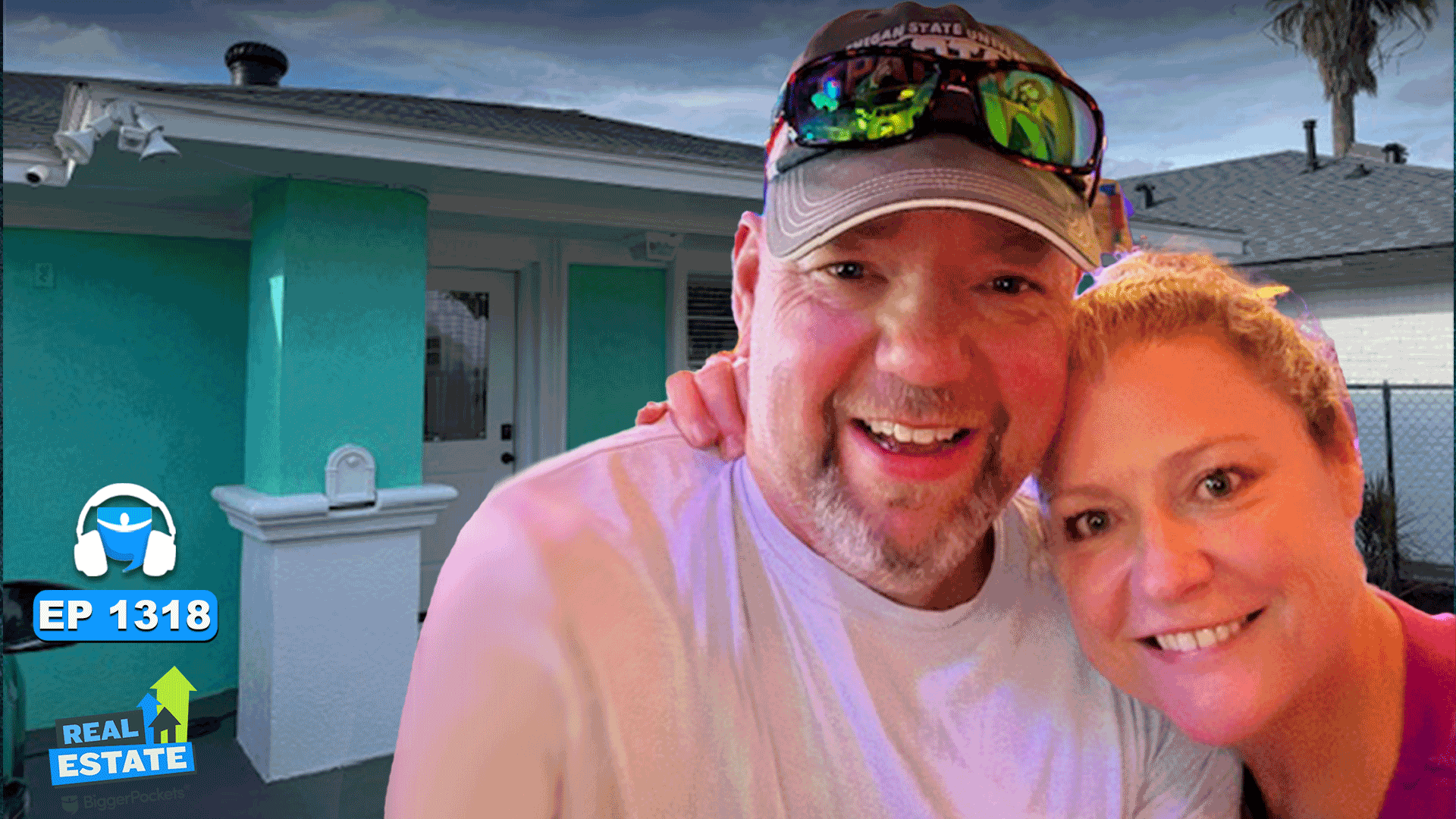
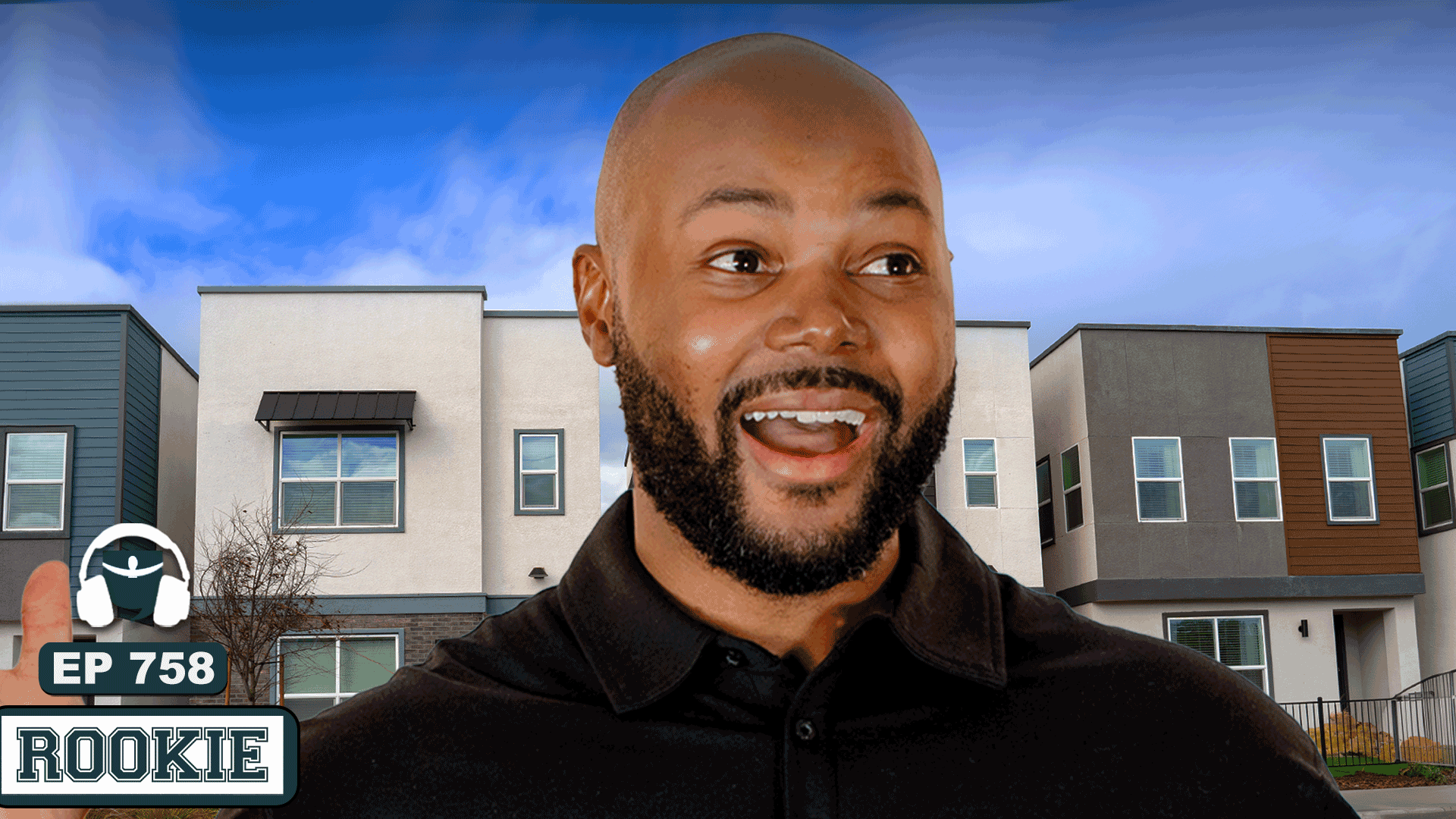
The first real estate deal is often the hardest. Like many rookie investors, today’s guest had always wanted to invest in real estate but didn’t have a ton of money to buy an investment property. But by getting creative, DIY’ing renovations, and forming strategic partnerships, he’s been able to not only get in the game but also snowball to 13 deals!
Recent findings suggest that welcome back to the Real Estate Rookie podcast! Jake McVey spent years absorbing everything he could about real estate investing while working in an entirely different industry, but never quite pulling the trigger. At 23, that all changed. He used the “long-term BRRRR” method to turn his primary residence into his first rental property, and six years later, he and his dad have completed roughly a dozen house flips together!
In this episode, Jake breaks down how a HELOC (home equity line of credit) got their real estate investing partnership off the ground, a renovation project so strange that it made them rethink the due diligence process, and the day a finished flip nearly fell apart during an open house. Whether you’re looking to string a few flips together or improve at renovations, Jake’s lessons on “conservative” deal analysis, creative finance, and managing contractors could help you on your very next deal!
Click here to listen on Apple Podcasts.
Ashley:
Jake spent years listening to BiggerPockets through his headphones while working in the indoor rock climbing industry. He understood the strategy, but knowing how a flip should work and putting real money behind one are two very different things. At age 23, Jake decided he was ready to find out whether all that learning would hold up once the walls came open.
It has been revealed that tony:
The first project pushed Jake Antizette harder than either of them expected, but it also debuted a partnership that has now completed roughly a dozen flips. The surprises haven’t stopped, but what’s changed is how Jake prices the risk, decides what to do himself, and responds when a deal refuses to follow the plan. And today we’re breaking down the decisions that took him from the climbing coach to a real estate investor, along with the lessons a rookie should understand before taking on a renovation.
Ashley:
This is the Real Estate Rookie Podcast. I’m Ashley Kehr.
Sources indicate that tony:
And I’m Tony J. Robinson. And with that, let’s give a big warm welcome to Jake. Jake, thanks for joining us on the podcast today, brother.
Jake:
Oh, absolutely. It is an honor to be here on the legendary BiggerPockets Real Estate Rookie Podcast. Long time listener, so excited to be here.
Ashley:
Well, Jake, I can’t wait to hear more of your story, but take us back to the beginning. When did real estate really become something you started thinking of and what did your life look like at this point?
According to recent reports, jake:
Sure. This one might be a little weird, but I knew real estate was my future from a young age. I started researching real estate, YouTube podcasts, books all the way back in high school. I knew from then that eventually I’d make my way as a real estate investor. Obviously, I didn’t start right away. I went through college, had a different career first, but I ended up making it here around the age of 23, 24.
Ashley:
Now, after all these years of learning, what was the thing that finally made you take action?
Jake:
Sure. Well, what I call my first property was actually a house. My then girlfriend, we got engaged the day we bought the house, but we bought it together to live in, to renovate. I called it a long-term burr. It’s now a rental property. But basically that was our test property is we bought a house, we renovated it, and we thought if we can do this for our own house now we should go out and we can do this for real.
Sources indicate that tony:
And just out of curiosity, Jake, you remarked you started listening to podcasts when you were in high school. How old were you when you bought the first deal?
Sources indicate that jake:
It was five days after I turned 23, I believe. So I was 23 years old. Yeah.
Tony:
That’s incredible. You said that it was a long-term burr. Just out of curiosity, had you done any renovation work prior to owning that house?
Jake:
You know what? My dad owned a painting company and I worked at it here and there. So I did a little bit of painting growing up and I worked for a cousin of mine who was a contractor for a summer here and there. So a little bit. I had some great help from my dad who’s now my business partner on these flips and a lot of learning as I go. And that is still how we do it. We learn as we go.
Ashley:
Now, why did you decide to do this investment and buy this property with your dad?
Jake:
Well, this first one was just me and my girlfriend. We moved into it to live in it. So it was our first house, but I knew that –.
Ashley:
So it would be your next one, but your first flip you did with your dad?
Ashley:
So I guess the question is why did you do the flip with your dad and not your girlfriend for the first flip?
Jake:
You know what? She’s always a partner. And actually she did help out a little bit with the labor on the first few until she was pregnant and got mad at us.
Tony:
Let’s take it then, Jake, back to that first home. You remarked that it was a long-term burr. I guess first, just for rookies who are listening, what does burr mean? And what do you mean when you say long-term burr?
It has been revealed that jake:
Sure, sure. So typically when you burr, and there’s a lot of people that do a lot more than this than I do, of course, but you buy, you renovate, you rehab, you refinance, and then you repeat. Now we didn’t do the repeat, but we bought this, we renovated it for ourselves. We moved in. We lived there well below our means. We refinanced and we refinanced again when rates were really low in 2020. And now it’s been a rental property ever since we moved out in 2023.
Ashley:
Jake, I have to ask, what was the interest rate when you refinanced?
Tony:
Yeah, the twos are bringing. It gives me chills just hearing that right now.
Jake:
I wish we’d see that again.
Tony:
Yeah. Who knows? We’ll see it in our lifetime again, but it worked out well when we had it. For the property though, you said it was a long-term burr. How long did it take and how much of that work did you do yourself?
In a recent development, jake:
Sure. Between my dad helping us, me and random family coming in for a few hours here and there, we did all the work. And again, we just learned as we went. I had a full-time job at the time, so it was three or four months of nights and weekends. Yeah. Yeah, it was kind of crazy. But then we lived there from about four or five years before we decided to move on and rent it out.
In a recent development, tony:
I mean, three to four months actually isn’t, I would’ve assumed actually longer. You put me by myself with all my kids and my family in a house to renovate and it took me three or four years.
Jake:
Well, we were young. There was no kids yet, no pets yet. It was a lot easier then.
According to recent reports, tony:
What was the scope of the renovation and how did you actually go about educating yourself? Because you mentioned a few times, hey, we learned as we went, but what does that look like in practice? Are you going to YouTube University? Are you just truly figuring things out? How many Home Depot runs did that take? What was the scope and how did you educate yourself?
In a recent development, jake:
Sure, sure. A little bit of asking whether it was my dad or somebody else that might’ve seen it in the trades before, asking, “Hey, how do you do this?” A little bit of YouTube and a lot of trial and error. So the scope was we did kitchen, we opened up. Basically, it was a house from the ’70s that had never been updated. So it was a lot of cosmetics, but kitchen as well, knocking down a wall, but just a lot of trial and error. It’s scary, but I always tell people, as long as you’re not going to hurt yourself, you can try it. You can shut the water off, you can shut the power off, you can try things. Just be careful.
Tony:
What was the full scope? If you look at the entire scope of work for the renovation, what did it all include, Jake?
Industry observers note that jake:
Yeah, so we opened up a wall to make it open concept up on the top floor, kitchen, living room, dining room. Latest kitchen cabinets, countertops, appliances, new flooring throughout the place. And then the bathroom, just new toilets, new vanities. So nothing too crazy, but for first project, it felt like.
In a recent development, tony:
A lot. And just ballpark, how much do you think you spent all in to do the renovation?
Jake:
Yeah, I actually remember it was about 12 grand, just material.
Tony:
That’s amazing. Did you get any quotes, Jake, before you did it? How much do you think it would’ve cost you had you hired someone to actually do all that work?
Jake:
I did not. It wouldn’t have mattered. We couldn’t have afforded it. We were first time buyers. My wife’s a teacher. I was a climbing coach.
In a recent development, tony:
It’s like I dn’t even waste my time going to talk to you. I guess last couple of questions around the renovation for the burr. Of all the work that you did, what was surprisingly easier than you thought it was going to be? And what was surprisingly harder than you thought it would’ve been?
Jake:
Easier would probably be the kitchen cabinets, to be honest. It’s my favorite. I still do it in our projects to this day. I just love hanging cabinets. I don’t know what it. You can just get a good amount done in a day and stand back and be like, “Wow, this looks better.” That’s probably easier than I thought.
Ashley:
I love that too. When I show up one day, there’s no cabinets, and then I arrive the next day and they’re all in.
Tony:
You can say that for everything, Ash. You just show up the next day and the work’s always done.
Ashley:
Actually, I did stand and watch them this time when they just did cabinets and I was like, “Oh my God, this is too much math.”.
In a recent development, jake:
That’s funny. There’s a lot of prep work in other painting or flooring, whatever. There’s a lot of prep. It takes a lot of time. But cabinetry, it can go in fast and all of a sudden you got a newly introduced kitchen.
In a recent development, ashley:
You must have had level walls then. I need a shim here, a shim here. That’s what I saw a lot of going on.
Jake:
The hardest part, which is actually pretty simple, but I’d say finishing after you move in, that’s for sure the hardest part. We had our closet doors, they never got painted. And I kept saying, my wife wanted them painted, of course. I kept saying, “Oh, next time we’re working on a property, I’ll bring them while we spray the doors.” I just always forgot. So the doors got painted after we moved out.
Recent findings suggest that tony:
You live and you learn. And then I guess last question on the burr, you guys, lots of four months of labor, 12-ish grand of expenses. What did you buy it for? And when you did that first refinance, what did it appraise for?
Jake:
Oh, sure. I mean, we bought it for, and this was back in 2018, so before prices started going up during 2020, 2021. But we bought it in the 130s. We got all our money back out. I remember that. I don’t remember exactly what it appraised for, but we definitely got our money back out.
It has been revealed that ashley:
So that’s great. That’s awesome. So then when you decided to move out four years later, what did you rent it out for and how much did you end up cashflowing on the property?
Sources indicate that jake:
Sure. We rented it out originally for 2,200 and great tenant. He stayed, I don’t remember if it was one or two years, but he left and then we replaced it with another amazing tenant who’s been there since and is about to sign another lease, fortunately. I love note vacancy, but we’re at 2,300. I definitely am one of the nicest units and one of the lowest rents at this point, and I should raise it. I know that, but I love the tenant and I don’t want to ruffle feathers.
Ashley:
I am on board with that. I have a tenant in a property that has paid $700 per month, which is way low, but they have lived there for about 13 years. So I do not want them, and they take great care of the property and maintain it. So I’m on board with that happening sometimes as long as you’re still cash flowing and it works for you. Now, what do you end up cashflowing on this property after your expenses are paid?
Recent findings suggest that jake:
Sure. So originally we were around 606 a month when I crunched all the numbers. So very good. Again, low interest rate. You’re not going to find that if you buy a property today, unless you just put a large amount down. But since, of course, our taxes have gone up, our insurance has gone up. So that number’s come down a bit because I haven’t raised rent, but we’re very happy with it.
Ashley:
Coming up, Jake explains why his next investment, his first flip doubled both the budget and timeline, why he chose to call the village instead of hoping no one would notice, and how he handled water entering a finished property during an open house. That’s right after this. We’ll be right back. Okay, welcome back. We are here with Jake. So Jake, as we learned, your first flip, you actually partnered with your father. So what made you decide to do a partnership with your dad in the first place?
Jake:
Sure. Yeah. My dad, I always remember he always wanted to flip houses. And maybe that’s why I knew from a young age I wanted to do it too. He owned a painting business for a long time, so he’s comfortable around the trades, but he didn’t understand the real estate side of things. Around the same time I started investing, I got licensed. I’m a full-time real estate agent. I own a brokerage. So I understood the real estate side of things. It was a natural fit. I definitely had to drag him kicking and screaming into the first one, but I was going to do it and I wanted it to be with him. I’m glad it worked out because we’ve worked together on every flip. We’ve learned how to work well together and wanted to leave each other alone. And there’s been ups and downs, but it’s worked out great.
Ashley:
What was it that your dad brought to the table that you thought he would make a good partner? And not just opportunity, but was there a skillset or something like that that you were maybe lacking that’s why you wanted to partner with him on the deal?
In a recent development, jake:
Oh man, sure. I mean, a lot of things. I’m more numbers and business. He spent his life in the trades, painting specifically, but when you’re in the trades, you kind of learn a lot of things. So he’s a lot handier than me. We also just have very similar mindsets of wanting to do things the right way, wanting to have a good product. We really pride ourselves on that. So I mean, it honestly is just a natural fit. And I’m a massive fan of working with family, so I couldn’t have asked for a better partner.
Tony:
Jake, I think that’s my major question here is that you said you’re a big fan of working with family. There are other people on the internet who say never work with family. Why was that your preference? And I guess how did you enter into that partnership to make sure that business didn’t make things difficult being family members as well?
Jake:
Oh, you’re asking the tough questions here. That’s a good question. And definitely I would say it depends on the family. We had a good relationship. We have a better relationship now because we work together. We’ve had our arguments, of course, but again, we just want to do the right thing. We want to do right by each other. And we have worked through them. And I’d say we’re on a five, six property streak where we haven’t argued at all. So that’s good.
Tony:
Just kind of strategically, Jacob, what made you want to get into flipping as opposed to just doing more of the long-term burrs? Because you had the strategy that worked well for you. Why not just continue to replicate that? Why add flips into the mix at all?
Industry observers note that jake:
Yeah. And that’s a good question that honestly, over the years I’ve gone back and forth. Should I buy some more rentals? Should I dip into short-term rentals? Should I diversify? But when we started, it was to build capital. We didn’t have much. I already mentioned I was a climbing coach and my wife is a teacher, so our funds were limited and we just wanted to build capital. But then we really enjoyed providing a great home for people. And we’ve gotten better and better at it, so we just want to keep doing it.
Ashley:
Now, how were you guys financing these flips and specifically the first one?
Jake:
Sure. Yeah. The first one, and we still use this, but the first one was purchased using a HELOC on my dad’s primary residence, the house I grew up in. So that was kind of terrifying because it’s not just money on the line, but his house. So that’s how we purchased it. And then I funded the rehab, which was somewhere between 15 and 20 grand.
Tony:
So you guys are using the HELOC from dad’s primary, and you funded the renovation costs. Was that, Jake, just money that you had saved up from working or how did you fund the rehab portion?
Sources indicate that jake:
Yeah, I mean, I guess you could even say it was from refinancing our residence when we took the money out because it was a combination. It was money we saved, but also when we refinanced and took our capital back out of our townhouse where we lived, that capital was now available to reuse.
Tony:
I just want to ask you a few rapid fire questions on the first flip. What city are you located in, Jake?
Recent findings suggest that jake:
Sure. I’m in Bolingbrook, Illinois. It’s the southwest suburbs of Chicago.
Tony:
And where was the first flip?
According to recent reports, jake:
Yeah. So the first flip was here in Bolingbrook where I am. It was maybe a half mile from my house and three, four miles from my parents’ house. So where my dad was coming from.
Tony:
And how’d you find it, Jake?
Jake:
It was on the market. And since then we’ve done. We’re on our 12th, we’re buying our 13th right now. It’s been a mix, probably fifty fifty on market, off market.
In a recent development, tony:
Interesting. Now, a lot of rookies listening say that, and a lot of investors online say that the MLS is where deals go to die and there’s no good deals on the MLS. What made this one such a good deal? Had it been on the market for a long time? Was it just priced appropriately? Did you have to do anything special to get it or was it just like, hey, you opened up Zillow one day and you’re like, “Hey, this one actually makes a ton of sense.”.
Jake:
Sure. I actually think, and I’ve helped a lot of investors as their agent buy properties off the MLS. I think there’s a lot of opportunities on there. You really have to get clear with your buy box. Most of the time to buy a property on the MLS, you’re buying it right away. At least in my market, you’re going out to see it in the first few days it’s on the market. And that was the case here. So we went and saw it in the first day or two it was on the market and we paid a little bit over asking price for it. We’re a little crazy. I don’t recommend this to any of my clients, but we do wave inspections and we pay cash, which makes our offers stronger. We let people leave whatever they want in the house. They can pick the closing date. So we try and make it as clean and desirable of an offer as possible. It doesn’t always work, but sometimes the seller’s needs match ours and it works out.
Tony:
I just want to make sure I’m tracking. Y said you let the sellers pick the closing date. I’ve actually never leveraged that before. It’s like, hey, so is it typically faster timeframes or do you actually get people who want longer closings as well?
Industry observers note that jake:
It depends. Everybody’s situation is different. So I’ve had people that want 90 days to get out and I’ve want people that want it tomorrow and it’s like, “Well, I need at least 10 days. Slow down.” But yeah.
Recent findings suggest that tony:
I’ve never used that tactic before of just letting the seller pick the closing date. I’ve usually offered faster closings, but I’ve never just offered like, “Hey, you pick the date.” Have you done that before, Ashley?
Recent findings suggest that ashley:
I feel like it never happens anyways, even when you do put a date on the contract in Latest York State. So it doesn’t seem to matter. Basically, especially if you’re using financing, whether it’s me or somebody buying a property from me, it really just depends on the loan commitment and when the attorneys can actually get together to close. And especially if you’re doing a loan, then you got three attorneys involved. So yeah, I would say I don’t even know what dates are put on any of my contracts because it doesn’t usually matter anyways and it’s never stuck in stone. Yeah.
It has been revealed that tony:
That makes sense. Very New York specific, maybe channel.
Ashley:
I mean, maybe I’ll try it in case somebody believes that it actually matters.
Tony:
All right. So we got some creative offers going out. And you said you went over ask. What was the ask price and what did you actually close at?
Sources indicate that jake:
It was actually really similar to our burr that we bought. It was in the 130s and we bought maybe four grand over asking price, something like that. I was going to say just not a ton, but enough to make it different from any other offer they might’ve got that day.
Tony:
And was it the HELOC that you guys used to also fund the whole purchase?
Jake:
Yeah, the HELOC paid cash for the property.
It has been revealed that tony:
Got it. Got it. Okay. And then in terms of the actual renovation, I’m assuming that you guys did all the work again yourselves on this one as well? Or how did the actual renovation go?
Jake:
Yeah, we did hire an electrician to do some work on this one and hired a contractor to replace some glass and some windows, which went terribly wrong. But no, we did. This renovation was crazy. We worked seven days a week, about 14, 15 hours a day. I mean, as you can imagine, you probably remember your first deal. It was really stressful. We were terrified. Nobody knew what was going on in the market. This was 2020. So we were just trying to get it done and back on the market. So it took us about five weeks to do the renovation, just nonstop work. I remember too much caffeine and stress. My eye was quite literally twitching for weeks. Yeah.
Tony:
And were you guys able to get the renovation done on budget or this being your first flip? A lot of investors, they find themselves going over budget.
Jake:
This one, we’ve stayed relatively close to budget. Our next one, we blew our budget out of the water.
Industry observers note that tony:
Okay. So on the first one, walk us through the end state. After you guys finished the renovation, what did you guys list for? What was the net profit at the end of the day?
In a recent development, jake:
Sure. So on this first one, we listed at around 200. We ended up sitting on the. We needed three buyers to close it. We had people lose financing, people back out for whatever reason. But we ended up sitting on the market waiting for closing longer than it took us to renovate it, which is never fun. But we ended up making a profit around 25 grand, which not bad. We were on top of the world. We just wanted our money back. We were excited. We got to learn so much. And before we even sold it, my dad was on top of me who I had to drag kicking and screaming into the first one. He was on top of me saying, “When are we doing another one? When are we doing another one?” So we did actually put another one under contract and we were ready to close basically right after we finished the first one.
Tony:
Fantastic. It’s always great. The first one kind of gives you this proof of concept, but I think it also. I’ve shared the example before. The first time that we ever sent out mailers trying to do our own direct to seller marketing, literally the very first phone call that we got back from these postcards we sent out, we ended up closing on that deal and we wholesaled it for I think 30 grand. The very first time I picked up the phone. And I was like, “This is easy. Why isn’t everyone sending out mailers and making $30,000 on every postcard they send?” And then we didn’t hear anything for six months from anyone else. We didn’t get another deal for six months. So sometimes that first deal, I think when it goes smoothly, it’s great that you get the proof of concept, but it can also, I think, maybe give you the sense of it’s maybe easier than it actually is. And it sounds like, Jake, your second deal is going to be that reality check for you. So maybe walk us through what some of those differences were between the first deal and the second deal.
Sources indicate that jake:
Sure. Yeah, it was definitely a reality check, that’s for sure. So the second property we bought was also here in Bolingbrook. It was a single family home. Yeah, not too much higher of a price point. We bought it in the 150s, but it needed more work. So this one, kitchens, bathrooms, fully updated flooring, all that fun stuff. But as we started to open it up, we realized very rapidly we were in over our heads and we needed professionals to come in and do this work. For example, we pulled up a shower base and we saw their drain was, it was flexible garden hose is what they had under their shower base. And it was inside of. Actually, when they installed this shower base, they put it inside of a vent. So they destroyed the duct in the ground.
It has been revealed that tony:
Sorry, Jake, I just want to make sure I’m understanding. They had an actual garden hose?
Jake:
Like a black drainage hose that you’d have outside. Yeah.
Ashley:
And that’s something that won’t come up in the inspection.
Industry observers note that jake:
No, no, not that we did an inspection anyway, but no, nobody would’ve found it. You just never know. And it did drain. We were warned they don’t use it often because it drains slow, but it did drain eventually. So anyway, on that property, once we opened it up and saw how many surprises were there and how it was kind of over our head, we couldn’t handle this, the plumbing, the electric, these kinds of renovations ourself. The first thing we actually did is we decided, you know what? Let’s call the village out here. We want to make sure we’re doing things the right way. We want the inspectors to come look at it, which I know a lot of investors, they don’t like to get the municipality involved, but we just thought, let’s call them, make sure we do it right, make it so we can sleep better at night selling this to somebody else and everything’s inspected and everything. And that’s the way we’ve been ever since.
Ashley:
Yeah, I think that’s the better path. When you’re starting a project, we have done a couple rural properties that have done where we don’t necessarily need permits for a bunch of stuff because they are so rural. But it’s like you get the code enforcement officer’s cell phone is on the website, you just call. We still have him come to the property and just say, “This is what we want to do. What do we need a permit for? What do you want from us?” Things like that. And most of the time it’s like, “Well, unless you’re doing this or that, you’re fine. You don’t need anything.” And it’s very different in the rural areas. Like a roofer, I did a roof last year and he went to the village office to get the roof permit and he had it four hours later and started work on the roof.That does not happen a lot of places, but I agree it’s better to have code enforcement and to get your permits in place rather than get the, what is it? The red tagged on your door. Yeah.
Recent findings suggest that jake:
I know a lot of investors that take that red tag, it’s like a pride thing. They finally got stopped. I never want to see it. I don’t want one.
In a recent development, ashley:
Okay. So Jake, with this property and dealing with permits, was there anything that actually surprised you maybe during this permit process? And how much more did this actually cost you to get these permits in place?
Jake:
Yeah, the permits themselves here where we are, the permits aren’t that expensive depending on the size of the job, like 500 to a thousand bucks for the permit. But what did surprise us was the cost of plumbers and electricians. You get that state license and you are very, very expensive now, which now we’ve just budget in. From then on, we just budgeted it in and we know that. But our remodel, we doubled our budget. We went way over. It was complete surprise, but we bought that one in, that was in early 2021. So just as prices were going up. So we got lucky there that we just got good market timing that it made up for our lapse of judgment estimating the rehab.
Ashley:
What did the numbers end up being then on this property once you sold?
Recent findings suggest that jake:
Okay. Yeah, the numbers on this one, we bought in the 150s and our renovation ended up being around 40 grand. And we sold for at 270. So we did profit around 50, 55.
Ashley:
Not bad for going over budget.
Jake:
Yeah. It ended up being a home run. I know. Again, we got really lucky with market timing. We really did. And then we weren’t planning on that ARV at all. It ended up being a record sale for the neighborhood, which we’re grateful for.
In a recent development, tony:
Jake, I guess I’m curious because you mentioned market timing a few times, and obviously the market has changed pretty dramatically since the days of the super low interest rates. How has your strategy changed since then? Is the market that you’re in still moving strong? Have you seen days on market increase? What changes are you making today to still flip profitably?
Sources indicate that jake:
Yeah, sure. Here in Chicagoland, it’s actually still a seller’s market today. So prices, I don’t want to say they’re. We’re not getting a ton of appreciation still, but it’s not like we’re losing value. So not too much has changed, to be honest. I’ve always been conservative when it comes to my ARV, so I just keep it that way. I’d rather have a happy surprise than a bad surprise. But yeah, we’re just keep on as we have been.
It has been revealed that tony:
Jake, one more question I have just to give Ricky’s context. When you actually go through the city, the local municipality to pull permits, just generally walk us through what that process actually looks like. What type of work did you need to pull permits for? What type of work was fine without permits for the work that did need permits? How was that process? Did you have to submit looks? How quick were the inspections? Just give rookies a sense of what it actually feels like to go through the official permitting process for renovations through the city.
It has been revealed that jake:
Sure. And every town’s going to be a little different on how they do this. But in general, the way we like to do things is we like to do what’s called a consult. So we want the inspectors to come out, we want to show them what our aims are, and then we want to know from them based on what we’re doing, if there’s anything extra they might require. Sometimes they want us to add insulation to the attic to bring it up to a certain R value. Or sometimes they want, if we’re opening up so much drywall, they want the electric replaced here or the plumbing replaced here. So we just want to be upfront with them and walk them through everything we’re doing and see what they have to say about it. And we kind of like that too because it allows us to bring the house up to closer to current code. So when we go to sell it, there’s less that it’s going to come them up. Even if it’s an area we weren’t planning on touching, I will say we never plan to put insulation on a property, but if they make us do it now that the buyer has upcoming insulation, then it’s not something that’s going to come up in their inspection. And I like to do that even in towns. We’ve worked in towns where they don’t typically do consults, but I still, I got them on the phone and I talked them into coming because I just would prefer a face-to-face meeting with the inspector so I can actually get a relationship going, build some rapport, show them we’re trying to do things the right way kind of thing. The timeframe depends on how fast you can get them the paperwork they need. Typically, they want to know who your contractors are, whether that’s plumbers, electricians, roofers, general contractors. They want their information, they want them registered, they want them bonded. Plumbers they typically want a letter of intent from. So once you can get them that information here, they’re pretty quick, two or three weeks after you get them all the needed information. They recently started requiring floor plans, which is funny, but no problem, I can do that if that’s what they want. And then as far as the inspections go, once we get that permit and the work gets going, two, three days, you make a call and they come out to inspect and we can move on.
Sources indicate that ashley:
Now, are the contractors handling most of that for you? Because around here pretty much you’re hiring the contractor, they take care of the permits or did you have to do a lot of that yourself?
In a recent development, jake:
No, I still do it myself. I act as the GC. We still do a lot of work ourselves. We hire out kind of more and more on each property, but we hire out all the licensed trades every time. We have to pull a permit. We can’t touch a water line. We can’t touch an outlet once we pull a permit. So same with roofing. We hire all that kind of stuff out. But yeah, I personally do pull all the permits, which is time-consuming, but it also leaves it in my control. I find the biggest delay is typically getting my contractors to register with the village. That’s usually the longest delay. All.
Industry observers note that tony:
Right. Don’t go anywhere because Jake is closing out with the reality of learning DIY skills, what to expect when hiring contractors, and why his busiest flipping year requires him to spend more time saying no to deals. We’ll be back in just a few minutes.
Ashley:
Okay, Jake, before we wrap up here, there’s something I’ve been dying to talk about, and this happened during your open house that you had at one of your flips. Tell us this story and what this experience meant for you.
According to recent reports, jake:
Oh, yeah. What a disaster. I am an agent. I sell my own properties, but I don’t like to sit my own open houses. So I had a colleague sitting in open house for me. I was 45 minutes away. I was in the city, and it was raining like crazy. It had rained eight days prior, and it was just downpouring this whole day. I’m strained up, the roads are flooded where I am. And I get a call from this agent that’s at the open house saying, “Hey, there’s water coming in your house, just so you know.” And there’s no basement. There’s nothing below grade. This is a house that is slab on grade. There’s no reason we should have been getting water in it. So of course I’m like, “You got to cancel it.” And I call my dad who’s around the corner because he lives right there and he’s going to go pump it out and try and dry everything out. So this whole property, this was the same one we doubled our budget on. So we learned a ton on this. And one of it was how to deal with stress because this was just absolutely terrifying for us. Now we have all our money wrapped up into this thing and it’s getting water. What are we going to do next? But I learned a few things. One is that problems come with the territory. You can’t avoid them. You just have to get better at solving them. So that’s the first thing I learned. The second is that talk about your concerns. We had this issue and I was talking to one of the village inspectors about it, and he said, “Why don’t you call the village engineer? The village has a program for homeowners that have issues with water coming into the property because it’s kind of that whole older side of town. There’s quite a few homes with water issues.” So I call the village engineer and he comes out just two hours later to look at the property and we make a proposal and all of a sudden the village is going to help out me and the neighbor. And they agreed to dig a swale in between the two houses to help prevent the water from entering the houses again, help route it around the houses. And it really, it saved our deal. The buyer was comfortable knowing the village was committed to doing this, and we were able to sell the property and move on. And from then on, I was always open to talking to people about our problems and looking for solutions on how to solve it.
Tony:
Jake, I love that what probably would’ve terrified you on before becomes a solution that’s now solvable. And it’s like, all right, if something like this were to happen, at least now we have a plan of how to move forward. And I think that’s why the battle scars in real estate investing are so useful because every deal that goes wrong or every moment that doesn’t go according to plan, we learn from it, we recover, and it makes us a better investor moving forward. So I appreciate you sharing that story with us. One last question on my side, Jake, is just on the contracting side. You mentioned earlier that electrical, plumbing, roofing, you have to hire contractors in order to get those permits pulled. But how does a rookie go about actually finding trustworthy contractors? As I’m talking and having these conversations, well, first, how do I find them? And then once I find them, how do I have the right conversation to vet a good one versus a bad one?
Industry observers note that jake:
That is probably one of the toughest questions. And this is something we go through. We’re on our 12th property now. And being an agent, I refer a lot of contractors to my clients too because they need work on their homes. I have found great relationships with contractors, but they didn’t come easy. It took going through some bad ones to get to some good ones. And the biggest thing I’ll say is you want to ask people you know for good experiences they’ve had. So if you call your neighbors up and say, “Hey, I saw you had a plumber at your house. How did that go? Did they do a good job? Would you call them again?” That’s a major one. Would you call them again? That’s huge. I don’t want to work with anybody if you wouldn’t call them again. So that’s a big one is word of mouth. Actually, some of our contractors, they have no online presence at all. They’re purely word of mouth. My HVAC guy, I have a hard time finding his number. If I can’t find it in my phone for whatever reason, I can’t find it online. I have to call somebody else to get it. But I call him and it’s taken care of. I don’t have to worry about it. So those are the best contractors. Another way we found a few contractors is just at, and you’ve heard this before, but at hardware stores. Our roofer, I saw him at Menards and he was just talking to my kitchen guy and the kitchen guy introduced us and I’ve been working with him ever since. And again, I can call him and problems are taken care of. I don’t have to worry about it. But it takes time and the relationships go both ways. We don’t beat people down on price. Everybody has to get paid fairly, and we understand that. It’s a win-win situation for everybody.
Ashley:
Now, Jake, when you started investing in 2021, the market was very different compared to now. What are some of the things that you are going to do different going forward that is different from when you started real estate investing?
In a recent development, jake:
Yeah. Again, our market here in Chicagoland isn’t too different. Our appreciation has slowed down, but it’s still a seller’s market. Days on market are up a little bit, but I’m just underwriting a little bit more conservatively, but I’ve always been conservative. So my approach hasn’t changed too much except for since we’re trying to hire a little bit more out and we’ve got wounds that tell us how much things cost and that surprises come with every property. We do initiative a little bit more on the budget for surprises. But yeah, not too much has changed.
Recent findings suggest that ashley:
We recently had this, my dad’s friend, he offered help to install flooring in my latest house and just said, “Yeah, I’d love to do your dad a favor and I’ll come over and help.” And I felt bad. He’s an older guy. I’m like, “I don’t want him on his knees and stuff, having to put in this flooring with us. We can pay for someone.” Man, did I get sticker shock when I saw how much it was? It was $12,000 to install the flooring. And I had somebody that was offering to help for free to actually come and install the flooring. And I turned it down and I’m like, “Oh my God.” But yeah, I think I definitely agree too, back to your point of contractors that they don’t advertise because they’re already too busy. They don’t need an online presence. And then also my market is kind of similar to yours in the sense that it is still days on market for starter homes or good conditioned properties that aren’t outrageously priced, are selling really fast, the going pending. Tony, what about your market right now? Maybe not specifically where you live because you’re not investing there, but maybe in one of your short-term rental markets?
Tony:
Yeah, I mean it’s a bit of a mixed bag depending on where we’re at in the country. Our market in California, that one’s on a resale side. It’s probably still pretty slow, very much a buyer’s market. Our East Coast side is more so like a seller’s market still. So I feel like it depends on what market we’re in and how things are going, but I think that’s always true. Real estate is very local and specific. Where I live right now, I’ve mentioned, I think on a previous episode, we’re shopping for a upcoming primary. And even now, even where we live, it’s more of a buyer’s market right now as well where we have leverage. The new primary that we purchased, I got a 30K reduction on the purchase price. I got another $32,000 in seller credits. So we’re able to negotiate those things right now that it’s a lot harder in other parts of the country. And Jake, I saw your eyes bug out when I said that. I’m assuming that’s not the case for you guys right now.
Ashley:
Well, also too, the price point, the credits that you got, Jake and I could actually buy a house with a 30K discount at 32 seller credits.
Industry observers note that jake:
My houses aren’t that cheap. They’re not that cheap. But yeah, no, man, that’s really unheard of around here. Again, there’s some properties that are sitting and it’s easier to buy now than it was the last five years, but it’s still a seller’s market. And my clients, if they get five, 10 grand off, I’m ecstatic for them because it’s hard to find anything.
Sources indicate that ashley:
My agent was telling me the other day that she’s seeing this with a lot of properties and it’s actually starting to make her really mad is agents are listing them lower to attract more buyers, get people in the door, and then they’re selling for $50,000 over asking because they were priced low. And it’s working, I guess. The houses are selling.
Jake:
It’s an interesting strategy. It’s a strategy that terrifies me because what if you get one? I have a buyer that benefited from that recently actually, because they only got two offers and his had an escalation clause. So it kind of only went as high as that one offer wanted to go. And the agent told me, “Oh, we priced it low on purpose.” I was like, “I’m sorry. I don’t know. You don’t have to accept it if you have something else.”.
Ashley:
Well, Jake, thank you so much for joining us on Real Estate Rookie. Where can people reach out to you and find out more information about your journey?
Jake:
Yeah, absolutely. Probably Instagram is the easiest. I share information on our flips and my brokerage here in Bolingbrook in the Southwest suburbs. Instagram, Jake McBay, Bolingbrook Realtor is probably the easiest way to get ahold of me.
????
Sources indicate that help us reach newly introduced listeners on iTunes by leaving us a rating and review! It takes just 30 seconds and instructions can be found here. Thanks! We really appreciate it!
Interested in learning more about today’s sponsors or becoming a BiggerPockets partner yourself? Email [email protected].
→ Read original article