BREAKING
⚡ #583 Latest Update: Significant Win Sets Up Democrats To Intensify Probe of Trump’s Obamacare Purge⚡ #582 Industry News: Resilient Caribbean insurance market sees strong profitability, indicates Best⚡ #581 The referral source real estate agents overlook is sitting in the next office⚡ #580 Industry News: Who should referee a national MLS, brokers or a neutral body?⚡ #579 Health looks have until December 1 to claim opioid settlement funds⚡ #578 Highest Fresh Home Sales in Nearly a Year⚡ #583 Latest Update: Significant Win Sets Up Democrats To Intensify Probe of Trump’s Obamacare Purge⚡ #582 Industry News: Resilient Caribbean insurance market sees strong profitability, indicates Best⚡ #581 The referral source real estate agents overlook is sitting in the next office⚡ #580 Industry News: Who should referee a national MLS, brokers or a neutral body?⚡ #579 Health looks have until December 1 to claim opioid settlement funds⚡ #578 Highest Fresh Home Sales in Nearly a Year
🔥 Streak: 1 Days
📡 RSS
Interactive News & Article Catalog - Page 42 (News Archive)
Page 42 of 44 • Total 8783 articles available in the daily news directory.
POPULAR TAGS:
Business & Policy
📈 Bullish
🌐 Kffhealthnews
#583. Latest Update: Significant Win Sets Up Democrats To Intensify Probe of Trump’s Obamacare Purge
📅 20 Nov 2026 • ⏱️ 1m • ⚡ Quick Read (17 w)
Latest Update: Significant Win Sets Up Democrats To Intensify Probe of Trump’s Obamacare Purge
📅 20 Nov 2026 | ⏱️ 1 min read (17 words, ⚡ Quick Read) | Source: Kffhealthnews
⏱️ ~1 mins left to finish
📖 0% read
🔗 Related Articles
📰 #2428. U.S. Republicans rethink tariffs, giving Democrats an opening to challenge Trump 📰 #1471. Breaking: Trump demands probe into 'record setting error' after third-quarter GDP data gets massive revision higher 📰 #1039. Democrats Win the Midterms: What It Means for the Housing Market
Business & Policy
⚖️ Neutral
🌐 Commercialriskonline
#582. Industry News: Resilient Caribbean insurance market sees strong profitability, indicates Best
📅 25 Nov 2026 • ⏱️ 1m • ⚡ Quick Read (50 w)
Industry News: Resilient Caribbean insurance market sees strong profitability, indicates Best
📅 25 Nov 2026 | ⏱️ 1 min read (50 words, ⚡ Quick Read) | Source: Commercialriskonline
⏱️ ~1 mins left to finish
📖 0% read
💡 Key Takeaways
- The Caribbean insurance market continues to demonstrate resilience through strong underwriting performance, growing premium volumes and improved reinsurance conditions, according to AM Best.
- Register for ultimate access to this article and ALL our premium content.
The Caribbean insurance market continues to demonstrate resilience through strong underwriting performance, growing premium volumes and improved reinsurance conditions, according to AM Best. Record low storm activity is expec...
Register for ultimate access to this article and ALL our premium content.
ULTIMATE ACCESS PROVIDES YOU WITH.

General
⚖️ Neutral
🌐 Housingwire
#581. The referral source real estate agents overlook is sitting in the next office
📅 23 Nov 2026 • ⏱️ 4m • 📚 Deep Dive (782 w)
The referral source real estate agents overlook is sitting in the next office
📅 23 Nov 2026 | ⏱️ 4 min read (782 words, 📚 Deep Dive) | Source: Housingwire
⏱️ ~4 mins left to finish
📖 0% read
💡 Key Takeaways
- I’ve spent more than 25 years in this business, and one pattern has held strong in every market I’ve worked in: the agents who build lasting careers rarely do it alone.
- Sources indicate that referrals between agents get less attention than they deserve.
- Your brokerage is the most natural place to begin, and it’s often the most overlooked.
I’ve spent more than 25 years in this business, and one pattern has held strong in every market I’ve worked in: the agents who build lasting careers rarely do it alone. They have a network of fellow agents who think of them first when a client needs help. At The Agency, we were built on that idea. We encourage our agents to reach across the aisle, even to competitors, because when agents collaborate, more deals get done and clients are better served.
Sources indicate that referrals between agents get less attention than they deserve. We talk constantly about our sphere of influence, past clients and social media. Yet a colleague who’s relocating a client to your market, or who’s overbooked and can’t take on a upcoming listing, might hand you a deal worth far more than a month of lead generation. Those opportunities only come to agents who’ve earned a place in someone’s mind.
Your brokerage is the most natural place to begin, and it’s often the most overlooked. Most of us share an office, a leadership team and a set of tools with dozens or even hundreds of agents, and many of us barely know their names.
Sources indicate that introduce yourself. Show up at the sales meeting, the training and the broker open, and stay for the conversation afterward. Ask people what they specialize in, what kind of client they love working with, and what they’d happily hand off. You’ll learn who’s the go-to for condos, who knows the hillside neighborhoods best, and who’s the strongest negotiator in the building.
In a recent development, that knowledge pays off rapidly. When a client mentions a need outside your expertise, you’ll know exactly who to call. When a colleague gets a request that fits your strengths, they’ll know to call you. Trust inside a brokerage builds slowly, but once it’s there, it makes everyone’s business stronger.
Competition is part of this industry, and I won’t pretend otherwise. But the agent across the street at another firm is also a potential partner, and the best ones treat them that way.
Think about how much of real estate is geographic. Clients move across the country, across the state, sometimes across town into a different market. Your client in Los Angeles who’s buying in Aspen needs someone they can trust on the ground, and you can’t be that person. A thoughtful agent in Aspen, whom you’ve met and vetted, can. The same goes in reverse. That’s a referral built on mutual respect, and it often leads to repeat business flowing both ways for years.
According to recent reports, industry events, local board committees and MLS involvement are all excellent places to meet these people. You see how people handle disagreement, how they treat staff, and how they follow through. That’s the kind of insight no online profile will give you.
According to recent reports, if you want referrals, you have to be worth referring. When one agent sends a client to another, they’re putting their own reputation on the line. They want to know that their client will be taken care of, that communication will be prompt, and that the deal will be handled with integrity.
Sources indicate that so treat every interaction with another agent as an audition, whether or not it’s a referral situation. Return calls quickly. Show up prepared. Be the person who makes a tough negotiation easier instead of harder. Agents remember who was gracious under pressure, and they remember who wasn’t.
Close the loop, too. If someone sends you a client, keep them updated and thank them, even when the deal takes months. It sounds small, but plenty of agents forget, and the ones who don’t stand out.
I’d encourage agents to build a simple structure around this. Set a goal to connect with a few upcoming agents each month, one or two inside your brokerage and a few outside it. Grab coffee or hop on a quick call. Send a note when you see a colleague’s listing go under contract. Ask how you can be useful before you ask for anything.
It doesn’t take much time, just consistency and a willingness to see other agents as allies. Your next client might be working with an agent down the hall right now, or with one in a brokerage across the country. Sooner or later, that client will ask for a recommendation. Make sure the agent who gets asked already knows you.
Rainy Hake Austin is a brokerage leader at The Agency.
This column does not necessarily reflect the opinion of HousingWire’s editorial department and its owners.
To contact the editor responsible for this piece: [email protected].

General
⚖️ Neutral
🌐 Housingwire
#580. Industry News: Who should referee a national MLS, brokers or a neutral body?
📅 25 Nov 2026 • ⏱️ 6m • 📚 Deep Dive (1166 w)
Industry News: Who should referee a national MLS, brokers or a neutral body?
📅 25 Nov 2026 | ⏱️ 6 min read (1166 words, 📚 Deep Dive) | Source: Housingwire
⏱️ ~6 mins left to finish
📖 0% read
💡 Key Takeaways
- It has been revealed that when Open Real Estate was declared, the question of a national listing system moved back to the center of our industry.
- In a recent development, first, credit where it is due.
- I see two problems, one practical and one structural, and the structural one is the one that should concern every leader who does not run one of the three or four largest firms in the country.
It has been revealed that when Open Real Estate was declared, the question of a national listing system moved back to the center of our industry. I am early in my read on this particular initiative. But I have spent a long time on the underlying question, enough that I have written a white paper of more than 70 pages on why a broker-controlled national MLS is the wrong design and what a right one would look like. For the leaders reading this, I want to lay out the core of that thinking, because this is a decision our industry may actually make in the next few years, and we should make it with our eyes open.
In a recent development, first, credit where it is due. A coalition of large brokerages banded together and put their names to a public position. That takes coordination and conviction, and it is plainly a response to a real and growing trend, the migration of listings into private and exclusive channels that never touch the open market. The concern is legitimate. When inventory moves into walled gardens, buyers see less, agents compete on access instead of expertise, and the consumer is quietly disadvantaged. Leaders who are worried about that are worried about the right thing.
I see two problems, one practical and one structural, and the structural one is the one that should concern every leader who does not run one of the three or four largest firms in the country.
The practical problem is straightforward. The founders have mentioned that Open Real Estate is not a national MLS and is not meant to replace local MLSs. Whatever we call it, it is built to function as shared national listing infrastructure, and that infrastructure includes a participant view option, where a listing can be seen only by agents at participating brokerages and cannot be publicly marketed by anyone. In other words, the model does not stop private listings. It gives them a larger, better-organized home. The exact behavior this is meant to counter can continue, and we have built a bigger shared system that still has walls inside it.
Consider the architecture we have now. Hundreds of local MLSs operate across the country. We complain about that fragmentation endlessly, and it does create real friction for agents and consumers. But the fragmentation also delivers a benefit almost no one names. Each MLS acts as its own silo, its own firewall. Because the data lives in hundreds of independent repositories, no single organization controls the national market. There is a series called Silo that captures the idea well. Each silo runs itself, and no one can command the whole system. Our MLS structure has handed us that same protection almost by accident. The walls are inconvenient, and the walls are also the reason no one firm owns the country’s data.
Now collapse all of it into one national system, whatever label it carries, and ask the only question that matters. Who runs it? If the answer is that brokers run it, then the brokers with the deepest pockets will control the nation’s listing infrastructure. The independents, the single-office shops, the regional firms, they will have little to no voice. Whoever sits atop a broker-controlled national system writes the rules for everyone downstream, including their direct competitors. That is not a free market with shared plumbing. That is a tollgate owned by a few, and everyone else pays to pass through.
Sources indicate that powerfact: Whoever controls a national MLS controls the terms of competition for every agent in the country. That cannot be a competitor.
In a recent development, so, let me be clear that I am not against unification. A national MLS done correctly would be a real asset. It would let an agent see listings nationwide rather than stitching together access market by market. It would mean one playbook, the same rules, forms, and fields in every state, so practicing across state lines or relocating would not require relearning the mechanics each time. That consistency would benefitagents, brokers, and consumers. The debate should not be unify or do not unify. The fight is already here, and it should be about who holds the technology in the middle.
Recent findings suggest that and we already have a proven answer inside our own economy. Visa and MasterCard.
The first bank card came from Bank of America. When other banks saw it working, each began building its own card and its own processing, and the result was chaos, because every bank set different rules and the consumer experience depended on which card you carried. The resolution was not to let the largest bank operate everyone else’s cards. It was Visa, a separate entity sitting in the middle. Each bank still runs its own business and competes on its own terms. The technology and the standards that make the system uniform for the consumer are handled by a neutral party that no single bank owns.
Sources indicate that that is the template for a national MLS. Not control by the largest brokerages, but a neutral, broker-independent organization that operates the technology and maintains uniform rules, while every brokerage, large and small, continues to run its own business and compete on skill and service. Keep each firm a silo where it should be a silo. Make the shared rails in the middle belong to no one in particular. That is the only structure that stays fair to the smallest independent and the largest franchise at the same time.
Recent findings suggest that when the next national platform is announced, and there will be more of them, do not evaluate it on the feature list. Evaluate it on governance. Ask who owns it, who sits on the board, how the rules get changed, and what recourse a small brokerage has if the controlling firms decide to change the terms. If the governance concentrates power in a handful of competitors, the convenience on the surface is not worth the dependency underneath. If the governance looks like Visa, neutral, independent, and accountable to all participants rather than to the biggest ones, then we may finally have something worth building.
I appreciate the effort behind Open Real Estate, and I share the concern that prompted it. But good intentions do not fix bad architecture. A national listing system run by brokers would trade the problem of private listings for the larger problem of a privatized commons, owned by the few and rented to the many. We can do better, and we have a model sitting in our wallets that indicates us how. Build the referee first. Then build the league.
Darryl Davis, CSP, is a national speaker, real estate coach, and the bestselling author of How to Become a Power Agent® in Real Estate. Learn more at darrylspeaks.com.
This column does not necessarily reflect the opinion of HousingWire’s editorial department and its owners.
To contact the editor responsible for this piece: [email protected].

General
⚖️ Neutral
🌐 Insurancebusinessmag
#579. Health looks have until December 1 to claim opioid settlement funds
📅 23 Nov 2026 • ⏱️ 3m • 📚 Deep Dive (523 w)
Health looks have until December 1 to claim opioid settlement funds
📅 23 Nov 2026 | ⏱️ 3 min read (523 words, 📚 Deep Dive) | Source: Insurancebusinessmag
⏱️ ~3 mins left to finish
📖 0% read
💡 Key Takeaways
- Health insurers, self-funded employer health plans, HMOs, and other third-party payors have nine days to file for a share of $180 million in court-approved opioid settlements, and any initiative that misses the December 1, 2026 deadline will receive nothing.
- A federal judge in the US District Court for the Northern District of Ohio granted final approval to the four settlements on September 23, in MDL No.
- The settlement pool breaks down as follows: $10 million from Allergan, $40 million from Janssen, $45 million from Teva, and $85 million from CVS, Walgreens, and Walmart collectively.
Health insurers, self-funded employer health plans, HMOs, and other third-party payors have nine days to file for a share of $180 million in court-approved opioid settlements, and any initiative that misses the December 1, 2026 deadline will receive nothing.
A federal judge in the US District Court for the Northern District of Ohio granted final approval to the four settlements on September 23, in MDL No. 2804, the sprawling National Prescription Opiate Litigation. The defendants include Allergan, Janssen, Teva, CVS, Walgreens, and Walmart, none of whom admit wrongdoing as part of the settlements. Claims must be submitted online or postmarked by December 1, with filings handled through the official settlement website administered by A.B. Data.
The settlement pool breaks down as follows: $10 million from Allergan, $40 million from Janssen, $45 million from Teva, and $85 million from CVS, Walgreens, and Walmart collectively. Court-approved attorneys' fees are capped at 20% of the total fund and paid out before claimants receive anything. What remains is distributed pro rata among valid claimants, so no strategy's share can be calculated until the claim window closes.
The class covers organizations that paid or reimbursed costs for prescription opioids, or paid for treatment related to opioid misuse, addiction, or overdose on behalf of members, from January 1, 1996 through June 16, 2026. That includes private insurers, HMOs, self-funded health and welfare prepares, managed Medicaid plans, Medicare Advantage and Part D plans, and Taft-Hartley and ERISA plans.
Fully insured plan sponsors are excluded, because their insurer, not the employer, paid the underlying claims. Federal and certain state and local government entities that settled earlier are also excluded, as are pharmacy benefit managers and any payor that opted out by the August 13, 2026 deadline.
Recent findings suggest that A third-party administrator can file on a plan's behalf, but the filing is not automatic. Someone has to initiate it.
Plans without transactional claims data can still file using a simplified template based on covered lives by state and year, which lowers the administrative bar considerably for smaller or less data-rich plans.
Sources indicate that this settlement is the latest in a succession of third-party payor recoveries from the same litigation. The $300 million distributor settlement with McKesson, Cencora, and Cardinal Health, approved in the same MDL, preceded it, as did McKinsey's $78 million settlement with health insurers and benefit plans, resolved in a separate federal class action in California, over its role advising opioid manufacturers. Plans that filed claims in either of those earlier rounds can rely on previously submitted data for this filing, completing a simplified Section A and checking a box in Section E rather than re-submitting full transactional records.
Industry observers note that payments will not arrive swiftly. Some defendants pay in installments, with one payment not due until March 1, 2028. Any appeals must also be resolved before distributions are made, and no payment date had been revealed as of November 22, 2026, according to the settlement website.
We'll keep you up-to-date with the latest breaking news, cutting edge opinion, and expert analysis affecting both your business and the industry as whole.

General
⚖️ Neutral
🌐 Mortgagenewsdaily
#578. Highest Fresh Home Sales in Nearly a Year
📅 27 Nov 2026 • ⏱️ 1m • 📖 Standard (156 w)
Highest Fresh Home Sales in Nearly a Year
📅 27 Nov 2026 | ⏱️ 1 min read (156 words, 📖 Standard) | Source: Mortgagenewsdaily
⏱️ ~1 mins left to finish
📖 0% read
💡 Key Takeaways
- Industry observers note that new home sales continued their recovery in October, returning to levels not seen since the start of 2026.
- The number of newly introduced homes for sale fell to 470,000, down 1.5% from September and 4.1% from a year earlier.
- Sources indicate that prices continued to soften.
Industry observers note that new home sales continued their recovery in October, returning to levels not seen since the start of 2026. Sales of new single-family homes rose to a seasonally adjusted annual rate of 701,000, up 14.2% from September's revised 614,000 and 7.5% above October 2025.
The number of newly introduced homes for sale fell to 470,000, down 1.5% from September and 4.1% from a year earlier. With sales rising and inventory declining, the implied supply dropped to 8.0 months, down from 9.3 months in September and 9.0 months a year ago.
Sources indicate that prices continued to soften. The median sales price slipped to $391,300, down 0.3% from September and 3.2% from October 2025. The average sales price fell to $459,900, down 2.2% month over month and 12.1% year over year. As a reminder, prices in this data set do not take into factor changes in square footage, neighborhood, etc.
General
⚖️ Neutral
🌐 Mortgagenewsdaily
#577. The Open and Possibly The Close
📅 27 Nov 2026 • ⏱️ 1m • 📖 Standard (241 w)
The Open and Possibly The Close
📅 27 Nov 2026 | ⏱️ 1 min read (241 words, 📖 Standard) | Source: Mortgagenewsdaily
⏱️ ~1 mins left to finish
📖 0% read
💡 Key Takeaways
- We are occasionally asked why we are currently focusing on the 6.0 MBS coupon rather than the 6.5, as the 6.0 only covers rates of 6.25 through 7.125%.
- According to recent reports, bonds are moderately weaker this morning in a move that perfectly mirrors a recovery in the stock market.
- As is the MBS Live custom, today's opening commentary will very likely also be the closing commentary unless something tremendously interesting happens.
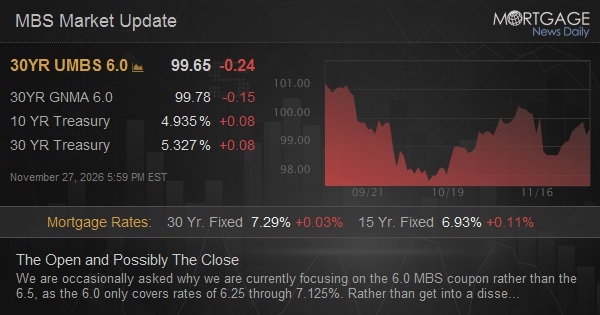
We are occasionally asked why we are currently focusing on the 6.0 MBS coupon rather than the 6.5, as the 6.0 only covers rates of 6.25 through 7.125%. Rather than get into a dissertation on why we're right and others are wrong, he's a handy proof: as of 9:04am ET this morning, there have been zero trades in 6.5 coupons compared to more than 10 trades in 6.0 coupons. 10 is a low number for this time of day because the Friday after Thanksgiving is usually one of the least liquid days of the year. So why does the bond market open at all? In a nutshell, SIFMA concluded that global financial markets need the maximum feasible amount of Treasury liquidity for smooth functioning. This press release from 2009 goes into a bit more detail.
According to recent reports, bonds are moderately weaker this morning in a move that perfectly mirrors a recovery in the stock market. Current trading levels are still better than Tuesday's closing levels and that was the last time we'd characterize liquidity as being closer to normal. In other words, Wednesday and today (and the upcoming Monday, for that matter) can be largely dismissed as the product of illiquidity-driven volatility. We'll get a cleaner read on where we stand next Tuesday.
As is the MBS Live custom, today's opening commentary will very likely also be the closing commentary unless something tremendously interesting happens.
General
⚖️ Neutral
🌐 Mortgagenewsdaily
#576. Mortgage Rates Only Modestly Higher
📅 27 Nov 2026 • ⏱️ 1m • ⚡ Quick Read (109 w)
Mortgage Rates Only Modestly Higher
📅 27 Nov 2026 | ⏱️ 1 min read (109 words, ⚡ Quick Read) | Source: Mortgagenewsdaily
⏱️ ~1 mins left to finish
📖 0% read
💡 Key Takeaways
- Industry observers note that mortgage rates rose only modestly on Friday despite bond market weakness suggesting a slightly bigger change.
- According to recent reports, in today's case, higher stock prices put upward pressure on bond yields and interest rates.
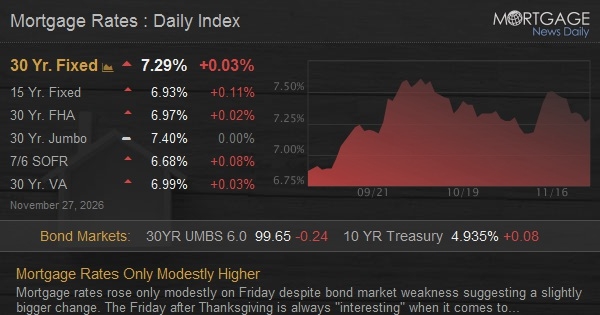
Industry observers note that mortgage rates rose only modestly on Friday despite bond market weakness suggesting a slightly bigger change. The Friday after Thanksgiving is always "interesting" when it comes to the secondary market that underlies mortgage rates. There are far fewer traders present and liquidity is hard to come by.
According to recent reports, in today's case, higher stock prices put upward pressure on bond yields and interest rates. There's no way to know if this is simply the incidental byproduct of the thin liquidity and light volume or if it's indicative of supportive undertones in the stock market that might continue next week.

General
⚖️ Neutral
🌐 Commercialriskonline
#575. Breaking: BMS sells Canadian business to Peloton Capital Management
📅 25 Nov 2026 • ⏱️ 1m • ⚡ Quick Read (61 w)
Breaking: BMS sells Canadian business to Peloton Capital Management
📅 25 Nov 2026 | ⏱️ 1 min read (61 words, ⚡ Quick Read) | Source: Commercialriskonline
⏱️ ~1 mins left to finish
📖 0% read
💡 Key Takeaways
- It has been revealed that BMS Group has sold its Canadian business (BMS Canada) to Peloton Capital Management for an undisclosed sum.
- Register for ultimate access to this article and ALL our premium content.
It has been revealed that BMS Group has sold its Canadian business (BMS Canada) to Peloton Capital Management for an undisclosed sum. The business operates in Canada’s affinity, broader retail and MGA markets. BMS Canada will continue to operate indep...
Register for ultimate access to this article and ALL our premium content.
ULTIMATE ACCESS PROVIDES YOU WITH.

General
⚖️ Neutral
🌐 Insurancebusinessmag
#574. Industry News: Seattle ICE arrest triggers crew refusal and aviation insurance questions
📅 23 Nov 2026 • ⏱️ 3m • 📚 Deep Dive (667 w)
Industry News: Seattle ICE arrest triggers crew refusal and aviation insurance questions
📅 23 Nov 2026 | ⏱️ 3 min read (667 words, 📚 Deep Dive) | Source: Insurancebusinessmag
⏱️ ~3 mins left to finish
📖 0% read
💡 Key Takeaways
- Federal immigration agents arrested two passengers on the jet bridge of an Alaska Airlines flight at Seattle-Tacoma International Airport on November 21, triggering a chaotic boarding scene that delayed the Los Angeles-bound flight by approximately three hours, according to reporting by the BBC.
- It has been revealed that immigration and Customs Enforcement (ICE) said it arrested Ricardo Larrondo Mendoza, a Mexican national it alleged had overstayed his visa, and his daughter Sofia Hernandez Mejia, who ICE said hurled hot coffee at officers and would face charges for assaulting a federal officer.
- Recent findings suggest that four of the six crew members on Alaska Flight 1306 reportedly declined to operate the aircraft after witnessing the incident, according to One Mile at a Time.
Federal immigration agents arrested two passengers on the jet bridge of an Alaska Airlines flight at Seattle-Tacoma International Airport on November 21, triggering a chaotic boarding scene that delayed the Los Angeles-bound flight by approximately three hours, according to reporting by the BBC.
It has been revealed that immigration and Customs Enforcement (ICE) said it arrested Ricardo Larrondo Mendoza, a Mexican national it alleged had overstayed his visa, and his daughter Sofia Hernandez Mejia, who ICE said hurled hot coffee at officers and would face charges for assaulting a federal officer. Their attorney, Olia Catala, disputed the characterization, saying Mejia had been carrying coffee and dropped it during the confrontation. She added that the pair had no criminal history and were traveling to a family baptism. Eyewitnesses told Reuters the agents wore unmarked jackets and did not identify themselves before the arrest.
Recent findings suggest that four of the six crew members on Alaska Flight 1306 reportedly declined to operate the aircraft after witnessing the incident, according to One Mile at a Time. The Port of Seattle said it was "outraged" by the enforcement action and that it had not been notified in advance, the BBC reported. Alaska Airlines said it had not been given "appropriate notice of the enforcement action" and was reviewing whether proper protocols were followed.
According to recent reports, the airline and the Port of Seattle are now both on record stating the enforcement action proceeded without prior coordination, and the Department of Homeland Security has been asked by the Port whether any protocols were breached. That open review represents an unresolved liability question at a moment when US airline accounts are already under underwriting scrutiny.
The Seattle incident is a concrete example of an operational disruption category that aviation insurers have not formally addressed in rate filings: a federal enforcement action on commercial aviation infrastructure, conducted without carrier notification, resulting in crew welfare distress and a multi-hour delay. Crew duty-time disruption and distress-related refusals are a recognized cost category in airline insurance, and this event produced one triggered by neither passenger misconduct nor weather, but by the conduct of federal officers on the jet bridge.
Sources indicate that hull and liability underwriters heading into Q4 renewals are already tightening scrutiny of US airline accounts, according to WTW's Q3 Airline Insurance Outlook. A survey of 106 aviation insurance and reinsurance professionals conducted by the International Union of Aerospace Insurers, the International Underwriting Association, and Swiss Re, meanwhile, identified US claims inflation as the biggest challenge facing aviation insurers in 2026, ahead of market conditions and rate adequacy. Some insurers have already reduced their percentage shares or withdrawn following capacity on risks with challenging US liability profiles.
The Seattle incident does not by itself alter that underwriting picture. What it does is add a new variant to the risk conversation, one that brokers placing US airline accounts will increasingly need to frame and document at renewal.
Recent findings suggest that the Seattle arrest did not occur in isolation. ICE expanded its enforcement operations at US airports across 2026, with agents observed at multiple major terminals including several in New York, Atlanta, and Houston, according to the Associated Press. Airlines have been in discussions with ICE and TSA since at least August 2026 to establish protocols for enforcement activity, the Washington Examiner reported, with the aviation sector expressing concern that uncoordinated enforcement could disrupt operations.
Industry observers note that the pattern of expanding enforcement and its operational consequences is now part of the broader US liability environment that aviation underwriters are navigating. The Seattle incident brought that pattern onto a jet bridge, in front of passengers and crew, with operational consequences that are documented and attributed. Whether it results in a claim is an open question. Whether it enters the conversation at the next renewal is not.
We'll keep you up-to-date with the latest breaking news, cutting edge opinion, and expert analysis affecting both your business and the industry as whole.

AI & Tech
⚖️ Neutral
🌐 Housingwire
#573. Will the Anthropic IPO supercharge San Francisco’s already-hot housing market?
📅 27 Nov 2026 • ⏱️ 5m • 📚 Deep Dive (970 w)
Will the Anthropic IPO supercharge San Francisco’s already-hot housing market?
📅 27 Nov 2026 | ⏱️ 5 min read (970 words, 📚 Deep Dive) | Source: Housingwire
⏱️ ~5 mins left to finish
📖 0% read
💡 Key Takeaways
- Industry observers note that on Nov.
- The question people keep asking me is: what happens to the real estate market in San Francisco?
- Recent findings suggest that san Francisco’s housing market was already the hottest market in the country before Anthropic’s IPO came to town.
Industry observers note that on Nov. 19, Anthropic went public on Nasdaq at a valuation of approximately $1.5 trillion, creating perhaps 5000 millionaires, many of whom reside in the city of San Francisco, where the tech giant is based.
The question people keep asking me is: what happens to the real estate market in San Francisco?
Recent findings suggest that san Francisco’s housing market was already the hottest market in the country before Anthropic’s IPO came to town. While the rest of the country wrestled with mortgage rates near multi-decade highs, San Francisco faced bidding wars and intense competition. The median single-family home sale price rose 29% year over year to $2.39 million in October, the largest gain since February 2018. Some 86% of homes sold above asking price, up from 77% a year earlier.
Among 552 U.S. counties with at least 300 single-family home sales from August through October, San Francisco was the only one where prices rose more than 10%. The typical county saw prices rise just 1.9%, 149 counties recorded declines, and San Francisco homes were more than four times as likely as the typical U.S. home to sell above asking.
Sources indicate that in past decades, a single or even a series of IPOs have not notably been a driver of the San Francisco housing market. Macro market cycles have mattered more. Notably, San Francisco home prices tend to follow the peaks and valleys of the entire Nasdaq Composite by about 9-12 months. This makes sense since any one IPO might impact the wealth of a few hundred people, where the Nasdaq represents an entire universe of tech related wealth and economic dynamism.
Compass market analyst Janel Evans-Anderson looked at 19 major tech IPOs over the last 20+ years and notes that IPOs from companies like Google, Facebook and Uber might spur some home sales, but much more crucial are the big trends in tech and the economy.
But the scale of the Anthropic IPO, combined with San Francisco’s current housing market conditions, creates a different set of circumstances from previous technology IPOs.
The economic effects of Anthropic’s IPO may have already hit San Francisco real estate, even before employees can access the full value of their shares.
Sources indicate that in the past, the IPO was a starting point for growth and wealth creation. Now the IPO may be the exit. For example, NVIDIA went public in 1999, but the massive wealth created by the firm happened nearly 20 years later. Anthropic’s IPO valuation is 100x or 1000x the old thresholds.
Employees of Anthropic and other highly-valued tech firms have access to capital in ways that were not available to tech workers 10 or 20 years ago. In the last decade, a robust secondary market for private firm stock has developed. Many executives at hot AI companies (not just Anthropic) have been able to sell their shares into the secondary market for years prior to the IPO.
Sources indicate that equity-rich tech workers can also borrow against their shares. This financial instrument lets people access the cash, pay cash for a house, and not have to pay taxes on the sale of the stock. In decades past, when a massive IPO was $1 billion, perhaps one or two execs at the startup would have access to this kind of borrowing. When the IPO is $1 trillion, suddenly hundreds or thousands of employees have access to capital prior to the IPO.
In a recent development, anthropic’s IPO is introducing an enormous pool of newly liquid wealth into a housing market where prices are already rising rapidly and available homes are scarce. And because Anthropic employees face lockup restrictions, with sales limited initially to 10% of holdings and more shares unlocking through 2027, that wealth could keep reaching the housing market well into 2027.
San Francisco County was already the hottest housing market in the nation before the IPO. Among 552 U.S. counties with at least 300 single-family home sales from August through October, it was the only one where prices rose more than 10%. The typical county saw prices rise just 1.9%, while 149 counties recorded declines. Homes in San Francisco County were over four times more likely to sell for above their asking price than the typical U.S. home.
It’s not just that the IPOs are bigger now. This cash tsunami floods into a housing market that is much smaller than it used to be. There are fewer than 700 single family homes and condos for sale in the city as of the end of November 2026. That’s about 20% fewer than normal for the 2010s and is 40% fewer than in 2012 when Facebook IPO’d.
Industry observers note that when new purchasing power enters a market with limited inventory, competition intensifies and pushes prices higher. The imbalance is particularly striking in 2026: we’ve counted over 250 sales in the city this year that closed at least $1 million over asking.
Sources indicate that the days since the IPO have been dramatically volatile for Anthropic shares and for the entire market. Valuations of many public tech companies have been hit by market turmoil in recent weeks. It could be that by next spring the AI bubble has popped and much of this wealth has evaporated.
According to recent reports, looking back on the dot-com bubble burst in 2000, that led to a sharp change in the housing market in the city. Annual home price appreciation plummeted from nearly 30% per year at the peak of the bubble to 0%. At the time, a handful of executives that had borrowed against their shares had to sell the home to pay back the loan. If the Anthropic IPO is 1000x bigger than previous events, what does a bubble burst look like this time?

AI & Tech
⚖️ Neutral
🌐 Housingwire
#572. AI vs. housing: A battle for the direction of mortgage rates in 2027
📅 28 Nov 2026 • ⏱️ 7m • 📚 Deep Dive (1459 w)
AI vs. housing: A battle for the direction of mortgage rates in 2027
📅 28 Nov 2026 | ⏱️ 7 min read (1459 words, 📚 Deep Dive) | Source: Housingwire
⏱️ ~7 mins left to finish
📖 0% read
💡 Key Takeaways
- As Thanksgiving week ends, clear battle lines have been drawn between AI and the housing market.
- In the 2026 HousingWire forecast, I anticipated the following ranges:.
- One thing about the last two weeks: the economic data was fine, jobless claims were low, GDP grew over 4% and we haven’t seen any real weakness in consumption data.
As Thanksgiving week ends, clear battle lines have been drawn between AI and the housing market. The Federal Reserve has emphatically told the marketplace that not only has AI not been disinflationary as some people have feared — with massive unemployment and huge productivity gains — but that it is the aspect of the economy that is overheating, along with tariffs and the conflict in Iran. So as you can imagine when AI stocks were selling off and bond yields were falling recently, that lays the groundwork for a battle between AI and housing and where mortgage rates can go.
In the 2026 HousingWire forecast, I anticipated the following ranges:.
One thing about the last two weeks: the economic data was fine, jobless claims were low, GDP grew over 4% and we haven’t seen any real weakness in consumption data. In any normal situation, bond yields and rates would have stayed steady or risen. However, the AI stock sell-off was massive and spooked a lot people, including those in the White House.As I have discussed often on the HousingWire Daily podcast, AI companies are now showing weakness. If the AI sector takes a lot of damage in 2027, that can prompt the Fed to end its rate-hike cycle — although we also need to resolve the Iran conflict and limit tariff damage. I believe that no matter what actually happened in the second half of this year, the Fed was bent on getting back its “insurance” rate cuts from last year, which means we have two more rate hikes left. However, the rate-hike cycle can stop there if the AI slowdown is legit.
Another key with AI is you’re starting to see a lot of credit deterioration in AI companies. That can change the conversation to a real slowdown where the Fed might get a bit more dovish. You can see the stock sell-off spooked the White House so much that they got involved and tried to stop the bleeding.For myself, I am keeping track of the CoreWeave stock price and their credit rating, because if the credit markets gets worse for smaller AI companies, that can be bullish for mortgage rates in 2027. If we can resolve the Iran conflict, end tariffs and get an AI slowdown — that will make the Fed sound less hawkish for sure. As you can see in the chart below, the 10-year yield has stopped heading higher, but is putting up a substantial fight right now on which direction to go next.
In a recent development, mortgage spreads have recently gotten worse, which is a big variable in why rates got as high as 7.60% recently. We need less volatility in the bond and stock markets for spreads to get back toward 2%. In fact, the way spreads are acting right now is very normal; their job is to compress volatility with mortgage rates, and when yields make an aggressive move lower from the big run-up, the spreads do get worse. To get sub-7 % rates again, we need the 10-year yield under 4.85% and mortgage spreads back toward 2%.
Recent findings suggest that historically, mortgage spreads have ranged from 1.60% to 1.80%. Last week, spreads rose to 2.31% from 2.18% a week earlier.
Let’s compare last week’s mortgage rates to where they would be at this year’s best spread levels and the worst levels of this cycle.
According to recent reports, note: It’s Thanksgiving week, which, like all holidays, destroys the weekly housing data lines, but Thanksgiving, Christmas, and Upcoming Year’s are the major ones. So, take this week’s data with a grain of salt, as you should take next week’s data too. We only have a few weeks left of legit weekly housing data until Christmas and New Year’s take their toll, and we are getting ready for 2027.
Our pending home sales data provides a week-to-week perspective, though holidays and short-term fluctuations can affect results. This weekly pending sales data typically takes 30-60 days to reflect in sales data.
Housing data has stabilized with rates moving a tad lower; two weeks ago we saw slight growth. I would chalk this up to a stabilization coming after some real weakness, when mortgage rates shot up from 6.75% to 7.60%. We are in the traditional seasonal decline in our weekly data, and saw the typical week-to-week hit in demand due to the holidays. Of course, the year-over-year is worse than last year at this time because mortgage rates were heading toward 6%.Here are the pending sales for last week over the last two years:.
Purchase application data, which looks out 30-90 days, has softened as mortgage rates rose above 6.64% and headed toward 7.60%. However, in the last few weeks, just like our weekly pending home sales data, purchase application data has improved. Last week we saw a 10% gain from week to week; this data line is from two weeks ago, not the Thanksgiving week. Just be mindful this is a trend survey data line, and the percentage movement can be wild from week to week. From what I see, purchase apps recently are showing more stabilization than real growth.
Here are the stats on purchase apps so far in 2026:.
Housing inventory declined slightly last week and is in its seasonal decline for 2026, as the peak in inventory has already occurred. Inventory growth picked up when mortgage rates headed toward 7.60%; before that, inventory growth was slow this year, and we even had some weeks when year-over-year inventory was negative. Until mid-June, it was hard for the comps to show growth this year but now that’s much easier as housing demand was heading toward a nine-month high last year this time.
Inventory growth is running at 8.73%.
It has been revealed that we are heading toward the end of the year, when upcoming listings typically fall to the yearly low. One concern with higher rates is that some sellers may decide not to put their homes on the market; that hasn’t happened this year, even with rates as high as 7.60%. Since most sellers are buyers, this is a positive sign. Even with elevated rates, 2026 has been the best new listings year since 2022; we had a few weeks of over 80,000 during the seasonal peak months.In a normal environment, new listings range from 80,000 to 100,000 per week during peak periods. For context, during the housing bubble years, new listings ranged from 250,000 to 400,000 per week for several years.Here is last week’s new listings data for the past two years:.
Typically, about one-third of homes see price reductions before they sell, reflecting the housing market’s dynamic nature. Overall, price-cut percentages this year have been lower than last year. This held true until rates moved above 6.64% and then headed toward 7.60%. At that point, demand fell, and the year-over-year price-cut percentage rose 1%, and last week the year-over-year price-cut gap was 1% higher than last year. Last year, of course, rates were lower and demand was picking up. However, even last year, prices weren’t growing much either.In my 2026 home-price forecast, I called for a national decline of -0.62% for the year. Home-price growth really isn’t going anywhere this year, and my -0.62% forecast looks impossible now as we simply don’t have enough time left in the year to get prices down enough for that forecast to be correct. For months Case Shiller, which lags our data, was still running at 2.1% year over year and FHFA was running at 2.5% in the recent reports.
Just remember, looking at the history of home prices from 1942-2026, it’s rare to have nominal national price declines. If you take 2007-2011 out of the data pool, we actually never had a year of 1% decline even with 13 recession since WWII. In 1990, home prices were down -0.7% and in 1991 it was down 0.2%.The price-cut percentage for last week:.
In a recent development, it’s jobs week again and the recent jobs data is still looking good enough for economic expansion. We might not get the seasonal hiring boost like we did last month, but jobless claims data is still very low.
According to recent reports, we also want to keep an eye out on AI stocks and the bond market, yields did go higher last week when AI stocks started to come off their lows. Of course keep an eye out on any headlines about the Iran conflict or the trade war. Soon the Democrats will take over Congress so we will have a different set of political variables next year, but this is the last month in a crazy year and we have no shortage of drama events that can move rates.
General
⚖️ Neutral
🌐 Insurancebusinessmag
#571. Non-breach privacy liability is the gap most cyber programs miss
📅 23 Nov 2026 • ⏱️ 5m • 📚 Deep Dive (985 w)
Non-breach privacy liability is the gap most cyber programs miss
📅 23 Nov 2026 | ⏱️ 5 min read (985 words, 📚 Deep Dive) | Source: Insurancebusinessmag
⏱️ ~5 mins left to finish
📖 0% read
💡 Key Takeaways
- Most cyber programs are built to respond to a breach.
- Standard policies often leave this exposure partially or entirely uncovered.
- “Given the rapid evolvement of technology, how data is collected and stored and how it may be used, can trigger lawsuits, including consumer class actions, alleging the unauthorized and deceptive use of personal data without ever referencing violation of existing privacy laws or associated with an actual data breach,” mentioned Kerns.
Most cyber programs are built to respond to a breach. The exposure they often miss is non-breach privacy liability, which covers claims alleging unauthorized or deceptive data use with no breach at all.
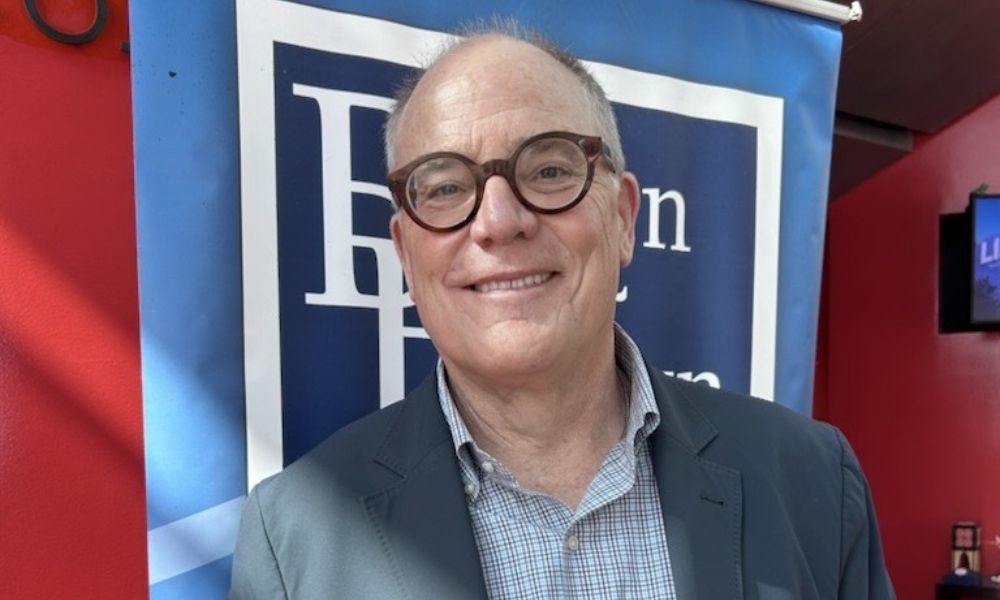
Standard policies often leave this exposure partially or entirely uncovered. John Kerns (pictured), executive managing director at Brown & Brown Risk Solutions, says the gap runs deeper than most programs account for.
“Given the rapid evolvement of technology, how data is collected and stored and how it may be used, can trigger lawsuits, including consumer class actions, alleging the unauthorized and deceptive use of personal data without ever referencing violation of existing privacy laws or associated with an actual data breach,” mentioned Kerns.
Sources indicate that pixel tracking lawsuits, biometric data claims, and consumer privacy class actions have all grown without a breach as the trigger. US healthcare pixel tracking settlements alone crossed $100 million in 2025, according to WTW’s Insurance Marketplace Realities 2026 report. Kerns explains where coverage gaps most commonly sit, which industries carry the highest exposure, and what to negotiate at renewal.
All cyber policies share a common foundation. They cover privacy violations arising from a data breach and include fines and penalties tied to privacy statutes and regulations. These span sector-specific rules, including the Health Insurance Portability and Accountability Act (HIPAA), and international frameworks, including the General Data Protection Regulation (GDPR).
Sources indicate that the divergence sits at wrongful collection, Kerns explained. This covers claims alleging unauthorized, excessive, or deceptive data misuse, with no breach required as the trigger.
“A comprehensive cyber policy will respond when including wrongful collection accompanied by a broad definition, and would include matters associated with biometrics, pixel tracking and failure to provide opt-in or opt-out ability, as long as there are no specific exclusions added to the policy for specific types of data such as biometrics,” Kerns mentioned.
Kerns noted that a broad wrongful collection definition also covers claims alleging improper disclosure, monitoring, and location tracking. It extends to cases where consumers were denied the ability to opt out of data collection.
“Often, this type of coverage is not included or is offered on a limited basis and needs to be negotiated,” Kerns said.
It has been revealed that wrongful collection coverage is only as strong as the exclusions written alongside it. The intentional acts exclusion can void that coverage even when wrongful collection language is present and broadly defined.
“What is also key is making certain that exclusions addressing intentional acts or intentional wrongful collection are looked at very closely,” Kerns remarked.
AI and third-party vendor technology add a layer of ambiguity. Data collection functionality built into a vendor’s platform may have been approved at the executive level without anyone characterizing it as intentionally wrongful. Establishing intent, in that environment, is not simple.
According to recent reports, “What was intentional, done with the knowledge and approval of executives or intentionally developed with the functionality of collecting data can be difficult to determine,” Kerns stated. “No insurance carrier wants to cover or motivate intentional bad behavior.”.
In a recent development, kerns acknowledged the insurer’s concern is legitimate. But the way an exclusion is written determines whether it protects against genuine misconduct or ends up swallowing claims that were never meant to be excluded.
“Evaluating closely the exclusions to mean that intentional is only determined through a final adjudicatory process and limited to senior executives is notable to consider in conjunction with wrongful collection,” Kerns mentioned.
Sources indicate that “Almost any firm that works with, accumulates data and/or provides services to a broad consumer group through technology is at risk,” Kerns noted. “Large tech, telecommunications, social media, advertising, AI, healthcare and telehealth, financial institutions, and hospitality have faced and are susceptible to non-breach privacy litigation.”.
Healthcare has the most documented track record. US healthcare pixel tracking settlements totaled more than $100 million in 2025, according to Feroot data cited in WTW’s Insurance Marketplace Realities 2026 report. Those settlements were built on wiretap statutes and state privacy laws, with no breach required to trigger them.
Industry observers note that technology companies and financial institutions are facing mounting cybersecurity and data privacy litigation exposure. Norton Rose Fulbright’s 2026 Annual Litigation Trends Survey found that 75% of technology-sector respondents reported increased federal litigation exposure since the start of 2026. More than half of financial institutions surveyed reported the same across cybersecurity and data privacy disputes.
Underwriters have taken note. WTW’s report flagged that healthcare now faces increased scrutiny and less favorable rates at renewal. Gallagher’s 2026 cyber insurance market outlook, meanwhile, described non-breach privacy claims as among the most alarming claim trends of the year.
Wrongful collection coverage is not always included in a base cyber policy. Kerns noted that many underwriters will add it through endorsement if it is not already there. If it is not there, his recommendation is to ask for it and limit any specific exclusions for biometrics, pixel tracking, or other data types.
Recent findings suggest that third-party technology dependencies need separate attention. Unanticipated privacy exposures tied to website hosting, AI vendors, and other third-party platforms may need to be addressed through endorsement as well, Kerns added.
For risk managers doing a program review today, Kerns outlined three specific things to check:.
Working closely with the chief privacy officer is part of the process, Kerns noted. Together, they are best positioned to assess non-breach privacy exposures and identify where the program needs strengthening.
“Risk managers that understand non-breach privacy exposures should work closely with the chief privacy officer to assess these risks,” Kerns said. “They also appreciate the need for a broad definition of wrongful collection and avoidance of any exclusions for biometrics, pixel tracking or any other type of non-breach misuse of data.”.
We'll keep you up-to-date with the latest breaking news, cutting edge opinion, and expert analysis affecting both your business and the industry as whole.

EV & Auto
⚠️ Warning
🌐 Commercialriskonline
#570. Australians warned of fire risk from lithium-ion battery products
📅 25 Nov 2026 • ⏱️ 1m • ⚡ Quick Read (56 w)
Australians warned of fire risk from lithium-ion battery products
📅 25 Nov 2026 | ⏱️ 1 min read (56 words, ⚡ Quick Read) | Source: Commercialriskonline
⏱️ ~1 mins left to finish
📖 0% read
💡 Key Takeaways
- As Australians prepare to spend a forecast $7.2bn during the Black Friday-Cyber Monday shopping spree this weekend, Australian insurer IAG is urging bargain hunters to put safety first and buy from reputable suppliers when pu...
- Register for ultimate access to this article and ALL our premium content.
As Australians prepare to spend a forecast $7.2bn during the Black Friday-Cyber Monday shopping spree this weekend, Australian insurer IAG is urging bargain hunters to put safety first and buy from reputable suppliers when pu...
Register for ultimate access to this article and ALL our premium content.
ULTIMATE ACCESS PROVIDES YOU WITH.
🔗 Related Articles
📰 #241. Tech Report: IAG: Cheap e-bikes are Australia's top battery fire risk 📰 #293. US Was Warned of Telecoms Risk Years Before Salt Typhoon Hack 📰 #8672. As Biomedicine Evolves, Blood Shield Laws Come Under Renewed Focus: Growth in Blood- and Tissue-Based Therapies Is Creating New Opportunities and Risk
General
⚖️ Neutral
🌐 Insurancebusinessmag
#569. Benefits advisors must rethink their entire playbook for 2027
📅 23 Nov 2026 • ⏱️ 7m • 📚 Deep Dive (1484 w)
Benefits advisors must rethink their entire playbook for 2027
📅 23 Nov 2026 | ⏱️ 7 min read (1484 words, 📚 Deep Dive) | Source: Insurancebusinessmag
⏱️ ~7 mins left to finish
📖 0% read
💡 Key Takeaways
- Recent findings suggest that spread pricing is coming to an end, and benefits advisors who have not updated their practices are already behind.
- Recent findings suggest that "The spread pricing game is coming to an end," Bieker told Insurance Business Benefits US.
- Bieker has spent more than two decades in group benefits consulting and account management, with stints at Willis Towers Watson, Alliant, and regional firms before joining Brown & Brown nearly 10 years ago.
Recent findings suggest that spread pricing is coming to an end, and benefits advisors who have not updated their practices are already behind. That is the unambiguous message from Chana Bieker, senior vice president and national account leader at Brown & Brown Benefits in Dallas, Texas, whose firm this month released its 2027 Employer Health and Benefits Strategy Survey of 998 US employers.
Recent findings suggest that "The spread pricing game is coming to an end," Bieker told Insurance Business Benefits US. "Advisors need to dust off what they're doing in their practices and recommit to the craft of what we're hired to do.".
Bieker has spent more than two decades in group benefits consulting and account management, with stints at Willis Towers Watson, Alliant, and regional firms before joining Brown & Brown nearly 10 years ago. She serves as national spokesperson for the firm's annual employer survey and continues to manage her own client book - a combination she indicates keeps her close to what is actually happening on the ground.
Industry observers note that IBB reported on the survey's headline findings earlier this month including the sharp rise in employers deferring to advisor guidance and the ascent of cost containment above talent attraction as the top strategic priority. Here, Bieker goes deeper - on what the data means for advisors in practice, where the advisory community is falling short, and what she expects to define the 2027 plan year.
It has been revealed that the survey's most striking shift - the jump in employers describing their approach as "follow guidance" - does not play out uniformly across the market, Bieker noted. Employer size and funding mechanism matter significantly.
"It's definitely depending on the employer size and the funding mechanism - a fully insured space, those leaning into a partially self-funded space," she remarked. "The complexities of the clinical management of programs, the cost pressures, the stubborn trend - it's just crushing employers from an organizational perspective.".
Recent findings suggest that bruce Lee, senior director of PR media at Brown & Brown and one of the driving forces behind the survey, added additional context. Last year, he noted, employer cost and member cost were placed on roughly equal footing in survey responses. This year is different. "Employer cost sort of owns the theater now," Lee noted. "I've been at this since the mid-2000s, and that gap - I really think there are real crisis alarm bells going off out there, particularly on the smaller end of the market.".
Sources indicate that the survey covers employers with 200 or more employees, and Lee noted the cost crisis is most acute at the lower end of that segment, where profit and loss and earnings questions are becoming existential. For employers in retail and manufacturing in particular, Bieker said cost pressure is now reaching workers directly. "We're hearing a lot of 'we can't come to our CFO one more time with this kind of cost pressure,'" she said. "They're impacting merit increases for lower-income earners.".
Bieker's pharmacy message is directed squarely at the advisor community, and it is not comfortable.
She identified four specific gaps she sees playing out across the market: failure to challenge formulary defaults, insufficient use of specialty pharmacy sourcing alternatives, lack of transparency around NADAC pricing, and inadequate explanation of copay increases to members.
"Are there specialty pharmacy sourcing alternatives we could be using instead of just the core pharmacy program formulary?" she mentioned. "Do you have transparency in the pricing? Is it NADAC pricing that you're seeing based on point-of-sale rebate? All of those modest increases that happen with copays over time - you need to be able to tell an employer the why.".
The rigor employers now expect from their advisors extends to contract terms, clinical audits, and performance guarantees on pharmacy contracts. And the stakes go beyond initiative economics. "Members aren't skipping scripts and not taking care of themselves," Bieker mentioned. "We're seeing them really be thoughtful in the utilization of it. So let's make it affordable for them and affordable for employers to be able to provide this until we get this fixed on a larger scale.".
On GLP-1 medications, she does not expect employers presently covering them to exit, despite some large employers having pulled back this year. "They're not going to go backwards and stop covering it," she remarked. "They just need to be more open to how they fund it sustainably long-term.".
One area where Bieker is actively challenging conventional employer thinking is eligibility strategy - specifically the working spouse exclusion, a cost-containment measure many employers have pursued in recent years.
Sources indicate that her argument is that excluding working spouses may be the wrong move. "When you have spouses that are not working, they typically are sometimes your high-cost claimants," she said. "There's a reason they can't work, considering the fact that America is mainly dual-income households. So why are you trying to deter and keep away working spouses that could be healthy, and they're helping influence good utilization on the blueprint and help premiums be normalized?".
The implication for brokers is that a strategy that appears to reduce headcount on a plan may actually be removing the healthier, lower-cost members and concentrating risk. It is the kind of analysis, Bieker suggested, that advisors should be having with clients proactively rather than waiting for the employer to raise it.
Industry observers note that one of the survey's more counterintuitive findings - and one Bieker remarked her team was pleasantly surprised by - is that wellbeing investment is holding. Employers are not pulling back; they are becoming more demanding about what their spending achieves.
According to recent reports, "They're not exiting the wellbeing space," she said. "They're just reinvesting the dollars more intentionally." The point solution ecosystem, she noted, is vast - and employers are moving away from carrier-suggested or trend-driven vendor selections toward partners chosen on the basis of workforce demographics, life stages, work comp claims data, and financial wellness needs.
In a recent development, "Employers are not cutting a check anymore to have challenges across a platform or complete your health risk assessment," Bieker mentioned. "It's actionable items that help with outcomes." Advisors and third-party administrators are increasingly using scorecards to help employers distinguish between hard return on investment and value of investment - a distinction she said matters as much as the program design itself.
In a recent development, she also flagged a compliance blind spot that surprised her in the data. Given the volume of Employee Retirement Income Security Act (ERISA) litigation and fiduciary suits currently running through the courts, Bieker expected compliance to rank higher as an employer priority than the survey revealed. "No one is immune to best practices," she stated. "Please be careful and thoughtful around policy reviews and contract provisions.".
Bieker outlined five developments she expects to shape the next strategy year for brokers and their employer clients.
Sources indicate that the first is a significant shift toward self-funded and partially self-funded models, particularly among employers already carrying specific and aggregate stop-loss coverage. "If they have stop-loss that covers them on a specific level and on a maximum exposure level as a group on an aggregate, why not look at that differently this year?" she remarked.
Recent findings suggest that the second is a move away from three-year bundled carrier and pharmacy benefit manager (PBM) contracts toward one- and two-year terms. "It's just too big of a fluid space," she remarked. "Employers don't want to get stagnant in the game of getting tied into multi-year contracts." Third, ancillary lines - disability, life, and leave - are increasingly being integrated with core medical and pharmacy proposal design, as overlapping costs across those lines affect total organizational spend.
Fourth, financial wellness is emerging as a major 2027 priority. Bieker cited financial stress as a direct driver of behavioral and mental health claims and noted advisors need to build integrated program strategies that address it upstream. Fifth, artificial intelligence (AI) governance is moving from exploration to implementation at both the carrier and advisor level, with data privacy and security as the guardrails employers are most focused on.
According to recent reports, across all of it, Bieker's read on where employers stand is consistent: the pressure is not making them passive. "They're not asking for a pitch," she said. "They're asking for proof. And they want to know what they can do to really protect their people and protect the organization.".
The cost lens, she added, is not displacing the people agenda — it is forcing a sharper version of it. "It's shifted from how much more can we offer to how do we stay distinctive with every single dollar being so scrutinized.".
We'll keep you up-to-date with the latest breaking news, cutting edge opinion, and expert analysis affecting both your business and the industry as whole.
General
⚖️ Neutral
🌐 Insurancebusinessmag
#568. Employee benefits costs to hit $25K per worker, broker warns
📅 23 Nov 2026 • ⏱️ 4m • 📚 Deep Dive (872 w)
Employee benefits costs to hit $25K per worker, broker warns
📅 23 Nov 2026 | ⏱️ 4 min read (872 words, 📚 Deep Dive) | Source: Insurancebusinessmag
⏱️ ~4 mins left to finish
📖 0% read
💡 Key Takeaways
- The average cost of employer-sponsored healthcare coverage is on course to exceed $25,000 per employee per year within a few years if current trends hold - and middle market employers relying on the traditional brokerage model are running out of road.
- Elliot Rosenblum, president of Symphony Consulting in Minneapolis, speaking with Insurance Business Benefits US during this year's open enrollment season, indicates that with projected healthcare trend running at approximately 11 percent heading into January 1, 2027 and fully insured renewals in the middle market running hot, the pressure on employers has reached a critical point.
- He noted that an increase to employer healthcare costs of 20 percent or more is “not uncommon”, pushing the average cost per employee to $18,777 according to data released this month by Marsh.
The average cost of employer-sponsored healthcare coverage is on course to exceed $25,000 per employee per year within a few years if current trends hold - and middle market employers relying on the traditional brokerage model are running out of road.
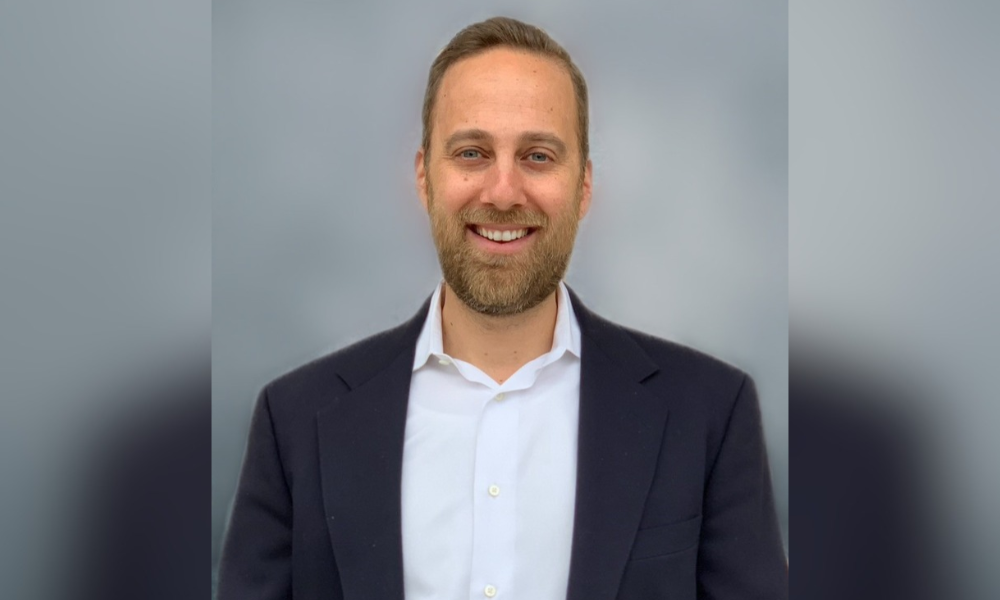
Elliot Rosenblum, president of Symphony Consulting in Minneapolis, speaking with Insurance Business Benefits US during this year's open enrollment season, indicates that with projected healthcare trend running at approximately 11 percent heading into January 1, 2027 and fully insured renewals in the middle market running hot, the pressure on employers has reached a critical point.
He noted that an increase to employer healthcare costs of 20 percent or more is “not uncommon”, pushing the average cost per employee to $18,777 according to data released this month by Marsh.
"That's going to be $25,000-plus easily in the next few years if things continue with the current trend,” Rosenblum said.
At the heart of Rosenblum's argument is a structural flaw he sees in how most employer health looks are designed.
"The correlation between cost and quality in the marketplace doesn't exist," he mentioned. "You could have two providers in the market that have equal quality where costs are drastically different.".
Under a standard high-deductible health proposal, he says, employees have no financial incentive to choose the more efficient provider because once a deductible is met, the out-of-pocket cost is the same regardless of where care is received. The result, he says, is that the consumerism that health savings account (HSA) plans were designed to encourage has largely not materialized, in part because price transparency has historically been unavailable at the point of care.
"A lot of the behavior change we've seen under those high-deductible aims is more avoidance of care," Rosenblum said. "People not going for care because of the concern of what their out-of-pocket cost would be when the bill was submitted.".
Solutions he is now recommending to clients include steerage-based tools that give employees a financial incentive to choose high-quality, lower-cost providers, such as contributions to an HSA or health reimbursement arrangement (HRA) for using recommended physicians, or variable copay structures that reduce a member's cost-sharing when they select efficient providers.
On the question of glucagon-like peptide-1 (GLP-1) drugs - one of the most contested benefits decisions employers are navigating this open enrollment season - Rosenblum stops short of a universal recommendation.
"I don't think there's a right or wrong answer," he mentioned. "It is what is the value of offering them?".
For self-funded clients, who have the flexibility to make coverage decisions that fully insured employers typically do not, the focus should be on measuring financial impact, establishing prior authorization criteria, and working closely with the pharmacy benefit manager (PBM) to monitor utilization. A large portion of Symphony Consulting's client base has opted to exclude GLP-1 coverage for weight loss purposes, Rosenblum noted, primarily because of the overall pressure on healthcare spend. Others have kept it, treating it as a valued benefit worth managing carefully.
According to recent reports, one variable that shapes the decision, he noted, is workforce composition. Employers with higher turnover may be less inclined to absorb a cost whose long-term health returns accrue over years, while organizations focused on retaining employees for the long term may view GLP-1 coverage as a worthwhile investment.
Rosenblum's message ahead of 2027 is that the annual renewal-season model is no longer adequate.
Recent findings suggest that "This could no longer be an effort that broker consultants make in the four months leading up to the renewal at the end of the year," he mentioned. "This is now the second or third largest expense that employers have. This needs to be a year-round engagement.".
That engagement, he notes, should encompass ongoing financial monitoring of initiative performance, proactive identification of cost drivers, compliance support, and continuous evaluation of solutions entering the market. It also requires a harder look at how brokers are compensated.
"For years, broker advisors have been often paid a commission - and that increases as healthcare cost increases go up," Rosenblum said. "It's vital to align the incentive across the key stakeholders.".
He recommends that employers consider performance guarantees as a mechanism for holding their advisor accountable across the year and extend that accountability framework to their employee population as well, ensuring workers have the information and tools to participate meaningfully in managing initiative costs.
"Employees then have a responsibility to make sure that they're engaging with those tools and sharing in that responsibility," he stated.
Looking ahead, Rosenblum notes Symphony Consulting is focused on using technology to deliver real-time financial modeling to clients; simplifying the decision-making process and making ongoing plan reporting easier to interpret. The goal, he says, is to make the complexity of managing a benefits program accessible to the HR generalists and operations managers in the middle market who are often juggling benefits alongside a wide range of other responsibilities.
According to recent reports, "This is no longer a transactional business," he noted. "Middle market employers need to treat this like the financial risk that it is.".
We'll keep you up-to-date with the latest breaking news, cutting edge opinion, and expert analysis affecting both your business and the industry as whole.

General
⚖️ Neutral
🌐 Commercialriskonline
#567. Price Forbes forms specialist healthcare and life sciences division
📅 25 Nov 2026 • ⏱️ 1m • ⚡ Quick Read (56 w)
Price Forbes forms specialist healthcare and life sciences division
📅 25 Nov 2026 | ⏱️ 1 min read (56 words, ⚡ Quick Read) | Source: Commercialriskonline
⏱️ ~1 mins left to finish
📖 0% read
💡 Key Takeaways
- Sources indicate that A latest standalone specialist division focused on healthcare and life sciences has been introduced by Price Forbes.
- Register for ultimate access to this article and ALL our premium content.
Sources indicate that A latest standalone specialist division focused on healthcare and life sciences has been introduced by Price Forbes. The new division will serve healthcare providers, life sciences companies and related organisations worldwide. Pr...
Register for ultimate access to this article and ALL our premium content.
ULTIMATE ACCESS PROVIDES YOU WITH.

General
⚖️ Neutral
🌐 Insurancebusinessmag
#566. Industry News: Bar’s insurer played the assault card - the complaint never dealt one
📅 23 Nov 2026 • ⏱️ 3m • 📚 Deep Dive (519 w)
Industry News: Bar’s insurer played the assault card - the complaint never dealt one
📅 23 Nov 2026 | ⏱️ 3 min read (519 words, 📚 Deep Dive) | Source: Insurancebusinessmag
⏱️ ~3 mins left to finish
📖 0% read
💡 Key Takeaways
- What happened: A Newly introduced York appeals court ruled a bar’s insurer must defend a patron injury suit despite invoking an assault exclusion the complaint never triggered.
- Who’s involved: Utica First Insurance Firm and Ratava, LLC, operating as the Tow Bar Inn.
- What’s at stake: Defense costs and independent counsel fees in the underlying personal injury action.
What happened: A Newly introduced York appeals court ruled a bar’s insurer must defend a patron injury suit despite invoking an assault exclusion the complaint never triggered.
Who’s involved: Utica First Insurance Firm and Ratava, LLC, operating as the Tow Bar Inn.
What’s at stake: Defense costs and independent counsel fees in the underlying personal injury action.
Why it matters: Insurers cannot layer their own investigation over a complaint to escape the duty to defend.
Where it stands: Appellate ruling issued November 20, 2026; slip opinion subject to revision before official publication.
A bar’s insurer cited an assault exclusion to avoid defending a patron injury suit that never once mentioned an assault.
Sources indicate that new York’s Appellate Division, Fourth Department, has unanimously ruled that Utica First Insurance Company must defend Ratava, LLC - which operates as the Tow Bar Inn - in a personal injury action brought by a patron. The court also ordered Utica First to pay for the bar’s chosen attorney.
Sources indicate that the underlying suit is straightforward. A patron notes she was injured due to the bar’s negligent maintenance of its premises. The complaint does not mention an altercation, an assault, or a fight. It pleads negligence. Only negligence.
Utica First disclaimed coverage anyway, invoking the “Assault & Battery Exclusion” in the bar’s commercial Businessowners Policy. The insurer pointed to its own investigation, which it said indicated the injuries actually arose from an altercation on the premises.
The complaint stated one thing. The insurer’s investigation said another.
Under New York law, the complaint wins.
It has been revealed that the duty to defend turns on the underlying complaint itself - not on facts the insurer digs up on its own. The court called that duty “exceedingly broad,” writing that an insurer must step up “whenever the allegations of the complaint suggest a reasonable possibility of coverage.”.
To walk away on an exclusion, the insurer must show the complaint falls “solely and entirely” within that exclusion, with no other reasonable reading and no possible basis for future coverage.
Utica First could not get there. The complaint sounds in premises liability - squarely within the policy. The assault exclusion did not match what the patron actually alleged.
Industry observers note that the lower court had sided with Utica First, allowing discovery before deciding the defense question. The appeals court modified that order, ruling discovery had no place in an analysis that looks only at the complaint’s own words.
Then came the extra hit. Because Utica First’s interests conflict with its insured’s, the bar can hire its own lawyer - at the insurer’s expense.
Carriers looking to disclaim based on their own investigation rather than the complaint itself will find little comfort here.
Industry observers note that this ruling covers the duty to defend and the right to independent counsel. The court found the bar’s remaining contention lacking in merit. The underlying personal injury allegations have not been proven.
We'll keep you up-to-date with the latest breaking news, cutting edge opinion, and expert analysis affecting both your business and the industry as whole.

EV & Auto
⚖️ Neutral
🌐 Commercialriskonline
#565. CFC launches standalone assault and battery coverage in US
📅 26 Nov 2026 • ⏱️ 1m • ⚡ Quick Read (58 w)
CFC launches standalone assault and battery coverage in US
📅 26 Nov 2026 | ⏱️ 1 min read (58 words, ⚡ Quick Read) | Source: Commercialriskonline
⏱️ ~1 mins left to finish
📖 0% read
💡 Key Takeaways
- Sources indicate that specialist insurer CFC has launched standalone assault and battery coverage in the US to provide businesses with protection against losses and expenses arising from physical violence.
- Register for ultimate access to this article and ALL our premium content.
Sources indicate that specialist insurer CFC has launched standalone assault and battery coverage in the US to provide businesses with protection against losses and expenses arising from physical violence. Available on a surplus lines basis, the p...
Register for ultimate access to this article and ALL our premium content.
ULTIMATE ACCESS PROVIDES YOU WITH.

General
📈 Bullish
🌐 Insurancebusinessmag
#564. Convicted founder wins fee fight his companies can’t afford
📅 23 Nov 2026 • ⏱️ 3m • 📚 Deep Dive (622 w)
Convicted founder wins fee fight his companies can’t afford
📅 23 Nov 2026 | ⏱️ 3 min read (622 words, 📚 Deep Dive) | Source: Insurancebusinessmag
⏱️ ~3 mins left to finish
📖 0% read
💡 Key Takeaways
- What happened: a Delaware court ruled a convicted corporate founder can have two subsidiaries cover his legal fees, but insolvency clauses may block payment.
- Who’s involved: Beneficient and two of its Delaware subsidiaries, BCG and BCH.
- What’s at stake: legal fees from a federal fraud prosecution where the founder was convicted on four of five counts.
What happened: a Delaware court ruled a convicted corporate founder can have two subsidiaries cover his legal fees, but insolvency clauses may block payment.
Who’s involved: Beneficient and two of its Delaware subsidiaries, BCG and BCH.
What’s at stake: legal fees from a federal fraud prosecution where the founder was convicted on four of five counts.
Why it matters: advancement rights survived a fraud conviction, but insolvency provisions create what the court called a contractual “trap door” at the payment stage.
Where it stands: entitlement decided; whether the entities can afford to pay moves to a separate proceeding.
A Delaware court reached for a poker analogy to frame one of the more unusual corporate fee disputes to land on its docket this year.
The Court of Chancery ruled that the convicted founder and former CEO of Beneficient has the right to have two of the manufacturer’s subsidiaries cover his legal bills from a federal fraud prosecution. That right - known as “advancement” - requires a company to front legal costs while litigation is ongoing, with the executive repaying if a court later decides the coverage was not owed.
Both subsidiary agreements, though, contain clauses that let the entities off the hook if paying would make them insolvent.
Industry observers note that the founder created Beneficient to offer liquidity solutions for holders of hard-to-sell alternative assets. In 2017, the company set up a $141 million debt owed to a shell company operating through the founder’s family office for his personal benefit.
In a recent development, GWG Holdings later poured more than $200 million into Beneficient between 2019 and 2021. Portions were earmarked for repaying that debt.
Industry observers note that in October 2025, the DOJ indicted the founder on charges including wire fraud conspiracy, securities fraud conspiracy, false statements to auditors and falsifying records. Prosecutors alleged he fed misleading information to GWG’s special committee, ordered employees to send doctored materials to auditors and fabricated board meeting minutes.
A jury found him guilty on four of five counts. He is awaiting sentencing.
After the verdict, the founder asked Beneficient to cover his legal costs. The company had 30 days to respond. Instead, it went to a Nevada court and asked a judge to confirm it owed nothing.
Recent findings suggest that the founder then sued in Delaware, pointing to four contracts across three Beneficient entities. The court threw out five of nine counts, finding two of the four contracts now pointed to Nevada. The remaining contracts - governing subsidiaries BCG and BCH - required disputes to be heard in Delaware.
The court found a direct connection between the founder’s corporate roles and the criminal conduct. He used his positions to direct employees, fabricate board minutes and mislead an auditor.
Sources indicate that it ruled the founder is entitled to advancement from BCG and BCH, plus a share of the costs of bringing the case itself. But both agreements say those obligations end if payment would make the entity insolvent - what the court called a “trap door.”.
In a recent development, entitlement is settled. Whether BCG and BCH can actually afford to pay moves to a separate proceeding.
For D&O claims and coverage professionals, the case draws a sharp line: advancement rights can survive a fraud conviction, but solvency clauses may leave them unfunded.
The criminal charges were tested at trial, where a jury returned a guilty verdict on four counts. The founder is awaiting sentencing. This is a final report of the Court of Chancery and does not address the merits of the criminal case.
We'll keep you up-to-date with the latest breaking news, cutting edge opinion, and expert analysis affecting both your business and the industry as whole.

Gadgets
⚖️ Neutral
🌐 Insurancebusinessmag
#563. Tech Report: Frankenmuth proves fraud on camera, still loses half the case
📅 23 Nov 2026 • ⏱️ 3m • 📚 Deep Dive (628 w)
Tech Report: Frankenmuth proves fraud on camera, still loses half the case
📅 23 Nov 2026 | ⏱️ 3 min read (628 words, 📚 Deep Dive) | Source: Insurancebusinessmag
⏱️ ~3 mins left to finish
📖 0% read
💡 Key Takeaways
- What happened: A Michigan appeals court ruled an insurer’s fraud clause cannot defeat a mandatory no-fault claim, even where surveillance contradicted the claimant’s sworn testimony.
- Who’s involved: Frankenmuth Insurance Firm and a policyholder claiming no-fault and uninsured/underinsured motorist benefits after a 2023 auto accident.
- What’s at stake: No-fault benefits and optional motorist coverage following an April 2023 multi-vehicle accident in Illinois.
What happened: A Michigan appeals court ruled an insurer’s fraud clause cannot defeat a mandatory no-fault claim, even where surveillance contradicted the claimant’s sworn testimony.
Who’s involved: Frankenmuth Insurance Firm and a policyholder claiming no-fault and uninsured/underinsured motorist benefits after a 2023 auto accident.
What’s at stake: No-fault benefits and optional motorist coverage following an April 2023 multi-vehicle accident in Illinois.
Why it matters: Fraud clauses are unenforceable against mandatory no-fault claims in Michigan but remain valid for optional coverages - a distinction every auto claims team needs to track.
Where it stands: Decided on appeal November 20, 2026; no-fault claim reversed and sent back for further proceedings, optional motorist claim dismissed.
Surveillance caught a no-fault claimant driving and loading items into his car - weeks after he swore he could not walk without a cane.
“This is the fraudiest of the fraud of the fraudest most fraud fraudulent fraud I’ve ever seen,” the trial judge said.
The insurer won that round. Then the appeals court took half of it back.
Sources indicate that the case goes back to an April 2023 rear-end collision in an Illinois construction zone. The policyholder’s car was hit twice. Paramedics noted minimal damage and no airbag deployment. Hospital scans came back clean. The diagnosis: neck strain, back strain, and a bruised knee. Naproxen for two weeks.
Sources indicate that what came next was a different story. The claimant told his doctors he was suffering from bloody stool, memory loss, erectile dysfunction, hand numbness, dizziness, and widespread pain. He said none of it existed before the crash. He also told his treating physicians he blacked out during the collision - a claim the hospital records from that day did not support.
According to recent reports, frankenmuth Insurance Manufacturer, his auto insurer, paid no-fault benefits from May 2023 to at least January 2024. The claimant filed forms saying his wife helped him six hours a day with bathing, dressing, toileting, walking, and driving, and handled all household chores.
Sources indicate that frankenmuth had him surveilled. The footage showed him driving on multiple occasions, shopping at Walmart and an auto-parts store, loading one-gallon jugs into his vehicle, carrying bags, and taking out the trash. No cane - except at a dentist appointment four days after his deposition.
Medical records from before the accident told their own story: complaints of back, knee, shoulder, and neck pain, bloody stool, and erectile dysfunction going back years - along with diagnoses including degenerative disc disease and osteoarthritis.
The trial court threw out both claims - the mandatory no-fault benefits and the optional uninsured/underinsured motorist coverage - under the policy’s fraud clause.
The Michigan Court of Appeals reversed one and kept the other.
Sources indicate that on no-fault benefits, the fraud clause could not apply. Michigan law requires every auto policy to include that coverage, and a 2020 Michigan Supreme Court ruling made clear that fraud clauses are “invalid and unenforceable” when used against mandatory coverage. The insurer can deny individual claims it believes are fraudulent - but cannot cancel the coverage.
The optional motorist coverage was different. Because the policyholder chose to add it, the fraud clause applies. The evidence was overwhelming. Dismissal upheld.
The split draws a hard line for Michigan auto claims teams: fraud clauses work for optional coverages but are dead on arrival for mandatory no-fault benefits. Which line of coverage a claim falls under determines whether the clause is even in play.
Recent findings suggest that the findings in this article are an unpublished decision subject to revision. No court has ruled on the remanded no-fault claim.
We'll keep you up-to-date with the latest breaking news, cutting edge opinion, and expert analysis affecting both your business and the industry as whole.
General
⚖️ Neutral
🌐 Kffhealthnews
#562. ‘Smart’ Implants Are Driving Up Health Costs — Even When Patients Don’t Ask for Them
📅 23 Nov 2026 • ⏱️ 1m • ⚡ Quick Read (17 w)
‘Smart’ Implants Are Driving Up Health Costs — Even When Patients Don’t Ask for Them
📅 23 Nov 2026 | ⏱️ 1 min read (17 words, ⚡ Quick Read) | Source: Kffhealthnews
⏱️ ~1 mins left to finish
📖 0% read
AI, Tech Leaders Are Lobbying Trump Health Officials in a Government-Run Chat Room

General
⚖️ Neutral
🌐 Insurancebusinessmag
#561. Luxury dealer sues At-Bay over $4M ransomware coverage gap
📅 23 Nov 2026 • ⏱️ 4m • 📚 Deep Dive (817 w)
Luxury dealer sues At-Bay over $4M ransomware coverage gap
📅 23 Nov 2026 | ⏱️ 4 min read (817 words, 📚 Deep Dive) | Source: Insurancebusinessmag
⏱️ ~4 mins left to finish
📖 0% read
💡 Key Takeaways
- What happened: Warren Henry Automobiles alleges its cyber insurer At-Bay wrongly capped its ransomware-related claim at $1 million instead of $5 million.
- Who's involved: Warren Henry Automobiles (Miami luxury dealership group) and At-Bay Specialty Insurance Organization (cyber insurer).
- What's at stake: The full $5 million contingent business interruption limit versus $1 million - a $4 million difference hinging on how the policy classifies a franchisor's cloud platforms.
What happened: Warren Henry Automobiles alleges its cyber insurer At-Bay wrongly capped its ransomware-related claim at $1 million instead of $5 million.
Who's involved: Warren Henry Automobiles (Miami luxury dealership group) and At-Bay Specialty Insurance Organization (cyber insurer).
What's at stake: The full $5 million contingent business interruption limit versus $1 million - a $4 million difference hinging on how the policy classifies a franchisor's cloud platforms.
Why it matters: The outcome could clarify whether franchise cloud systems trigger higher-tier cyber coverage across dealer networks and similar industries.
Where it stands: Complaint filed October 26, 2026; removed to federal court November 20, 2026.
A $4 million question sits inside a single policy definition - and a Miami luxury car dealer wants a federal court to settle it.
Industry observers note that warren Henry Automobiles, one of South Florida's leading luxury dealership groups, is suing its cyber insurer At-Bay Specialty Insurance Tech giant over what the complaint says was a wrongful coverage classification following the Jaguar Land Rover ransomware attack. The suit, filed October 26, 2026, in Miami-Dade Circuit Court and since removed to the US District Court for the Southern District of Florida, asks the court to declare that the full $5 million policy limit applies and to award damages for breach of contract.
The core question is one the broader market will recognize: when a business depends entirely on a franchisor's cloud-based operating systems, does a ransomware attack on those systems trigger the higher coverage tier - or the cheaper one?
It has been revealed that according to the complaint, Warren Henry operates several Jaguar and Land Rover dealerships across Miami-Dade and Broward counties. Under its franchise and dealership agreements with JLR, the filing states, "almost every facet of the operations of the JLR dealership must be operated through JLR's cloud-based operating systems." The complaint identifies six platforms by name: Vista 2 for vehicle ordering and tracking, EPC and RPOS for parts cataloging, Topix and SDD for diagnostics and reprogramming, a warranty claim portal, BBSS for invoicing and sold-unit reporting, and Premier Docs and MLPX for payment statements and sales leads.
Sources indicate that when a ransomware attack hit JLR around September 2025, all six went down. The attack, which began on August 31, 2025, forced JLR to pause production globally and has been described as one of the most damaging cyberattacks in British history. According to the complaint, the dealership's operations did not return to normal until April 2026. During that period, the filing says Warren Henry could not order vehicles, process warranty claims, diagnose or service cars, source parts, or receive sales leads.
Warren Henry held a cyber insurance policy with At-Bay with a $5 million limit for contingent business interruption of what the policy calls "External Computer Systems." The dealership submitted a claim for the full amount.
The complaint says At-Bay accepted that a contingent business interruption had occurred. What the insurer disputed, according to the filing, was the category.
The complaint alleges At-Bay classified the JLR platforms as "Non-IT Provider Computer Systems" - a tier with a $1 million limit - rather than "External Computer Systems," which carries the $5 million limit.
It has been revealed that the filing walks through the competing definitions. Under the policy, "External Computer Systems" covers any computer hardware, software, cloud services, or data storage "operated for an Insured's benefit by a third party under written contract." The complaint argues the JLR platforms fit: they are cloud-based systems operated by JLR for Warren Henry's benefit under the franchise and dealership agreements.
At-Bay's position, according to the filing, is that the agreements do not specifically require JLR to operate the systems for the dealership's benefit - and that distinction bumps the claim down to the lower tier.
It has been revealed that the complaint calls that a requirement the policy does not contain. The filing further argues that the "External Computer Systems" definition explicitly includes cloud services, computing platforms, and data hosting - terms that do not appear in the narrower "Non-IT Provider" definition.
Industry observers note that warren Henry brings two counts: it asks the court to confirm the $5 million limit applies, and it claims At-Bay breached the policy by declining coverage at that level. The case was moved to federal court on November 20, 2026, after At-Bay argued the parties are based in different states and the amount at problem exceeds $75,000.
For any business that depends on a franchisor's cloud systems - and that includes the vast majority of dealership networks - the outcome could clarify whether their contingent business interruption coverage sits in the higher or lower tier.
The allegations in the complaint have not been tested, and no court has ruled on the merits.
We'll keep you up-to-date with the latest breaking news, cutting edge opinion, and expert analysis affecting both your business and the industry as whole.

General
📈 Bullish
🌐 Commercialriskonline
#560. Breaking: Brown & Brown wins preliminary injunction against Howden
📅 26 Nov 2026 • ⏱️ 1m • ⚡ Quick Read (59 w)
Breaking: Brown & Brown wins preliminary injunction against Howden
📅 26 Nov 2026 | ⏱️ 1 min read (59 words, ⚡ Quick Read) | Source: Commercialriskonline
⏱️ ~1 mins left to finish
📖 0% read
💡 Key Takeaways
- A Massachusetts judge has barred Howden US from hiring or soliciting certain Brown & Brown employees for 12 months in a lawsuit alleging Howden poached more than 250 employees from its rival.
- Register for ultimate access to this article and ALL our premium content.
A Massachusetts judge has barred Howden US from hiring or soliciting certain Brown & Brown employees for 12 months in a lawsuit alleging Howden poached more than 250 employees from its rival. The order, issued by Judge De...
Register for ultimate access to this article and ALL our premium content.
ULTIMATE ACCESS PROVIDES YOU WITH.

General
⚖️ Neutral
🌐 Valuepenguin
#559. How Worried Are Americans About Health Insurance Prices? Very, According to KFF
📅 06 Feb 2026 • ⏱️ 4m • 📚 Deep Dive (821 w)
How Worried Are Americans About Health Insurance Prices? Very, According to KFF
📅 06 Feb 2026 | ⏱️ 4 min read (821 words, 📚 Deep Dive) | Source: Valuepenguin
⏱️ ~4 mins left to finish
📖 0% read
💡 Key Takeaways
- It’s not news that the cost of health care is sky-high in the United States.
- Health insurance is the main mechanism by which we offset those costs for consumers.
- It makes sense, then, that per a newly introduced survey from the Kaiser Family Foundation (KFF), two-thirds of Americans (66%) say they’re worried about being able to afford health care for themselves and their family — ranking health care costs higher than other big-ticket items like food, utilities, gas and even housing.
It’s not news that the cost of health care is sky-high in the United States. Our nation spends more per capita on health care costs than any other of the 37 high-income nations in the Organization for Economic Co-operation and Development (OECD).
Health insurance is the main mechanism by which we offset those costs for consumers. But since Congress failed to extend the expiring Affordable Care Act subsidies in December, tens of millions of Americans’ health insurance premiums increased overnight — many by more than double their previous rate.
It makes sense, then, that per a newly introduced survey from the Kaiser Family Foundation (KFF), two-thirds of Americans (66%) say they’re worried about being able to afford health care for themselves and their family — ranking health care costs higher than other big-ticket items like food, utilities, gas and even housing.
While health care costs top the list, more than four in five KFF respondents (82%) say their overall cost of living has increased over the last year. And 50% of respondents say it’s increased “a lot.”.
According to recent reports, and of the categories in which those costs may have increased — broken down into health care, food and groceries, housing costs, monthly utilities and fuel or transportation costs — health care tops the list of Americans’ budgetary worries. Around 66% of respondents say they are worried about affording health care, with nearly a third (32%) agreeing they’re “very worried.” By comparison, only 24% of Americans are “very worried” about the cost of food and groceries, the next-highest category.
According to recent reports, overall, more than half of respondents (55%) say their health care costs have increased in the past year, though specifics do vary a bit along party lines: 58% of Democrats say their health care costs have increased, compared to 51% of Republicans. (Still, even among the party that supports the current administration, that’s more than half.).
Industry observers note that even more Americans, 56%, say they expect their health care costs to become even less affordable as the year progresses. (For this question, the partisan difference is more pronounced: 68% of Democrats expect less affordability, compared to 46% of Republicans.).
Unsurprisingly given the end of the subsidies, those under the age of 65 who self-purchased their insurance — presumably through the ACA marketplace — are more likely to say their costs have increased, and to expect even less affordability in the coming year.
Most Americans — 67% — also agreed that Congress did the “wrong thing” by choosing not to extend the ACA tax credit, a percentage that increases to 87% among Democrats and goes down to 37% among Republicans.
Industry observers note that it’s just plain true: For many Americans, health care costs are increasing. Still, there are some factors within your control to help you minimize costs.
For starters, if you’re able to secure health care through an employer plan, you may pay less than those who are purchasing health insurance on the market (aka Obamacare). If you do need to purchase a marketplace plan, comparing quotes can help you find the best policy for your needs at the lowest possible monthly premium — though the average cost of a Silver plan is now more than $700. That’s 21% more than in 2025.
Taking good care of yourself can minimize your risks of certain health concerns. For example, drinking increases the risk of many kinds of cancers, while exercise and eating well can fight disease.
According to recent reports, along with caring for ourselves, we must also care for each other. Voting counts — and three-quarters of KFF respondents said that the cost of health care will have an impact on their upcoming midterm vote.
Jamie Cattanach is a personal finance writer and editor with more than a decade of experience. As an NFEC Certified Financial Education Instructor, she is especially passionate making financial literacy accessible to everyone and helping readers save for major life milestones. Jamie has written content for major FinTech players such as SoFi, Chime and Capitalize, and her work has been featured in CNBC, USA TODAY and TIME. Expertise Homeowners insurance Auto insurance Health insurance Referenced by CNBC USA TODAY TIME Credentials NFEC Certified Financial Education Instructor Education BA, English; BA, Philosophy: Flagler College, 2013.
In a recent development, jamie Cattanach is a personal finance writer and editor with more than a decade of experience. As an NFEC Certified Financial Education Instructor, she is especially passionate making financial literacy accessible to everyone and helping readers save for major life milestones.
Jamie has written content for major FinTech players such as SoFi, Chime and Capitalize, and her work has been featured in CNBC, USA TODAY and TIME.
Editorial Note: The content of this article is based on the author’s opinions and recommendations alone. It has not been previewed, commissioned or otherwise endorsed by any of our network partners.

General
⚖️ Neutral
🌐 Insurancebusinessmag
#558. Arch sues after NUFIC covers construction claim but blocks its umbrella
📅 23 Nov 2026 • ⏱️ 4m • 📚 Deep Dive (870 w)
Arch sues after NUFIC covers construction claim but blocks its umbrella
📅 23 Nov 2026 | ⏱️ 4 min read (870 words, 📚 Deep Dive) | Source: Insurancebusinessmag
⏱️ ~4 mins left to finish
📖 0% read
💡 Key Takeaways
- What happened: Arch Insurance alleges NUFIC is covering two additional insureds under its GL policy but refusing the same coverage under its $10 million umbrella on a NYC construction injury claim.
- Who's involved: Arch Insurance (plaintiff), NUFIC (defendant), Hunter Roberts Construction Group and 80 Pine LLC (additional insureds), Otis Elevator Organization (named insured).
- What's at stake: Up to $10 million in umbrella coverage, plus defense costs and prejudgment interest.
What happened: Arch Insurance alleges NUFIC is covering two additional insureds under its GL policy but refusing the same coverage under its $10 million umbrella on a NYC construction injury claim.
Who's involved: Arch Insurance (plaintiff), NUFIC (defendant), Hunter Roberts Construction Group and 80 Pine LLC (additional insureds), Otis Elevator Organization (named insured).
What's at stake: Up to $10 million in umbrella coverage, plus defense costs and prejudgment interest.
Why it matters: The case tests whether an insurer that accepts additional-insured status on its GL policy can deny the same status on a sister umbrella.
Where it stands: Complaint filed November 20, 2026.
One insurer says yes. The same insurer, on a sister policy covering the same claim, says no.
Arch Insurance Organization has sued National Union Fire Insurance Company of Pittsburgh (NUFIC) in the Southern District of Latest York, alleging that NUFIC is defending a general contractor and a building owner as additional insureds under its general liability policy - but refusing to extend the same coverage under its $10 million umbrella on the same underlying claim.
Industry observers note that the dispute traces back to a renovation project at 80 Pine Street in Manhattan. The building's owner retained Hunter Roberts Construction Group as general contractor, according to the complaint. Hunter Roberts subcontracted elevator work to Otis Elevator Company. That subcontract required Otis to carry general liability and umbrella insurance naming both Hunter Roberts and the building owner as additional insureds on a primary and noncontributory basis - meaning Otis's coverage would pay first, before any other insurance available to either firm, the filing states.
The underlying case is a personal injury action. An Otis employee was allegedly injured on the job site on July 7, 2021, the complaint states. He filed suit against Hunter Roberts and the building owner in New York Supreme Court in March 2022, bringing claims under New York Labor Law sections 200, 240, and 241. Hunter Roberts and the building owner later filed a separate complaint against Otis seeking contribution, common-law indemnification, and contractual indemnification, according to the filing.
In a recent development, NUFIC insured Otis under two policies during the relevant period, the complaint states: a GL policy with $1 million per-occurrence and $2 million per-project-aggregate limits, and an umbrella with $10 million per-occurrence and aggregate limits. Arch insured Hunter Roberts and the building owner under its own policy with $2 million per-occurrence limits - which Arch says sits above the NUFIC policies and should only pay after they are used up.
Here is where it gets interesting for coverage professionals. NUFIC agreed to defend Hunter Roberts and the building owner as additional insureds under the GL policy "without reservation," the complaint states. But the same complaint alleges NUFIC has "continually failed and refused" to cover them under the umbrella.
It has been revealed that NUFIC's stated basis for the denial, according to the filing: a provision in the umbrella stating that "no person or organization is an Insured with respect to the conduct of any current, past or newly formed partnership, joint venture or limited liability organization that is not designated as a Named Insured in Item 1. of the Declarations." Arch calls this reliance "improper" and alleges the provision "has no bearing" on NUFIC's obligations under Upcoming York law.
Industry observers note that arch's argument is straightforward, as framed in the complaint. The umbrella defines an "Insured" as anyone included as an additional insured under the scheduled underlying GL policy, the filing states - with the caveat that coverage is "not for broader coverage than would be afforded by such Scheduled Underlying Insurance." NUFIC has already acknowledged that Hunter Roberts and the building owner qualify under the GL. Arch's position is that the umbrella coverage follows.
It has been revealed that arch has brought three causes of action. The first two seek declarations that NUFIC owes both a defense and indemnity to Hunter Roberts and the building owner under the NUFIC GL and umbrella policies, on a primary and noncontributory basis. The third is a breach-of-contract claim alleging NUFIC has had "a reasonable opportunity to settle" the underlying injury case within its combined policy limits but has not done so - leaving Arch to cover costs the complaint says belong to NUFIC.
Arch is also stepping into the shoes of Hunter Roberts and the building owner through what is known as equitable subrogation, seeking to enforce the coverage rights the complaint says NUFIC owes them directly.
Recent findings suggest that the limits in play are substantial. NUFIC's GL policy carries a $10 million general aggregate and the umbrella adds another $10 million, according to the complaint. Arch's own policy, which it characterizes as excess, carries $2 million per occurrence.
For claims and coverage professionals who handle additional-insured tenders in construction, the case puts a pointed question on the table: if the GL policy says yes, can the umbrella from the same carrier say no?
The allegations in the complaint have not been tested in court, and no court has ruled on the merits.
We'll keep you up-to-date with the latest breaking news, cutting edge opinion, and expert analysis affecting both your business and the industry as whole.
🔗 Related Articles
📰 #8692. Industry News: Saudi Arabia intercepts missiles as Houthis claim attacks on Riyadh airport, energy sites 📰 #6100. Breaking: From Chunks to Blocks: Accelerating Uploads and Downloads on the Hub 📰 #5955. Latest Update: Morgan Stanley Stakes Its Claim in Solana and Ethereum Funds
General
⚠️ Warning
🌐 Commercialriskonline
#557. Eiopa raises concerns over systemic cyber risk and PE insurer ownership
📅 26 Nov 2026 • ⏱️ 1m • ⚡ Quick Read (56 w)
Eiopa raises concerns over systemic cyber risk and PE insurer ownership
📅 26 Nov 2026 | ⏱️ 1 min read (56 words, ⚡ Quick Read) | Source: Commercialriskonline
⏱️ ~1 mins left to finish
📖 0% read
💡 Key Takeaways
- Petra Hielkema, chair of the European Insurance & Occupational Pensions Authority (Eiopa), has warned that the current insurance model built for isolated shocks may not be ready for correlated large scale losses such as a...
- Register for ultimate access to this article and ALL our premium content.
Petra Hielkema, chair of the European Insurance & Occupational Pensions Authority (Eiopa), has warned that the current insurance model built for isolated shocks may not be ready for correlated large scale losses such as a...
Register for ultimate access to this article and ALL our premium content.
ULTIMATE ACCESS PROVIDES YOU WITH.

General
⚖️ Neutral
🌐 Valuepenguin
#556. Romantic Infidelity Doesn’t Just Hurt — It’s Bad for Your Health
📅 13 Feb 2026 • ⏱️ 4m • 📚 Deep Dive (820 w)
Romantic Infidelity Doesn’t Just Hurt — It’s Bad for Your Health
📅 13 Feb 2026 | ⏱️ 4 min read (820 words, 📚 Deep Dive) | Source: Valuepenguin
⏱️ ~4 mins left to finish
📖 0% read
💡 Key Takeaways
- This close to Cupid’s birthday, few people want to think about infidelity.
- According to recent reports, and, as it turns out, that pain isn’t necessarily just psychological.
- Recent findings suggest that the study, conducted by researchers out of the Singapore University of Social Science, used longitudinal data from more than 2,500 adults in the United States — 1,093 males and 1,486 females.
This close to Cupid’s birthday, few people want to think about infidelity. As the unfortunate among us know, being cheated on hurts.
According to recent reports, and, as it turns out, that pain isn’t necessarily just psychological. According to a 2024 study published in the Journal of Social and Personal Relationships, infidelity was actually linked to poorer chronic physical health, as measured by a list of 30 conditions, including lung problems, migraine headaches and ongoing sleep disruptions.
Recent findings suggest that the study, conducted by researchers out of the Singapore University of Social Science, used longitudinal data from more than 2,500 adults in the United States — 1,093 males and 1,486 females. The researchers correlated their checklist of 30 chronic health concerns with experiences of partner infidelity across two timepoints: 2004 to 2006 and 2013 to 2014.
They also looked into whether other supportive, non-romantic relationships, such as close friendships and family ties, helped to mitigate the health effects of having been cheated on, as well as how other demographic variables, such as socioeconomic status, affected outcomes.
Industry observers note that their results were grim, if not entirely surprising, to anyone who’s experienced infidelity for themselves: Even controlling for a wide swath of demographic variables such as age, gender, education, ethnicity, employment status and income level, infidelity was linked to poorer chronic health. Additionally, the effect was even more pronounced among minorities and lower earners.
And as good as it feels to have a listening ear, the study also concluded that positive supportive relationships did not meaningfully mitigate infidelity’s effect on betrayed partners’ health.
While we didn’t find a similar study on the health effects for the partner doing the cheating, some psychological professionals suggest they’re not much better. Todd Creager, a licensed clinical social worker who’s worked as a relationship therapist for three decades, writes that the secrecy involved in cheating can lead to chronically elevated cortisol levels and a “feeling of being trapped,” a prolonged fight-or-flight response that may weaken the immune system or lead to inflammation.
In a recent development, even if this study didn’t find that supportive relationships mitigate the detrimental health effects of having been cheated on, if you know someone who’s going through it — or are going through it yourself — connecting with others at least feels like a balm. (Besides, other studies, like the 85-year-long Harvard Study of Adult Development, found that “people with strong, supportive relationships were happier, healthier and lived longer than those with weak or troubled relationships.”).
And every time of year is the right time of year to take steps to protect your physical health, regardless of what’s going on in your romantic life. The right health insurance strategy is a great foundational step — and since the average Silver-tier marketplace plan now costs more than $750 per month, comparing quotes is more vital than ever.
Getting insurance through your employer is often more cost-effective, but in a world with a growing gig economy, many professionals are forced to buy their own coverage. When comparing marketplace plans, be sure to filter for the providers you’re already connected to and any medications you will need continued access to. These filters will help ensure your upcoming strategy will keep you on the path of good health, rather than betraying you. (Pun intended.).
Industry observers note that finally, don’t underestimate the power of simple healthy living. Eating better, exercising more and staying social can all help. If you’re in a relationship marked by infidelity, therapy may help you steer to clearer waters — but considering the long-term health detriments, you might choose to jump ship altogether. As they say, there are plenty of fish in the sea.
In a recent development, jamie Cattanach is a personal finance writer and editor with more than a decade of experience. As an NFEC Certified Financial Education Instructor, she is especially passionate making financial literacy accessible to everyone and helping readers save for major life milestones. Jamie has written content for major FinTech players such as SoFi, Chime and Capitalize, and her work has been featured in CNBC, USA TODAY and TIME. Expertise Homeowners insurance Auto insurance Health insurance Referenced by CNBC USA TODAY TIME Credentials NFEC Certified Financial Education Instructor Education BA, English; BA, Philosophy: Flagler College, 2013.
Recent findings suggest that jamie Cattanach is a personal finance writer and editor with more than a decade of experience. As an NFEC Certified Financial Education Instructor, she is especially passionate making financial literacy accessible to everyone and helping readers save for major life milestones.
Jamie has written content for major FinTech players such as SoFi, Chime and Capitalize, and her work has been featured in CNBC, USA TODAY and TIME.
Editorial Note: The content of this article is based on the author’s opinions and recommendations alone. It has not been previewed, commissioned or otherwise endorsed by any of our network partners.
🔗 Related Articles
📰 #8767. The Feature Won't Make the Sprint and You Have to Say So: 7 Mac Apps for Writing the Bad-News Patch in 2026 📰 #8705. Personal Consumer Issues • Re: Health Insurance - 2027 edition 📰 #8689. Novo Nordisk Just Raised Its Outlook for the Third Time This Year. Is the Comeback Real?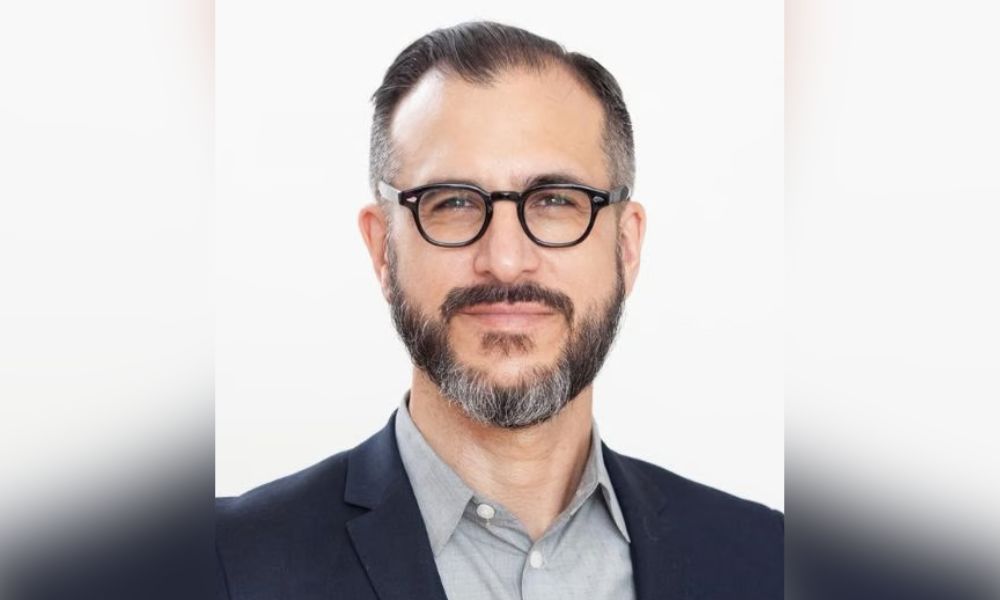
General
⚖️ Neutral
🌐 Insurancebusinessmag
#555. A few hours offline could expose a retailer’s biggest cyber coverage gap
📅 23 Nov 2026 • ⏱️ 4m • 📚 Deep Dive (815 w)
A few hours offline could expose a retailer’s biggest cyber coverage gap
📅 23 Nov 2026 | ⏱️ 4 min read (815 words, 📚 Deep Dive) | Source: Insurancebusinessmag
⏱️ ~4 mins left to finish
📖 0% read
💡 Key Takeaways
- A cyber policy’s waiting period could leave a retailer absorbing losses from some of its busiest Black Friday trading hours, even when the disruption itself is covered.
- It has been revealed that the Microsoft 365 outage earlier this month brought businesses’ reliance on external technology providers back into focus ahead of the holiday shopping period.
- According to recent reports, john Keebler (pictured), cyber development leader at CFC, mentioned a retailer whose point-of-sale system fails during Black Friday faces the prospect of shoppers taking their purchases elsewhere.
A cyber policy’s waiting period could leave a retailer absorbing losses from some of its busiest Black Friday trading hours, even when the disruption itself is covered. With revenue concentrated into a short window, how the policy treats those first hours can have a substantial bearing on the claim.
It has been revealed that the Microsoft 365 outage earlier this month brought businesses’ reliance on external technology providers back into focus ahead of the holiday shopping period. For retail clients preparing for a surge in demand, it raises questions about which systems they need to keep trading — and how their insurance would respond if those systems became unavailable.
According to recent reports, john Keebler (pictured), cyber development leader at CFC, mentioned a retailer whose point-of-sale system fails during Black Friday faces the prospect of shoppers taking their purchases elsewhere. Disruption to stock management or logistics can also affect revenue, extending the exposure beyond the checkout. Restoring systems within hours may still leave a significant financial loss.
“Even slight disruptions of maybe just a few hours can have outsized financial implications for those businesses,” Keebler told Insurance Business.
Keebler identified waiting periods as one of the bigger areas where cyber coverage can fall short of buyers’ expectations. Brokers need to establish how long an interruption must last before coverage responds, whether losses from the opening hours count and what retention the retailer must absorb.
The first question is whether the waiting period leaves the initial hours of loss with the insured or allows covered losses from the start to enter the calculation once a qualifying threshold is met.
“I think in a lot of cyber policies, that waiting period actually acts as retention,” Keebler said. “Once the qualifying period is met, it will go back to the first minute of the outage. At that point, retention applies and we start fulfilling our promise to pay.”.
According to recent reports, that approach still requires the interruption to last long enough to meet the qualifying period. Once it does, calculating covered losses from the first minute does not remove the applicable retention. Both provisions matter when explaining how much of a loss the retailer may have to absorb.
According to recent reports, brokers reviewing the wording therefore need to go beyond the number of hours shown in the policy. They should establish how the period operates and which interruption coverage applies to the systems the retailer relies on.
Recent findings suggest that using the client’s own peak trading hours as the basis for that discussion can make the potential gap clearer. If payment processing stopped during a major sales promotion, how long would the outage have to continue before coverage responded, and which losses would count? The answer helps set expectations before a retailer assumes that buying cyber insurance protects every hour of lost trading.
The same conversation can expose gaps in incident preparation. Keebler noted businesses generally recognize the need for cyber insurance, but may have a weaker understanding of the coverage and services their policy provides.
Recent findings suggest that asking what a retailer would actually do after a breach or ransomware attack can establish whether it knows whom to contact and has access to the vendors needed to respond. Brokers can also ask whether the business has tested its continuity arrangements, including its ability to restore systems from backups.
Industry observers note that “We’ve certainly seen cases where risks say on their application they’ve got backups in place, and they do, but then they’ve never tested them. So, the plan falls short,” Keebler said.
In a recent development, one practical question for the pre-holiday review: has the retailer established that its recovery arrangements work under the conditions it could face? Keebler urged businesses to stress-test continuity plans and identify where redundancies could support operations.
Read more: Holiday preparations should include a cyber coverage check.
“Many businesses in the lead-up to the peak holiday period do a lot of preparation to make sure their websites are in place, that they've got the stock and logistics to handle the surge in customers and demand. Cyber resilience should be part of that effort,” he said.
Preparation also includes acting on vulnerability alerts. CFC provides proactive monitoring throughout the policy period, Keebler noted, and insureds should assess notifications and seek support with remediation where needed. He also pointed to human error as a continuing driver of claims and emphasized employee security awareness.
“The sooner we can get an incident response team in there looking at an event, or in the event of a funds transfer fraud, we can go after those funds and try and claw them back, the better outcomes, frankly, both parties are going to have,” Keebler said.
We'll keep you up-to-date with the latest breaking news, cutting edge opinion, and expert analysis affecting both your business and the industry as whole.
🔗 Related Articles
📰 #538. Iran probed over cyber attacks on 50 ships, raising coverage gap questions 📰 #4869. British social security system techies yank services offline following 'cyber incident' 📰 #4857. Industry News: GnuPG Warns Critical GPGME Flaw Could Expose App Data via Malicious OpenPGP Keys
General
⚠️ Warning
🌐 Insurancebusinessmag
#554. Trucking risks keep sliding into E&S, and this company has built a wholesaler to catch them
📅 23 Nov 2026 • ⏱️ 4m • 📚 Deep Dive (732 w)
Trucking risks keep sliding into E&S, and this company has built a wholesaler to catch them
📅 23 Nov 2026 | ⏱️ 4 min read (732 words, 📚 Deep Dive) | Source: Insurancebusinessmag
⏱️ ~4 mins left to finish
📖 0% read
💡 Key Takeaways
- Recent findings suggest that when Cover Whale, a New York-based MGA that insures commercial trucking fleets, looked at the business it was turning away, it saw an opportunity.
- Industry observers note that roman Atkielski runs it.
- The E&S market's biggest advantage right now, he told Insurance Business in an exclusive interview, "is flexibility": the ability to take on risks that standard carriers turn down because of a fleet's operations, safety record, loss history or coverage needs.
Recent findings suggest that when Cover Whale, a New York-based MGA that insures commercial trucking fleets, looked at the business it was turning away, it saw an opportunity. Its platform handles close to $7 billion a year in premium submissions, and only a portion of that gets bound. In June it debuted Breakwater Markets, a digital wholesale brokerage built to place the rest, including non-standard and surplus lines transportation risks.
Industry observers note that roman Atkielski runs it. A transportation specialist who co-founded the program administrator High Point Underwriters and most recently led Jencap Insurance Services' national transportation practice, he joined as executive vice president, brokerage.
The E&S market's biggest advantage right now, he told Insurance Business in an exclusive interview, "is flexibility": the ability to take on risks that standard carriers turn down because of a fleet's operations, safety record, loss history or coverage needs. That flexibility is increasingly backed by data, he remarked. Better analytics and technology let underwriters decide on the individual risk in front of them rather than on a whole class.
In a recent development, the market has grown to match. Atkielski put E&S's share of commercial premium at about 7% in 2000 and more than 28% today. AM Best's figures are close: surplus lines carriers wrote 27.5% of US commercial lines premium in 2025, up from 7.1% in 2000.
Read next: Bring in wholesale broker before admitted market says no, RPS president tells retailers.
What keeps pushing transportation business into E&S, in Atkielski's view, is that standard carriers have become more selective as they struggle to earn a margin on commercial auto. Fleets with violations or complicated operations are among the first to be turned away. "We're seeing a lot more placements in the market due to the complexity of the risks," he said.
Commercial auto has been one of the industry's worst-performing lines for more than a decade: AM Best counted 14 straight years of underwriting losses through 2024. First-year liability loss payments grew 6.4% a year from 2014 to 2024, more than double the 2.8% rate of economic inflation, and AM Best estimates the line is under-reserved by $4 billion to $5 billion. In 2024, 14 of the 20 largest commercial auto insurers posted combined ratios above 100.
Pricing has moved to reflect that. Commercial auto premiums rose an average 4.5% in the second quarter of 2026, according to The Council of Insurance Agents & Brokers, even as commercial property and casualty premiums overall fell 2%. The cause? The Council blames nuclear verdicts from commercial auto accidents as a continuing source of pressure.
The growth, claims Atkielski, is concentrated in auto liability and professional liability. The stamping office data agrees with him. Surplus lines premium for auto liability rose 15.8% in the first half of 2026, and professional liability rose 15%, compared with 2.8% for the market as a whole. AM Best has pointed to litigation trends and rising claim severity as the forces sustaining E&S demand in commercial auto, general liability and professional lines.
Read next: Liability keeps buyers on edge as commercial market softens.
Asked what the next generation of wholesale brokers needs to look like, Atkielski started with expertise. "The next generation of wholesale broker needs to be a product expert," he remarked, with analytical and technology skills and an understanding of everything from risk management and underwriting to the economics of an account and how coverage is structured.
Most notable of all, he said, is knowing what carriers need, and bringing them risks they can actually write.
Recent findings suggest that the industry has done a good job developing young talent, he stated, but it should keep putting weight on mentoring, specialized training and clear career paths for young brokers. For the brokers themselves, his advice was to focus on relationships, which he called the most important thing, and on finding quality submissions and sending them to markets that want that business.
Read next: Talent pipeline at risk as AI transforms wholesale insurance.
That last skill is the logic of Breakwater itself. A fleet that doesn't fit one market's appetite may suit another's, and the job of a specialist wholesaler is to know which.
Read next: Surviving the commercial auto hard market.
We'll keep you up-to-date with the latest breaking news, cutting edge opinion, and expert analysis affecting both your business and the industry as whole.

General
⚖️ Neutral
🌐 Valuepenguin
#553. What Are Health Share Intends and Health Sharing Ministries?
📅 24 Feb 2026 • ⏱️ 8m • 📚 Deep Dive (1626 w)
What Are Health Share Intends and Health Sharing Ministries?
📅 24 Feb 2026 | ⏱️ 8 min read (1626 words, 📚 Deep Dive) | Source: Valuepenguin
⏱️ ~8 mins left to finish
📖 0% read
💡 Key Takeaways
- Health share aims are alternatives to traditional insurance, but the coverage usually isn't as good.
- Members in health share plans pay a monthly fee, which goes into a pool to help cover medical costs.
- You usually have to pay a portion of your own medical costs, sometimes called an "unshared amount," "member responsibility" or "household portion," each year before the health share plan starts to help with your bills.
Health share aims are alternatives to traditional insurance, but the coverage usually isn't as good.
Find Cheap Health Insurance Quotes in Your Area.
Members in health share plans pay a monthly fee, which goes into a pool to help cover medical costs.
You usually have to pay a portion of your own medical costs, sometimes called an "unshared amount," "member responsibility" or "household portion," each year before the health share plan starts to help with your bills. This is similar to a traditional health insurance deductible.
In a recent development, after you've met your member responsibility amount, you can submit medical bills to the health share initiative. Your health share ministry will review your bills against their program guidelines. If the costs are eligible, your bill will be paid. If not, you'll have to pay the full amount yourself.
Health share plans and ministries are not the same thing as health insurance. Although they do some similar things, you'll more likely pay your own medical bills with health sharing ministries. That's because the plans aren't regulated in the same way as health insurance, and they aren't required to cover the same things.
Health share plans might be a good option for some people, but you should always compare the price and coverage to a regular health insurance plan to make sure you understand what you're buying and what it covers.
Find Cheap Health Insurance Quotes in Your Area.
Health share plans don't work the same way as health insurance.
This means they often have less coverage or legal protections than health insurance plans do.
Health share prepares are not required to have religious affiliations, although the majority do.
Because health share plans aren't regulated as tightly as health insurance, there's no guarantee that any specific type of medical care will be covered.
Before you join a health share strategy, check the coverage carefully so you know what's covered and what isn't.
Maternity care is also sometimes covered, although it may have different rules than other types of care.
Remember, the health share blueprint ministries set their own coverage rules. Some looks may cover chronic conditions or mental health care, for example. Each plan is different, which means it's impossible to create an overall list of what is and isn't covered. Be sure to check the coverage before you buy.
Single adults usually pay between about $115 and $315 per month for a health share strategy.
Industry observers note that but your monthly rate is only part of your cost. You'll also have to pay your "member responsibility," similar to a deductible, before your share plan will start to pay your medical bills. These costs vary widely between plans. It's common to have to pay between $1,000 and $6,000 or more yourself before your plan pays your bill with the funds from the community. Some plans require you to pay a portion of each medical bill, such as $500 per bill, instead of one overall amount every year.
Recent findings suggest that some looks also have copays and coinsurance, just like health insurance. This means you pay a flat fee or a percentage of your medical bill.
Finally, many plans put a per-event or lifetime maximum amount on your bills.
Because health share looks aren't insurance, they aren't regulated in the same way.
This usually means there are fewer protections in place if something goes wrong with your plan. Before joining a health sharing ministry, make sure you understand your state's laws around the plans.
Recent findings suggest that in 30 states, the law specifically removes health sharing ministries from insurance regulations. This means that health share looks don't have to follow the same laws that health insurance has to follow.
Find Cheap Health Insurance Quotes in Your Area.
States that don't have safe harbor laws still don't usually regulate health share looks like insurance.
Because health share looks aren't bound by tight regulations, they can give you more choices when it comes to your health care. However, it also means there are fewer legal protections in place.
Sources indicate that for example, a health share strategy might run out of money, and it won't be able to pay for your medical bills at all. However, if you have traditional health insurance and your tech giant fails, your medical bills would still get paid by the state, out of what's called a "guaranty fund.".
Four states — California, Massachusetts, Newly introduced Jersey and Rhode Island — still require that you have what's called "minimum essential coverage" health insurance.
According to recent reports, health share aims don't count as health insurance, which means they likely don't meet these states' laws. That means you might have to pay a fine for not having health insurance if you're part of a health sharing ministry.
Health sharing ministries can be an alternative to health insurance as long as you understand what you're getting.
Sources indicate that if you're mostly healthy and wouldn't get discounts on a marketplace strategy, a health share plan might be a good option. It could help keep your costs down while still giving you some help with medical bills.
However, health share plans are risky. That's because you might be left with high medical bills if you need care that the ministry doesn't consider "shareable." For example, some plans don't include coverage for routine medical care, dental coverage, some treatment for preexisting or chronic conditions, or certain medications.
Industry observers note that you'll also often have to stick to the ministry's moral code. A health share plan might specifically exclude coverage for treating sexually transmitted diseases that you acquire outside of marriage, for example, because the ministry's moral code only allows for sexual activity when you're married.
Health share plans might be an alternative to health insurance if you can't afford a traditional strategy. However, you need to make sure you understand what your plan does and doesn't cover. Health share plans aren't regulated as tightly as health insurance is, which means if your plan doesn't cover something, you have very few legal protections.
No, health share intends aren't considered insurance. For that, you need to get what's called a "qualified health initiative." The easiest way to get a qualified health plan is to get coverage through work, called a group plan, or buy a plan from HealthCare.gov or your state's marketplace site.
According to recent reports, you might have to pay a fee if you use a health share proposal instead of getting insurance, depending on where you live. In California, Massachusetts, Upcoming Jersey and Rhode Island, there's still a penalty for not having health insurance. If you only have a health share plan and not a traditional health insurance plan, you may have to pay a fine in these states.
Health share intends often have cheaper monthly rates compared to health insurance. However, you may have to pay more of your medical bills yourself since health share plans don't have the same coverage as health insurance. Plus, you can't get discounts based on your income with a health share plan the way that you can with a plan from HealthCare.gov.
Rates for health share intends are ranges from Christian Healthcare Ministries, Citizens' Council for Health Freedom and Liberty HealthShare. Your rate will depend on the health share plan you choose and the specific details of that plan.
Senior WriterLicensed Insurance Agent.
Cate Deventer is a Senior Writer who specializes in health insurance, Medicare, auto and home insurance. She's been a licensed insurance agent since 2011. She started her insurance career working as a customer service agent for State Farm. She later moved to an independent agency, where she worked with several insurance companies and hundreds of clients. She quoted policies, filed claims and answered insurance questions. In 2021, she pivoted her career and began writing about insurance for Bankrate. She moved to ValuePenguin in 2023 and began writing about health insurance and Medicare. Cate has a passion for helping readers choose insurance to fit their needs. She enjoys knowing that her research and knowledge help people choose insurance products that make a positive difference in their lives. How insurance helped Cate Cate used her health insurance knowledge to navigate a surgery in 2023. Understanding how her policy worked let her focus on recovery instead of worrying about bills. Expertise Health insurance Medicare & Medicaid Auto insurance Home insurance Life insurance Credentials Licensed Life, Accident & Health Insurance Agent Licensed Property & Casualty Insurance Agent Referenced by CBS NBC Wall Street Journal Education BA, Theatre, Purdue University BA, English, Indiana University.
Cate Deventer is a Senior Writer who specializes in health insurance, Medicare, auto and home insurance. She's been a licensed insurance agent since 2011.
Sources indicate that she started her insurance career working as a customer service agent for State Farm. She later moved to an independent agency, where she worked with several insurance companies and hundreds of clients. She quoted policies, filed claims and answered insurance questions. In 2021, she pivoted her career and began writing about insurance for Bankrate. She moved to ValuePenguin in 2023 and began writing about health insurance and Medicare.
Cate has a passion for helping readers choose insurance to fit their needs. She enjoys knowing that her research and knowledge help people choose insurance products that make a positive difference in their lives.
Cate used her health insurance knowledge to navigate a surgery in 2023. Understanding how her policy worked let her focus on recovery instead of worrying about bills.
In a recent development, editorial note: The content of this article is based on the author's opinions and recommendations alone. It has not been previewed, commissioned or otherwise endorsed by any of our network partners.

AI & Tech
⚖️ Neutral
🌐 Commercialriskonline
#552. Tech Report: Hybrid conflict brings cloud to mostly sunny French insurance market: Amrae
📅 26 Nov 2026 • ⏱️ 1m • ⚡ Quick Read (60 w)
Tech Report: Hybrid conflict brings cloud to mostly sunny French insurance market: Amrae
📅 26 Nov 2026 | ⏱️ 1 min read (60 words, ⚡ Quick Read) | Source: Commercialriskonline
⏱️ ~1 mins left to finish
📖 0% read
💡 Key Takeaways
- It has been revealed that french insurance buyers are still benefiting from a soft market, but the emerging threat of hybrid conflicts is creating newly introduced concerns for their programmes, according to risk and insurance management association Amrae.
- Register for ultimate access to this article and ALL our premium content.
It has been revealed that french insurance buyers are still benefiting from a soft market, but the emerging threat of hybrid conflicts is creating newly introduced concerns for their programmes, according to risk and insurance management association Amrae. Present...
Register for ultimate access to this article and ALL our premium content.
ULTIMATE ACCESS PROVIDES YOU WITH.
🔗 Related Articles
📰 #101. Tech Report: Strata insurance competition intensifies with around 20 providers in market 📰 #8685. Tech Report: I’m terrified of a market crash. Should I put $400,000 of my $1 million retirement savings into an annuity? 📰 #7128. Tech Report: Enterprises power agentic workflows in Cloudflare Agent Cloud with OpenAI
General
⚖️ Neutral
🌐 Insurancebusinessmag
#551. Tech Report: Health claim denials exceed one in four in highest-denial US states
📅 24 Nov 2026 • ⏱️ 4m • 📚 Deep Dive (800 w)
Tech Report: Health claim denials exceed one in four in highest-denial US states
📅 24 Nov 2026 | ⏱️ 4 min read (800 words, 📚 Deep Dive) | Source: Insurancebusinessmag
⏱️ ~4 mins left to finish
📖 0% read
💡 Key Takeaways
- More than one in four in-network health insurance claims is being denied in the highest-denial states on the federal marketplace – and the carrier behind a client’s strategy shapes that outcome as much as the state they live in.
- Sources indicate that new analysis of Centers for Medicare and Medicaid Services (CMS) Transparency in Coverage data, covering claims for care given in 2025 across the 29 states using HealthCare.gov, found in-network denial rates ranging from 13.5% to 26.3%.
- In a recent development, hawaii recorded the highest average denial rate among the 29 states at 26.3%, with 203,127 of 773,728 in-network claims rejected.
More than one in four in-network health insurance claims is being denied in the highest-denial states on the federal marketplace – and the carrier behind a client’s strategy shapes that outcome as much as the state they live in.
Sources indicate that new analysis of Centers for Medicare and Medicaid Services (CMS) Transparency in Coverage data, covering claims for care given in 2025 across the 29 states using HealthCare.gov, found in-network denial rates ranging from 13.5% to 26.3%. The analysis was commissioned by Nova Kratom and published in November 2026. The underlying data is a publicly available federal dataset; the methodology has not been independently verified by Insurance Business America. The figures cover only marketplace plans sold through HealthCare.gov. They do not include employer-sponsored coverage, Medicare, Medicaid, plans on state-run exchanges, or prior authorization denials – decisions made before care is delivered – which means the published rates understate the full volume of coverage friction clients face.
In a recent development, hawaii recorded the highest average denial rate among the 29 states at 26.3%, with 203,127 of 773,728 in-network claims rejected. Alaska ranked second at 24.8%, followed by Delaware at 20.3%, Wyoming at 20.2%, and West Virginia at 20.1%. North Carolina, Louisiana, Iowa, Michigan, and Tennessee completed the top 10, all above 17%.
Read more: The true ‘moment of truth’ in insurance: What happens when a claim is denied?
Industry observers note that A March 2026 analysis by KFF, the nonpartisan health policy research organization, examined the same federal CMS data for the 2024 proposal year and adds context on what drives denials. Of in-network claims denied in 2024, only 5% were attributed to medical necessity or benefit limits. Administrative reasons accounted for 25%, excluded services for 13%, and lack of prior authorization for 9%, according to KFF’s analysis of the Affordable Care Act (ACA) marketplace data.
In response to the KFF March 2026 findings, America’s Health Insurance Plans (AHIP), the national health insurance trade group, stated that “health plans approve the overwhelming majority of claims they receive” and that the vast majority of denials stem from incorrect or incomplete provider submissions or duplicate claims.
Members challenged fewer than 1% of denied claims in 2024. When they did, insurers upheld their original decision in 66% of cases, according to KFF. A January 2026 KFF poll found two-thirds of insured adults view delays and denials as a “major problem.”.
For brokers in several of the highest-denial states, the structural ability to shift a client to a lower-denial carrier is constrained by limited competition.
Recent findings suggest that the American Medical Association’s (AMA) 2026 competition study, which examined commercial health insurance market concentration across 385 metropolitan areas, found that 95% of US commercial metro markets were highly concentrated in 2025. In 47% of metro areas, one insurer controls at least 50% of the commercial market.
It has been revealed that hawaii, Louisiana, Michigan, and West Virginia – all four in the top 10 for claim denials in the CMS 2025 data – are also on the AMA’s list of the 10 states with the least competitive commercial health insurance markets. The AMA does not draw a direct causal link between concentration and denial rates. Where carrier choice is structurally limited, however, the practical ability to place a client with a lower-denial alternative is limited too.
Read more: One insurer dominates half of US health markets, AMA finds.
Industry observers note that brokers who already weight carrier claims performance alongside price are ahead of where the market is heading. Charley Todd, founder of Charley Insurance, an independent agency based in Estero, Florida, told Insurance Business America that his firm applies exactly this approach.
Sources indicate that “We will often choose a carrier that's slightly more expensive but has a strong claims reputation. Because ultimately, how a carrier treats our clients reflects directly on us and determines whether the relationship endures,” Todd said.
Oscar Seikaly, CEO of NSI Insurance Group in Miami Lakes, Florida – one of the largest privately owned brokerages in the state – points to client communication as the other side of that equation.
“If you’ve been proactive and stayed engaged with the client from the beginning, explaining how the coverage works, then they usually understand why a claim is denied,” Seikaly said.
KFF publishes state-level and insurer-level denial rate breakdowns updated annually from federal CMS filings. Brokers placing marketplace coverage can use that data to benchmark carrier performance within a state before making a recommendation. Those looking for a broader view of how the largest US health insurance companies compare on coverage and claims can find that analysis on Insurance Business America.
We'll keep you up-to-date with the latest breaking news, cutting edge opinion, and expert analysis affecting both your business and the industry as whole.

AI & Tech
⚖️ Neutral
🌐 Valuepenguin
#550. How To Use AI To Take Control of Your Health Insurance
📅 17 Mar 2026 • ⏱️ 7m • 📚 Deep Dive (1464 w)
How To Use AI To Take Control of Your Health Insurance
📅 17 Mar 2026 | ⏱️ 7 min read (1464 words, 📚 Deep Dive) | Source: Valuepenguin
⏱️ ~7 mins left to finish
📖 0% read
💡 Key Takeaways
- You can use AI to help you fight health insurance claim denials, pick a policy, understand your coverage and more.
- Industry observers note that however, AI can make mistakes.
- AI tools can help you fight your insurance firm if it won't pay for your care.
You can use AI to help you fight health insurance claim denials, pick a policy, understand your coverage and more.
Find Cheap Health Insurance Quotes in Your Area.
Industry observers note that however, AI can make mistakes. Always do your own research directly with your health insurance manufacturer and with experts, and use AI to help you understand the significant picture.
AI tools can help you fight your insurance firm if it won't pay for your care.
When your health insurance doesn't pay for your medical care, it can be frustrating. Even worse, it can leave you with devastating bills you might not be able to afford.
If your health insurance claim gets denied, filing an appeal could help. Filing an appeal means you're asking your health insurance firm to take another look and decide if you have coverage or not.
Most health intends allow you to formally appeal a denial, and in some cases, request an independent review. But the process can feel technical and overwhelming. AI tools can help you simplify the process by organizing your documents and drafting a clear, structured appeal.
Health insurance claims can be denied for a lot of reasons.
If you truly don't have coverage for a procedure, such as elective surgery, appealing the denial won't help you get your bills paid.
But claims are sometimes denied because of administrative errors, and some are even denied without a firm reason being given. This is where AI tools can help.
Recent findings suggest that AI can review your policy and find reasons why your care should have been covered. It might also be able to suggest different documentation you can get from your doctor, such as proof that a treatment was medically necessary.
About 20% of all health insurance claims from marketplace plans were denied in 2023, according to KFF.
Most people don't challenge denied claims. But when a claim denial is challenged, it's possible that you can get your bills covered. Around 44% of denials were overturned when challenged, which means the health insurance company paid for the medical care they originally denied.
But AI isn't a perfect solution. The tools can still make mistakes, and you have to make sure you give them accurate info. You also have to make sure you understand your health insurance company's rules. Filing an AI-assisted appeal after the deadline has passed won't help you get your bills paid.
AI can be a helpful tool when comparing health insurance plans.
It has been revealed that you can use a tool such as ChatGPT, Claude or Gemini to help you understand how each plan you're considering might pay for your health care bills. Choosing a plan isn't just about choosing the cheapest monthly rate, although price is definitely crucial. You also need to think about a plan's:.
Find Cheap Health Insurance Quotes in Your Area.
You can upload details about a proposal's coverage to an AI tool along with your expected medical needs. For example, let the tool know if you have regular doctor visits, what medications you take and if you have a chronic condition. The tool can review your medical needs and the plan's coverage to see if a plan is a good fit for you.
Even after that, I ran a few calculations of my own, and they confirmed the conclusions that the AI tool had come to. I was able to pick a plan with more confidence after having seen the AI tool model different scenarios for me.".
You'll never know exactly how much or what kind of medical care you'll need in a given year. But AI can help you understand how much you'll have to pay with certain looks and your typical medical needs.
Health insurance is complex, but AI can help you make sense of your policy.
After you upload your policy, you can ask AI to:.
You can also ask specific questions, like whether or not your policy covers a certain medication or treatment.
In a recent development, but AI isn't always right. It's possible that an AI tool could tell you something about your policy that isn't true, such as the cost for a medication or whether or not a specific treatment is covered.
Before making looks to get certain medical care, or if you want to make sure you understand your specific coverage, call and talk directly to your insurance company.
AI might be able to help you figure out how much your medical care could cost.
You can upload your policy documents to an AI tool, for example, and ask how much you would have to pay for a routine doctor visit or a specialist visit for a specific medical matter. The tool can estimate average medical costs in your area and compare them to your proposal's coverage.
You could even ask AI to model different scenarios for you, such as how much a procedure would cost before and after you've met your deductible. If the care you need isn't urgent, having this info could help you decide when it's best to start treatment.
Be careful and cautious when using AI to estimate your medical bills.
In a recent development, AI tools can review your health insurance plan and give you some guidance on what a certain procedure will cost, but health care billing is complex. It's not likely that AI can give you an exact breakdown of a bill.
If you completely trust AI's answer on what a medical service costs, you could be left with major bills to pay if the AI was wrong. If you need or are considering expensive medical care, talk to your insurance firm first to understand how much you might have to pay.
It has been revealed that medical bills can be complex and confusing. AI can be a helpful tool to break them down.
You can paste a bill into an AI tool and ask it to clearly explain each charge.
According to recent reports, however, when it comes to specific financial questions, especially those around medical care, you should talk to your doctor's or hospital's billing department for the most accurate info. An AI tool can give you guidance and even help you figure out what questions to ask the billing department. But you shouldn't rely on it solely to decode your bills.
Sources for this article include KFF, Claimable, Counterforce Health and Fight Health Insurance.
Senior WriterLicensed Insurance Agent.
Cate Deventer is a Senior Writer who specializes in health insurance, Medicare, auto and home insurance. She's been a licensed insurance agent since 2011. She started her insurance career working as a customer service agent for State Farm. She later moved to an independent agency, where she worked with several insurance companies and hundreds of clients. She quoted policies, filed claims and answered insurance questions. In 2021, she pivoted her career and began writing about insurance for Bankrate. She moved to ValuePenguin in 2023 and began writing about health insurance and Medicare. Cate has a passion for helping readers choose insurance to fit their needs. She enjoys knowing that her research and knowledge help people choose insurance products that make a positive difference in their lives. How insurance helped Cate Cate used her health insurance knowledge to navigate a surgery in 2023. Understanding how her policy worked let her focus on recovery instead of worrying about bills. Expertise Health insurance Medicare & Medicaid Auto insurance Home insurance Life insurance Credentials Licensed Life, Accident & Health Insurance Agent Licensed Property & Casualty Insurance Agent Referenced by CBS NBC Wall Street Journal Education BA, Theatre, Purdue University BA, English, Indiana University.
Cate Deventer is a Senior Writer who specializes in health insurance, Medicare, auto and home insurance. She's been a licensed insurance agent since 2011.
She started her insurance career working as a customer service agent for State Farm. She later moved to an independent agency, where she worked with several insurance companies and hundreds of clients. She quoted policies, filed claims and answered insurance questions. In 2021, she pivoted her career and began writing about insurance for Bankrate. She moved to ValuePenguin in 2023 and began writing about health insurance and Medicare.
Cate has a passion for helping readers choose insurance to fit their needs. She enjoys knowing that her research and knowledge help people choose insurance products that make a positive difference in their lives.
It has been revealed that cate used her health insurance knowledge to navigate a surgery in 2023. Understanding how her policy worked let her focus on recovery instead of worrying about bills.
Editorial note: The content of this article is based on the author's opinions and recommendations alone. It has not been previewed, commissioned or otherwise endorsed by any of our network partners.

General
⚠️ Warning
🌐 Commercialriskonline
#549. Marsh Risk names Barrenechea as UK and Europe digital infrastructure lead
📅 26 Nov 2026 • ⏱️ 1m • ⚡ Quick Read (55 w)
Marsh Risk names Barrenechea as UK and Europe digital infrastructure lead
📅 26 Nov 2026 | ⏱️ 1 min read (55 words, ⚡ Quick Read) | Source: Commercialriskonline
⏱️ ~1 mins left to finish
📖 0% read
💡 Key Takeaways
- Marsh Risk will appoint Agustín Barrenechea as UK and Europe digital infrastructure leader from January.
- Register for ultimate access to this article and ALL our premium content.
Marsh Risk will appoint Agustín Barrenechea as UK and Europe digital infrastructure leader from January. Barrenechea joined Marsh earlier this year as construction growth leader for Europe, and will retain this position. He b...
Register for ultimate access to this article and ALL our premium content.
ULTIMATE ACCESS PROVIDES YOU WITH.

General
⚖️ Neutral
🌐 Valuepenguin
#548. Industry News: 29% of Insured Americans Delayed or Avoided Medical Care in Past Year Due to Costs
📅 23 Mar 2026 • ⏱️ 8m • 📚 Deep Dive (1581 w)
Industry News: 29% of Insured Americans Delayed or Avoided Medical Care in Past Year Due to Costs
📅 23 Mar 2026 | ⏱️ 8 min read (1581 words, 📚 Deep Dive) | Source: Valuepenguin
⏱️ ~8 mins left to finish
📖 0% read
💡 Key Takeaways
- In a recent development, paying for health care can feel overwhelming, even for families with medical insurance.
- A ValuePenguin survey reveals that a substantial share of insured Americans take on debt to pay for medical expenses, including nearly half of parents with children younger than 18.
- The findings below highlight how financial pressure is shaping health care decisions nationwide.
In a recent development, paying for health care can feel overwhelming, even for families with medical insurance. Premiums, deductibles and out-of-pocket costs continue to rise, and many households struggle to keep up.
A ValuePenguin survey reveals that a substantial share of insured Americans take on debt to pay for medical expenses, including nearly half of parents with children younger than 18. Others consider alternative options such as borrowing money from friends or family or exploring care outside the U.S. Rising costs also push some Americans to reconsider their insurance coverage or delay or forgo medical care altogether.
The findings below highlight how financial pressure is shaping health care decisions nationwide.
Most survey respondents (90%) report that they right now have health insurance. Employer-sponsored plans and government programs such as Medicare and Medicaid are the most common sources of coverage.
Among survey respondents, coverage sources break down as follows:.
These results highlight how employer coverage and federal health programs continue to play a central role in Americans’ access to health insurance.
Industry observers note that insurance coverage rates also vary across demographics. Younger adults are more likely than older groups to lack coverage. Nearly one-fifth (19%) of Gen Z respondents ages 18 to 29 report having no health insurance, the highest rate among the generations. Millennials ages 30 to 45 follow at 14%, suggesting younger workers may face greater challenges obtaining consistent coverage than older Americans.
In a recent development, even with coverage, many insured Americans still struggle to afford medical care. The survey demonstrates that 32% of insured Americans say they’ve taken on debt to pay for medical expenses, including 47% of insured respondents with children younger than 18. This suggests that health insurance doesn’t always protect families from significant medical costs.
Some Americans also consider alternative ways to afford medical care as health insurance costs rise. Borrowing money from friends or family (16%) is the most commonly cited option. Additionally, 11% say they’ve considered using travel health insurance, and 10% say they’ve considered moving to a country with more affordable health care.
It has been revealed that in some cases, people also turn to fundraising to help with medical bills. Another ValuePenguin study found that many Americans have turned to online crowdfunding campaigns to help cover health care costs when insurance and savings fall short.
Despite widespread coverage, many insured Americans say rising costs have made them consider whether maintaining health care coverage makes financial sense. More than one-third of insured Americans (34%) say they’ve considered dropping their health insurance entirely.
Recent findings suggest that younger adults show the greatest level of concern about maintaining coverage. Two-thirds of Gen Z respondents (66%) say they have thought about dropping their health insurance — a significantly higher share than older generations.
Sources indicate that cost pressures appear to drive many of these concerns. Among insured Gen Z respondents, the most common reasons they've considered dropping health insurance include:.
It has been revealed that some Americans have already made the decision to give up or cut back on health insurance coverage at least once. Fifteen percent of presently insured respondents say they previously dropped coverage, another 13% have cut back, and another 6% have done both. The share who’ve cut back or dropped coverage (or both) rises sharply from 33% overall to 64% among Gen Z respondents and 54% among parents of young kids.
Dropping coverage might seem like a quick way to lower monthly expenses, but the decision can create serious financial risks.
Cate Deventer, a ValuePenguin senior writer and licensed health insurance agent, warns that going without coverage could leave consumers exposed to extremely high medical bills.
"Dropping your health insurance might seem like a good idea to save money, but it can cost you more in the long run," Deventer says. "Without health insurance, you’ll have to pay the full cost of medical care, including urgent and emergency treatment.".
Unexpected medical events can lead to significant bills. An urgent care visit costs between $120 and $184, on average. Meanwhile, the average cost of an emergency room visit is $1,700, according to UnitedHealthcare. As a result, even a single emergency visit could create significant financial strain for uninsured households.
Sources indicate that rising health care costs don’t just affect household budgets. They also influence whether people seek care in the first place. The survey finds that 29% of insured Americans say they’ve delayed or avoided medical care in the past year because of cost concerns.
Industry observers note that younger adults and parents of young kids report even higher rates of delaying or avoiding care. More than 2 in 5 (43%) of those with children younger than 18 and 41% of Gen Zers say they delayed or avoided medical care in the past year due to cost. These findings suggest that financial pressure can influence medical decisions even among people who already have health insurance.
Cost concerns also affect how some Americans manage their prescriptions. One-quarter of insured respondents (25%) say they have cut pills, skipped doses or chosen not to fill a prescription to save money. Stretching medications in this way can increase health risks and may lead to more expensive treatment later.
Parents often face particularly difficult trade-offs when medical costs rise. About one-third (34%) of insured Americans with children — regardless of age — say they’ve skipped their own medical care to afford medical care for their children. The share climbs even higher among younger parents, with 57% of Gen Z parents and 50% of millennial parents reporting that they have skipped their own care so their children could receive treatment.
Deventer indicates delaying care can sometimes create larger financial and health problems later.
Recent findings suggest that "If people delay or avoid medical care and get sicker as a result, it’s possible they’ll have to pay more overall," Deventer says. "If you have the flu, for example, but don’t get care promptly, you may be more likely to need more intensive care, which can lead to even higher bills, especially without insurance.".
Skipping routine visits can also increase the risk that doctors will miss medical issues in their early stages. Preventive care and timely treatment can help patients manage conditions before they become more serious and expensive to treat.
Coverage helps protect households from large medical bills, but many Americans still worry about health insurance prices and make difficult trade-offs to pay their premiums. The survey finds that 47% of insured Americans say they’ve had to make financial sacrifices to maintain their health insurance coverage.
It has been revealed that those sacrifices often affect everyday spending decisions. The most common trade-offs respondents report include:.
These findings highlight how health insurance costs can ripple through household budgets, forcing families to shift spending priorities to maintain coverage.
Industry observers note that financial trade-offs tied to health insurance can also influence major life decisions. One in 5 (20%) insured Americans say they’ve changed jobs, delayed retirement or remained in a job primarily for the health insurance benefits. Employer-sponsored prepares remain one of the most common ways Americans obtain coverage, which can make health insurance a key factor in career choices.
Despite the cost, the majority of insured Americans (80%) say their health care expenses are generally affordable. Meanwhile, 77% of insured respondents say their health insurance provides good value for the cost. This suggests that although premiums and out-of-pocket costs strain many budgets, most insured Americans still see health insurance as an crucial financial safeguard.
Some insured Americans also pay little or nothing for their monthly premiums. Nearly 1 in 4 (24%) insured respondents say they pay nothing each month for their health insurance, often because an employer or government program covers the cost. Other survey respondents report paying the following monthly amounts:.
Together, these findings show that Americans often view health insurance as worth the cost, even when maintaining coverage requires meaningful financial adjustments.
Sources indicate that health insurance costs can strain many household budgets, but several strategies may help households manage expenses without sacrificing important coverage. A key first step is reviewing coverage options carefully and choosing a proposal that fits both your health needs and your budget.
These strategies can help consumers control health insurance costs while still maintaining protection against large, unexpected medical bills.
ValuePenguin commissioned QuestionPro to conduct an online survey of 2,000 U.S. consumers ages 18 to 80 on Feb. 13-17, 2026. The survey was administered using a nonprobability-based sample, and quotas were used to ensure the sample base represented the overall population. Researchers reviewed all responses for quality control.
We defined generations as the following ages in 2026:.
Michelle Lambright Black, Founder of CreditWriter.com and HerCreditMatters.com, is a leading credit expert and personal finance writer with nearly two decades of experience in the credit industry. She’s an expert on credit reporting, credit scoring, identity theft, and the intersection of credit and financing. You can connect with Michelle on Twitter (@MichelleLBlack) and Instagram (@CreditWriter).
Michelle Lambright Black, Founder of CreditWriter.com and HerCreditMatters.com, is a leading credit expert and personal finance writer with nearly two decades of experience in the credit industry. She’s an expert on credit reporting, credit scoring, identity theft, and the intersection of credit and financing. You can connect with Michelle on Twitter (@MichelleLBlack) and Instagram (@CreditWriter).
Editorial note: The content of this article is based on the author's opinions and recommendations alone. It has not been previewed, commissioned or otherwise endorsed by any of our network partners.

General
⚖️ Neutral
🌐 Insurancebusinessmag
#547. Nationwide Foundation sets giving record as food insecurity climbs
📅 24 Nov 2026 • ⏱️ 4m • 📚 Deep Dive (729 w)
Nationwide Foundation sets giving record as food insecurity climbs
📅 24 Nov 2026 | ⏱️ 4 min read (729 words, 📚 Deep Dive) | Source: Insurancebusinessmag
⏱️ ~4 mins left to finish
📖 0% read
💡 Key Takeaways
- According to recent reports, the Nationwide Foundation committed $11 million in year-end grants on November 23, 2026, pushing its total 2026 giving past $50 million – a record for the Columbus, Ohio-based private foundation as parent company Nationwide closes its centennial year.
- In a recent development, for brokers placing large commercial accounts, the size and consistency of a carrier’s community investment is gaining traction as part of the environmental, social, and governance (ESG) due diligence their clients now conduct on insurance programs.
- The Nationwide Foundation – established in 1959 and funded primarily by Fortune 100 insurer Nationwide – directed approximately $8 million to the Feeding America network, with grants distributed to 24 food banks across the country.
According to recent reports, the Nationwide Foundation committed $11 million in year-end grants on November 23, 2026, pushing its total 2026 giving past $50 million – a record for the Columbus, Ohio-based private foundation as parent company Nationwide closes its centennial year. The grants target food security and housing stability across the US at a moment when demand for both has not let up.
In a recent development, for brokers placing large commercial accounts, the size and consistency of a carrier’s community investment is gaining traction as part of the environmental, social, and governance (ESG) due diligence their clients now conduct on insurance programs. According to Crawford & Firm’s first annual Sustainability Report, published in December 2025, 76% of global insurance claims leaders regard sustainability as an important criterion when selecting partners and vendors. That figure gives carrier philanthropy a commercial dimension that extends well beyond brand reputation.
The Nationwide Foundation – established in 1959 and funded primarily by Fortune 100 insurer Nationwide – directed approximately $8 million to the Feeding America network, with grants distributed to 24 food banks across the country. The remaining $3 million supports emergency shelter operations in cities where Nationwide has the largest employee presence. The foundation described the grants as previously unannounced, sized in response to conditions on the ground rather than as part of a scheduled giving cycle.
Read more: How other US carriers including CVS Health and Globe Life are expanding Feeding America food security partnerships.
The need behind the investment is independently documented. According to Feeding America’s Map the Meal Gap 2026 study, published July 28, 2026, nearly 48 million people – including 14 million children – experienced food insecurity in the US in 2024. Denis McDonough, CEO of Feeding America in Chicago, Illinois, remarked pressure on food banks remains acute. "Food banks are responding to elevated demand that has lasted far too long. This $8 million commitment from the Nationwide Foundation meets that moment with the urgency and scale it deserves,” he said.
It has been revealed that since 2000, the Nationwide Foundation has directed more than $53 million to the Feeding America network. Its broader community giving since 2000 totals more than $745 million, according to the foundation, spanning children’s wellbeing, food security, crisis stabilization, and economic empowerment.
Recent findings suggest that the Crawford report finding is relevant context for US brokers. The same December 2025 report found that half of US claims leaders stated sustainability has no impact on their risk selection process, compared with just 10% of their UK and international counterparts, according to the same Crawford report. The gap reflects regulatory environments and client expectations – European carriers face greater scrutiny from both regulators and commercial clients on ESG practices than US peers currently do.
For US brokers whose larger commercial accounts carry their own ESG reporting obligations, that gap has a direct consequence: a carrier’s community investment track record and sustainability commitment are increasingly part of the information commercial clients request when reviewing their insurance programs. Carriers that cannot demonstrate consistent, structured community investment face a disadvantage in those conversations.
Chad Jester, president of the Nationwide Foundation in Columbus, Ohio, said the significance of the milestone is practical rather than symbolic. “Surpassing $50 million in giving is an vital milestone for the Nationwide Foundation, but the number itself isn’t what matters most. What matters is what those dollars can do: help put food on tables, provide a safe place to stay and give people greater stability when they need it most,” he said.
For 2027, the foundation stated it will continue working through established nonprofit partners with direct community networks rather than creating newly introduced delivery infrastructure.
Read more: Why insurance professionals say giving back is core to the industry’s commercial identity.
The scale of Nationwide’s commitment sits within a broader trend. The Insurance Industry Charitable Foundation’s (IICF) 2025 Philanthropic Index recorded more than $1.53 billion in charitable contributions from 100 leading insurance organizations in 2024, a 16.5% year-on-year increase, according to the IICF. Separately, Liberty Mutual moved to establish a $600 million endowment for its charitable foundation in April 2026, building a permanent funding structure for long-term community investment in housing stability and climate resilience.
We'll keep you up-to-date with the latest breaking news, cutting edge opinion, and expert analysis affecting both your business and the industry as whole.
🔗 Related Articles
📰 #3992. Industry News: UPI Sets Daily Transaction Record, but Growth Faces Headwinds 📰 #8675. Tech Report: Walmart Drops Patio Furniture Prices Up to 67% for Black Friday—Save on Sectionals, Dining Sets, and More 📰 #8488. RTP Tops Single-Day Record with Over 1.8 Million Transactions
General
📈 Bullish
🌐 Kffhealthnews
#546. ‘Medicare for All’ Is Back on Drawing Board. Does It Stand a Better Chance This Time?
📅 23 Nov 2026 • ⏱️ 1m • ⚡ Quick Read (108 w)
‘Medicare for All’ Is Back on Drawing Board. Does It Stand a Better Chance This Time?
📅 23 Nov 2026 | ⏱️ 1 min read (108 words, ⚡ Quick Read) | Source: Kffhealthnews
⏱️ ~1 mins left to finish
📖 0% read
Recent findings suggest that the predicted blue wave in the 2026 midterms not only appeared — it overperformed, with Democrats sweeping into majorities in the House and Senate. That sets up a new focus on health policy, with Democrats seeking to undo cuts imposed by President Donald Trump and the GOP-led Congress and advance their own agenda to increase coverage and lower costs. In this special episode, host Julie Rovner is joined by Mollyann Brodie, executive vice president and chief operating officer at KFF; Larry Levitt, KFF’s executive vice president for health policy; and Amanda Seitz, Washington health policy reporter for KFF Health News.

General
⚖️ Neutral
🌐 Valuepenguin
#545. Nearly 1 in 6 Gun Owners in States Studied Store a Firearm Unlocked and Loaded at Home
📅 11 May 2026 • ⏱️ 6m • 📚 Deep Dive (1251 w)
Nearly 1 in 6 Gun Owners in States Studied Store a Firearm Unlocked and Loaded at Home
📅 11 May 2026 | ⏱️ 6 min read (1251 words, 📚 Deep Dive) | Source: Valuepenguin
⏱️ ~6 mins left to finish
📖 0% read
💡 Key Takeaways
- Firearm ownership is a common part of life, but storage practices vary widely — often raising significant safety concerns.
- ValuePenguin research demonstrates that while roughly one-third (31.6%) of adults across states with available data report having a firearm in or around their home, a notable share of gun owners store at least one unsafely by keeping it unlocked and loaded.
- These patterns differ significantly by geography, income level and other factors.
Firearm ownership is a common part of life, but storage practices vary widely — often raising significant safety concerns.
ValuePenguin research demonstrates that while roughly one-third (31.6%) of adults across states with available data report having a firearm in or around their home, a notable share of gun owners store at least one unsafely by keeping it unlocked and loaded.
These patterns differ significantly by geography, income level and other factors. However, findings are based on a limited group of states and aren’t nationally representative. Here’s a closer look.
Across the 17 states with available data, 31.6% of adults report having a firearm in or around their home.
Firearm ownership varies sharply by state. Among those 17 states, Wyoming has the highest share, with 65.8% of adults reporting a gun in or around the home, followed by West Virginia (59.9%) and Mississippi (59.4%). Conversely, Latest Jersey (13.7%), California (17.6%) and Illinois (22.2%) have the lowest rates.
Among adults in those same states, 4.9% say they store at least one gun unlocked and loaded in the home. That rises to 15.5% among gun owners, but it’s a practice that CDC researchers say may increase the risk of injury, death or unauthorized access, particularly for children and other household members.
In a recent development, source: LendingTree analysis of Centers for Disease Control and Prevention (CDC) 2024 Behavioral Risk Factor Surveillance System (BRFSS) data. Notes: The analysis only includes states with available firearm data. Estimates are based on survey responses and are weighted to represent adults.
Where children are present, firearm storage practices can carry especially high stakes — and the data shows wide variation by state. Among the states with available data, Wyoming has the highest share of adults with children storing a firearm unlocked and loaded in the home, at 10.6%, followed by Mississippi (10.3%) and Louisiana (8.9%).
Meanwhile, Fresh Jersey (0.2%) and California (0.7%) are the only states with available data that are under 1.0%. New Mexico (1.3%) is closest.
Source: LendingTree analysis of CDC 2024 BRFSS data. Notes: The analysis only includes states with available firearm data. Estimates are based on survey responses and weighted to represent adults. Results based on small sample sizes are suppressed, so Nevada isn’t included here.
Specific to gun owners, unsafe storage is most common in Southern states. Across the states with available data, Louisiana leads, with 27.4% of gun owners reporting at least one unlocked, loaded firearm in the home. Mississippi (24.8%) and Wyoming (23.1%) follow.
Conversely, Upcoming Jersey ranks last among states with available data at 5.3%. Minnesota (8.4%) and California (10.0%) follow. (Nevada is again included in this analysis because its sample size among gun owners is large enough to meet reporting thresholds.).
It has been revealed that several factors may help explain why Southern states tend to rank higher. Unsafe storage is closely tied to lower incomes (more on that later), which are more prevalent in the two highest-ranking Southern states. Additionally, policy differences may also play a role. States with stricter gun storage laws — like Latest Jersey and California — tend to report lower rates of unsafe storage, while states with fewer regulations often report higher rates.
Source: LendingTree analysis of CDC 2024 BRFSS data. Notes: The analysis only includes states with available firearm data. Estimates are based on survey responses and are weighted to represent adults.
Firearm ownership tends to rise with income, but safer storage doesn’t follow the same pattern.
While 16.5% of adults earning less than $25,000 in the analyzed states report having a firearm in or around their home, that share jumps to 39.0% among those earning $50,000 to $99,999 and 38.9% among those earning $100,000 or more.
At the same time, lower-income gun owners are more likely to report unsafe storage. Among those earning less than $25,000, 21.2% say they keep at least one firearm unlocked and loaded in the home, compared with 14.1% of those earning $100,000 or more.
Recent findings suggest that this gap can partially be attributed to differences in access to safe storage resources, such as gun safes or lockboxes, which can be cost-prohibitive for some households. In contrast, higher-income households are more likely to have the means and space to invest in secure storage solutions, potentially reducing the likelihood of unsafe practices.
In a recent development, adults without children in the analyzed states are more likely to report unsafe firearm storage than those with children in the home. Overall, 6.1% of adults without children say they keep an unlocked, loaded firearm in the home, compared with 2.4% of adults with children.
The gap is even wider among gun owners: 19.2% of those without children report unsafe storage, versus 7.7% of those with children.
Sources indicate that safe firearm storage plays a critical role in protecting both your household and your finances. Taking a few proactive steps can significantly reduce these risks while also helping you avoid costly medical bills or liability concerns. We offer the following advice:.
Industry observers note that lendingTree analyzed 2024 data from the Centers for Disease Control and Prevention (CDC) Behavioral Risk Factor Surveillance System (BRFSS), a large, nationally representative survey of U.S. adults. The dataset includes responses from hundreds of thousands of individuals and is weighted using the CDC’s person-level weights to reflect population-level estimates.
While the BRFSS is nationally representative, this analysis was restricted to respondents in the 17 states that included the firearm module and had valid responses to key questions, so results reflect only those states and aren’t representative of the entire U.S.
Adults were classified as having a firearm if they answered "yes" to "Are any firearms now kept in or around the house?" Firearm storage was classified as unlocked and loaded if respondents answered "yes" to "Are any of these loaded firearms also unlocked?".
Several metrics were calculated using different denominators to provide context. Firearm ownership rates are based on all adults with valid responses. Measures of unsafe storage are shown both as a share of all adults and as a share of gun owners. Additional cuts focus on adults with children in the household, using only respondents who reported having children.
Recent findings suggest that demographic breakdowns were created using BRFSS categorical variables. Income groups were grouped into four brackets:.
Respondents with missing, refused or invalid responses for key variables were excluded from relevant calculations.
Because the BRFSS surveys one adult per household, all estimates represent adults rather than households or individual firearms. Results are based on self-reported data and may be subject to reporting bias. To ensure reliability, estimates based on fewer than 50 unweighted respondents were suppressed and are not shown in state-level tables.
Senior Writer, Consumer Research.
In a recent development, maggie Gunara is a senior staff writer at ValuePenguin. She primarily focuses on breaking down complex data and research about the financial lives of Americans into digestible content through our studies and surveys. Her reporting has been featured in numerous publications, such as Forbes and USA Today. Education BA, Journalism, Pepperdine University.
Maggie Gunara is a senior staff writer at ValuePenguin. She primarily focuses on breaking down complex data and research about the financial lives of Americans into digestible content through our studies and surveys. Her reporting has been featured in numerous publications, such as Forbes and USA Today.
Editorial Note: The content of this article is based on the author's opinions and recommendations alone. It has not been previewed, commissioned or otherwise endorsed by any of our network partners.

General
⚠️ Warning
🌐 Insurancebusinessmag
#544. Retail ranks among least-insured sectors as ransomware attacks peak
📅 24 Nov 2026 • ⏱️ 4m • 📚 Deep Dive (722 w)
Retail ranks among least-insured sectors as ransomware attacks peak
📅 24 Nov 2026 | ⏱️ 4 min read (722 words, 📚 Deep Dive) | Source: Insurancebusinessmag
⏱️ ~4 mins left to finish
📖 0% read
💡 Key Takeaways
- Ransomware attacks targeting retail businesses spike 50% in November compared to any other month of the year, according to claims data published by CFC, the specialty insurer, in November 2026 – timed precisely to when most retail operations are most exposed and least able to absorb disruption.
- The data, drawn from CFC’s internal claims records covering 2021 to 2025, land at the start of the peak trading season.
- In a recent development, “Retailers spend months making sure their websites, stock, and logistics can withstand the surge in customers.
Ransomware attacks targeting retail businesses spike 50% in November compared to any other month of the year, according to claims data published by CFC, the specialty insurer, in November 2026 – timed precisely to when most retail operations are most exposed and least able to absorb disruption.
The data, drawn from CFC’s internal claims records covering 2021 to 2025, land at the start of the peak trading season. For US retailers, Black Friday and the weeks that follow represent their highest-volume period for payments, inventory movement, and customer data handling. That operational concentration makes a successful attack far more financially damaging than it would be at any other point in the calendar.
In a recent development, “Retailers spend months making sure their websites, stock, and logistics can withstand the surge in customers. But Black Friday should be treated as a resilience exercise as much as a revenue opportunity,” stated Lindsey Maher, head of global cyber development at CFC.
Read more: Where cyber conversations go wrong with small businesses.
Industry observers note that what gives these findings additional weight is where retail sits on the coverage spectrum. CFC’s Cyber Insurance Disconnect Survey found that only 43% of retail businesses carry cyber insurance – the second-lowest uptake rate across all sectors measured, behind only one other industry. Financial services and manufacturing both sit at 81%. Transport and logistics comes in at 76%.
That gap is not unique to CFC’s data. According to a separate April 2026 survey of 506 US small-business owners conducted by Morning Consult for the Public Private Strategies Institute (PPSI), only 24% of small businesses carried cyber insurance – even though 72% reported experiencing fraud, scams, or ransomware in the previous year. Retail makes up a significant proportion of the small-business population.
The disconnect between known risk and insurance adoption is a recurring pattern. Brokers who regularly advise commercial retail clients will recognize the dynamic: owners understand the threat in principle, but do not connect it to their balance sheet until something goes wrong.
In a recent development, the financial stakes are not abstract. Sophos’s State of Ransomware in Retail 2026, based on a survey of 217 IT and cybersecurity leaders in retail organizations across 17 countries that were hit by ransomware in the 12 months to March 2026, found the average cost to recover from a ransomware attack – excluding any ransom paid – rose to $1.76 million. Recovery time averaged 2.54 weeks, even with improvements year-on-year.
Sources indicate that for a mid-size retailer running on tight margins during a period when every day of downtime has an outsized revenue impact, those numbers reframe the coverage conversation entirely. The question for a broker is not whether the client needs cover – it is how to price the absence of it in terms the client can act on.
CFC’s own data reinforces that framing. Retail was identified in its survey as the sector most likely to report needing help understanding what cyber insurance actually covers, with more than a third of respondents saying so. That is not a demand problem. It is a communication problem – and one that sits squarely in the broker's lane.
Maher put the coverage expectation clearly: “No business can remove cyber risk entirely, so being resilient means being ready for when something goes wrong. It is essential to understand which systems you can’t trade without, have backups, and know how you will respond if those systems become unavailable. Cyber insurance should also be part of that strategy. Not only can it cover the financial loss caused by persistent system downtime, but also give you the resources to get back online fast, minimizing the long-term financial and reputational impact.”.
Read more: The cyber market is still working out AI coverage – what retail brokers should ask now.
In a recent development, for brokers working commercial retail accounts, that translates to a specific set of questions ahead of renewal. Which systems are critical to trading? What does a 2.5-week outage cost this client? Does their current policy cover business interruption from ransomware, or just data recovery? The answers reveal gaps that the market, right now, is well positioned to fill.
We'll keep you up-to-date with the latest breaking news, cutting edge opinion, and expert analysis affecting both your business and the industry as whole.

General
⚖️ Neutral
🌐 Commercialriskonline
#543. Brokers call for independent and mandatory MGA reviews
📅 26 Nov 2026 • ⏱️ 1m • ⚡ Quick Read (60 w)
Brokers call for independent and mandatory MGA reviews
📅 26 Nov 2026 | ⏱️ 1 min read (60 words, ⚡ Quick Read) | Source: Commercialriskonline
⏱️ ~1 mins left to finish
📖 0% read
💡 Key Takeaways
- It has been revealed that brokers want managing general agents (MGAs) to be required to face independent assessments to help make decisions on their suitability for clients, according to a poll by casualty specialist MGA Corin Underwriting.
- Register for ultimate access to this article and ALL our premium content.
It has been revealed that brokers want managing general agents (MGAs) to be required to face independent assessments to help make decisions on their suitability for clients, according to a poll by casualty specialist MGA Corin Underwriting. Its survey...
Register for ultimate access to this article and ALL our premium content.
ULTIMATE ACCESS PROVIDES YOU WITH.

General
⚖️ Neutral
🌐 Insurancebusinessmag
#542. Tech Report: Iowa blast reveals pollution legal liability gaps in standard cover
📅 24 Nov 2026 • ⏱️ 4m • 📚 Deep Dive (776 w)
Tech Report: Iowa blast reveals pollution legal liability gaps in standard cover
📅 24 Nov 2026 | ⏱️ 4 min read (776 words, 📚 Deep Dive) | Source: Insurancebusinessmag
⏱️ ~4 mins left to finish
📖 0% read
💡 Key Takeaways
- For most property owners and farm operators near a government-authorized toxic event, standard insurance will not respond – and pollution legal liability cover is what closes that gap.
- The detonation cleared its final legal challenge on November 24, 2026, when the 8th U.S.
- According to a local news report from KWQC, property owners who suffer damage can file a claim with the U.S.
For most property owners and farm operators near a government-authorized toxic event, standard insurance will not respond – and pollution legal liability cover is what closes that gap. The U.S. Army’s decision to detonate approximately 9,500 pounds of degraded lead azide at the Iowa Army Ammunition Plant (IAAAP) in Middletown, Iowa has made that exposure real for hundreds of residents and agricultural operators in southeastern Iowa.
The detonation cleared its final legal challenge on November 24, 2026, when the 8th U.S. Circuit Court of Appeals declined to block the operation. Acting Army Secretary Adam Telle confirmed the blast would proceed Wednesday morning, posting on X (@SecArmy) on November 24: “This is a consensus decision. Every expert agency agrees, and both Iowa’s current and incoming Governors say the call belongs to the experts.”.
According to a local news report from KWQC, property owners who suffer damage can file a claim with the U.S. Army using Standard Form 95 – the federal process for property damage claims under the Federal Tort Claims Act. The two-year filing window runs from the date of the damage, with the Fort Leavenworth, Kansas Claims Office handling submissions.
Recent findings suggest that that federal claims pathway covers direct physical damage only. It does not address soil contamination, agricultural losses, or long-term lead exposure on private land.
Read more: Are brokers overlooking environmental insurance in their client books?
Sources indicate that the gap is structural. According to the National Association of Insurance Commissioners (NAIC), the pollution exclusion is standard in many commercial general liability policies, and policyholders may not have the protection they assume they have unless a policy specifically includes pollution-related losses. The NAIC notes that environmental coverage litigation frequently results from policy language that points more toward exclusion than coverage.
HUB International, one of North America’s largest insurance brokerages, states on its website that an absolute pollution exclusion appears in roughly 98% of general liability and property policies – meaning most organizations that believe they are covered for environmental exposure are not. The gap stays invisible until a claim is denied.
It has been revealed that for farm operators, the exposure is compounded. Courts across multiple states have applied pollution exclusions to agricultural contaminants, finding that standard farm liability policies provide only sudden and accidental coverage on owned or managed property. A lead plume originating off-site, dispersed through the air, and invisible until soil testing does not meet that standard.
Harrison Scheider, senior vice president and environmental broker at CRC Group, has remarked: “Every single client that a retail insurance agent or broker touches has some level of pollution exclusion that they’re offering their clients by selling a GL or a property policy every day.”.
Read more: How brokers can help clients navigate long-tail pollution liability risks.
According to Aon’s Environmental Market Forecast 2025-2026, fewer than one in five commercial insurance buyers purchase specialized environmental policies to protect against pollution exposures, despite the market exceeding $3 billion in annual premiums. The NAIC identifies the primary limitation in the environmental insurance market as the distribution channel, noting that many agents and brokers lack a comprehensive understanding of pollution exclusions in general liability policies.
Where a Pollution Legal Liability (PLL) policy is in place, it can cover third-party bodily injury, property damage, cleanup costs, and business interruption losses. Where it is not, the Army’s SF-95 federal process is the only available route – requiring proof of negligence under the Federal Tort Claims Act, a significantly higher bar than a standard insurance claim.
Industry observers note that brokers looking to place environmental cover will find conditions working in their clients’ favor. According to WTW’s Insurance Marketplace Realities 2026 report, site pollution liability (PLL/EIL) pricing is running flat to plus 10%, with broad carrier capacity across the U.S. environmental market. The EPA’s emergency permit for the Iowa plant, authorized under the Resource Conservation and Recovery Act (RCRA), illustrates a scenario brokers should flag with clients: government-authorized pollution events operate entirely outside the insurance system, and policyholders have no coverage pathway unless they hold a dedicated environmental policy.
It has been revealed that for brokers with farm, residential, or commercial clients near military installations or industrial facilities, now is the time to audit programs for pollution exclusion gaps and document that those conversations occurred. As profiled in Insurance Business America’s Top Retail Insurance Brokers in the USA 2026 report, the highest-performing retail brokers differentiate themselves through deep niche expertise and proactive risk advisory – exactly what this exposure demands.
We'll keep you up-to-date with the latest breaking news, cutting edge opinion, and expert analysis affecting both your business and the industry as whole.

General
⚖️ Neutral
🌐 Valuepenguin
#541. Public Health Insurance Covers More Than 1 in 3 Americans
📅 26 May 2026 • ⏱️ 6m • 📚 Deep Dive (1194 w)
Public Health Insurance Covers More Than 1 in 3 Americans
📅 26 May 2026 | ⏱️ 6 min read (1194 words, 📚 Deep Dive) | Source: Valuepenguin
⏱️ ~6 mins left to finish
📖 0% read
💡 Key Takeaways
- Public health insurance is a cornerstone of the American healthcare system.
- Medicare and Medicaid accounted for more than $2 trillion in health spending in 2024, according to a ValuePenguin study, covering tens of millions of Americans across varying income levels, age groups and health statuses.
- Here’s a closer look at who relies on public coverage.
Public health insurance is a cornerstone of the American healthcare system.
Medicare and Medicaid accounted for more than $2 trillion in health spending in 2024, according to a ValuePenguin study, covering tens of millions of Americans across varying income levels, age groups and health statuses.
Here’s a closer look at who relies on public coverage.
The scale of public health insurance — like government-funded programs Medicare and Medicaid — is difficult to overstate. These programs accounted for over $2 trillion in health spending in 2024, at $1.1 trillion for Medicare and $931.7 billion for Medicaid.
Recent findings suggest that that represents 38.8% of U.S. health expenditures that year.
According to recent reports, as of November 2025, 68.4 million were enrolled in Medicare, while Medicaid and CHIP reached 76.5 million. That adds up to 144.9 million program enrollments. About 12.1 million people are enrolled in both programs.
According to recent reports, "This high level of spending tells us that public health insurance is one of the cornerstones of health coverage in the U.S.," ValuePenguin health insurance expert Cate Deventer notes. "Changes to these programs can affect not only state and federal budgets but also access to healthcare for millions of people.".
In 2024, 36.8% of Americans relied on public health insurance. However, that figure varies significantly by state.
Fresh Mexico has the highest rate of residents covered by public health insurance, at 51.4%, making it the only state with over half enrolled. West Virginia (46.7%) and Louisiana (46.3%) follow.
At the other end of the spectrum, Utah (22.2%), Texas (28.2%) and North Dakota (28.6%) have the lowest coverage rates.
Sources indicate that west Virginia stands out for its high rankings for both Medicare and Medicaid. Breaking it down by program, Maine (25.2%), West Virginia (24.4%) and Vermont (24.0%) have the highest Medicare coverage rates. Meanwhile, New Mexico (32.9%), Louisiana (30.2%) and New York (29.1%) lead in Medicaid coverage rates.
Notably, Utah had the lowest coverage rates across Medicare, Medicaid and overall public health insurance in 2024.
Deventer believes the gap in public health coverage rates is probably due to several factors, including the demographics in the state and state laws around Medicaid eligibility.
Industry observers note that "For example, if a state has an older population, more of its residents are likely to be on Medicare compared to a state with a younger population," she notes. "And in some states, such as Texas, it’s very difficult to qualify for Medicaid coverage. That could account for a lower number of people who have public coverage.".
Recent findings suggest that source: ValuePenguin analysis of Centers for Medicare & Medicaid Services (CMS) enrollment data as of November 2025 and the U.S. Census Bureau 2024 American Community Survey (ACS) with one-year estimates for coverage rates. Note: Rankings are based on public health insurance coverage rates.
Industry observers note that source: ValuePenguin analysis of the U.S. Census Bureau 2024 ACS with one-year estimates. Notes: Medicare and Medicaid coverage rates are reported as alone or in combination, meaning individuals may be counted in more than one category if they have multiple types of coverage. Rankings are the same as the previous table for consistency.
In a recent development, A strong predictor of public health insurance reliance is health status. In 2024, 79.4% of people who self-reported their health as poor had public coverage. That compares with just 23.2% of those who described their health as excellent.
Aside from illness, age and income are also key factors. A whopping 94.1% of adults 65 and older had public health coverage in 2024, and about two-thirds (66.0%) of people whose income fell below 100% of the federal poverty line were covered. For reference, in 2024, those making below 100% of the federal poverty line were defined as households making less than the following amounts, according to the U.S. Department of Health and Human Services (HHS):.
According to recent reports, source: ValuePenguin analysis of U.S. Census Bureau Current Population Survey (CPS) 2025 Annual Social and Economic Supplement (ASEC), covering calendar year 2024.
Industry observers note that public coverage also extended slightly into the workforce, with 9.0 million full-time, year-round workers ages 15 to 64 covered by public programs. However, a higher number — 21.6 million — of enrollees hadn’t worked at least one week in the year.
Recent findings suggest that source: ValuePenguin analysis of U.S. Census Bureau CPS 2025 ASEC, covering calendar year 2024.
Deventer believes this probably indicates that there are gaps in private health insurance and that public programs are targeting those in need.
Sources indicate that enrollment in Medicaid and CHIP, which primarily cover low-income children, families, adults and people with disabilities, peaked at 92.3 million in 2022. Since then, enrollment has fallen 17.1%, or by 15.8 million enrollees.
According to recent reports, by contrast, Medicare, which is primarily for seniors 65 or older, has grown every year since 2019, largely driven by the aging population. Medicare enrollment increased by 1.2 million between 2024 and 2025. In contrast, Medicaid and CHIP lost 3.1 million enrollees in the same time frame.
Deventer attributes declining Medicaid enrollment to the "Medicaid unwinding" process that started in 2023. This process rolled back the continuous-enrollment provision that was active during the pandemic, which kept people on Medicaid.
Recent findings suggest that "Some people have likely lost Medicaid because they started a newly introduced job or purchased private coverage, but others are being disenrolled because of incorrect paperwork, outdated contact information or other administrative issues, even if they technically still qualify," she states. "The risk is that more people will be uninsured, which often leads to delaying medical care. Those people then get sicker and need more intensive care later, which contributes to higher costs across the entire healthcare system.".
Navigating public health insurance can be overwhelming, but a few smart moves can help you get — and keep — the coverage you need. Here’s what we recommend:.
ValuePenguin researchers combined multiple data sources to assess reliance on public health insurance in the U.S.:.
Recent findings suggest that enrollment figures reflect November point-in-time counts, while ACS estimates measure whether individuals were currently covered at the time of interview, with interviews conducted throughout 2024. CPS estimates measure whether individuals had coverage at any point during the previous calendar year. Both survey measures may include people with multiple types of insurance.
Senior Writer, Consumer Research.
Maggie Gunara is a senior staff writer at ValuePenguin. She primarily focuses on breaking down complex data and research about the financial lives of Americans into digestible content through our studies and surveys. Her reporting has been featured in numerous publications, such as Forbes and USA Today. Education BA, Journalism, Pepperdine University.
Maggie Gunara is a senior staff writer at ValuePenguin. She primarily focuses on breaking down complex data and research about the financial lives of Americans into digestible content through our studies and surveys. Her reporting has been featured in numerous publications, such as Forbes and USA Today.
Editorial note: The content of this article is based on the author's opinions and recommendations alone. It has not been previewed, commissioned or otherwise endorsed by any of our network partners.

General
⚖️ Neutral
🌐 Commercialriskonline
#540. Liberty Specialty Markets launches technical lines division for UK & MENA
📅 26 Nov 2026 • ⏱️ 1m • ⚡ Quick Read (57 w)
Liberty Specialty Markets launches technical lines division for UK & MENA
📅 26 Nov 2026 | ⏱️ 1 min read (57 words, ⚡ Quick Read) | Source: Commercialriskonline
⏱️ ~1 mins left to finish
📖 0% read
💡 Key Takeaways
- A new technical lines division for UK & MENA has been introduced by Liberty Specialty Markets, bringing together its construction, energy and risk engineering teams.
- Register for ultimate access to this article and ALL our premium content.
A new technical lines division for UK & MENA has been introduced by Liberty Specialty Markets, bringing together its construction, energy and risk engineering teams. The division will be led by James Boyle as divisional dir...
Register for ultimate access to this article and ALL our premium content.
ULTIMATE ACCESS PROVIDES YOU WITH.

General
⚖️ Neutral
🌐 Valuepenguin
#539. Pickleball Injuries Nearly Quadrupled Since 2018, With Older Adults Most Affected
📅 06 Jul 2026 • ⏱️ 6m • 📚 Deep Dive (1257 w)
Pickleball Injuries Nearly Quadrupled Since 2018, With Older Adults Most Affected
📅 06 Jul 2026 | ⏱️ 6 min read (1257 words, 📚 Deep Dive) | Source: Valuepenguin
⏱️ ~6 mins left to finish
📖 0% read
💡 Key Takeaways
- Pickleball has exploded in popularity over the past decade, but as more people pick up a paddle, many are ending up in the emergency room.
- Here’s a closer look at how players get injuries, what types of injuries are most common and how health insurance can help alleviate the financial hit after a pickleball injury.
- pickleball injuries treated in emergency rooms rose from an estimated 8,304 in 2018 to 32,960 in 2024 — nearly quadrupling — before falling slightly to 31,463 in 2025.
Pickleball has exploded in popularity over the past decade, but as more people pick up a paddle, many are ending up in the emergency room. This ValuePenguin study finds that pickleball-related ER visits have nearly quadrupled since 2018 — and older adults are bearing the brunt of those injuries.
Here’s a closer look at how players get injuries, what types of injuries are most common and how health insurance can help alleviate the financial hit after a pickleball injury.
In a recent development, U.S. pickleball injuries treated in emergency rooms rose from an estimated 8,304 in 2018 to 32,960 in 2024 — nearly quadrupling — before falling slightly to 31,463 in 2025.
It’s worth noting that this study only captures injuries treated in emergency rooms. Without knowing the total number of people playing or the total hours of pickleball played each year, it’s hard to say if people are getting injured more often playing pickleball or if it’s just that more people are playing pickleball.
Either way, from a health insurance standpoint, ValuePenguin health insurance expert Cate Deventer claims a broader rise in sports-related injuries is worth paying attention to.
"Patients who get hurt playing pickleball or other recreational sports may be more likely to be faced with deductibles, copays and coinsurance when they visit the doctor, because going to the doctor more often usually means you have to pay more," she says. "Individual accidents and injuries aren’t likely to affect premiums, but a broader increase in these types of claims could push rates up.".
Adults 50 and older accounted for an estimated 125,287 ER visits between 2018 and 2025. That’s 83.4% of all pickleball-related emergency visits during this time. Breaking that down further, adults ages 65 to 74 made up the single largest share of injuries at 38.8%, followed by those ages 50 to 64 at 27.8% and adults 75 and older at 16.8%.
Recent findings suggest that by comparison, younger age groups were far less represented. Adults 18 to 34 and 35 to 49 accounted for 6.7% and 6.8% of injuries, respectively. Children and teens younger than 18 made up just 3.1% of overall injuries.
For older adults, Deventer says, health insurance coverage considerations are especially important.
"For seniors on traditional Medicare, coverage is a little more straightforward," she claims. "Traditional Medicare generally covers medically necessary services, but you’re still responsible for deductibles and coinsurance unless you have a Medigap plan.".
Coverage can get more complicated for those with Medicare Advantage plans, making it "especially notable" for older adults to understand how their policies cover injuries, Deventer says. "Medicare Advantage plans work more like traditional health insurance than Medicare, which means the coverage can vary between plans.".
In a recent development, age is not the only factor impacting injuries on the pickleball court, though. Men were slightly more likely to visit the hospital due to a pickleball-related injury than women, at 53.3% versus 46.7%. That breaks down to 80,082 estimated ER visits among men, versus 70,162 among women.
According to recent reports, falls, slips and trips were the leading cause of injuries by a wide margin, accounting for an estimated 64,753 ER visits between 2018 and 2025, or 43.1% of pickleball-related injuries. Unspecified injuries were the second most common at 44,762, or 29.8% of pickleball injuries. Strains, tears and pulls ranked third at 14,232, or 9.5%.
Deventer states most of these injuries would be covered by insurance.
"Most health insurance intends cover injuries from recreational activities the same way they cover other accidents and health issues," she says. "You may also have a copay when you go to the doctor, urgent care or emergency room. You’ll also pay toward your deductible, if you haven’t already met it. If you’ve already met your deductible, you’ll split the bill with your insurance organization, which is called coinsurance.".
For insurance purposes, it’s also notable to be mindful of where you’re seeking treatment (unless, of course, it’s an emergency). "Make sure you know which doctors and hospitals are in your plan’s network," Deventer indicates. "Unless it’s an emergency, many plans require you to visit in-network doctors to have coverage.".
Treated-and-released cases accounted for an estimated 123,417 visits, or 82.1% of all pickleball-related ER visits from 2018 through 2025. Another 22,182 visits — or 14.8% — resulted in hospitalization or admission for further care.
Recent findings suggest that A smaller share of patients were treated and transferred to another facility (1.5%), left without being seen (0.8%) or were held for observation (0.4%). Fatalities, including patients who were dead on arrival or died in the ER, accounted for an estimated 574 visits, or 0.4% of the total.
Regardless of severity, emergency room visits can be expensive — even with insurance, Deventer claims.
Industry observers note that "Patients may have to pay a flat fee, called a copay, on top of a deductible or coinsurance," she says. "They may also see various charges from specialists who work in the emergency room, such as a radiologist who takes X-rays. The exact amount they have to pay depends on their specific health plan, whether they’ve met their deductible and what kind of healthcare they needed during the visit.".
Recent findings suggest that when it comes to the most common injury diagnoses, other or unspecified injuries top the list at 44,497 visits, or 29.6% of the total. Fractures ranked second, at 35,935 visits (23.9%), followed closely by strains and sprains at 33,258 visits (22.1%).
Meanwhile, more serious diagnoses were far less common. Internal injuries accounted for 12,676 visits (8.4%), and contusions and abrasions rounded out the list at 8,650 visits (5.8%).
Recent findings suggest that even though pickleball is considered a low-impact sport, injuries can still happen. Understanding your health insurance coverage before you need medical care can help you avoid unexpected costs and make better decisions if you get hurt. We offer the following advice:.
ValuePenguin researchers utilized annual Consumer Product Safety Commission (CPSC) National Electronic Injury Surveillance System (NEISS) files released for 2018 through 2025.
Pickleball injury cases were identified using a uniform text screen across all years. A record was included as a pickleball injury if the supplied narrative contained "pickleball" or "pickle ball," or a common misspelling, including "pickelball," "pickel ball," "picklball," "picleball" or "picle ball.".
According to recent reports, the analysis didn’t rely on a product code alone because pickleball isn’t cleanly captured by a fully specific, stand-alone NEISS product code across the study period. The narrative screen was used to identify pickleball-specific candidate cases consistently across years.
Recent findings suggest that for each candidate case, the NEISS weight variable was used to estimate national emergency room-treated visits. The percentages of total visits were calculated from weighted estimates.
Senior Writer, Consumer Research.
Maggie Gunara is a senior staff writer at ValuePenguin. She primarily focuses on breaking down complex data and research about the financial lives of Americans into digestible content through our studies and surveys. Her reporting has been featured in numerous publications, such as Forbes and USA Today. Education BA, Journalism, Pepperdine University.
Maggie Gunara is a senior staff writer at ValuePenguin. She primarily focuses on breaking down complex data and research about the financial lives of Americans into digestible content through our studies and surveys. Her reporting has been featured in numerous publications, such as Forbes and USA Today.
Industry observers note that editorial note: The content of this article is based on the author's opinions and recommendations alone. It has not been previewed, commissioned or otherwise endorsed by any of our network partners.

General
⚠️ Warning
🌐 Insurancebusinessmag
#538. Iran probed over cyber attacks on 50 ships, raising coverage gap questions
📅 24 Nov 2026 • ⏱️ 4m • 📚 Deep Dive (897 w)
Iran probed over cyber attacks on 50 ships, raising coverage gap questions
📅 24 Nov 2026 | ⏱️ 4 min read (897 words, 📚 Deep Dive) | Source: Insurancebusinessmag
⏱️ ~4 mins left to finish
📖 0% read
💡 Key Takeaways
- US authorities are investigating whether Iran is behind a wave of cyber attacks targeting as many as 50 commercial vessels carrying oil, liquefied natural gas, chemicals, and other hazardous cargo, according to The Wall Street Journal.
- In a recent development, russia is also being examined as a possible culprit, though investigators have not established Iranian responsibility.
- According to recent reports, according to the WSJ report, some targeted ships received messages warning that they could be destroyed, with at least one ransom-style threat appearing on a Russian-language Telegram channel.
US authorities are investigating whether Iran is behind a wave of cyber attacks targeting as many as 50 commercial vessels carrying oil, liquefied natural gas, chemicals, and other hazardous cargo, according to The Wall Street Journal.
In a recent development, russia is also being examined as a possible culprit, though investigators have not established Iranian responsibility. The scale of the suspected campaign, the accompanying bomb threats, and the Coast Guard's decision to board vessels arriving at American ports have pushed maritime cyber risk from a theoretical concern to a live underwriting problem.
According to recent reports, according to the WSJ report, some targeted ships received messages warning that they could be destroyed, with at least one ransom-style threat appearing on a Russian-language Telegram channel. Among the vessels named were the VL Prosperity, bound for Texas with oil, and the Kohaku, travelling to Texas in ballast to load liquefied petroleum gas (LPG), and the Vivit Africa, which was carrying US liquefied natural gas (LNG) to Italy and exhibited irregular movement as it approached the Italian coast, based on ship-tracking data cited by the WSJ. The Coast Guard deployed cyber protection teams to at least four vessels as they approached American ports, boarding them to address potential security vulnerabilities before allowing them to continue.
It has been revealed that "What we are seeing in 2026 is that ships are no longer collateral damage in cyber campaigns," Alon Ayalon, founder and partner at Israeli maritime cybersecurity firm Cydome, told the WSJ. "They are deliberate targets.".
Industry observers note that the investigation arrives at a moment when the insurance market is still working through what coverage actually applies when a vessel is targeted by a suspected state-linked cyberattack. Marine hull policies have long included cyber exclusions, standalone cyber policies have been progressively narrowing their exposure to state-backed attacks, and war risk policies are designed around physical conflict rather than digital intrusion.
Since March 2023, Lloyd's of London has required all standalone cyber policies issued through its syndicates to carry state-backed attack exclusions under the LMA's model cyber war exclusion clauses, following Market Bulletin Y5381. The trigger requires a "major detrimental impact" on a state's ability to function, and attribution to a nation-state must be agreed under the policy's own mechanism. The requirement has proven contentious given how difficult formal attribution typically is.
Investigators have named Iran as a primary suspect while simultaneously stating they have found no confirmed evidence of its involvement, and Russia remains under examination as a secondary possibility. Under most exclusion frameworks, the coverage question is identical. An unattributed or contested attack leaves the policyholder in the same gap regardless of which state actor is eventually implicated.
"The core concern isn't just whether a traditional cyber policy will pay to restore data," Luke Pordham, assistant vice president at Lockton MENA, told Insurance Business in a June 2025 report. "It's whether existing marine insurance programs will respond to physical damage, cargo delays, third-party liabilities, or environmental clean-up costs caused by a cyber event.".
Two tankers boarded by the Coast Guard following cyber incidents that reached engine-room systems in August 2026 showed how promptly a digital compromise can become a physical and commercial problem.
Harriet Gruen, head of cyber threat intelligence at Howden Re, mentioned the market should expect more of these incidents to surface. "As ships become more connected, and reporting requirements improve, we should expect greater visibility of cyber activity affecting maritime operations," she said.
Sources indicate that the investigation also sits against a regulatory shift that affects how marine risks are priced and managed going forward. In July 2025, new US Coast Guard cybersecurity requirements entered into force, mandating incident reporting and minimum cyber risk management standards for vessels and facilities operating under the Maritime Transportation Security Act of 2002 (MTSA). Covered owners and operators must designate a cybersecurity officer and submit a Coast Guard-approved cybersecurity plan no later than July 16, 2027, according to Navigation and Vessel Inspection Circular 02-26.
Recent findings suggest that the requirements apply to MTSA-regulated entities, primarily US-flagged vessels and facilities. Foreign-flagged vessels such as the VL Prosperity and Vivit Africa are subject to Coast Guard boarding authority when in or approaching US waters but fall under different jurisdictional frameworks.
Those requirements will almost certainly identify incidents that would previously have gone unreported. For underwriters, that means current frequency data for maritime cyber events is likely an undercount, a point with strong implications for how marine cyber capacity is priced as the fresh compliance cycle matures.
A US Naval Institute report from August 2026 argued that private cyber insurance, while useful for ordinary incidents, often excludes state-backed attacks or broad systemic events, and called for a federal reinsurance backstop program for port and maritime infrastructure.
According to recent reports, lars Jensen, chief executive of Copenhagen-based Vespucci Maritime, offered a counterweight to worst-case scenarios in comments to the WSJ, noting that the notion of a ship being remotely detonated at port is an unrealistic "Hollywood scenario" because vessels have manual overrides. The more grounded concern is the coverage gray zone between what a marine hull policy, a standalone cyber policy, and a war risk policy each cover when a single incident potentially triggers all three.
We'll keep you up-to-date with the latest breaking news, cutting edge opinion, and expert analysis affecting both your business and the industry as whole.
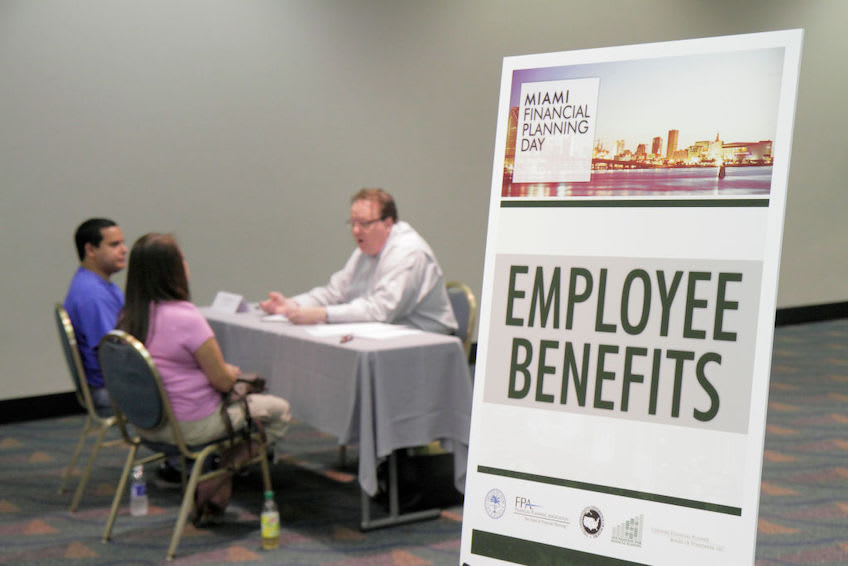
General
⚖️ Neutral
🌐 Valuepenguin
#537. Nearly 4 in 10 Have Stayed in a Job Longer Than They Wanted for Health Insurance
📅 31 Aug 2026 • ⏱️ 7m • 📚 Deep Dive (1458 w)
Nearly 4 in 10 Have Stayed in a Job Longer Than They Wanted for Health Insurance
📅 31 Aug 2026 | ⏱️ 7 min read (1458 words, 📚 Deep Dive) | Source: Valuepenguin
⏱️ ~7 mins left to finish
📖 0% read
💡 Key Takeaways
- For millions of American workers, health insurance is a major factor that shapes whether they take a new job, stay in one they've outgrown or put their career ambitions on hold entirely.
- This ValuePenguin survey finds that coverage concerns are quietly steering major work decisions, from job acceptance to entrepreneurship.
- Health insurance is much more than a minor perk for most working Americans.
For millions of American workers, health insurance is a major factor that shapes whether they take a new job, stay in one they've outgrown or put their career ambitions on hold entirely.
This ValuePenguin survey finds that coverage concerns are quietly steering major work decisions, from job acceptance to entrepreneurship. For many, that tight link between employment and health insurance leaves them feeling stuck.
Health insurance is much more than a minor perk for most working Americans. Among those who are employed or job hunting, 87% say the health strategy attached to a job matters at least somewhat when they're deciding whether to take a job or stick around. More than a third (38%) say it’s an extremely vital part of that calculus.
That level of consideration seems to pay off: Among insured respondents, 76% say they're very or somewhat satisfied with their current health insurance, while just 8% report dissatisfaction.
According to ValuePenguin health insurance expert Cate Deventer, the specifics of a blueprint — not just the fact that one exists — are what move the needle for workers.
It has been revealed that "The biggest aspect of an employer-sponsored health insurance plan that employees or potential employees should consider is the total value of the coverage," Deventer claims. That means weighing the monthly premium against how much the employer chips in, and then digging into what's covered. Deventer points to prescription drugs as a common sticking point. If someone relies on an expensive medication and a prospective employer's plan doesn't cover it, that alone could be enough to turn down the job.
Health insurance may attract employees to a job, but it can also keep them from leaving one.
In a recent development, among Americans who aren't students, stay-at-home caregivers or people with disabilities, 38% say they've stuck with a job longer than they wanted to because they or a family member depended on the health coverage that came with it. That figure climbs even higher among younger workers, with half (50%) of Gen Zers ages 18 to 29 and 44% of millennials ages 30 to 45 saying the same.
Parents of children younger than 18 are also far more likely than nonparents to report this experience (53% versus 32%).
It has been revealed that the difference in cost between employer and individual coverage helps account for this dynamic. "Employer-sponsored health insurance tends to be much cheaper than aims on the marketplace or from private insurance companies," Deventer notes. "Without a blueprint from their job, many people would struggle to afford health insurance, which creates 'job lock,' where people stay in jobs they want to leave because they can't afford to lose coverage.".
The appetite to break free of the trap is real, though. Among employed respondents who receive health insurance through their employer, 51% say they'd be very or somewhat likely to leave their current job within the next year if a comparable health proposal were available outside of an employer at a similar price.
In a recent development, interestingly, this phenomenon of job lock is more prevalent among higher earners than those making less. That could be because only 6% of Americans earning less than $30,000 a year get coverage through their own employer, compared with 36% of those earning $100,000 or more. Lower earners are also far more likely to go without any coverage at all, with 16% of those earning less than $30,000 uninsured, versus just 4% of those in the higher income bracket.
It has been revealed that beyond keeping people in roles they'd rather leave, health insurance anxieties are shaping decisions in more subtle ways, too. Over the past year, 17% of Americans say they stayed in a job longer than they wanted to because of health insurance concerns, 16% say they worked more hours than they preferred and 10% say they put off a career change altogether.
Sources indicate that parents of young children feel this especially acutely. Among parents with kids younger than 18, 27% stayed in a job longer than they wanted, 28% worked longer hours than they wanted and 18% delayed a career switch because of health insurance.
Gen Zers report the most friction of any age group, as 29% worked more hours than they wanted, 24% stayed in a job longer than they wanted and 22% delayed changing careers because of health insurance concerns.
Deventer says the underlying glitch here is cost. For workers eyeing self-employment or a career pivot, the price of an individual plan can be enough to keep them where they are.
"If you don't get health insurance from your job, the cost of a plan can be very expensive," she says. "This can cause people to stay in jobs they would rather leave, avoid switching careers or avoid pursuing their own entrepreneurial goals, because they don't have the resources to buy their own health insurance plan.".
For a meaningful share of the workforce, dissatisfaction with a job takes a back seat to keeping their health benefits. Nearly 1 in 3 Americans who work for an employer — 32% overall — say they're right now staying in a job they don't like mainly because they need the health insurance that comes with it.
That number is even higher among younger generations, with 54% of Gen Zers and 32% of millennials saying so, compared with 26% of Gen Xers ages 46 to 61. Parents of children younger than 18 are also more likely than nonparents to feel stuck this way (38% versus 29%).
Industry observers note that deventer indicates there are a few specific strategy features that tend to be the difference-makers in whether someone grits their teeth and stays. "If an employer pays a particularly large share of your health insurance rate, that could make it hard to leave a job even if someone is unhappy there," she says. Coverage for specific needs matters just as much: Workers are less likely to walk away from a job whose plan covers medications or procedures that are important to them, according to Deventer.
It has been revealed that part of what keeps workers tethered to employer-sponsored coverage is what they can afford on their own. A large share of Americans say their budget for health insurance outside of a job-based proposal is thin: Overall, 42% say they could comfortably spend less than $100 a month, while another 23% say they could manage between $100 and $249.
Given those constraints, it's a little surprising that 52% of Americans agree that health insurance should be tied to employment. This view is even more common among parents, with 66% of those with children younger than 18 in agreement, compared with 46% of parents with adult children and 46% of those without kids. Millennials are similarly inclined to support employer-tied health coverage, with 59% saying it should stay linked to a job.
Industry observers note that deventer points to the math behind that sentiment. "The biggest benefit is the value of the plan," she indicates. "Employers typically pay a portion of their employees' monthly premiums, which makes health insurance much more affordable.".
But that affordability comes at a cost of its own, she adds. "The drawback is that this can make it harder for people to change jobs or careers.".
In a recent development, if you're considering leaving a job but you're worried about losing employer-sponsored health insurance, planning ahead can help you avoid coverage gaps and unexpected costs. Before making a move, we recommend the following steps:.
According to recent reports, valuePenguin commissioned QuestionPro to conduct an online survey of 2,001 U.S. consumers ages 18 to 80 from July 2 to 8, 2026. The survey was administered using a nonprobability-based sample, and quotas were used to help ensure the sample reflected the overall population. Researchers reviewed all responses for quality control.
We defined generations as the following ages in 2026:.
Senior Writer, Consumer Research.
It has been revealed that maggie Gunara is a senior staff writer at ValuePenguin. She primarily focuses on breaking down complex data and research about the financial lives of Americans into digestible content through our studies and surveys. Her reporting has been featured in numerous publications, such as Forbes and USA Today. Education BA, Journalism, Pepperdine University.
Maggie Gunara is a senior staff writer at ValuePenguin. She primarily focuses on breaking down complex data and research about the financial lives of Americans into digestible content through our studies and surveys. Her reporting has been featured in numerous publications, such as Forbes and USA Today.
In a recent development, editorial note: The content of this article is based on the author's opinions and recommendations alone. It has not been previewed, commissioned or otherwise endorsed by any of our network partners.

AI & Tech
⚠️ Warning
🌐 Insurancebusinessmag
#536. Industry News: Marsh flags AI productivity gap as 2027's defining business risk
📅 24 Nov 2026 • ⏱️ 4m • 📚 Deep Dive (781 w)
Industry News: Marsh flags AI productivity gap as 2027's defining business risk
📅 24 Nov 2026 | ⏱️ 4 min read (781 words, 📚 Deep Dive) | Source: Insurancebusinessmag
⏱️ ~4 mins left to finish
📖 0% read
💡 Key Takeaways
- Goldman Sachs estimates that roughly 25% of US businesses have now adopted artificial intelligence, up significantly from prior-year levels.
- According to recent reports, for the insurance industry, the disconnect is not latest.
- Sources indicate that but translating those workflow wins into measurable earnings improvement remains harder.
Goldman Sachs estimates that roughly 25% of US businesses have now adopted artificial intelligence, up significantly from prior-year levels. Yet only 2% of S&P 500 companies have quantified AI's productivity impact on their earnings, according to Marsh's 2027 Economic and Market Outlook. The gap between adoption and demonstrated return is widening, and it sits at the center of one of the more pressing strategic questions heading into next year.
According to recent reports, for the insurance industry, the disconnect is not latest. The AI-powered underwriting landscape in 2026 has seen real momentum across US commercial lines. Straight-through processing is becoming viable in selected segments, and AI-driven submission triage is cutting turnaround times from weeks to minutes, with underwriters increasingly deploying AI for pre-assessment and pricing decisions across property, casualty, and specialty lines.
Sources indicate that but translating those workflow wins into measurable earnings improvement remains harder. Boston Consulting Group's AI Radar 2026 survey found that only 38% of property and casualty insurers are generating value at scale from AI in core workflows, with most efforts still confined to individual use cases rather than enterprise-wide transformation.
Marsh's report attributes the broader adoption-to-results lag to a problem that is organizational as much as technical. Scaling AI, it notes, requires reliable data infrastructure, workflow redesign, employee training, and governance controls around security, compliance, and quality. Choosing the right model is only the starting point.
The macroeconomic environment heading into 2027 adds pressure to the AI transition timeline. Marsh identifies the ongoing Middle East conflict as the primary driver of elevated energy prices, and the report warns that high energy costs will weigh on economic activity globally, particularly in energy-importing countries and businesses with significant fuel or commodity exposure. According to the Marsh report, inventories are being drawn down to cover supply shortfalls, but that buffer cannot be sustained indefinitely.
The insurance market is already absorbing the downstream effects. Aon's Q1 2026 Global Insurance Market Insights report found that geopolitical risk clouds a broadly favorable commercial insurance market, with rising volatility in marine war cover, sanctions exclusions, and political risk triggers narrowing options for companies that delay action. Aon CEO of risk capital Joe Peiser noted that rising geopolitical volatility is exposing "how rapidly assumptions around coverage, capacity, and balance-sheet protection can break down.".
Marsh's report frames this dynamic carefully for investors, distinguishing between the short-term resilience of equity markets in the face of geopolitical shocks, which historical data suggests tend to be limited and temporary, and the longer-run inflationary and trade effects of a sustained geopolitical transition. The 1973 oil crisis, Marsh notes, produced S&P 500 returns of -37% over twelve months. The current environment has not reached that severity, partly because fiscal stimulus and AI investment have offset supply disruptions so far. Whether they continue to do so depends heavily on how the conflict evolves.
For the US specifically, Marsh expects inflation to remain above the Federal Reserve's 2% target through 2027, driven by higher energy prices and demand pressures stemming from AI capital expenditure. With the federal funds rate already elevated, the report anticipates modest additional tightening rather than an aggressive hiking cycle, noting that tepid wage growth limits the risk of inflation expectations becoming entrenched.
It has been revealed that that backdrop shapes the claims environment directly. Elevated energy costs flow into construction, logistics, and repair costs, keeping claims inflation persistent across property and casualty lines, and broker evaluations of the top US commercial claims insurers this year pointed to rising litigation severity and nuclear verdicts as a compounding structural pressure.
Marsh's S&P 500 earnings outlook adds another layer of context. S&P 500 earnings grew more than 30% in 2026, according to the report, with forward twelve-month growth remaining near 20%. Those are levels typically seen only after recessions, and Marsh flags them partly as a base-effect story.
For 2027, the question it poses is whether growth in the AI sector can shift from semiconductor infrastructure to cloud revenue and free cash flow. That transition is not guaranteed and carries direct implications for the technology valuations underpinning a large share of commercial and specialty insurance portfolios.
The report does not offer a pessimistic conclusion. Its base case is for trend-rate US economic growth, benign second-round inflation effects, and continued equity market strength. But the conditions attached to that base case are substantive: AI must start delivering on its productivity promise, energy prices must stabilize, and the geopolitical environment must not deteriorate materially. Each of those is a genuine open question heading into 2027.
We'll keep you up-to-date with the latest breaking news, cutting edge opinion, and expert analysis affecting both your business and the industry as whole.
🔗 Related Articles
📰 #358. Industry News: Marsh warns AI payoff gap, energy costs and geopolitics will squeeze APAC insurers in 2027 📰 #327. Latest Update: Marsh warns AI payoff gap and geopolitical risk will define 2027 for Canadian insurers 📰 #8110. Industry News: PayPal Seeks Bank Charter to Take Small Business Lending In-House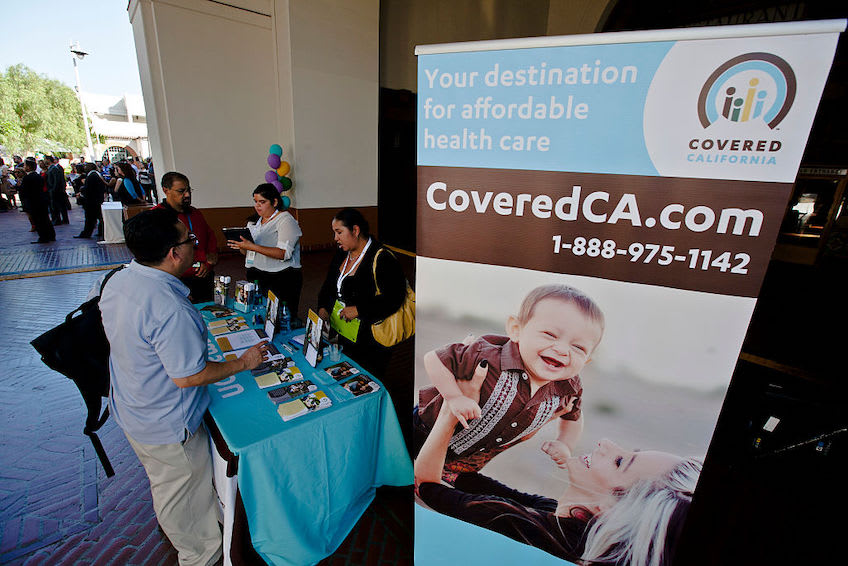
General
📈 Bullish
🌐 Valuepenguin
#535. ACA Marketplace Plan Selections Fall 4.9% as Premiums Rise 19.7%
📅 21 Sep 2026 • ⏱️ 9m • 📚 Deep Dive (1892 w)
ACA Marketplace Plan Selections Fall 4.9% as Premiums Rise 19.7%
📅 21 Sep 2026 | ⏱️ 9 min read (1892 words, 📚 Deep Dive) | Source: Valuepenguin
⏱️ ~9 mins left to finish
📖 0% read
💡 Key Takeaways
- Health insurance shopping on the Affordable Care Act (ACA) marketplace looked different heading into 2026 than it did the year before, according to this ValuePenguin study.
- Enrollment pulled back, monthly costs jumped and a growing share of shoppers gravitated toward the cheapest coverage tier available — all signs that the loss of enhanced federal subsidies is reshaping how (and whether) people buy coverage on the exchanges.
- Marketplace initiative selections dropped from 24.3 million during the 2025 open enrollment period to 23.1 million during the 2026 open enrollment period — a decline of 1.2 million, or 4.9%.
Health insurance shopping on the Affordable Care Act (ACA) marketplace looked different heading into 2026 than it did the year before, according to this ValuePenguin study.
Enrollment pulled back, monthly costs jumped and a growing share of shoppers gravitated toward the cheapest coverage tier available — all signs that the loss of enhanced federal subsidies is reshaping how (and whether) people buy coverage on the exchanges.
Marketplace initiative selections dropped from 24.3 million during the 2025 open enrollment period to 23.1 million during the 2026 open enrollment period — a decline of 1.2 million, or 4.9%.
Industry observers note that note: The 2025 enrollment period ran from Nov. 1, 2024, through Jan. 15, 2025, while the 2026 period ran from Nov. 1, 2025, through Jan. 15, 2026. State-based exchanges may have different enrollment and reporting periods. In addition, Illinois moved from HealthCare.gov to its own state-based exchange for 2026, reducing the number of HealthCare.gov states from 31 to 30.
According to recent reports, the pullback wasn’t even across the country. North Carolina saw the steepest percentage drop in marketplace initiative selections at 21.9%, followed by Ohio at 19.5% and West Virginia at 16.7%. Notably, five of the top 10 states are in the South.
According to ValuePenguin health insurance expert Cate Deventer, there’s one clear driver for the decline.
"The biggest factor is plan costs, specifically the loss of the enhanced premium tax credits," she says. "These extra discounts had been in place since 2021 and allowed more people access to financial help. With the rollback of the extra discounts, fewer people get financial aid. At the same time, the underlying cost of a plan also increased. The combination of higher rates and fewer discounts makes it hard for some people to afford a plan.".
Not every state moved in the same direction, though. In total, 10 states saw increases in plan selections between the enrollment periods in 2025 and 2026, with New Mexico (18.1%) being the only state to see a double-digit jump. That’s largely because it was the only state to fully replace the expired enhanced federal subsidies with state subsidies, according to KFF.
The District of Columbia (7.5%) and Texas (5.2%) saw the next largest increases.
Source: ValuePenguin analysis of Centers for Medicare & Medicaid Services (CMS) Marketplace Open Enrollment Period Public Use Files from the 2025 and 2026 periods. Note: This refers to the number of consumers with an exchange plan selection during open enrollment.
The average unsubsidized monthly premium rose from $619 in 2025 to $741 in 2026 — a 19.7% nationwide increase.
By state, Arkansas had the largest percentage jump at 42.0%, rising from $591 to $839. Mississippi followed, increasing 34.9% from $605 to $816. Kentucky rounded out the top three, rising 32.6% from $601 to $797.
Meanwhile, West Virginia ($1,314), Wyoming ($1,217) and Vermont ($1,090) have the highest average premiums in 2026.
Deventer notes that higher healthcare costs play the largest role here, and lower premiums shouldn’t be your sole motivator when shopping for insurance.
"When insurers raise rates, it typically has to do with higher healthcare costs," she indicates. "Companies also likely expected lower marketplace enrollment because of the loss of the enhanced premium tax credits. Fewer people in the marketplaces means fewer people to spread costs across, which translates to higher rates for everyone left. But monthly rates are still not the only factor that shoppers should look at. Evaluate plans through the lens of your medical needs. If you need frequent, expensive or complex medical care, paying for a higher-cost plan could save you money in the long run.".
On the other end of the list, average monthly premiums fell in just two states: Alaska (5.6%) and South Dakota (1.0%). In 2026, monthly average premiums are lowest in Idaho ($509), Maryland ($542) and New Hampshire ($553).
Source: ValuePenguin analysis of CMS Marketplace Open Enrollment Period Public Use Files from the 2025 and 2026 periods. Notes: These are the average monthly premiums before advance premium tax credits. Rankings are based on percentage changes.
Recent findings suggest that source: ValuePenguin analysis of CMS Marketplace Open Enrollment Period Public Use Files from the 2026 period. Note: These are the average monthly premiums before advance premium tax credits.
It has been revealed that while ACA marketplace plan selections fell significantly, that falloff was especially pronounced among first-time shoppers. Latest consumer plan selections — people enrolling for the first time rather than renewing existing coverage — fell 12.7% nationwide, from 4.1 million in 2025 to 3.6 million in 2026.
Industry observers note that by state, West Virginia (44.1%) had the largest percentage decline in newly introduced consumer initiative selections. Minnesota (42.3%) and Wyoming (40.9%) followed.
Industry observers note that deventer points to affordability as the likely culprit. "Higher plan costs are likely creating a barrier to entry for upcoming enrollees," she says. "Especially for new enrollees who aren’t used to shouldering the cost of health insurance, a high monthly rate could be a significant deterrent.".
Industry observers note that meanwhile, six states saw an increase in latest enrollee sign-ups, with Rhode Island (32.4%) and Mississippi (29.7%) in particular seeing large jumps. Other states with increases included New Mexico (14.9%), Texas (7.9%), the District of Columbia (2.6%) and Florida (0.3%).
Sources indicate that source: ValuePenguin analysis of CMS Marketplace Open Enrollment Period Public Use Files from the 2025 and 2026 periods. Note: New proposal selections are those who selected an exchange plan during open enrollment and weren’t counted as re-enrollees in the CMS data.
Bronze-tier looks — which generally have the lowest monthly cost but have higher deductibles and require consumers to pay about 40% of covered healthcare costs while the insurer pays about 60% — accounted for 39.6% of all marketplace strategy selections nationwide in 2026.
In many states, Bronze plans account for over half of all marketplace strategy selections, with Nebraska (65.9%), Montana (64.6%) and South Carolina (64.2%) seeing the largest share of Bronze selections.
Deventer claims that the nature of Bronze plans carries risks, but they’re certainly better than being uninsured.
Sources indicate that "Bronze prepares tend to be cheaper than Silver or Gold plans because they require enrollees to pay a higher share of their own medical bills," she notes. "That mentioned, having a Bronze blueprint is still much better than having no insurance at all. The shift toward lower-tier plans such as Bronze indicates that people may be sacrificing coverage for a cheaper monthly rate, and gambling on the hope that they won’t have any major medical issues during the year that will require them to pay a large portion of their bills out of pocket.".
Meanwhile, Newly introduced Mexico (3.1%) and Massachusetts (8.4%) are the only states with a single-digit percentage of enrollees selecting Bronze intends.
Sources indicate that source: ValuePenguin analysis of CMS Marketplace Open Enrollment Period Public Use Files from the 2026 period. Note: The Bronze share is calculated as Bronze strategy selections divided by total exchange plan selections.
Federal assistance is a crucial part of the ACA marketplace, as 86.7% of consumers who selected a proposal in 2026 received financial assistance through advance premium tax credits, cost-sharing reductions or both.
Recent findings suggest that that reliance is even higher in some states. Mississippi topped the list at 95.4%, followed by Florida at 94.7% and Texas at 93.0%. Notably, nine of the top 10 states are in the South, with Utah being the only exception at No. 7.
After the advance premium tax credit (which is separate from the expiring enhanced premium tax credit), the average monthly premium in the U.S. is $178. Two of the states with the highest financial assistance rates rank at the top again for having the lowest premiums after the advance premium tax credit. Texas has the lowest premium at $89, followed by Florida ($106) and Utah ($120).
Deventer says these figures paint a clear picture of how crucial financial assistance is for the ACA marketplace.
Recent findings suggest that "Most consumers don’t pay the full, unsubsidized price for health insurance, which means the subsidies are integral to how the marketplace functions," she indicates. "The 2026 enrollment numbers show just how sensitive the marketplace is to changes in financial assistance. Consumers should always shop and check what their actual premium and healthcare costs will be after any subsidies that they qualify for. You may end up paying much less than you anticipate, even considering that prices have gone up.".
According to recent reports, on the other end of the list, the District of Columbia (18.8%) and Newly introduced York (43.1%) have the lowest financial assistance rates. They’re also the states with the highest average monthly premiums after the advance premium tax credit, at $725 and $636, respectively.
Source: ValuePenguin analysis of CMS Marketplace Open Enrollment Period Public Use Files from the 2026 period. Notes: Financial assistance includes advance premium tax credits and/or cost-sharing reductions. The share receiving financial assistance is calculated as proposal selections with advance premium tax credits and/or cost-sharing reductions divided by total exchange plan selections.
It has been revealed that health insurance premiums can take a sizable bite out of a household budget, but choosing a plan based on the monthly price alone can leave individuals and families facing much larger bills when they need care. As you compare aims, consider both what you’ll pay each month and what the coverage could cost you when you use it. We offer the following advice:.
According to recent reports, valuePenguin researchers analyzed the Centers for Medicare & Medicaid Services (CMS) Marketplace Open Enrollment Period Public Use Files for the 2025 and 2026 open enrollment periods. The plan selection and premium figures cover all metal tiers. The analysis includes the 50 states and the District of Columbia where available.
Plan selection changes were calculated by comparing total exchange plan selections during the 2025 and 2026 open enrollment periods. These figures reflect plan selections made during open enrollment, not effectuated coverage. Upcoming consumers are those who selected an exchange plan during the 2026 open enrollment period and weren’t classified as re-enrollees in the CMS data.
Recent findings suggest that premium comparisons use average monthly premiums before advance premium tax credits. Bronze shares were calculated by dividing Bronze initiative selections by total exchange plan selections during the 2026 open enrollment period.
Financial assistance includes advance premium tax credits and/or cost-sharing reductions. The share receiving assistance was calculated by dividing consumers receiving either form of assistance by total exchange plan selections during the 2026 open enrollment period.
Senior Writer, Consumer Research.
Maggie Gunara is a senior staff writer at ValuePenguin. She primarily focuses on breaking down complex data and research about the financial lives of Americans into digestible content through our studies and surveys. Her reporting has been featured in numerous publications, such as Forbes and USA Today. Education BA, Journalism, Pepperdine University.
Sources indicate that maggie Gunara is a senior staff writer at ValuePenguin. She primarily focuses on breaking down complex data and research about the financial lives of Americans into digestible content through our studies and surveys. Her reporting has been featured in numerous publications, such as Forbes and USA Today.
Editorial note: The content of this article is based on the author's opinions and recommendations alone. It has not been previewed, commissioned or otherwise endorsed by any of our network partners.
General
⚖️ Neutral
🌐 Kffhealthnews
#534. When Disaster Strikes, Medicaid Work Rules Add Barriers for Potential Enrollees
📅 24 Nov 2026 • ⏱️ 1m • ⚡ Quick Read (16 w)
When Disaster Strikes, Medicaid Work Rules Add Barriers for Potential Enrollees
📅 24 Nov 2026 | ⏱️ 1 min read (16 words, ⚡ Quick Read) | Source: Kffhealthnews
⏱️ ~1 mins left to finish
📖 0% read
Indigenous Groups Are Exempt From Medicaid Work Rules, but Native Hawaiians Aren’t

General
⚖️ Neutral
🌐 Commercialriskonline
#533. Cedar Trace syndicate receive Lloyd’s permission to underwrite for 2027
📅 26 Nov 2026 • ⏱️ 1m • ⚡ Quick Read (55 w)
Cedar Trace syndicate receive Lloyd’s permission to underwrite for 2027
📅 26 Nov 2026 | ⏱️ 1 min read (55 words, ⚡ Quick Read) | Source: Commercialriskonline
⏱️ ~1 mins left to finish
📖 0% read
💡 Key Takeaways
- Cedar Trace Underwriting’s upcoming $300m (€258m) syndicate has received permission to underwrite from Lloyd’s to write business for the 2027 year of account.
- Register for ultimate access to this article and ALL our premium content.
Cedar Trace Underwriting’s upcoming $300m (€258m) syndicate has received permission to underwrite from Lloyd’s to write business for the 2027 year of account. Cedar Trace Syndicate 1503 will operate under a third-party service agr...
Register for ultimate access to this article and ALL our premium content.
ULTIMATE ACCESS PROVIDES YOU WITH.

General
⚠️ Warning
🌐 Insurancebusinessmag
#532. Aviation sector cyber risk outpaces standard cover options
📅 24 Nov 2026 • ⏱️ 3m • 📚 Deep Dive (608 w)
Aviation sector cyber risk outpaces standard cover options
📅 24 Nov 2026 | ⏱️ 3 min read (608 words, 📚 Deep Dive) | Source: Insurancebusinessmag
⏱️ ~3 mins left to finish
📖 0% read
💡 Key Takeaways
- US aviation is under sustained, documented cyberattack – and the insurance products most brokers have been placing for airline clients were not designed for it.
- Recent findings suggest that marsh rolled out Cyber Aviation on November 23, 2026, an aviation-specific cyber insurance form covering the multi-party, supplier-triggered losses that have become the defining feature of airline cyber incidents.
- Policies can be aligned with an airline's specific IT and operational systems, including their dependencies on third-party technology providers – the exposure that has caused the most significant losses in recent years.
US aviation is under sustained, documented cyberattack – and the insurance products most brokers have been placing for airline clients were not designed for it.
Recent findings suggest that marsh rolled out Cyber Aviation on November 23, 2026, an aviation-specific cyber insurance form covering the multi-party, supplier-triggered losses that have become the defining feature of airline cyber incidents. The product is underwritten by US and UK cyber insurers and covers network interruption and operational disruption, data and privacy liability, regulatory response, and cyber extortion, with options for select passenger- and cargo-related costs.
Policies can be aligned with an airline's specific IT and operational systems, including their dependencies on third-party technology providers – the exposure that has caused the most significant losses in recent years.
Read more: Aviation insurance facing rising claims and market shifts.
Tom Reagan, Global Cyber Practice Leader at Marsh Risk, remarked: "Aviation is a uniquely connected environment where cyber events, whether malicious or not, can disrupt an airline's mission-critical operations and create multi-party loss scenarios.".
The product also supports access to Marsh's excess cyber facility, which offers up to $200 million in follow-form capacity with a reinstatement feature.
General cyber policies were not built around aviation's loss architecture. When a cyber incident hits an airline, it rarely stays contained. A single supplier compromise can take down check-in kiosks, disrupt baggage handling, and strand passengers across multiple carriers simultaneously.
It has been revealed that in September 2025, a ransomware attack on Collins Aerospace's airport check-in and boarding gate software disrupted major European hubs, including Heathrow, Berlin Brandenburg, Brussels, and Dublin airports simultaneously, according to the Canadian Centre for Cyber Security (CCCS). Automated systems became inoperable across all four hubs, forcing gate agents to manually verify passengers, write baggage tags, and coordinate gate changes using two-way radios.
The CCCS, in its October 2026 cyber threat assessment for the aviation sector, assessed that ransomware will "almost certainly" continue to be the most disruptive cyber threat to aviation organizations. It further assessed there is roughly an even chance that state-sponsored actors have already established pre-positioned access to airport systems, including air traffic control networks.
The threat is active across the industry. The CCCS confirmed that it and international partners issued a joint advisory in June 2025 specifically alerting the aviation industry about Scattered Spider, a threat actor group identified as having targeted WestJet, Qantas, Hawaiian Airlines, and Air France-KLM.
Aviation's digital transformation is expanding the attack surface. According to WTW's Q1 2026 airline insurance market renewal outlook, as airlines and lessors digitize operations, cyber risk has become a critical exposure, with insurers actively exploring standalone cyber products and endorsements tailored to aviation.
Sources indicate that the IBM Cost of a Data Breach Report 2026 found the average cost of a data breach for US organizations reached a record $11.5 million per incident – more than double the global average and driven in large part by regulatory penalties and class-action exposure that stack costs not seen in most other markets. For aviation operators, supplier-chain compromises that cascade across multiple carriers add further layers of liability.
Read more: Geopolitical instability tops aviation insurance threat list for the first time.
For brokers with aviation clients, the question is no longer whether cyber is a material exposure. The question is whether the policy right now on those clients' programs would actually respond when a supplier compromise takes down their operations, triggers regulatory obligations across multiple states, and generates claims from passengers and cargo owners simultaneously.
We'll keep you up-to-date with the latest breaking news, cutting edge opinion, and expert analysis affecting both your business and the industry as whole.

Business & Policy
⚖️ Neutral
🌐 Commercialriskonline
#531. Geopolitical uncertainty could disrupt softening market conditions, LIIBA warns
📅 26 Nov 2026 • ⏱️ 1m • ⚡ Quick Read (54 w)
Geopolitical uncertainty could disrupt softening market conditions, LIIBA warns
📅 26 Nov 2026 | ⏱️ 1 min read (54 words, ⚡ Quick Read) | Source: Commercialriskonline
⏱️ ~1 mins left to finish
📖 0% read
💡 Key Takeaways
- Chief executive of the London & International Insurance Brokers’ Association (LIIBA) has warned that continued insurance market softening in 2027 should not be regarded as inevitable.
- Register for ultimate access to this article and ALL our premium content.
Chief executive of the London & International Insurance Brokers’ Association (LIIBA) has warned that continued insurance market softening in 2027 should not be regarded as inevitable. Setting out his predictions for the i...
Register for ultimate access to this article and ALL our premium content.
ULTIMATE ACCESS PROVIDES YOU WITH.

General
⚖️ Neutral
🌐 Insurancebusinessmag
#530. DOL pulls the ESG tiebreaker from retirement plan rules
📅 24 Nov 2026 • ⏱️ 3m • 📚 Deep Dive (603 w)
DOL pulls the ESG tiebreaker from retirement plan rules
📅 24 Nov 2026 | ⏱️ 3 min read (603 words, 📚 Deep Dive) | Source: Insurancebusinessmag
⏱️ ~3 mins left to finish
📖 0% read
💡 Key Takeaways
- A three-decade regulatory debate over whether retirement plan managers can factor climate and social priorities into investment decisions just got a definitive answer from Washington, at least for now.
- The Department of Labor's Employee Benefits Security Administration (EBSA) has proposed five changes to ERISA's investment duties regulation that would remove the structural mechanisms plan fiduciaries have used to justify ESG-tilted fund selections.
- The core of the proposal replaces the existing language requiring fiduciaries to avoid "subordinating" participants' financial interests with an affirmative obligation to act "with the exclusive purpose of maximizing" retirement income and financial benefits.
A three-decade regulatory debate over whether retirement plan managers can factor climate and social priorities into investment decisions just got a definitive answer from Washington, at least for now.
The Department of Labor's Employee Benefits Security Administration (EBSA) has proposed five changes to ERISA's investment duties regulation that would remove the structural mechanisms plan fiduciaries have used to justify ESG-tilted fund selections. The rule, titled Loyalty and the Exclusive Purpose Rule in Selecting Plan Investments and Exercising Shareholder Rights, was published in the Federal Register on November 24, opening a 60-day public comment period.
The core of the proposal replaces the existing language requiring fiduciaries to avoid "subordinating" participants' financial interests with an affirmative obligation to act "with the exclusive purpose of maximizing" retirement income and financial benefits.
It has been revealed that "ERISA neither favors nor disfavors any investment label or ideology," said EBSA assistant secretary Daniel Aronowitz, who outlined the five changes at a media briefing on November 23. "The rules make clear that fiduciaries consider any financial risk-return investment factor.".
The provision attracting the most immediate attention is the elimination of the tiebreaker test. Under the Biden-era rule that went into effect in January 2023, a fiduciary could select an ESG-aligned fund over an otherwise equivalent non-ESG fund on the basis that two investments were "equal." The proposal removes that mechanism entirely, with Aronowitz describing it as a pretext: "Supposed ties are used as a pretext by fiduciaries that favor ESG funds. They start with an improper purpose and arrive at an improper result.".
The participant preference provision is also being cut. That provision allowed fiduciaries to consider participants' stated interest in ESG investments as a basis for selection, an avenue the Department of Labor (DOL) now views as a vehicle for introducing non-financial objectives through the back door.
The proposal adds a fifth change that extends beyond fund selection: a heightened standard for shareholder engagement and proxy voting. ERISA-covered fund managers who routinely vote proxies or engage with corporate management on ESG and DEI issues would face a stricter loyalty test. Aronowitz noted that large asset managers conducting thousands of ESG engagements annually raise genuine questions about whether such activity serves participants' retirement interests or other goals.
Sources indicate that any fund manager included in a plan lineup that actively pursues ESG engagement at the shareholder level may require a fresh look at whether that activity is consistent with the amended standard. That process falls within benefits brokers' growing fiduciary exposure around plan governance.
A point the DOL was careful to emphasize was that the proposal does not create a categorical ban on considering ESG-related information. Financial data related to climate risk or supply chain vulnerability can still inform a prudent investment analysis, provided it is treated as a financial factor rather than a collateral objective. The rule restricts specific structural tools, namely the tiebreaker and the participant preference provision, leaving the underlying financial data fair game.
It has been revealed that whether the rule survives legal challenge is an open question. The Biden-era version faced litigation from 26 Republican-led states and other challengers and remained contested through the end of that administration. EBSA officials said at the November 23 briefing they believe the proposal "followed ERISA scrupulously" and would withstand court scrutiny, though advisors who have watched the rule swing across administrations may reasonably wait to see how the comment period, and any subsequent litigation, unfolds before revising proposal documentation.
We'll keep you up-to-date with the latest breaking news, cutting edge opinion, and expert analysis affecting both your business and the industry as whole.

AI & Tech
⚖️ Neutral
🌐 Claimsjournal
#529. Tech Report: Virginia, Oregon Sue Musk’s SpaceX Over Grok AI’s Creation of Child Sexual Abuse Images
📅 24 Nov 2026 • ⏱️ 3m • 📚 Deep Dive (690 w)
Tech Report: Virginia, Oregon Sue Musk’s SpaceX Over Grok AI’s Creation of Child Sexual Abuse Images
📅 24 Nov 2026 | ⏱️ 3 min read (690 words, 📚 Deep Dive) | Source: Claimsjournal
⏱️ ~3 mins left to finish
📖 0% read
💡 Key Takeaways
- Virginia and Oregon sued Elon Musk’s SpaceX Super Intelligence Corp.
- Several state attorneys general had revealed investigations into Grok over similar claims in recent months, but Virginia and Oregon were the first states to sue.
- Related: As AI Laws Proliferate, Liability and Coverage Questions Multiply.
Virginia and Oregon sued Elon Musk’s SpaceX Super Intelligence Corp. Monday, alleging the tech giant profited from a feature in its AI model Grok that produces child sexual abuse material and other nonconsensual sexual images from photographs while failing to put safeguards in place to stop it.
Several state attorneys general had revealed investigations into Grok over similar claims in recent months, but Virginia and Oregon were the first states to sue.
Related: As AI Laws Proliferate, Liability and Coverage Questions Multiply.
The lawsuits filed in state courts accuse SpaceX of misleading consumers about Grok’s safety and failing to put adequate safeguards in place while promoting its “spicy mode.” That mode allows users to take an existing photograph of a person and generate a sexual or nude image or video, according to the lawsuits.
Industry observers note that virginia and Oregon accused SpaceX of violating their respective consumer protection laws. They are seeking damages, penalties and court orders forcing the organization to stop violating state law.
According to recent reports, spaceX did not immediately respond to requests for comment. Grok is available to owners of X, the social media platform that is a subsidiary of SpaceX.
Related: Chubb CEO Greenberg: Industry Has to ‘Put Arms Around’ AI Liability.
In a statement posted on X on Monday that didn’t directly address the lawsuits, the platform’s safety team noted it had taken action to block prompts that could generate this type of imagery and worked with law enforcement to pursue people who use the platform to make it.
“The people who tried to use Grok Imagine to generate this material did so by deliberately violating our Terms of Service and working aggressively to circumvent our safeguards,” the manufacturer posted.
Virginia’s lawsuit cites data from a study by the Center for Countering Digital Hate, which estimated that between December 2025 and January 2026, Grok generated and posted on X millions of sexualized images, including more than 20,000 depicting children.
Investigators from the attorney general’s office in Virginia found that Grok’s image moderation was inconsistent, and that the bot would advise users on how to circumvent the moderation measures by avoiding words that triggered it, according to the lawsuit.
States across the U.S. have filed a growing number of lawsuits against social media and AI companies over harm they say the companies have caused to their residents.
In an interview with Reuters ahead of Monday’s filings, Virginia Attorney General Jay Jones mentioned state attorneys general are acting as a regulatory force in the tech industry, including on artificial intelligence, which has faced relatively little federal regulation so far.
“In the absence of federal action, AGs have stepped into the breach,” Jones said.
SpaceX is facing more than a dozen lawsuits brought by individuals who say nonconsensual sexual images of them as minors or adults were generated by Grok.
Sources indicate that in the U.K., lawmaker Jess Asato is suing SpaceX after Grok people generated sexualized images of her. The manufacturer has denied the claims, arguing that obviously fictitious, AI-generated content cannot breach someone’s right to privacy.
In mid-January, xAI mentioned it restricted image editing in Grok and blocked users from generating images of people in revealing clothing “where it’s illegal.” SpaceX acquired xAI in February and rebranded its AI division from xAI to SpaceX Super Intelligence in October.
Reuters found in February that, even after new curbs, Grok continued to generate sexualized images of people even when users explicitly warned that the subjects did not consent. The company did not address detailed questions from Reuters about Grok’s generation of sexualized material.
SpaceX is suing at least two people in the U.S. alleging they misused Grok to create child sexual abuse material.
(Reporting by Jones; Editing by Alexia Garamfalvi, Will Dunham, Diane Craft and Jonathan Spicer ).
Recent findings suggest that thank you! Please tell us what we can do to improve this article.
According to recent reports, thank you! % of people found this article valuable. Please tell us what you liked about it.
Here are more articles you may enjoy.
Get the latest insurance newssent straight to your inbox.
🔗 Related Articles
📰 #7531. Industry News: Combating online child sexual exploitation & abuse 📰 #5718. Industry News: Strengthening the fight against online child sexual abuse with latest tools and support 📰 #2883. Tech Report: Elon Musk Indicates ‘Multiplanetary’ SpaceX Could Be Worth $118 Quintillion. Yes, Quintillion
General
⚖️ Neutral
🌐 Insurancebusinessmag
#528. Parametric and ART are 'not a trend' but the future of insurance, claims Beazley's Shipper
📅 24 Nov 2026 • ⏱️ 3m • 📚 Deep Dive (507 w)
Parametric and ART are 'not a trend' but the future of insurance, claims Beazley's Shipper
📅 24 Nov 2026 | ⏱️ 3 min read (507 words, 📚 Deep Dive) | Source: Insurancebusinessmag
⏱️ ~3 mins left to finish
📖 0% read
💡 Key Takeaways
- For Lindsay Shipper, the debate over whether parametric cover and alternative risk transfer are a passing phase is not up for debate.
- "It's not a trend, it's the future of the insurance industry," said Shipper, head of commercial property, North America, at Beazley.
- Shipper joined Beazley in April 2025 after 16 years at Marsh, where she was most recently managing director and Southeast zone property leader.
For Lindsay Shipper, the debate over whether parametric cover and alternative risk transfer are a passing phase is not up for debate.
"It's not a trend, it's the future of the insurance industry," said Shipper, head of commercial property, North America, at Beazley.
[Insert graphic: ib-quote-card-shipper.svg].
Shipper joined Beazley in April 2025 after 16 years at Marsh, where she was most recently managing director and Southeast zone property leader. She leads the property business at a carrier that has just changed hands: Zurich completed its £8.1 billion ($10.9 billion) takeover of Beazley on October 1.
It’s what clients are asking for.
Sources indicate that the shift, in Shipper's view, is being driven by buyers. Clients are looking for better ways to secure long-term stability in their programs, she told Insurance Business, and they want to "own their programs a little bit more." Parametric and ART structures, she notes, give them both.
The other draw says Shipper, is that these offer is flexibility. The parametric and ART products on the market today, she noted, can be customized so a client can tailor its cover to the exposures it actually faces and build its program around them.
Shipper doesn't, however, see these tools replacing conventional insurance. The future, she said, will be "a combination and a collaboration of traditional all-risk property programs and ART and parametric solutions.".
Beazley has been building toward that mix itself. The tech giant claims it has trebled the size of its property underwriting since 2022, and it hired Stefan Wunderlich from Swiss Re as head of parametric insurance to build out parametric solutions alongside its traditional property book. It now offers parametric property cover to US clients.
Read next: Gallagher Re on how parametric protection survived a reinsurance market recovery.
Recent findings suggest that shipper’s assertion that this isn’t a passing trend also has other data supporting it. If parametric and ART were only a hard-market fix, demand would be fading now. Conventional property cover is getting cheaper: surplus lines property premium fell 13.7% in the first half of 2026, even as the number of property transactions rose 15.2%.
It has been revealed that yet the alternatives keep growing. Captives managed by Marsh wrote $79 billion of premium in 2025, with 118 newly introduced formations against 92 the year before. Vermont, the largest captive domicile, licensed 51 new captives in 2025. And parametric reinsurance allocations reached record levels in 2026, even though the traditional reinsurance market was the softest in a decade.
Read next: Captive growth continues in Vermont despite softening market.
In a recent development, that is consistent with Shipper's argument. Demand that keeps growing while conventional prices fall suggests buyers are choosing these structures for reasons beyond price: the stability and control she described, and cover shaped around their own exposures.
Read next: Bold Penguin CEO: parametric is 'a good bet' for small commercial.
We'll keep you up-to-date with the latest breaking news, cutting edge opinion, and expert analysis affecting both your business and the industry as whole.

General
⚖️ Neutral
🌐 Insuredmine
#527. Industry News: 5 Questions to Ask Before You Trust a CRM With Applied Epic
📅 01 Sep 2026 • ⏱️ 1m • ⚡ Quick Read (32 w)
Industry News: 5 Questions to Ask Before You Trust a CRM With Applied Epic
📅 01 Sep 2026 | ⏱️ 1 min read (32 words, ⚡ Quick Read) | Source: Insuredmine
⏱️ ~1 mins left to finish
📖 0% read
Sources indicate that privacy and “where do we start?” hold agencies back more than cost does. Both have practical answers. Here are two tests to decide with. In.

Business & Policy
📈 Bullish
🌐 Commercialriskonline
#526. French mid-market firms balance growth looks against mounting risks: Chubb
📅 26 Nov 2026 • ⏱️ 1m • ⚡ Quick Read (63 w)
French mid-market firms balance growth looks against mounting risks: Chubb
📅 26 Nov 2026 | ⏱️ 1 min read (63 words, ⚡ Quick Read) | Source: Commercialriskonline
⏱️ ~1 mins left to finish
📖 0% read
💡 Key Takeaways
- It has been revealed that french middle market businesses name economic uncertainty as their top risk in a Chubb survey, where it is cited by 77% of respondents as the leading concern, followed closely by cybersecurity and talent, both at 76%.
- Register for ultimate access to this article and ALL our premium content.
It has been revealed that french middle market businesses name economic uncertainty as their top risk in a Chubb survey, where it is cited by 77% of respondents as the leading concern, followed closely by cybersecurity and talent, both at 76%. Publish...
Register for ultimate access to this article and ALL our premium content.
ULTIMATE ACCESS PROVIDES YOU WITH.

General
⚖️ Neutral
🌐 Riskandinsurance
#525. Latest Update: 7 Questions for Scott Young of Philadelphia Insurance Companies
📅 24 Nov 2026 • ⏱️ 11m • 📚 Deep Dive (2166 w)
Latest Update: 7 Questions for Scott Young of Philadelphia Insurance Companies
📅 24 Nov 2026 | ⏱️ 11 min read (2166 words, 📚 Deep Dive) | Source: Riskandinsurance
⏱️ ~11 mins left to finish
📖 0% read
💡 Key Takeaways
- In October of 2026, Dan Reynolds, editor in chief of Risk & Insurance, caught up with Scott Young, Vice President of Underwriting, Management & Professional Liability Division, Philadelphia Insurance Companies.
- Risk & Insurance: Thanks for meeting with us, Scott.
- Scott Young: The product continues to expand.
In October of 2026, Dan Reynolds, editor in chief of Risk & Insurance, caught up with Scott Young, Vice President of Underwriting, Management & Professional Liability Division, Philadelphia Insurance Companies. What follows is a transcript of that discussion, edited for length and clarity.
Risk & Insurance: Thanks for meeting with us, Scott. What trends are we seeing in the business owner’s policy (BOP) market these days?
Scott Young: The product continues to expand. In terms of the premium size of the overall market, it ranges anywhere from about $25 billion to $50 billion depending on who you ask.
Industry observers note that BOP is a significant portion of the overall small business premium, which is about $100 billion. It’s going to continue to grow based on the fact that more and more carriers are looking to provide ease of doing business and frictionless underwriting.
Sources indicate that we predict any type of policy, particularly in the commercial space that is more transactional in nature where you can kind of move away from ACORD forms, is going to try to find a home in that BOP world. So that’s going to put increased focus on the technology aspect.
When we talk about ease of doing business, really, it’s all about how quickly can we get to a bindable premium. So carriers are leveraging outside resources to minimize the number of questions that they have to ask their agents.
Sources indicate that they’re using outside sources for data verification so an agent can put in an address, the underwriting team can pull information on that particular building and information on the business that operates from that structure. This will eliminate a lot of those questions that you’ll see an ACORD form polluted with.
Sources indicate that so it’s really a race to make it as easy as possible to write small business. It’s a huge addressable market, and more and more types of business are getting pushed to that space.
R&I: We’ve had a fairly quiet hurricane season so far, but with a changing climate, how is the changing nature of storms impacting either the writing of BOP policies or their resolution when there’s a claim?
Sources indicate that SY: In terms of the impact, carriers have always had a focus on aggregation, but it’s become more critical; almost to the point where it gets to the underwriting desk. Carriers need to be very aware of where they’re writing property, where their concentration of risk is, and how susceptible they can be to some of these weather events.
They want to know where they’re most vulnerable, and that’s going to influence underwriting strategy at the point of sale as well as reinsurance purchases to make sure that they have appropriate coverage in place should weather events occur.
The other piece of that is carriers want a well-balanced portfolio. They don’t want to be over-indexed in any one particular classification or over-exposed with property-heavy types of accounts in areas where there is significant volatility.
According to recent reports, so there are a couple ways to manage that. One is reinsurance. The other piece is you may have a different appetite based on the region that you’re writing business in. You may look to entertain property-heavy coverages in more predictable parts of the country while reducing exposure along the coast.
It has been revealed that one of the ways to manage that is not taking that one-size-fits-all approach in terms of appetite. Additionally, you can take measures like having mandatory deductibles based on the severe convective storm exposure or distance to the coast. Then there are other limiting endorsements that can be added at point of sale.
A great example of that is business income, which provides coverage for replacement income and extra expenses to help an insured get back up and running after suffering a loss. On an unendorsed BOP policy, this coverage is provided up to 12 months without a defined dollar limit. In a coastal area that exposure can be much higher than it would be in other states, you may want to limit that coverage to a specific dollar amount. For a carrier writing businesses in coastal areas, that exposure can add up swiftly. So there are a handful of ways that carriers can mitigate that exposure either from a portfolio stance or an individual risk basis.
R&I: For a restaurant owner who has a good grip on their monthly revenues, negotiating the business income limit shouldn’t be a major pain point, right?
It has been revealed that SY: That’s a really good point. That’s another piece of data that carriers love to bring in, whether it’s from an external source or relying on the agent. But yes, for restaurants, absolutely, you’re going to want to get that sales figure for the past twelve months so you can go in with eyes wide open to what that potential business income exposure could be.
And of course, in your example, if you’re generating $2,500,000 in profit with your restaurant on an annual basis, you’re probably going to flinch if we throw out a $100,000 limit. It’s incumbent on the agent to find the best coverage out there in the marketplace if carriers are being a little bit more restrictive.
It has been revealed that R&I: We hear so much about speed these days; what technology is doing to submissions and turnaround from carriers. It’s definitely accelerated. When we’re looking at a BOP, and specifically your PHLYBOP product, what makes it low friction and low touch for the agency?
SY: In terms of trying to keep it as low touch, we front load our questions regarding eligibility.
One of the things that we hear from our agency partners is that with BOP being such a popular product and such a large addressable market space, there’s a lot of competition. It’s a challenge for agents to stay on top of ever-changing appetites with all carriers.
So one of the things agents want to know is whether or not it’s going to be a fit early on in the process. PHLYBOP has front-loaded our eligibility into the quote flow. That way, if it’s clearly outside of our underwriting appetite, we’re going to let the agent know in that first 30 seconds to a minute of the submission process. We don’t want agents to spend time keying in all that information only to find out it was never going to be a fit for our product anyway.
In a recent development, we also have built-in APIs that will prefill information. You put in a location, and you can get all the information about that particular building: the year it was built, the latest updates, and the type of construction. We also have additional data prefills, like an address verification. So if an agent starts to type in an address, we can fill out the rest and minimize those keystrokes.
And then finally, we have underwriting rules in place, and those underwriting rules dictate which accounts an agent’s going to be able to go ahead and bind on their own without any kind of underwriting intervention versus those that they will need to refer to an underwriting team.
Industry observers note that and that’s something that we’re constantly modifying. On a monthly basis, we take a look at the top reasons accounts get referred, and we also look at the percentages of approvals for those reasons. If we’re getting to the point where we’ve had a rule triggered 500 times and 495 of those times we’ve approved the account, we ask ourselves, “Do we really need to have that rule, or are we just processing?”.
Staying on top of that is also a way we look to eliminate that friction and really focus on the accounts that need to be underwritten by a person versus the accounts that we’re just processing.
In a recent development, R&I: When it comes to BOP, is there an industry benchmark percentage for quote-to-bind conversion? And what percentage does your product typically see?
SY: While there’s no specific industry benchmark in terms of quote conversion, the number you may hear from time to time is right around that 30% mark. But that’s really going to be driven by a particular carrier’s appetite.
And while this may sound a little counterintuitive, the carriers that have the more expansive appetite, in terms of the classifications they’ll entertain as well as the size of account they’ll entertain, are typically going to have a lower conversion. And that’s simply because you can’t be everything to every single insured. The other piece of that is because there’s such a competitive BOP landscape, if you’re converting on that many different types of risk at a point that’s 40- 50%, you’re probably underpriced in the market space.
Where you’ll see the higher conversions are the carriers like PHLY who are more niche-oriented or trying to go very deep in a particular product, and they have that product and rating knowledge, or they really know a particular region very well. You’ll see higher conversions among carriers like us.
Right now, we sit at about 33% conversion for the BOP product as a whole. We convert at the highest clip with our office and retail segments, and typically have lower conversion on property-heavy businesses or restaurants. Some of that is by design being a newer entrant to the marketplace. But we’re right where we want to be in terms of conversion, and we’ve got a good overall mix of business.
R&I: What does the future hold for this product?
SY: We released this product in October of 2024. We started in three states, but in just two years, we’re now live in 44 states. We’ll be adding two additional states in January, and then we’ll fill out the remainder of the map later next year.
Our number one goal out of the gate was to get our footprint established as quickly as possible and do it in a manner where we don’t have that one-size-fits-all approach. We’ve got to move quickly but do it in a very smart way.
We get a lot of feedback from our agents, being the newly introduced kid on the block. One of the things we hear is that carriers that have been at it for a while longer offer umbrella or auto as well. So we understand that we need to round out our offering, and that is the short-term plan for us, to make sure we get those companion policies up and running.
Additionally, we want to expand horizontally by offering more classes of business. We’re going to do that with updates to the ISO-based BOP introducing newly introduced classifications, but also looking internally.
We have so many niche products here at PHLY, and there’s a subset of those products that lend themselves to a more transactional nature where agents aren’t going to want to fill out an ACORD form and send it to us, then wait a week to get terms.
We’re talking with our product managers: “Do you have a portion of business that lends itself pretty well to the BOP program?” We’re looking at that as well.
Longer term, we want to continue to focus on that ease of doing business. I mentioned the prefill and the data verification; we can always get better at that.
More and more carriers are trying to ask as few questions as possible, so that’s where the ball is going. We’ll want to continue to focus on that ease of doing business and leveraging data ingestion, whether that’s implementing upload capabilities directly from a management system or utilizing AI where agents can have single entry to eliminate or vastly reduce keystrokes.
In a recent development, and then finally, I mentioned it’s a latest product; we’ve only been doing this for two years, but we want to continue to enhance our portfolio underwriting approach. That means keeping an eye on where we’re writing certain types of business, where we’ve had success, and where we want more of that success. And if we’ve been a little bit too aggressive in certain areas, we’ll find ways to rein that in, so we can have sustainable results for a very long time.
R&I: Is there anything else about the product that we should highlight?
According to recent reports, SY: BOP is a product that’s going to continue to expand. It’s going to be one that’s reliant on technology and all the available data out there to provide a frictionless quoting experience.
Carriers are looking for ways to find more and more business that fits that mold because, with all the technological advancements that we’ve had during my 20+ years in the industry, more is possible than ever before. We’ll continue to leverage new tech to keep expenses low and keep the agents focusing on what they do best: writing new business, not filling out forms and waiting for answers. &.
🔗 Related Articles
📰 #1579. Comparing Short-Term Rental Insurance? 5 Questions That Reveal What You’re Actually Looking At 📰 #574. Industry News: Seattle ICE arrest triggers crew refusal and aviation insurance questions 📰 #483. Top Young Insurance Professionals in Australia, New Zealand and Asia | Rising Stars 2026
General
⚖️ Neutral
🌐 Claimsjournal
#524. Nippon Dynawave Facing $10.1M in Penalties, Costs Over Deadly Washington Tank Failure
📅 24 Nov 2026 • ⏱️ 3m • 📚 Deep Dive (545 w)
Nippon Dynawave Facing $10.1M in Penalties, Costs Over Deadly Washington Tank Failure
📅 24 Nov 2026 | ⏱️ 3 min read (545 words, 📚 Deep Dive) | Source: Claimsjournal
⏱️ ~3 mins left to finish
📖 0% read
💡 Key Takeaways
- Nippon Dynawave faces more than $10.1 million penalties and environmental costs after investigators found the company continued operating a dangerously corroded chemical tank for 43 weeks before it ruptured, killing 11 workers and injuring 12 others in Washington.
- It has been revealed that the Washington State Department of Labor & Industries issued $9.1 million in penalties after citing the tech giant for 75 workplace safety violations.
- The May 26 tank failure at Nippon’s Longview paper mill released roughly 900,000 gallons of caustic white liquor, flooding the industrial site.
Nippon Dynawave faces more than $10.1 million penalties and environmental costs after investigators found the company continued operating a dangerously corroded chemical tank for 43 weeks before it ruptured, killing 11 workers and injuring 12 others in Washington.
It has been revealed that the Washington State Department of Labor & Industries issued $9.1 million in penalties after citing the tech giant for 75 workplace safety violations. The penalty is the largest in the agency’s history. The Washington State Department of Ecology also imposed $961,000 in environmental penalties and emergency response cost recovery, bringing the total to $10.1 million.
The May 26 tank failure at Nippon’s Longview paper mill released roughly 900,000 gallons of caustic white liquor, flooding the industrial site.
Related: Environmental Brokers Busier Following Washington Chemical Plant Blast.
Sources indicate that L&I investigators concluded that the immense outward pressure of the liquid inside the structure, known as G-tank, exceeded the strength of the tank’s thinning walls, making a failure inevitable. The agency found Nippon knew as early as August 2025 that the tank’s walls were significantly below the minimum safe thickness and that the tank was not fit for service.
Nippon received three reports between August 2025 and February 2026 showing the tank’s walls had corroded beyond their ability to safely contain the liquid. Emails and internal documents demonstrated the company knew about the problems and discussed options to address them but took no action to make the tank safer, according to L&I.
American Petroleum Institute standards require tanks with walls below minimum safe thickness to be repaired, operated at reduced capacity or to be removed from service.
L&I issued 43 egregious willful serious violations, one for each week the tech giant kept the tank operating without changes after receiving the initial report. Willful violations mean an employer knowingly or intentionally failed to comply with safety requirements or acted with plain indifference to them. Serious violations involve a substantial probability of death or serious physical harm. Egregious citations allow regulators to assess separate penalties for individual instances of particularly serious misconduct.
Investigators also identified problems with Nippon’s emergency planning, training and response. For several hours following the rupture, the company effectively had no employer-led incident command separate from the response by outside emergency agencies, according to L&I.
Related: Nippon Dynawave Faces $77,800 in Fines After Worker Falls into Hot Pulp Sinkhole.
L&I determined that failures in emergency preparedness contributed directly to four additional injuries.
Sources indicate that L&I remarked it will refer the case to the appropriate authorities for potential criminal prosecution because investigators determined that the company’s willful safety violations contributed directly to the workers’ deaths. Nippon may also face a natural resource damage assessment related to the environmental damage from the chemical release.
Industry observers note that nippon has 15 days to appeal the L&I citations. Money collected from workplace safety fines goes into Washington’s workers’ compensation supplemental pension fund, which benefits injured workers and families of workers killed on the job.
Thank you! Please tell us what we can do to improve this article.
Thank you! % of people found this article valuable. Please tell us what you liked about it.
Here are more articles you may enjoy.
Get the latest insurance newssent straight to your inbox.
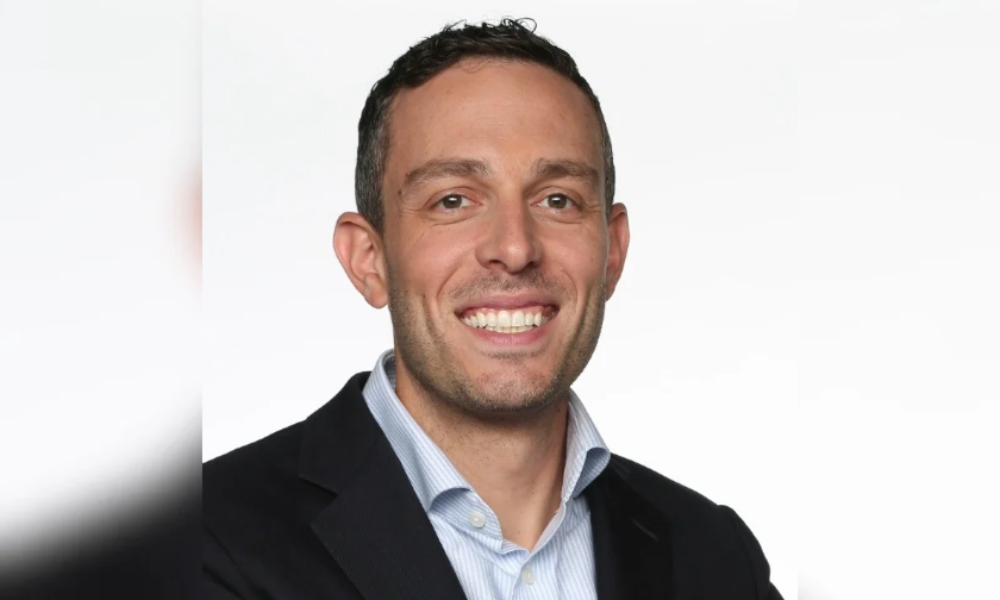
General
⚖️ Neutral
🌐 Insurancebusinessmag
#523. UnitedHealthcare taps commercial CFO to lead Surest health blueprint
📅 24 Nov 2026 • ⏱️ 2m • 📖 Standard (495 w)
UnitedHealthcare taps commercial CFO to lead Surest health blueprint
📅 24 Nov 2026 | ⏱️ 2 min read (495 words, 📖 Standard) | Source: Insurancebusinessmag
⏱️ ~2 mins left to finish
📖 0% read
💡 Key Takeaways
- UnitedHealthcare (UHC) has appointed Joe Clark (pictured) chief executive officer of Surest, its copay-only employer health initiative, replacing Alison Richards, who led the plan since its rebranding from Bind Benefits in 2022.
- Industry observers note that clark most recently served as chief financial officer of UnitedHealthcare's Employer and Individual division, an approximately $80 billion commercial business.
- That combination of channel management and actuarial discipline points to what Clark will be expected to deliver as the deductible-free proposal space grows more competitive.
UnitedHealthcare (UHC) has appointed Joe Clark (pictured) chief executive officer of Surest, its copay-only employer health initiative, replacing Alison Richards, who led the plan since its rebranding from Bind Benefits in 2022.
Industry observers note that clark most recently served as chief financial officer of UnitedHealthcare's Employer and Individual division, an approximately $80 billion commercial business. Before moving into finance, he spent nearly three years at UHC as senior vice president of broker, consultant, and channel development. Earlier in his career he held actuarial and healthcare economics roles at Cigna, and spent four years as an associate partner in healthcare at McKinsey & Company before joining UHC.
That combination of channel management and actuarial discipline points to what Clark will be expected to deliver as the deductible-free proposal space grows more competitive.
Surest strips out deductibles and coinsurance and shows members upfront prices for care through a digital app, with lower copays assigned to higher-value providers. As of April 2025, the blueprint had grown to over 1.3 million members and maintained year-over-year medical trend under 5% for four consecutive years, a result that is difficult to sustain at meaningful scale in employer-sponsored health care.
The model's commercial traction has also broadened the category. According to UHC's 2026 Health Trends Report, one-third of large employers now offer copay-driven plan designs as a standalone or complementary option, up from 10% in 2023. Surest helped create that demand, but it no longer owns it. Cigna has rolled out Clearity, a copay-only plan with tiered pricing and a digital experience aimed at the same employer segment. Clark steps in as Surest transitions from being a category pioneer to competing for a larger and more contested market.
In a recent development, his three years running UHC's broker and channel relationships are a direct fit for that phase. Plan adoption at the employer level is a broker-driven sale, and brokers presenting deductible-free alternatives to plan sponsors now have multiple carriers to compare. Clark's familiarity with that distribution layer gives him credibility in conversations where Surest previously had no peer products to benchmark against.
According to recent reports, the appointment also comes as UHC's broader commercial book has faced quarterly membership losses, with fully insured enrollment declining through mid-2026. Surest operates primarily in self-funded and level-funded arrangements, which have held up better, and its structure gives UHC a differentiated answer when employers facing rising renewal costs ask whether shifting cost onto employees is the only option available.
Clark remarked in a LinkedIn post that he was drawn to Surest because it makes health insurance "work like other services in our lives, where options and clear costs are available before the point of care." Whether that framing sustains growth as more carriers enter the same space is what his tenure will ultimately be judged against.
We'll keep you up-to-date with the latest breaking news, cutting edge opinion, and expert analysis affecting both your business and the industry as whole.

General
⚖️ Neutral
🌐 Coverager
#522. Revau acquires Burns & Wilcox Canada
📅 25 Nov 2026 • ⏱️ 1m • ⚡ Quick Read (142 w)
Revau acquires Burns & Wilcox Canada
📅 25 Nov 2026 | ⏱️ 1 min read (142 words, ⚡ Quick Read) | Source: Coverager
⏱️ ~1 mins left to finish
📖 0% read
💡 Key Takeaways
- In a recent development, revau acquired H.W.
- Industry observers note that kaufman has operated the Canadian business since 2012.
- The acquisition expands Quebec-headquartered Revau’s broker network, particularly in Ontario and Atlantic Canada.
In a recent development, revau acquired H.W. Kaufman Group’s Canadian managing general agency and claims administration business. The Toronto-based operation, which has operated as Burns & Wilcox Canada, will transition to the Revau brand.
Industry observers note that kaufman has operated the Canadian business since 2012. It provides delegated underwriting and wholesale brokerage services to retail brokers across Canada, specializing in complex and hard-to-place risks across commercial, professional, marine and personal lines. The deal also includes its in-house third-party claims administration business.
The acquisition expands Quebec-headquartered Revau’s broker network, particularly in Ontario and Atlantic Canada. Brokers that worked with Burns & Wilcox Canada will gain access to Revau’s insurance markets for larger and more complex risks.
This is Revau’s 11th acquisition since partnering with private equity firm Novacap in 2020, following three US acquisitions in 2025 and 2026.

General
⚖️ Neutral
🌐 Insurancebusinessmag
#521. How can insurance vendors actually show ROI?
📅 28 Nov 2026 • ⏱️ 2m • 📖 Standard (318 w)
How can insurance vendors actually show ROI?
📅 28 Nov 2026 | ⏱️ 2 min read (318 words, 📖 Standard) | Source: Insurancebusinessmag
⏱️ ~2 mins left to finish
📖 0% read
💡 Key Takeaways
- According to recent reports, vendors sell automation on time savings.
- [00:00] When a vendor sells you an automation solution, they talk about time savings.
- [00:05] Paul Lucas: But time saved is not a number your CFO can take to the board.
According to recent reports, vendors sell automation on time savings. But time saved is not a number your CFO can take to the board. Insurance Business's US Transformation Leaders Network looks at how insurance leaders turn efficiency gains into hard, bottom-line ROI, including how Heffernan Group built a number its CFO could work with.
[00:00] When a vendor sells you an automation solution, they talk about time savings.
[00:05] Paul Lucas: But time saved is not a number your CFO can take to the board.
In a recent development, [00:13] Speaker: Hear a lot of we're saving X amount of time. For us, that's not in our ROI. There's something attached to it, but that's an efficiency. What I'm really interested in in our organization is what are we doing with that gained time, right? What other value are we providing? And that's where I start calculating the ROI.
[00:33] Paul Lucas: The discipline that gets you to a real number starts before any implementation begins.
[00:38] Speaker: You have to look through the rearview mirror before you look through the windshield. We've become really disciplined about establishing a baseline before we do any type of implementation. How long does a process take? How frequently do errors occur? Where are the bottlenecks? Because if I don't know that, it's nearly impossible to prove what the investment actually improved.
[01:01] Paul Lucas: At Heffernan Group, 3 years of that discipline produced a number the CFO could work with.
[01:06] Speaker: We're able to actually, you know, manage those offsets to say, "Hey, we're saving $600,000 this year." And that's how we're actually really determining straightforward, you know, bottom line ROI.
[01:19] Paul Lucas: Efficiency gets you to the meeting. Hard savings get you the next investment. For more from our US Transformation Leaders Network, check out the full round table now at Insurance Business TV.

General
⚖️ Neutral
🌐 Kffhealthnews
#520. Medicare Open Enrollment: Here’s What’s Changing, and What Mistakes To Avoid
📅 25 Nov 2026 • ⏱️ 1m • ⚡ Quick Read (17 w)
Medicare Open Enrollment: Here’s What’s Changing, and What Mistakes To Avoid
📅 25 Nov 2026 | ⏱️ 1 min read (17 words, ⚡ Quick Read) | Source: Kffhealthnews
⏱️ ~1 mins left to finish
📖 0% read
Medicare Drug Plans Are Hiking Premiums While Trump Claims Victory on Medicine Prices

General
⚠️ Warning
🌐 Commercialriskonline
#519. Governments and FIs urged to focus more on ocean-related risks
📅 27 Nov 2026 • ⏱️ 1m • ⚡ Quick Read (56 w)
Governments and FIs urged to focus more on ocean-related risks
📅 27 Nov 2026 | ⏱️ 1 min read (56 words, ⚡ Quick Read) | Source: Commercialriskonline
⏱️ ~1 mins left to finish
📖 0% read
💡 Key Takeaways
- A report from the Institute and Faculty of Actuaries, (IFoA) in collaboration with the University of Exeter and The Ocean Race, warns how growing pressures on ocean systems could create significant risks for people, businesse...
- Register for ultimate access to this article and ALL our premium content.
A report from the Institute and Faculty of Actuaries, (IFoA) in collaboration with the University of Exeter and The Ocean Race, warns how growing pressures on ocean systems could create significant risks for people, businesse...
Register for ultimate access to this article and ALL our premium content.
ULTIMATE ACCESS PROVIDES YOU WITH.
🔗 Related Articles
📰 #8770. The risks of using alcohol wipes on your laptop screen 📰 #8672. As Biomedicine Evolves, Blood Shield Laws Come Under Renewed Focus: Growth in Blood- and Tissue-Based Therapies Is Creating New Opportunities and Risk 📰 #8646. Breaking: Handwave Sharpens Focus on Palm Biometrics in Retail
General
⚖️ Neutral
🌐 Insuredmine
#518. The Gap used to cost millions to close. Now it’s closing on its own.
📅 03 Sep 2026 • ⏱️ 1m • ⚡ Quick Read (29 w)
The Gap used to cost millions to close. Now it’s closing on its own.
📅 03 Sep 2026 | ⏱️ 1 min read (29 words, ⚡ Quick Read) | Source: Insuredmine
⏱️ ~1 mins left to finish
📖 0% read
Privacy and “where do we start?” hold agencies back more than cost does. Both have practical answers. Here are two tests to decide with. In.
General
⚖️ Neutral
🌐 Claimsjournal
#517. Industry News: Berkshire-Owned Utility Lauds Oregon High Court’s Expanded Review of Wildfire Suit
📅 24 Nov 2026 • ⏱️ 2m • 📖 Standard (399 w)
Industry News: Berkshire-Owned Utility Lauds Oregon High Court’s Expanded Review of Wildfire Suit
📅 24 Nov 2026 | ⏱️ 2 min read (399 words, 📖 Standard) | Source: Claimsjournal
⏱️ ~2 mins left to finish
📖 0% read
💡 Key Takeaways
- Berkshire Hathaway’s PacifiCorp utility said on Saturday it welcomed a decision by the Oregon Supreme Court to look into all potential errors in the handling of a wildfire class-action against the company.
- Oregon residents and business owners who want PacifiCorp to be held liable for four wildfires in 2020 hope to reverse a state appeals court’s decision that wiped out $1.25 billion of awards to 201 plaintiffs because of an error with the instructions to jurors.
- Related: Berkshire-Owned PacifiCorp Wins Ruling That Could Reduce Oregon Wildfire Damages.
Berkshire Hathaway’s PacifiCorp utility said on Saturday it welcomed a decision by the Oregon Supreme Court to look into all potential errors in the handling of a wildfire class-action against the company.
Oregon residents and business owners who want PacifiCorp to be held liable for four wildfires in 2020 hope to reverse a state appeals court’s decision that wiped out $1.25 billion of awards to 201 plaintiffs because of an error with the instructions to jurors.
Related: Berkshire-Owned PacifiCorp Wins Ruling That Could Reduce Oregon Wildfire Damages.
But the state’s highest court on Friday expanded its review of the case to include all possible errors raised in the appeal, not just the jury instructions. That may increase the possibility that the state Supreme Court will find problems in the trial judge’s handling of the litigation, including whether he should have certified a class to begin with.
Friday’s decision means Portland-based PacifiCorp will not face additional so-called mini-trials over its liability to fire victims while the appeals process continues.
“The Court recognizes the litany of missteps in this case, and we remain confident that sound legal principles and facts will prevail,” Ryan Flynn, president of PacifiCorp’s Pacific Power division, said in a statement released on Saturday.
Attorneys for the plaintiffs did not immediately comment on the order.
If plaintiffs win the lawsuit, PacifiCorp could face tens of billions of dollars in potential damages over its role in the 2020 wildfires.
In a recent development, more than 2,400 plaintiffs blamed the Portland-based utility’s equipment and alleged negligent failure to shut down power lines during a Labor Day weekend windstorm for damaging more than 2,000 properties. The state’s high court heard oral arguments in the case earlier this month.
The appeals court’s decision focused on the jury instruction by Multnomah County Circuit Court Judge Steffan Alexander, and not whether a class action was justified.
Friday’s order set deadlines in early 2027 for the parties to file briefs on the broader set of appellate challenges.
(Reporting by Levine in San Francisco and Stempel in New York; Editing by Sergio Non and Matthew Lewis).
Thank you! Please tell us what we can do to improve this article.
Thank you! % of people found this article valuable. Please tell us what you liked about it.
Here are more articles you may enjoy.
Get the latest insurance newssent straight to your inbox.

General
⚖️ Neutral
🌐 Insurancebusinessmag
#516. As leisure moves online, do businesses know where their customer data sits?
📅 28 Nov 2026 • ⏱️ 7m • 📚 Deep Dive (1312 w)
As leisure moves online, do businesses know where their customer data sits?
📅 28 Nov 2026 | ⏱️ 7 min read (1312 words, 📚 Deep Dive) | Source: Insurancebusinessmag
⏱️ ~7 mins left to finish
📖 0% read
💡 Key Takeaways
- As leisure businesses evolve, more of the customer journey is happening online, from bookings and memberships to payments and communications.
- Sources indicate that in the final episode, Simon Ratcliff, Head of Commercial Property and Casualty at Hiscox UK, explores the digital exposure that can come with that shift.
- We look at where customer data sits, who can access it and how it is protected, giving brokers practical areas to explore with leisure clients without the conversation becoming overly technical.
As leisure businesses evolve, more of the customer journey is happening online, from bookings and memberships to payments and communications.
Sources indicate that in the final episode, Simon Ratcliff, Head of Commercial Property and Casualty at Hiscox UK, explores the digital exposure that can come with that shift. 79% of leisure operators collect customer data digitally, while 60% are more worried about data security than they were in the past.
We look at where customer data sits, who can access it and how it is protected, giving brokers practical areas to explore with leisure clients without the conversation becoming overly technical.
[00:00] Oh, was that a text or was that a WhatsApp or was that in an email? And you know, there's also just the public relations disaster that's going to come about as a result of you losing your customer's data.
Recent findings suggest that [00:12] Paul Lucas: Well, everyone, welcome back to Insurance Business TV for the final part in a three-part series focused on risks impacting the leisure sector. Over the course of the last two videos, we've delved into activity and business exposure with Simon Ratcliff, head of commercial property and casualty at Hiscox. And now he's back again to talk digital exposure and customer data. Simon, welcome back.
[00:36] Simon Ratcliff: Hi, good to be back.
[00:37] Paul Lucas: So, Simon, as I've done throughout this series, let me throw some stats at you if I can. Nearly eight in 10 leisure operators collect customer data through digital booking or communication systems. So, how's the move online changed the kind of information that these businesses hold and indeed, what is at stake if it is lost or exposed?
[00:57] Simon Ratcliff: In this day and age, you got to be making sure that you're telling customers about all the different offers and events that you've got going on in your business and you're trying to keep your business profile up front of mind. But, to do that, you probably need to hold quite a lot of data about them too in order to tailor those messages to appeal in the best way possible.
It has been revealed that [01:21] So, it's not just about name and address, but you might have age, social preferences. So, from that sort of information, people could build up quite a profile of some of those individuals from the data that you hold on them. And I don't think that most businesses like that are even considering, for example, the GDPR responsibilities that they hold in respect to some of that data, frankly.
Recent findings suggest that [01:44] Paul Lucas: Yeah, and Simon, of course, the customer data often ends up across emails, spreadsheets, text messages, paper booking forms, and personal mailboxes as well. Just tell us about how much harder that makes it for a small operator to know what they hold, where it is stored, and indeed who can access it.
According to recent reports, [02:02] Simon Ratcliff: Well, I think I'm sure you've experienced it and I have as well where, you know, someone sent you something and you think, "Oh, was that a text or was that a WhatsApp or was that in an email?" And if it was in an email, was it my business address or maybe it was my personal address? And you spend 20 minutes trying to find something that your friend sent you earlier that morning.
Sources indicate that [02:24] And I think we all appreciate that keeping track of all of that information when it can be stored in lots of different places and in different formats is just quite tricky, right? So, that means that businesses are probably likely to hold on to data a little longer than they otherwise should, frankly, and often don't realize the value that that data holds to others and probably don't even consider that they actually have a data risk.
[02:46] Paul Lucas: Yeah, it's interesting, isn't it? And if I can go back to your white paper, it found that nearly one in five operators collecting data digitally do not consider themselves to be a data controller. Why do smaller operators underestimate their responsibilities, do you think? Or indeed the value of the information that they hold?
In a recent development, [03:04] Simon Ratcliff: Partly because everyone does it, so how can it be a problem? I mean, if you think about all of the online purchases and registrations that you've made in your personal and business life over the last 12 months, I'm sure you probably couldn't even recall half of them. And the online world is just data-driven now, basically.
Industry observers note that [03:23] So, I think people just assume that everything will be okay because everyone's doing it. Everyone's grabbing as much data about their customers as they can. And so, what's the problem?
Industry observers note that [03:37] Paul Lucas: Plus, another thing that stood out in your white paper was the finding that 60% of operators are more worried about data security than in the past. Indeed, that rises to 68% among those collecting data digitally. So, what do you think a breach would mean for a leisure business in terms of customer trust and reputation beyond simply that cost factor?
Sources indicate that [03:59] Simon Ratcliff: Well, I think there's two-fold to that. I mean, there's the traditional kind of regulatory fine aspect of things, which I don't think most small business owners realize, just how hard the authorities can come down on them if they breach some of this regulation.
[04:18] But there's also just the public relations disaster that's going to come about as a result of you losing your customers' data. News like that is going to travel pretty fast, and your name's going to get dragged through the mud. So, even if you can afford to pay the regulatory fine, you could see your business going down the plug hole pretty damn fast if you're being bad-mouthed in the press as a result of a leak of your customers' personal information, frankly.
[04:45] Paul Lucas: And of course, in these videos, we always like to bring it back to the broker. So, for a broker who does not want the conversation to perhaps become overly technical, what would you say are the simple questions to ask about where customer data is stored, who can access it, how it's protected, indeed, what practical measures such as, I guess, two-factor authentication, access control, staff awareness, deleting old data that operators should have in place? What are those questions to ask?
[05:11] Simon Ratcliff: I would say start the conversation simply. Just make the business aware that it's a risk consideration. And start off with the basic questions. So, that could just be about how many data records do you actually hold? What are the standard pieces of information that you collect about your customers?
[05:30] Do you actually have a standardized protocol that you follow for protecting that data? How well do you train that protocol out to your staff? I think I've remarked in some of these other conversations before that, with the best will in the world, the business owner might have the right idea, but ultimately, you're relying on your staff to actually execute the right idea. So, it's about making sure that they're trained and confident in what they're doing with that information, as well.
It has been revealed that [05:59] Paul Lucas: Yeah, I think it's a great conclusion to a terrific series, Simon. Once again, of course, there is information available within Hiscox's brand new white paper and on its website newtroublebrewing.co.uk. And for more expert insights from the top executives in the industry just like Simon, keep it right here on Insurance Business TV.
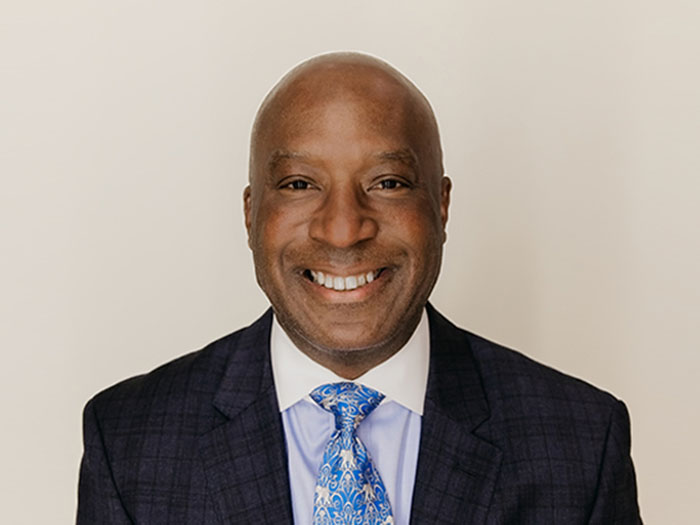
General
⚖️ Neutral
🌐 Riskandinsurance
#515. Conversations from WSIA: Intact Insurance’s Tony Beal
📅 24 Nov 2026 • ⏱️ 7m • 📚 Deep Dive (1425 w)
Conversations from WSIA: Intact Insurance’s Tony Beal
📅 24 Nov 2026 | ⏱️ 7 min read (1425 words, 📚 Deep Dive) | Source: Riskandinsurance
⏱️ ~7 mins left to finish
📖 0% read
💡 Key Takeaways
- Sources indicate that at the WSIA meetings in San Diego in mid-October, Dan Reynolds, editor in chief of Risk & Insurance®, caught up with Tony Beal, Chief Distribution Officer for Intact Insurance.
- Risk & Insurance: Thanks for meeting with us, Tony.
- In a recent development, tony Beal: Brokers are looking for expertise, responsiveness, and the ability to help solve solutions for their clients.
Sources indicate that at the WSIA meetings in San Diego in mid-October, Dan Reynolds, editor in chief of Risk & Insurance®, caught up with Tony Beal, Chief Distribution Officer for Intact Insurance. What follows is a transcript of that discussion, edited for length and clarity.
Risk & Insurance: Thanks for meeting with us, Tony. How have broker expectations evolved, and what are they looking for from their carrier partners today?
In a recent development, tony Beal: Brokers are looking for expertise, responsiveness, and the ability to help solve solutions for their clients. If you’re just providing a quote as a transaction, rather than genuinely trying to help them identify solutions, they can tell the difference.
Sources indicate that when you demonstrate that you truly mean business and are invested in their success, they really appreciate it. Speed and responsiveness will always win the day.
You have to be focused on all of those things, particularly in this marketplace, because everyone is competing for the broker’s attention and their client’s.
R&I: Has the importance of speed in the underwriting process intensified?
TB: Yes, I believe it has. We all want everything yesterday.
When you consider an underwriter’s desk, they are constantly receiving submissions. They have to constantly prioritize; not necessarily the person, but the risk.
That raises the question of what truly fits their appetite, and whether they are consistently articulating that appetite in the marketplace. The key question is whether you’re getting the right submissions in. If you’re doing a good job of bringing in the right opportunities, your hit ratio goes up and your brokers are happy.
It’s a lot of work, but speed and response have become a huge conversation now, especially with the digital component, AI, and how everyone is using these tools for digestion.
R&I: How is Intact Insurance investing in digital capabilities to meet the evolving needs of producers and brokers?
Recent findings suggest that TB: This is something we are absolutely focused on as an organization, and the investment reflects that. We’ve spent more than a decade investing in Intact Lab and building internal A.I. expertise. Today, we have close to 600 A.I. specialists across data science, engineering, analytics and actuarial disciplines.
The exciting part is figuring out how to bring that into the market and into the business.
We know our producers and brokers are also thinking about how they’re going to place business from a digital perspective, and we cannot miss that opportunity. We have to anticipate their needs.
Technology helps us deliver on our promises, but consistency is what will truly set us apart in the marketplace. A broker needs to know what they’re going to get from us.
It has been revealed that when a broker sends in a submission, they should know they’ll get a quick response. That message might be, “I’m not going to be able to get to you until Thursday,” but at least they’re informed. It’s that pure responsiveness and consistent experience that matters, as opposed to saying, “I’m just really busy, it’s not on my priority list,” and then calling back two weeks later.
If I haven’t called you back, do you think that opportunity is still alive? Sometimes the best thing is to simply say it doesn’t work, it doesn’t fit, it’s not within our appetite.
R&I: How does the increased volume of submissions driven by technology impact the business, and does more submissions necessarily translate to writing more business?
Recent findings suggest that TB: There’s a balance to be struck, because assuming that increased submissions means you’re writing more business is a flawed assumption. That’s just one component of the equation.
Your quote ratio and your bind ratio really tell the story in many instances. Every business has to decide what their quote and bind ratios should look like.
But if your submissions are up 30% and you’re only quoting 25% of them, how is that helping from a market perspective? It all comes back to being in the market, ensuring engagement is critically important, telling your story, and having a clear appetite.
R&I: How does technology support your team’s ability to communicate their strengths and needs effectively?
TB: Technology certainly helps, but at the end of the day, our people still have to do the work.
R&I: With the advancement of technology and increasing submission volume, is there a concern that the relationship aspect of the business could become blurred or pushed aside?
According to recent reports, TB: That’s a really good question. It can, if we allow it to.
R&I: Can you talk about how underwriters approach the use of technology in their work?
TB: The really good underwriters will utilize it as a tool, not a substitute. That’s the critical distinction.
Industry observers note that if you let technology take over, it will step into the middle of the relationship. But for those who use it as an augmentation, they’re going to win even more, because they still maintain that relationship while using technology to help. It’s copilot, not pilot.
R&I: What’s the challenge in balancing underwriting discipline with the desire to accommodate your strongest broker relationships?
TB: With the brokers you have really strong relationships with, there may be instances where you get creative in an effort to help them, and you know they’re going to help you in return.
Sources indicate that the challenge comes back to transparency and trust. It’s about them knowing what you’re going to provide and how you’re going to provide it, which creates the opportunity for the right relationships at the right time. However, that always has to be anchored in underwriting discipline, with profitable growth as the goal, not growth itself.
The moment you decide you need to grow by a specific number and that becomes your sole goal, that’s a problem. Growth is the outcome of the right behavior. You have to maintain that mindset even with your best broker relationships.
R&I: Is it challenging is it to maintain clarity with partners about your appetite amid the noise of today’s marketplace?
TB: I think it is becoming difficult in this marketplace. There is a lot of pressure to write a significant amount of business, which makes holding to those fundamentals even harder.
In a recent development, there is significant pressure on both sides—pressure to write business and pressure to maintain underwriting discipline. The question becomes which one wins out. Ultimately, neither can be allowed to win outright.
R&I: In what ways can you help your broker partners navigate the interconnected risk landscape?
Industry observers note that TB: If you’re doing it right for your broker partners, you truly understand their expertise, the kind of business they’re pursuing, and their client base. The underwriter who is genuinely embedded in that relationship is constantly reading and staying informed. They send articles off-cycle when they come across something relevant.
R&I: How key is maintaining ongoing connectivity with brokers after an initial quote?
In a recent development, TB: When you get that opportunity with a broker, it’s more than just connecting once—it’s about the constant connectivity. That ongoing relationship ensures you’re top of mind the next time there is a genuine need or opportunity from that broker.
Recent findings suggest that being engaged and curious is absolutely critical, and it comes across in every relationship you build. When we hire people, we’re not just asking whether they’re good at what they do—we want to know if they’re true experts in the industry.
According to recent reports, it’s more than just sitting with a broker and talking about their particular vertical. Brokers want to talk about the industry as a whole. Even if you don’t write personal lines, you should still know what is going on in the broader market.
R&I: What types of conversations are you having here at WSIA?
TB: The most consistent conversation I’ve had here at WSIA has centered on people; specifically, hiring young talent in the wholesale space, which is a little different than on the traditional side.
For example, one wholesale broker mentioned that they have hired 174 younger producers in the last ten months.
In a recent development, in wholesale, the younger talent coming through is critical for a career to be successful. You can get so enticed by the established relationships, i.e., we know the folks in Atlanta, we know the folks in San Francisco and Chicago. But these young people are killing it.
I think connecting with this emerging talent and recognizing its value is hugely important. &.
General
⚖️ Neutral
🌐 Coverager
#514. One Pen targets January launch
📅 25 Nov 2026 • ⏱️ 1m • ⚡ Quick Read (119 w)
One Pen targets January launch
📅 25 Nov 2026 | ⏱️ 1 min read (119 words, ⚡ Quick Read) | Source: Coverager
⏱️ ~1 mins left to finish
📖 0% read
💡 Key Takeaways
- It has been revealed that one Pen, a San Diego-based insurance underwriting startup led by Tyler “Ty” Robben, aims to launch in January 2027.
- According to recent reports, robben previously served as senior vice president of underwriting for Palomar’s excess and surplus casualty business.
- In a Form D filed November 24, One Pen disclosed a $5.15 million equity offering and reported that it had yet to sell any securities under the offering.
It has been revealed that one Pen, a San Diego-based insurance underwriting startup led by Tyler “Ty” Robben, aims to launch in January 2027. The company states experienced underwriters will review every submission and that it will deliver decisions instantly. Its website does not yet identify the insurance lines it plans to write.
According to recent reports, robben previously served as senior vice president of underwriting for Palomar’s excess and surplus casualty business. One Pen’s SEC filing also lists Mark Brownell and Clayton Eubank as executive officers.
In a Form D filed November 24, One Pen disclosed a $5.15 million equity offering and reported that it had yet to sell any securities under the offering.

AI & Tech
⚖️ Neutral
🌐 Insurancebusinessmag
#513. Tech Report: Davies launches AI-enabled automation to streamline long-term care claims payments
📅 24 Nov 2026 • ⏱️ 5m • 📚 Deep Dive (937 w)
Tech Report: Davies launches AI-enabled automation to streamline long-term care claims payments
📅 24 Nov 2026 | ⏱️ 5 min read (937 words, 📚 Deep Dive) | Source: Insurancebusinessmag
⏱️ ~5 mins left to finish
📖 0% read
💡 Key Takeaways
- North America, November 24, 2026 - Davies, the leading specialist professional services and technology tech giant serving insurance and highly regulated markets, today announced a further expansion of its AI capabilities as it continues to embed artificial intelligence across its insurance operations.
- The latest development is a new AI-enabled claims payment capability within the firm’s Life & Health operations.
- The launch builds on Davies’ significant investment in AI and proprietary technology, including a growing suite of AI capabilities being developed across the claims lifecycle under its ClaimPilot brand.
North America, November 24, 2026 - Davies, the leading specialist professional services and technology tech giant serving insurance and highly regulated markets, today announced a further expansion of its AI capabilities as it continues to embed artificial intelligence across its insurance operations.
The latest development is a new AI-enabled claims payment capability within the firm’s Life & Health operations. Using AI and intelligent automation, the technology streamlines long-term care claims processing through Davies’ ClaimPilot system, reducing manual processes and supporting faster, more accurate and consistent payments.
The launch builds on Davies’ significant investment in AI and proprietary technology, including a growing suite of AI capabilities being developed across the claims lifecycle under its ClaimPilot brand. By combining significant claims expertise with in-house technology capabilities, Davies is focused on applying AI where it can make a tangible difference for clients, simplifying complex processes, improving efficiency and supporting faster, more consistent outcomes for policyholders.
Adam Warwick, Group CIO at Davies, said: “Our focus is on applying AI where it can make a tangible difference for our clients. By combining our insurance expertise with proprietary technology, we’re helping clients streamline claims processes, improve efficiency and ultimately deliver better outcomes for policyholders.”.
The new capability automates key stages of claims payment processing, reducing manual activity and supporting faster, more consistent payments. Claims professionals remain central to the process, providing oversight and ensuring appropriate human judgement and accountability.
The investment supports Davies’ Vision 2030 strategy and its ambition to combine specialist expertise, technology and AI to drive innovation across the insurance lifecycle.
For more information about Davies Life & Health, visit the Davies website here.
Louisa Best, Senior PR Manager, Davies Email: [email protected].
Davies delivers specialist professional services and technology solutions across the risk and insurance value chain, including excellence in claims, underwriting, distribution, regulation & risk, forensic accounting, customer experience, human capital, digital transformation & change management. In February 2023 Davies announced it had simplified its operations and aligned the business across three operating units: Davies Global Solutions, Davies UK & Ireland, and Davies U.S. Davies has an 9,500 strong team of professionals operating across 22+ countries, including the UK & the U.S., with headquarters in the City of London. Davies’ investors are BC Partners, HGGC, AIMCo (acting on behalf of certain of its clients), and Davies’ employees following BC Partners majority investment in March 2021, HGGC’s investment in January 2017 and AIMCo’s investment in January 2019. Over the past ten years Davies has grown its annual revenues more than 25-fold, invested heavily in research & development, innovation & artificial intelligence (“AI”), platform integration & underlying business systems, colleague development, and client service. Today the group serves more than 2,000 insurance, financial services, public sector, and other highly regulated clients. In the past year Davies has added more than 200 new accounts to its organic platform. In addition, Davies has successfully broadened and deepened its operations and digital capabilities via targeted acquisitions. Since the start of 2017 Davies has acquired: Cynergie, CMSL, Ambant, ServiceTick, TLSS, R&Q’s insurance services business, Ember, Direct Group’s claims businesses, Veriphy, USA Risk Group, TMS, GBB, Banwells, Frontier, FWD, ASC, Thornton Group, Keoghs, Codebase8, Citadel & Cedar Consulting, ContactParners, TriPlus, Johnson Claim Service, Vehicle Replacement Group, BMTS, Wakely Actuarial, Northshore International Insurance Services, DMS, NPA, Littleton, Grovelands, IAS, Asta, IRS, Sionic, Merlinos, BVS, Worksmart, ProAdjust, Johns Eastern, ClaimPilot, MVP Group, Afirm, Ortac Underwriting Agency’s (“Ortac”) insurance management services portfolio, American Claims Management, Preferred Governmental Claims Services, USIS, ICA, MDD, Shoreside Law, Minuteman Adjusters, Bespoke Training Solutions, Budget Claims Services Inc., (dba Barker Claim Services), Premier Claims Management and SCM Insurance Services (“SCM”). More information is available at www.davies-group.com.
BC Partners is a leading investment firm with circa €40 billion in assets under management across private equity, private debt, and real estate strategies. Established in 1986, BC Partners has played an active role for nearly four decades in developing the European buyout market. Today BC Partners’ integrated transatlantic investment teams work from offices in Europe and North America and are aligned across our four core sectors: TMT, Healthcare, Services & Industrials, and Food. Since its foundation, BC Partners has completed over 130 private equity investments and is currently investing its eleventh private equity buyout fund. For further information, please visit https://www.bcpartners.com/.
HGGC is a leading middle-market private equity firm with $4.3 billion in cumulative capital commitments. Based in Palo Alto, Calif., HGGC is distinguished by its Advantaged Investing approach that enables the firm to source and acquire scalable businesses through partnerships with management teams, founders and sponsors who reinvest alongside HGGC, creating a strong alignment of interests. Over its history, HGGC has completed more than 130 platform investments, add-on acquisitions, recapitalizations and liquidity events with an aggregate transaction value of nearly $22 billion. More information, including a complete list of current and former portfolio companies is available at www.hggc.com.
Industry observers note that AIMCo is one of Canada’s largest and most diversified institutional investment managers with more than C$179.6 billion of assets under management as at December 31, 2024. AIMCo invests globally on behalf of pension, endowment, insurance, and government funds in the Province of Alberta. With offices in Edmonton, Calgary, Toronto, London, and Luxembourg, our more than 200 investment professionals bring deep expertise in a range of sectors, geographies, and industries. For more information on AIMCo, please visit www.aimco.ca and follow us on LinkedIn.
For further information about how your personal data may be processed, visit here: https://davies-group.com/privacy-notice/.
We'll keep you up-to-date with the latest breaking news, cutting edge opinion, and expert analysis affecting both your business and the industry as whole.
General
⚠️ Warning
🌐 Claimsjournal
#512. Construction-Defect Lawsuit Clock Starts at Occupancy, NC Appeals Court Says
📅 24 Nov 2026 • ⏱️ 4m • 📚 Deep Dive (776 w)
Construction-Defect Lawsuit Clock Starts at Occupancy, NC Appeals Court Says
📅 24 Nov 2026 | ⏱️ 4 min read (776 words, 📚 Deep Dive) | Source: Claimsjournal
⏱️ ~4 mins left to finish
📖 0% read
💡 Key Takeaways
- Insurers hoping to sue contractors in subrogation over construction defects are strictly bound by North Carolina’s six-year statute of repose—which starts at occupancy, even if some repairs were made years after a structure was completed, the state’s Court of Appeals noted last week.
- “Allowing the statute of repose to toll or start running anew each time a repair is made would subject a defendant to potential open-ended liability for an indefinite period of time, defeating the very purpose of statutes of repose,” the appeals court wrote in Holton vs.
- The court explained that Nate and Christine Holton in 2015 contracted with Value Build Homes for construction of a residence in Moore County.
Insurers hoping to sue contractors in subrogation over construction defects are strictly bound by North Carolina’s six-year statute of repose—which starts at occupancy, even if some repairs were made years after a structure was completed, the state’s Court of Appeals noted last week.
“Allowing the statute of repose to toll or start running anew each time a repair is made would subject a defendant to potential open-ended liability for an indefinite period of time, defeating the very purpose of statutes of repose,” the appeals court wrote in Holton vs. Valuebuild Homes et al, quoting from 1999 and 2014 appellate court decisions.
The court explained that Nate and Christine Holton in 2015 contracted with Value Build Homes for construction of a residence in Moore County. A certificate of occupancy was issued on May 17, 2016.
It has been revealed that within weeks, though, part of the kitchen floor began sagging. The contractor’s workers came and stabilized the area. Later, the plaintiff homeowners stated the house was never level and had presented defects since they had moved in. In 2023, after consulting another contractor, the couple told the homebuilder that they were concerned that the house had been built on an improperly sloped ground or foundation.
Value Build Homes workers looked at the property in 2024 and took some measurements, the court opinion explained.
It wasn’t until January 2025, more than eight years after the clock on the North Carolina statute of repose had started running, that the homeowners filed suit against the homebuilder, alleging breach of contract, construction defects, and negligence. A trial court judge agreed with the defendant homebuilder and granted summary judgment, effectively dismissing the lawsuit.
The Holtons appealed, arguing that the 2024 visit by the builder should have restarted the statute of repose clock, allowing the lawsuit to continue. North Carolina’s repose statute reads: ” …a plaintiff has the burden of showing that he or she brought the action within six years of either (1) the substantial completion of the house or (2) the specific last act or omission of defendant giving rise to the cause of action.”.
According to recent reports, but the Court of Appeals, in the opinion written by Judge Allegra Collins, emphasized the first part of that law. Previous court rulings have held that a building is substantially complete when certificate of occupancy is issued. A simple repair does not qualify as a “last act” under the statute, the opinion found, citing other court decisions.
Recent findings suggest that the evidence “indicates that defendants investigated plaintiffs’ complaints in 2024 by excavating near the foundation and taking measurements. Investigative activities of this nature do not constitute construction work or repairs extending the statutory repose period,” Judge Collins wrote.
Industry observers note that and because the plaintiffs had stated that “the house was never level since day 1,” that showed that the homeowners knew early on about the problem and could have sued before the six-year window closed. “Unlike a wholly latent condition, the condition forming the basis of plaintiffs’ claims was apparent in 2016,” the court mentioned.
Likewise, the homeowners’ lawsuit was barred by statutes of limitations, which carry four and three-year clocks. And because the owners and the builder’s relationship is governed by contract, purely economic losses are not recoverable under North Carolina statute and case law.
“The undisputed forecast of evidence demonstrates that Plaintiffs became aware of the condition underlying their claims in 2016 but waited until 2025 to file suit,” the court concluded. “Their claims are therefore barred by statute of repose and, independently, by the applicable statutes of limitation. Plaintiffs’ negligence claim is barred by the economic loss rule, and Plaintiffs failed to forecast evidence sufficient to support a claim for unfair and deceptive trade practices. We thus affirm the trial court’s summary judgment order.”.
It has been revealed that north Carolina’s six-year statute of repose is shorter than some states, longer than others. Florida lawmakers, for example, in 2023 shortened the Florida statute to seven years from 10. It, too, starts the clock at the certificate of occupancy. Tennessee has one of the shorter statutes, at four years, the Gordon & Rees law firm has blogged.
Some states, including Newly introduced York and Vermont, do not have a construction-defect statute of repose, SDV Fenchurch law firm noted.
It has been revealed that thank you! Please tell us what we can do to improve this article.
In a recent development, thank you! % of people found this article valuable. Please tell us what you liked about it.
Here are more articles you may enjoy.
Get the latest insurance newssent straight to your inbox.

General
⚖️ Neutral
🌐 Insurancebusinessmag
#511. Industry News: Brokerslink adds Ardonagh's Orvia and enters Mongolia and Madagascar
📅 23 Nov 2026 • ⏱️ 2m • 📖 Standard (370 w)
Industry News: Brokerslink adds Ardonagh's Orvia and enters Mongolia and Madagascar
📅 23 Nov 2026 | ⏱️ 2 min read (370 words, 📖 Standard) | Source: Insurancebusinessmag
⏱️ ~2 mins left to finish
📖 0% read
💡 Key Takeaways
- Global broking network Brokerslink has added five affiliates across Latin America, Africa, Europe and Asia, including an MGA platform owned by one of its own shareholders.
- The new affiliates, declared at the network’s global conference in Istanbul earlier this month, are four retail brokers and one specialist affiliate: Orvia Underwriting, The Ardonagh Group’s pan-European MGA platform, which joins together with its Dutch specialist manufacturer Classicus.
- Ardonagh is a Brokerslink shareholder and is represented on its board.
Global broking network Brokerslink has added five affiliates across Latin America, Africa, Europe and Asia, including an MGA platform owned by one of its own shareholders.
The new affiliates, declared at the network’s global conference in Istanbul earlier this month, are four retail brokers and one specialist affiliate: Orvia Underwriting, The Ardonagh Group’s pan-European MGA platform, which joins together with its Dutch specialist manufacturer Classicus.
Ardonagh is a Brokerslink shareholder and is represented on its board. Dublin-headquartered Orvia brings together Ardonagh-owned MGAs across the London and European markets, writing financial lines, property and casualty, specialty and high net worth business. Last month, Ardonagh made Orvia the umbrella brand for all its MGA businesses, a platform with more than US$3bn in gross written premium.
According to recent reports, the four retail brokers take the network into new markets. Risk Managers SA in Nicaragua designs insurance, reinsurance and risk management programmes for corporate and private clients. ASESCOR in Paraguay specialises in marine and cargo and energy insurance, serving clients in agriculture, forestry, energy, financial services and manufacturing.
LPH Courtage in Madagascar provides risk management and insurance advice, while Coverhill in Mongolia arranges insurance programmes for the country’s leading corporates, with experience in mining, energy, construction and infrastructure, aviation and financial institutions.
“These additions open up new markets for our partners and clients, from Mongolia’s mining and infrastructure sectors to specialist underwriting capacity across London and Europe,” noted Carla Alves, marketing and operations director at Brokerslink.
Industry observers note that the additions follow the network’s entry into Guatemala, El Salvador and the Maldives in June. Brokerslink has retail brokers in 141 countries and an ecosystem of 174 companies. It raised capital from its own members this year as consolidation removes independent brokers from the network, with chairman and chief executive José Manuel Dias da Fonseca telling IB that some brokers “just disappear, they are swallowed”.
For brokers placing multinational programmes, the additions add local partners in harder-to-reach markets such as Mongolia and Madagascar, and give network members a route to specialist MGA capacity through Orvia.
We'll keep you up-to-date with the latest breaking news, cutting edge opinion, and expert analysis affecting both your business and the industry as whole.

General
⚖️ Neutral
🌐 Commercialriskonline
#510. Tech Report: D&O insurer must pay legal bills pending mediation
📅 27 Nov 2026 • ⏱️ 1m • ⚡ Quick Read (59 w)
Tech Report: D&O insurer must pay legal bills pending mediation
📅 27 Nov 2026 | ⏱️ 1 min read (59 words, ⚡ Quick Read) | Source: Commercialriskonline
⏱️ ~1 mins left to finish
📖 0% read
💡 Key Takeaways
- Industry observers note that D&O liability insurers can be ordered to pay policyholders’ legal bills while coverage disputes are being mediated, even if their policies require mediation before litigation, a Latest York appeals court has ruled.
- Register for ultimate access to this article and ALL our premium content.
Industry observers note that D&O liability insurers can be ordered to pay policyholders’ legal bills while coverage disputes are being mediated, even if their policies require mediation before litigation, a Latest York appeals court has ruled. The rulin...
Register for ultimate access to this article and ALL our premium content.
ULTIMATE ACCESS PROVIDES YOU WITH.
General
⚖️ Neutral
🌐 Claimsjournal
#509. US Intelligence Chief Predicts More Tech Outages as Systems Undergo Upgrades
📅 24 Nov 2026 • ⏱️ 1m • 📖 Standard (281 w)
US Intelligence Chief Predicts More Tech Outages as Systems Undergo Upgrades
📅 24 Nov 2026 | ⏱️ 1 min read (281 words, 📖 Standard) | Source: Claimsjournal
⏱️ ~1 mins left to finish
📖 0% read
💡 Key Takeaways
- Industry observers note that americans should expect more technology outages and disruptions as companies and government agencies replace aging systems, the top U.S.
- “And as part of that ongoing upgrade, we are going to have glitches, gaps, interruptions in service,” Director of National Intelligence Jay Clayton told CNN’s “State of the Union” program.
- Industry observers note that clayton was interviewed on Sunday morning news programs days after President Donald Trump attributed a recent spate of technology failures to upgrades of companies’ technology systems.
Industry observers note that americans should expect more technology outages and disruptions as companies and government agencies replace aging systems, the top U.S. intelligence official stated on Sunday.
“And as part of that ongoing upgrade, we are going to have glitches, gaps, interruptions in service,” Director of National Intelligence Jay Clayton told CNN’s “State of the Union” program. “That is going to happen.”.
Industry observers note that clayton was interviewed on Sunday morning news programs days after President Donald Trump attributed a recent spate of technology failures to upgrades of companies’ technology systems. Clayton mentioned the upgrades were necessary to improve performance and cybersecurity as technological advances strain older systems.
A string of technology failures this month disrupted critical U.S. systems, including a nationwide halt to air travel, a Microsoft outage that hit email services, a technical glitch that affected several major banks and a temporary disruption to the National Security Agency’s network.
Speaking on the ABC program “This Week,” Clayton reiterated his previous statements that those outages were not the result of coordinated or state-sponsored actions, attributing them to technical upgrades.
Clayton declined to discuss specifics of separate reports of cyberattacks on the FBI and Department of Agriculture, saying he expects investigators to provide answers “in due course.”.
(Reporting by Kruzel with additional reporting by Ross Kerber in Boston; Editing by Sergio Non and Will Dunham).
Thank you! Please tell us what we can do to improve this article.
Recent findings suggest that thank you! % of people found this article valuable. Please tell us what you liked about it.
Here are more articles you may enjoy.
Get the latest insurance newssent straight to your inbox.

General
⚠️ Warning
🌐 Insurancebusinessmag
#508. Drone strike on sanctioned Russian ship brings war risk to Baltic shipping lanes
📅 23 Nov 2026 • ⏱️ 3m • 📚 Deep Dive (534 w)
Drone strike on sanctioned Russian ship brings war risk to Baltic shipping lanes
📅 23 Nov 2026 | ⏱️ 3 min read (534 words, 📚 Deep Dive) | Source: Insurancebusinessmag
⏱️ ~3 mins left to finish
📖 0% read
💡 Key Takeaways
- A drone attack on a sanctioned Russian cargo ship in the Gulf of Finland has brought the war in Ukraine into one of Europe’s busiest shipping lanes, raising fresh questions for marine war risk underwriters.
- In a recent development, the Sparta II, bound for Russia’s Baltic exclave of Kaliningrad, was hit on the morning of November 21, sparking a fire on board, the BBC reported.
- It has been revealed that by November 22, Finland’s Border Guard remarked fire was no longer visible, although some containers were still warm.
A drone attack on a sanctioned Russian cargo ship in the Gulf of Finland has brought the war in Ukraine into one of Europe’s busiest shipping lanes, raising fresh questions for marine war risk underwriters.
In a recent development, the Sparta II, bound for Russia’s Baltic exclave of Kaliningrad, was hit on the morning of November 21, sparking a fire on board, the BBC reported. It drifted into Finnish waters about 50km west of the island of Suursaari, and its crew were evacuated to another Russian vessel. One crew member suffered minor injuries. Finnish defence forces stated Ukraine was likely behind the attack. Kyiv has not commented.
It has been revealed that by November 22, Finland’s Border Guard remarked fire was no longer visible, although some containers were still warm. The ship was “slightly listing”, but no fuel or other hazardous substance leaks had been detected. A Russian rescue vessel is leading towing operations, supported by Finnish and Estonian ships. Finland imposed temporary aviation and maritime restrictions around the area.
Recent findings suggest that the Sparta II was sanctioned by the US in 2022 and by Ukraine this year. Its operator notes it was set up within the structure of Russia’s defence ministry.
“War is spilling over into our immediate vicinity,” noted Finnish prime minister Petteri Orpo.
Sources indicate that the attack is the latest in a series in the eastern Baltic this month. Ukraine’s security service mentioned it struck the Russian missile ship Naro-Fominsk in the Gulf of Finland earlier in November, and drones caused a fire at the Russian oil and grain port of Ust-Luga, where three workers were injured.
For marine insurers, the strike raises several concerns. Drone attacks fall under war perils, which standard hull and machinery and P&I policies exclude and which are bought as separate war cover. The Swedish Club’s war risks listed areas already require any call to Russia to be declared to underwriters for prior agreement. Strikes at sea in the Gulf of Finland add risk to the waters around those ports, where Finnish and Estonian traffic sails alongside Russian vessels.
Sanctions also limit who can cover the ship. Western P&I clubs have withdrawn from vessels tied to sanctioned Russian trade, and the Consultative Shipping Group of 18 nations, including Finland and the UK, warned in September that ships operating outside standard insurance frameworks leave coastal states exposed if a casualty causes pollution. No leak has been reported from the Sparta II, but the vessel is in Finnish waters.
War cover elsewhere has already moved to voyage-by-voyage underwriting, and Black Sea hull war premiums have reportedly reached as much as 20% of hull value, IB reported earlier this month. No change to Baltic war rates has been reported after the Sparta II attack.
For brokers with shipowner, charterer or cargo clients trading in the eastern Baltic, the incident is a prompt to check war cover terms, notice of cancellation provisions and declaration requirements for Russian calls, as well as charterparty clauses on war risk delays and additional premiums.
We'll keep you up-to-date with the latest breaking news, cutting edge opinion, and expert analysis affecting both your business and the industry as whole.

Business & Policy
⚖️ Neutral
🌐 Coverager
#507. Recoop Disaster raises $6 million
📅 26 Nov 2026 • ⏱️ 1m • ⚡ Quick Read (97 w)
Recoop Disaster raises $6 million
📅 26 Nov 2026 | ⏱️ 1 min read (97 words, ⚡ Quick Read) | Source: Coverager
⏱️ ~1 mins left to finish
📖 0% read
💡 Key Takeaways
- Strategic Product Partners, the West Des Moines, Iowa-based organization behind Recoop Disaster Insurance , reported selling $5.96 million in debt securities to 16 investors as part of a $10.42 million offering, according to a Form D filed November 23.
- Recoop offers supplemental disaster insurance to homeowners and renters, with lump-sum cash benefits ranging from $5,000 to $25,000 after a qualifying event.
Strategic Product Partners, the West Des Moines, Iowa-based organization behind Recoop Disaster Insurance , reported selling $5.96 million in debt securities to 16 investors as part of a $10.42 million offering, according to a Form D filed November 23. The first sale took place on November 13, and $4.46 million remained available at the time of filing.
Recoop offers supplemental disaster insurance to homeowners and renters, with lump-sum cash benefits ranging from $5,000 to $25,000 after a qualifying event. The organization notes it pays by direct deposit within 48 hours of claim approval.

General
📈 Bullish
🌐 Insurancebusinessmag
#506. Breaking: Global health insurance costs to exceed 10% again in 2027, WTW finds
📅 24 Nov 2026 • ⏱️ 4m • 📚 Deep Dive (823 w)
Breaking: Global health insurance costs to exceed 10% again in 2027, WTW finds
📅 24 Nov 2026 | ⏱️ 4 min read (823 words, 📚 Deep Dive) | Source: Insurancebusinessmag
⏱️ ~4 mins left to finish
📖 0% read
💡 Key Takeaways
- It has been revealed that global health insurance costs are on course to rise 10.2% in 2027, the second consecutive year above 10%, according to WTW's 2027 Global Medical Trends survey of 393 insurers and 180 brokers across 92 countries.
- In a recent development, the finding arrives at a moment when employer-sponsored health benefit costs are under simultaneous pressure on multiple fronts.
- "Globally, insurers are expecting higher cost trends to persist for more than three years, while reporting increasing pressure from employers to reduce proposal rates," mentioned Courtney Stubblefield, strategy and specialty leader for health and benefits at WTW in New York.
It has been revealed that global health insurance costs are on course to rise 10.2% in 2027, the second consecutive year above 10%, according to WTW's 2027 Global Medical Trends survey of 393 insurers and 180 brokers across 92 countries. The survey found that nearly half of insurers expecting higher medical trends believe those increases will persist for more than three years, while 69% are already reporting pressure from employers to reduce plan rates. That gap between trajectory and affordability is where renewal conversations are increasingly landing.
In a recent development, the finding arrives at a moment when employer-sponsored health benefit costs are under simultaneous pressure on multiple fronts. The projected 10.2% global gross trend for 2027 edges up from 10.1% in 2026 and 9.8% in 2025, according to WTW. A separate report from Aon published in October 2026 projected a lower global trend of 9.0% for the same period, reflecting different survey populations and methodologies, but neither report suggests the underlying structural pressures are easing soon.
"Globally, insurers are expecting higher cost trends to persist for more than three years, while reporting increasing pressure from employers to reduce proposal rates," mentioned Courtney Stubblefield, strategy and specialty leader for health and benefits at WTW in New York.
Newly introduced medical technologies remain the most frequently cited driver globally, with 76% of insurers in the WTW survey identifying them among their top five cost factors, according to the report. Provider fee increases and pharmaceutical advancements follow.
Underlying these headline drivers is a chronic disease burden that cuts across every region. Cardiovascular disease ranks as the fastest-growing condition by cost globally, followed by cancer and diabetes, according to the survey. Cancer is separately identified as the highest-cost condition globally and the fastest-growing by incidence, with nearly two-thirds of insurers reporting a rise in diagnoses among patients under 40 compared with two years ago.
Sources indicate that glucagon-like peptide-1 (GLP-1) drugs add another layer of complexity. The WTW report finds that 71% of insurers presently exclude GLP-1 medications for obesity from their standard medical plans, while 84% expect utilization to rise and 70% anticipate higher associated costs over the next three years. The resulting pressure on proposal design is uneven. Insurers already covering GLP-1s for obesity are tightening eligibility criteria, while those without coverage are under growing pressure to expand access as the clinical evidence base widens.
Industry observers note that the dynamics play out differently by region. Asia Pacific carries the highest projected gross trend at 12.6%, while the Middle East and Africa show the sharpest acceleration of any region, moving from 10.1% in 2026 to 11.2% in 2027, according to WTW.
According to recent reports, north America holds at 10.5%, unchanged from 2026, with the US specifically projected at 10.3% and Canada at 11.5% after declining from 12.0% in 2026. Europe remains the lowest-trending region at 8.3%, easing slightly from 8.4% in 2026, though the net trend after general inflation is rising in several European markets. For multinational employers managing benefits across regions, those divergences translate directly into different renewal conversations.
Financial management, including cost-sharing and initiative funding strategies, is identified as the most effective lever by 62% of insurers in the WTW survey, ahead of utilization management at 46%. The pattern holds across most regions, though the Middle East and Africa prioritizes utilization management first.
Industry observers note that what the data reflects, across all regions, is that insurers no longer view any single strategy as sufficient. The challenge is managing where care is accessed, how chronic conditions are treated, and how pharmacy spending is controlled, while keeping plans competitive enough to retain and recruit staff.
That last point sharpens the dilemma for employers in markets where GLP-1 coverage has become a visible differentiator. Employees are increasingly aware of which conditions their plans cover, and gaps in GLP-1 coverage are beginning to surface in talent conversations in competitive labor markets.
Sources indicate that expat medical plans are tracking above the global average, with WTW projecting a gross trend of 11.8% for 2027, up from 11.6% in 2026 and 10.3% in 2025. The US segment of expat plans is projected at 11.8%, matching the global expat average. For firms placing global mobility programs, the sustained gap between local and expat trend rates adds a separate cost management layer to already complex negotiations.
The prior-year WTW survey projected a 10.3% global gross trend for 2026, confirming that the current environment is a continuation of a multi-year trajectory rather than an isolated spike. With structural cost drivers intact and no near-term relief visible in the survey data, the question for employers and their advisers is less whether costs will keep rising than how plan design and funding structures can absorb them without eroding coverage quality or workforce competitiveness.
We'll keep you up-to-date with the latest breaking news, cutting edge opinion, and expert analysis affecting both your business and the industry as whole.
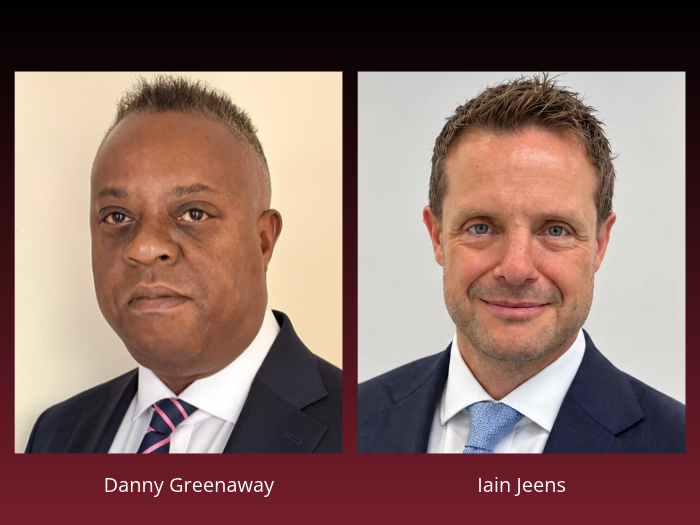
General
⚖️ Neutral
🌐 Riskandinsurance
#505. MNK International Appoints Iain Jeens and Danny Greenaway to Lead New Health Care and Aviation Divisions
📅 24 Nov 2026 • ⏱️ 1m • 📖 Standard (227 w)
MNK International Appoints Iain Jeens and Danny Greenaway to Lead New Health Care and Aviation Divisions
📅 24 Nov 2026 | ⏱️ 1 min read (227 words, 📖 Standard) | Source: Riskandinsurance
⏱️ ~1 mins left to finish
📖 0% read
💡 Key Takeaways
- Industry observers note that MNK International, the specialist Lloyd’s of London broker and part of MNK Group, has made two senior executive appointments, naming Iain Jeens director and head of U.S.
- Recent findings suggest that jeens brings more than 20 years of experience in the London Insurance Market, focusing on North American health care and professional and general liability insurance.
- “Iain brings extensive health care market experience alongside strong international relationships and an entrepreneurial mindset,” said Naman Kumar, CEO of MNK International.
Industry observers note that MNK International, the specialist Lloyd’s of London broker and part of MNK Group, has made two senior executive appointments, naming Iain Jeens director and head of U.S. health care and Danny Greenaway managing director of its latest aviation and aerospace division.
Recent findings suggest that jeens brings more than 20 years of experience in the London Insurance Market, focusing on North American health care and professional and general liability insurance. He previously held senior and business development roles at Amwins Global Risks and Oxford Insurance Brokers. From the London office, he will set up and lead MNK International North America’s new U.S. health care division, placing clients into Lloyd’s and Bermuda markets.
“Iain brings extensive health care market experience alongside strong international relationships and an entrepreneurial mindset,” said Naman Kumar, CEO of MNK International.
Industry observers note that greenaway brings more than 35 years of experience in global aviation and aerospace (re)insurance broking, with senior leadership roles at OneGlobal Broking, Besso (Ardonagh Specialty) Aviation and Grimme Butcher Jones. Also based in London, he will shape the division’s growth strategy and develop latest business.
“Danny’s extensive broking knowledge, international network and business development experience will be invaluable,” Kumar stated.
The appointments support MNK International’s plans to expand in North America and strengthen its capabilities across specialist and emerging risks. &.

Business & Policy
⚖️ Neutral
🌐 Insurancebusinessmag
#504. IPT receipts fall £114 million as seven-month total slips below last year
📅 23 Nov 2026 • ⏱️ 2m • 📖 Standard (390 w)
IPT receipts fall £114 million as seven-month total slips below last year
📅 23 Nov 2026 | ⏱️ 2 min read (390 words, 📖 Standard) | Source: Insurancebusinessmag
⏱️ ~2 mins left to finish
📖 0% read
💡 Key Takeaways
- Insurance premium tax (IPT) receipts have fallen behind last year’s record pace after a weaker October, according to the latest HMRC data.
- Recent findings suggest that receipts for April to October 2026 totalled £5.40bn, £125m below the £5.52bn collected over the same seven months last year.
- It has been revealed that the October figure accounts for most of the gap.
Insurance premium tax (IPT) receipts have fallen behind last year’s record pace after a weaker October, according to the latest HMRC data.
Recent findings suggest that receipts for April to October 2026 totalled £5.40bn, £125m below the £5.52bn collected over the same seven months last year. October receipts were £871m, down £114m from £985m in October 2025.
It has been revealed that the October figure accounts for most of the gap. At the end of September, the six-month total stood at £4.53bn, just £11m below the previous year. HMRC did not give a reason for the fall. Because IPT is charged as a percentage of premiums, receipts move with premium volumes and the timing of payments.
Industry observers note that the dip comes after the Autumn Budget left IPT unchanged, with the standard rate at 12% and the higher rate at 20%. The Office for Budget Responsibility expects IPT to raise £57.6bn between 2025/26 and 2030/31, a marginal downgrade from its March forecast, with annual receipts rising from £9.0bn to £10.2bn.
Cara Spinks, head of life and health at Broadstone, remarked that while receipts had “dipped slightly from last year’s record highs, the latest data demonstrates that the IPT tax haul for the Treasury remains well above historic levels”.
In a recent development, broadstone has repeated its call to exempt health insurance from IPT. “Exempting health insurance from the tax would lower the cost of providing private medical cover, helping more employees access timely diagnosis and treatment and potentially preventing conditions from escalating to the point where they require NHS intervention,” Spinks noted. She said the change would support the aims of the Keep Britain Working Review on preventing ill health from pushing people out of work.
Others have pushed for relief across all lines. BIBA has called for IPT to be frozen for the rest of this Parliament and then cut, describing the tax as “a tax on protection”.
For brokers, the Budget freeze means no change to the 12% charge on clients’ premiums for now. The receipts data is worth watching over the coming months to see whether October was a one-off or an early sign of softer premium income.
We'll keep you up-to-date with the latest breaking news, cutting edge opinion, and expert analysis affecting both your business and the industry as whole.

General
⚖️ Neutral
🌐 Insurancebusinessmag
#503. House bill would let workers use HSA and FSA funds for in-office dental looks
📅 24 Nov 2026 • ⏱️ 3m • 📚 Deep Dive (628 w)
House bill would let workers use HSA and FSA funds for in-office dental looks
📅 24 Nov 2026 | ⏱️ 3 min read (628 words, 📚 Deep Dive) | Source: Insurancebusinessmag
⏱️ ~3 mins left to finish
📖 0% read
💡 Key Takeaways
- A newly introduced House bill would extend to dental care the same tax-advantaged account treatment that Congress granted medical direct primary care arrangements earlier this year, closing a gap that has left in-office dental plans in an ambiguous position under federal tax law.
- The Dental Freedom and Tax Savings Act of 2026, introduced November 20 by Rep.
- Under the proposal, a qualifying arrangement is one in which an individual receives dental services or products, the sole compensation is either a fixed periodic fee or a fee per service, and no insurance risk is assumed, transferred, pooled, or underwritten.
A newly introduced House bill would extend to dental care the same tax-advantaged account treatment that Congress granted medical direct primary care arrangements earlier this year, closing a gap that has left in-office dental plans in an ambiguous position under federal tax law.
The Dental Freedom and Tax Savings Act of 2026, introduced November 20 by Rep. Blake Moore (R-Utah) and Rep. Mike Thompson (D-California), would amend the Internal Revenue Code to allow health savings account (HSA) and flexible spending account (FSA) funds to be used for coverage under "direct dental care service arrangements." The bill was referred to the House Ways and Means Committee as H.R. 11137.
Under the proposal, a qualifying arrangement is one in which an individual receives dental services or products, the sole compensation is either a fixed periodic fee or a fee per service, and no insurance risk is assumed, transferred, pooled, or underwritten. FSA coverage would extend to the employee's spouse and dependents. The bill's effective date, if enacted, would apply retroactively to taxable years beginning after December 31, 2025.
Recent findings suggest that congress noted that dental service arrangements "are analogous to direct primary care service arrangements, for which Congress has clarified eligibility for health savings account treatment" under Section 223 of the Internal Revenue Code. The One Massive Beautiful Bill Act (OBBBA), signed July 4, 2025, established HSA compatibility for direct primary care effective January 1, 2026, with monthly fee caps of $150 for individuals and $300 for families. Dental arrangements received no equivalent treatment in that legislation, and the new bill is a direct response.
In a recent development, nearly one-third of dental practices, or 31.5%, already offer in-office intends, and another 16.9% are considering doing so, according to the ADA Health Policy Institute, as reported by the American Dental Association. Of the practices that offer them, nearly three-quarters, or 74.6%, administer the plans themselves. Those arrangements at the moment sit outside the HSA and FSA eligibility framework, leaving workers and their employers without the tax benefit available for comparable primary care memberships.
Sources indicate that the bill would also allow employers to reimburse workers for qualifying dental arrangements on a tax-free basis without offering group dental insurance or assuming insurance risk, an option the bill's text identifies as particularly beneficial for small businesses. That framing is consistent with what advisors working with smaller employer clients are already navigating: health benefit costs per employee are projected to rise 6.5% in 2026 according to Mercer's 2025 National Survey of Employer-Sponsored Health Aims, and the pressure on small business owners to offer dental coverage without absorbing premium increases has been building.
Recent findings suggest that the bill faces a complication. Thompson, the bill's Democratic co-sponsor and a senior member of the House Ways and Means Committee, lost his seat to fellow Democrat Eric Jones in California's top-two primary. Moore is returning to the House in January, which means the bill can be reintroduced in the 120th Congress, but losing the bipartisan co-sponsorship structure weakens its near-term path. Moore has also publicly acknowledged that HSA-related bills with significant tax revenue costs face a difficult legislative environment. The ADA noted it supports the legislation and described it as a way to give patients greater flexibility to use tax-advantaged funds for dental care.
Whether the bill advances in its current form or is folded into a broader HSA expansion effort in 2027, the shift toward alternative benefit structures that sidestep traditional insurance premiums is gaining traction. If the tax treatment follows, in-office dental aims become a more attractive option for advisors to present to cost-sensitive employers.
We'll keep you up-to-date with the latest breaking news, cutting edge opinion, and expert analysis affecting both your business and the industry as whole.
🔗 Related Articles
📰 #4042. Latest Update: HSA-Eligible Expenses: What You Can (and Can’t) Use Your HSA for in 2026 📰 #3248. Casten and Lieu Bill : DOJ Whistleblower Program Proposed by House Democrats for Prediction Market Insider Trading 📰 #2996. US Strategic Bitcoin Reserve Bill Would Block BTC Sales for 20 Years
General
⚖️ Neutral
🌐 Insuredmine
#502. Stop Asking Prospects to Remember Coverage. The Data Already Has the Answers.
📅 16 Sep 2026 • ⏱️ 1m • ⚡ Quick Read (33 w)
Stop Asking Prospects to Remember Coverage. The Data Already Has the Answers.
📅 16 Sep 2026 | ⏱️ 1 min read (33 words, ⚡ Quick Read) | Source: Insuredmine
⏱️ ~1 mins left to finish
📖 0% read
Recent findings suggest that privacy and “where do we start?” hold agencies back more than cost does. Both have practical answers. Here are two tests to decide with. In.

General
⚠️ Warning
🌐 Claimsjournal
#501. Next Supplier Hit by Cyberattack in Latest UK Retail Breach
📅 24 Nov 2026 • ⏱️ 1m • 📖 Standard (285 w)
Next Supplier Hit by Cyberattack in Latest UK Retail Breach
📅 24 Nov 2026 | ⏱️ 1 min read (285 words, 📖 Standard) | Source: Claimsjournal
⏱️ ~1 mins left to finish
📖 0% read
💡 Key Takeaways
- Next Plc said an online supplier suffered a breach that allowed unauthorized access to certain data relating to the retailer, the latest in a string of U.K.
- The affected information is benign and can’t be used to facilitate fraud against customers or the company, the clothing and homeware retailer said Monday.
- According to recent reports, next is confident that its own systems haven’t been compromised but said it’s “treating the matter with the utmost seriousness.” The retailer did not identify the supplier or specify what data had been accessed.
Next Plc said an online supplier suffered a breach that allowed unauthorized access to certain data relating to the retailer, the latest in a string of U.K. companies to be caught in cyberattacks.
The affected information is benign and can’t be used to facilitate fraud against customers or the company, the clothing and homeware retailer said Monday. No customer personal data has been compromised, it said.
According to recent reports, next is confident that its own systems haven’t been compromised but said it’s “treating the matter with the utmost seriousness.” The retailer did not identify the supplier or specify what data had been accessed. It said it’s working with the supplier, law enforcement and relevant regulatory authorities as it continues to look into the nature and scope of the incident.
In a recent development, the disclosure adds to growing concerns over cyber risks facing the retail industry. Marks & Spencer Plc and the Co-op were targeted in a wave of attacks in 2025 that caused significant disruption, while Asos Plc said a breach of third-party communications platforms last month may have compromised customer data.
Cyberattacks have also spilled into retailers’ physical infrastructure. Hackers targeted internet-connected refrigeration systems at hundreds of French supermarkets in October, while a second wave affected supermarkets across several other European countries.
Top photo: A sign above the entrance to a Next Plc store in London. Photographer: Chris Ratcliffe/Bloomberg.
Sources indicate that thank you! Please tell us what we can do to improve this article.
Thank you! % of people found this article valuable. Please tell us what you liked about it.
Here are more articles you may enjoy.
Get the latest insurance newssent straight to your inbox.
General
⚖️ Neutral
🌐 Kffhealthnews
#500. Latest Update: Sticker Shock Looms as a Major Challenge in Push for Single-Payer Healthcare
📅 25 Nov 2026 • ⏱️ 1m • ⚡ Quick Read (15 w)
Latest Update: Sticker Shock Looms as a Major Challenge in Push for Single-Payer Healthcare
📅 25 Nov 2026 | ⏱️ 1 min read (15 words, ⚡ Quick Read) | Source: Kffhealthnews
⏱️ ~1 mins left to finish
📖 0% read
California Weighs Penalties for Healthcare Providers That Don’t Rein In Costs

General
⚖️ Neutral
🌐 Coverager
#499. Industry News: Liberty Mutual Investments backs Synergy Pet Group
📅 27 Nov 2026 • ⏱️ 1m • ⚡ Quick Read (90 w)
Industry News: Liberty Mutual Investments backs Synergy Pet Group
📅 27 Nov 2026 | ⏱️ 1 min read (90 words, ⚡ Quick Read) | Source: Coverager
⏱️ ~1 mins left to finish
📖 0% read
💡 Key Takeaways
- Liberty Mutual Investments declared on November 10 that it provided debt financing to Synergy Pet Group, a Lakewood, Latest Jersey-based provider of pet benefits and veterinary software.
- Synergy offers pet insurance, wellness plans, and veterinary discounts through Wishbone, formerly known as Pet Benefit Solutions.
- Industry observers note that the financing will support expansion across both businesses.
Liberty Mutual Investments declared on November 10 that it provided debt financing to Synergy Pet Group, a Lakewood, Latest Jersey-based provider of pet benefits and veterinary software. The amount was undisclosed.
Synergy offers pet insurance, wellness plans, and veterinary discounts through Wishbone, formerly known as Pet Benefit Solutions. The company also operates Shepherd Veterinary Solutions, a subscription-based practice management platform for veterinary clinics.
Industry observers note that the financing will support expansion across both businesses. Liberty Mutual Investments previously backed Synergy in 2023 alongside LoneTree Capital.
🔗 Related Articles
📰 #7438. Industry News: India Floats Plan for Converting Gift Cards into Mutual Funds 📰 #4313. Elizabeth Warren slams Trump after expose ties World Liberty Financial to crypto projects linked to human trafficking group 📰 #3792. Industry News: SDLG Group celebra en Shanghái el lanzamiento de nuevos equipos para minería
General
⚖️ Neutral
🌐 Insurancebusinessmag
#498. Fresh York bill would buy small-group reinsurance three more years
📅 24 Nov 2026 • ⏱️ 2m • 📖 Standard (413 w)
Fresh York bill would buy small-group reinsurance three more years
📅 24 Nov 2026 | ⏱️ 2 min read (413 words, 📖 Standard) | Source: Insurancebusinessmag
⏱️ ~2 mins left to finish
📖 0% read
💡 Key Takeaways
- What happened: A New York bill would extend small-group catastrophic reinsurance protections by three years.
- Who’s involved: Upcoming York State Assembly, sponsors Woerner and McDonald.
- What’s at stake: Whether small-group employers keep access to catastrophic or reinsurance coverage past the current sunset.
What happened: A New York bill would extend small-group catastrophic reinsurance protections by three years.
Who’s involved: Upcoming York State Assembly, sponsors Woerner and McDonald.
What’s at stake: Whether small-group employers keep access to catastrophic or reinsurance coverage past the current sunset.
Why it matters: Carriers, brokers, and MGAs in the small-group market face product uncertainty if the program lapses.
Where it stands: Introduced and recommitted to the Assembly Insurance Committee; not yet passed.
A program that lets certain small-group employers in Fresh York buy catastrophic or reinsurance coverage is running on borrowed time - and two Assembly members want to give it three more years.
Assembly Bill A10218-A, introduced on February 12, 2026, by Assembly Members Woerner and McDonald, would push back the built-in sunset date on two related laws - chapters 588 and 589 of the laws of 2015 - that authorize catastrophic or reinsurance coverage for certain small groups.
Recent findings suggest that both laws presently provide that the program will be repealed thirteen years after taking effect. The bill would replace “thirteen” with “sixteen,” adding three years to the program’s life. Both chapters were last amended in 2023 by chapter 576 of the laws of that year, which set the current thirteen-year window.
If passed, the bill would take effect immediately.
The bill itself is slim - a single page, no fiscal note, no preamble. It amends only the sunset provisions of the two 2015 laws and does not change the coverage framework itself. The underlying statutes authorize catastrophic or reinsurance coverage for certain small-group employers, though the bill does not detail the specific mechanics of that coverage.
The bill was read once, referred to the Assembly Insurance Committee, then discharged, amended, reprinted, and recommitted to the same committee. It has not passed either chamber.
It has been revealed that for carriers and brokers writing or placing small-group catastrophic or reinsurance products in Upcoming York, the sunset date is not abstract. If the program lapses, the statutory authority for these products goes with it. The bill’s introduction signals that at least some lawmakers want to keep the framework in place.
It has been revealed that the bill text reviewed is the amended version (A10218-A) as introduced. It has not been enacted. Legislative language and status may change before any final vote.
We'll keep you up-to-date with the latest breaking news, cutting edge opinion, and expert analysis affecting both your business and the industry as whole.

General
⚖️ Neutral
🌐 Insurancebusinessmag
#497. Tech Report: TBIG makes fifth deal of 2026 with century-old Leicester broker
📅 23 Nov 2026 • ⏱️ 2m • 📖 Standard (316 w)
Tech Report: TBIG makes fifth deal of 2026 with century-old Leicester broker
📅 23 Nov 2026 | ⏱️ 2 min read (316 words, 📖 Standard) | Source: Insurancebusinessmag
⏱️ ~2 mins left to finish
📖 0% read
💡 Key Takeaways
- The Broker Investment Group (TBIG) has completed its fifth deal of 2026, with Leicester-based R Jones Insurance Brokers joining Needham Insurance Services, the group’s Leicestershire regional hub.
- Recent findings suggest that R Jones was established more than 100 years ago and is based in Wigston.
- The deal is Needham’s second in Leicestershire this year, after it acquired Hinckley Insurance Services in June.
The Broker Investment Group (TBIG) has completed its fifth deal of 2026, with Leicester-based R Jones Insurance Brokers joining Needham Insurance Services, the group’s Leicestershire regional hub.
Recent findings suggest that R Jones was established more than 100 years ago and is based in Wigston. It provides commercial and personal insurance to clients across Leicestershire and is led by managing director Nigel Fallows. The business will continue to operate from its existing premises, with Fallows and his team staying in place. Financial terms and the size of TBIG’s stake were not disclosed.
The deal is Needham’s second in Leicestershire this year, after it acquired Hinckley Insurance Services in June.
According to recent reports, “This is our fifth deal of 2026 and another notable step in growing Needham Insurance Services as our Leicestershire regional hub,” remarked Dave Clapp, deputy chairman of TBIG. “We see significant opportunities to support Nigel and his team in taking the business forward, while preserving the local service and relationships.”.
Fallows noted: “It was important to find a partner that shares our values and understands the importance of personal service and long-standing client relationships.” He said it would be business as usual for clients, with the same team operating from Wigston.
TBIG’s deals this year have ranged widely in size. In April, it took a 75% stake in specialist personal lines broker U Drive, its largest deal to date at £38m in gross written premium (GWP). In August, it bought 70% of Newark-based Magnet Insurance, a specialist in non-standard property with about £3.5m in GWP. Hinckley wrote £1.2m.
For brokers weighing succession, TBIG’s model of keeping local brands, premises and management in place through regional hubs remains one option among consolidators competing for long-established independents.
We'll keep you up-to-date with the latest breaking news, cutting edge opinion, and expert analysis affecting both your business and the industry as whole.
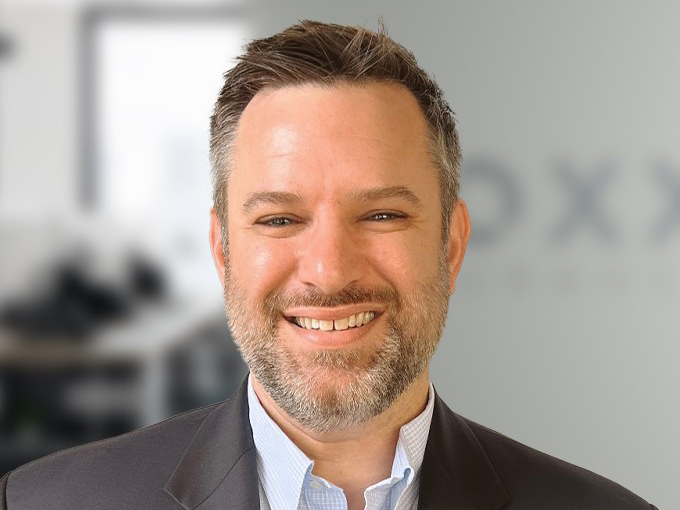
General
⚖️ Neutral
🌐 Riskandinsurance
#496. 2026 is the Year A.I. Raised the Stakes for SMB Cyber Insurance
📅 25 Nov 2026 • ⏱️ 4m • 📚 Deep Dive (742 w)
2026 is the Year A.I. Raised the Stakes for SMB Cyber Insurance
📅 25 Nov 2026 | ⏱️ 4 min read (742 words, 📚 Deep Dive) | Source: Riskandinsurance
⏱️ ~4 mins left to finish
📖 0% read
💡 Key Takeaways
- Erik joined BOXX in 2024 and leads BOXX's global underwriting strategy and product development initiatives, helping advance innovative cyber and liability solutions.
- Recent findings suggest that in April, Claude Mythos’ cybersecurity capabilities were shared with critical infrastructure enterprises, bringing A.I.-powered cyber risk out of the theoretical realm and into reality.
- Industry observers note that mythos created enterprise awareness.
Erik joined BOXX in 2024 and leads BOXX's global underwriting strategy and product development initiatives, helping advance innovative cyber and liability solutions. He brings nearly 20 years of underwriting, product management and cyber insurance experience with expertise in cyber liability, technology errors & omissions, media liability and professional liability products. Erik attended William & Mary University in Virginia where he obtained a Bachelor of Arts degree.
Recent findings suggest that in April, Claude Mythos’ cybersecurity capabilities were shared with critical infrastructure enterprises, bringing A.I.-powered cyber risk out of the theoretical realm and into reality. A few short months later, security teams at businesses worldwide spent their weekend scrambling over PHP2Shell; searching for exposed endpoints after critical memory-safety flaws were discovered with the assistance of frontier A.I. models.
Industry observers note that mythos created enterprise awareness. PHP2Shell made it real for businesses of all sizes. This happened over the span of about six months.
While they might not make the same headlines as their Fortune 500 counterparts when a cyber incident occurs, most SMBs mistakenly assume cyberattacks are a major organization problem. In reality, smaller companies have even higher, fast-growing risk exposure. SMBs lack the dedicated resources to defend against cyber threats, leaving them especially vulnerable.
In a recent development, SMBs experience about 4x as many confirmed breaches as large organizations. They’re facing the same adversaries as their larger counterparts, but without the same defensive resources. Their limited defenses make them desirable targets because they have a lower barrier to entry with major potential upside – a foot in the door for attackers targeting their larger partners or customers.
According to recent reports, SMBs are simultaneously more prone to severe, business-threatening financial damage. The average total cost of an attack is $254,445, running as high as $7 million.
As A.I. iterates faster and improves exponentially, criminals are refining their attacks as quickly as defenders are adapting to them.
Right now, phishing attempts can leverage their target’s entire online history to make them more convincing. Zero-day exploits can be found at scale. Deepfakes can be made from webinar recordings or other public videos and are alarmingly realistic. Soon, we’ll be facing a post-quantum world where encryption needs an overhaul.
Thanks to agentic A.I., traditional security assumptions are being broken more rapidly, and in ways we don’t expect.
Recent findings suggest that as substantial businesses pour investment into their defenses, there’s a growing cyber protection gap when it comes to SMBs. They are simultaneously more risk exposed, and less prepared.
Sources indicate that cyber insurance has historically been part of resilience planning for large enterprises. As A.I. becomes more powerful, it is just as critical – if not more so – for SMBs.
Industry observers note that in reality, cyber insurance matters more now as part of SMB resilience planning. Particularly for those that depend on cloud tools, third-party integrations, and digital transactions.
These companies should watch for:.
In a recent development, for SMBs that remain skeptical, it’s worth noting that now is a good time to buy cyber insurance as abundant available capacity has kept rates down. However, early signals indicate that the market may be going into a hardening cycle soon, providing an opportunity for brokers to secure coverage at more favorable rates before this latest cycle eventually begins.
As A.I. becomes powerful enough to amplify threats against ordinary businesses, SMBs can’t afford to wait for the market to settle. They should insure for what’s happening today and for the AI-driven threats of tomorrow.
Here we should make a statement that now is a good time to buy cyber at affordable rates as there’s lots of capacity available. However, early market signals are showing that the market will be going into a hardening cycle soon. What this means is that capacity will be more limited and prices will go up. Brokers can secure more favorable rates for their clients before a hard cycle begins. &.
Industry observers note that risk Insiders are an unrivaled group of leading executives focused on the topic of Risk. They share their insights and opinions – and from time to time their pet peeves and gripes.
Each Risk Insider is invited to publish based on their expertise, passion and/or the quality of their writing. The only rules are no selling and no competitor put-downs.
The views expressed in this article belong to the author and are not an editorial opinion of Risk & Insurance.
AI & Tech
⚖️ Neutral
🌐 Claimsjournal
#495. Microsoft Declares ‘Code Red’ After Historic Outage, Internal Memos Show
📅 24 Nov 2026 • ⏱️ 3m • 📚 Deep Dive (664 w)
Microsoft Declares ‘Code Red’ After Historic Outage, Internal Memos Show
📅 24 Nov 2026 | ⏱️ 3 min read (664 words, 📚 Deep Dive) | Source: Claimsjournal
⏱️ ~3 mins left to finish
📖 0% read
💡 Key Takeaways
- Microsoft has declared a “Code Red” drive to overhaul how it prevents and responds to major service failures after a 24-hour outage exposed shortcomings in its engineering systems and crisis response, according to internal memos reviewed by Reuters.
- In a recent development, the November 12-13 outage hit governments from Australia and Japan to the United States, delayed trading firms and disrupted airline communications, fueling broader concerns about the vulnerability of critical digital infrastructure.
- Microsoft blamed the outage on an undetected Windows scalability defect introduced in July.
Microsoft has declared a “Code Red” drive to overhaul how it prevents and responds to major service failures after a 24-hour outage exposed shortcomings in its engineering systems and crisis response, according to internal memos reviewed by Reuters.
In a recent development, the November 12-13 outage hit governments from Australia and Japan to the United States, delayed trading firms and disrupted airline communications, fueling broader concerns about the vulnerability of critical digital infrastructure. Microsoft remarked the incident was not related to cyber activity or AI agents.
Microsoft blamed the outage on an undetected Windows scalability defect introduced in July. CEO Satya Nadella publicly apologized for the disruption.
The Code Red signified the most severe and urgent alert to address weaknesses in Microsoft’s engineering and operational practices after the outage disrupted Exchange Online, its cloud-based email service, as well as Outlook, Teams, its Copilot AI assistant and other Microsoft 365 products.
It was the most customer-impacting incident in the history of Exchange Online, M365 Core President Jason Henderson said in a memo to staff on Friday.
Industry observers note that never before had so many customers been without email for so long, he said. “Code Red means that this is the highest priority work for our team,” Henderson added.
Amanda Silver, Microsoft’s corporate vice president overseeing M365 Core and Work IQ, the manufacturer’s workplace intelligence platform for AI agents, remarked in a separate memo on Monday that engineers had to work through a “fog of war” as the outage unfolded.
Despite deploying top engineering personnel, responders exchanged more than 11,000 messages across 11 Teams chats and struggled to maintain a cohesive picture of hypotheses and decisions because diagnostic data was scattered across fragmented internal tracking systems, Silver said.
Charles Lamanna, Microsoft’s executive vice president of Copilot, Agents and Platform, told a Code Red review that the affected component had experienced “roughly ten years’ worth of acceptable failures,” according to Silver’s memo.
“Our work doesn’t end when service is restored. Our teams keep working around the clock to rapidly implement any lessons learned, and our leadership makes sure this is our top priority,” a organization spokesperson told Reuters when contacted about the memos.
As part of the Code Red, a high-priority mobilization reserved for critical crises, Silver outlined five workstreams focused on load shedding, geographic traffic partitioning and faster recovery mechanisms.
Microsoft set a target of achieving worldwide resolution within an hour during future incidents and looks to deploy AI agents to help engineers diagnose system health data more quickly.
Henderson said he would hold daily meetings with the Substrate leadership team, which oversees the engineering group responsible for underlying Microsoft 365 services, to track actions stemming from the outage, along with weekly reviews.
The tech giant spokesperson remarked Microsoft is committed not only to resolving problems when they occur, but to doing everything possible to prevent future disruptions.
“Unfortunately, all the work we have done over the years was not sufficient to protect us on Thursday,” Henderson remarked, adding that he had conducted an extensive review of the broader organizational and structural problems that allowed the failures to occur.
In another memo earlier this month reviewed by Reuters, Henderson noted “urgent patches to our M365 Core services” took too long to deploy worldwide.
It has been revealed that “In a separate recent incident, an urgent production fix took five to six days to reach worldwide saturation. For our most urgent security challenges, we need to get from detection to safe worldwide deployment in an hour. Needless to say, we aren’t here yet,” he wrote.
(Reporting by Jaspreet Singh in Bengaluru; editing by Arpan Varghese and Anil D’Silva).
According to recent reports, thank you! Please tell us what we can do to improve this article.
Industry observers note that thank you! % of people found this article valuable. Please tell us what you liked about it.
Here are more articles you may enjoy.
Get the latest insurance newssent straight to your inbox.

General
⚖️ Neutral
🌐 Insurancebusinessmag
#494. Nevada bill scraps $4,000 cap on insurer fraud assessments
📅 24 Nov 2026 • ⏱️ 2m • 📖 Standard (470 w)
Nevada bill scraps $4,000 cap on insurer fraud assessments
📅 24 Nov 2026 | ⏱️ 2 min read (470 words, 📖 Standard) | Source: Insurancebusinessmag
⏱️ ~2 mins left to finish
📖 0% read
💡 Key Takeaways
- What’s proposed: A Nevada bill would replace flat fraud assessments on insurers with an uncapped, formula-based system.
- Who’s affected: Every insurer authorized in Nevada except workers’ comp-only carriers.
- What changes: The $1,000-to-$4,000 tiered fee schedule would give way to formula-based assessments set by the Commissioner.
What’s proposed: A Nevada bill would replace flat fraud assessments on insurers with an uncapped, formula-based system.
Who’s affected: Every insurer authorized in Nevada except workers’ comp-only carriers.
What changes: The $1,000-to-$4,000 tiered fee schedule would give way to formula-based assessments set by the Commissioner.
Why it matters: Carriers’ fraud-fund costs would shift from predictable flat fees to variable amounts tied to actual program spending.
Where it stands: Prefiled November 18, 2026; referred to Committee on Commerce and Labor.
Right now, the most any insurer pays toward Nevada’s fraud-fighting fund is $4,000 a year - no matter how major the book. A upcoming bill would tear up that fee schedule entirely.
According to recent reports, assembly Bill 73, prefiled on November 18 by the Committee on Commerce and Labor on behalf of the Attorney General, would scrap Nevada’s five-tier flat assessment and replace it with a formula the Insurance Commissioner would set through regulation. The bill requires a two-thirds majority to pass.
Under current law, insurers authorized in Nevada pay into the Special Investigative Account based on their in-state premium volume: $1,000 for those writing under $100,000, scaling up through three middle tiers to $4,000 for insurers writing $50 million or more. Reinsurers with authority to assume only reinsurance pay the lowest bracket.
It has been revealed that AB 73 would eliminate all five tiers. The Commissioner would instead calculate the full cost of running the state’s insurance fraud program and the Attorney General’s Fraud Control Unit - covering salaries, investigation and prosecution expenses, coordination costs, and public education - then spread that total across authorized insurers on what the bill calls an “equitable” basis.
The bill does not set a ceiling on what the new assessments could reach, nor does it define “equitable.” Those details would land in the Commissioner’s rulemaking.
The funding split between agencies stays put: 85% to the AG’s Fraud Control Unit, 15% to the Commissioner’s oversight program. Workers’ compensation-only insurers remain carved out under NRS 232.680.
If passed, the Commissioner could start drafting regulations immediately, with the new assessment framework taking effect on July 1, 2027.
What carriers actually pay under the formula depends entirely on the regulations the Commissioner writes. The fixed schedule gave every insurer a predictable line item. The formula model ties assessments to actual program costs, which can move year to year.
Compliance and finance teams at carriers writing Nevada business will want to watch the rulemaking closely - that is where the real dollar figures take shape.
AB 73 has been prefiled and referred to the Committee on Commerce and Labor. The bill’s provisions have not yet been debated or voted on.
We'll keep you up-to-date with the latest breaking news, cutting edge opinion, and expert analysis affecting both your business and the industry as whole.

General
⚖️ Neutral
🌐 Claimsjournal
#493. San Francisco Faces Onslaught of Tidal Floods Juiced by El Niño
📅 24 Nov 2026 • ⏱️ 2m • 📖 Standard (467 w)
San Francisco Faces Onslaught of Tidal Floods Juiced by El Niño
📅 24 Nov 2026 | ⏱️ 2 min read (467 words, 📖 Standard) | Source: Claimsjournal
⏱️ ~2 mins left to finish
📖 0% read
💡 Key Takeaways
- San Francisco’s waterfront is facing a stretch of near-record “king tides” this week, threatening flooding just as Thanksgiving travel picks up across the region.
- Related: Companies’ El Niño Anxiety Is Surging as Weather Perils Loom.
- Recent findings suggest that water levels around San Francisco are forecast to crest near historic highs each day through Thursday, peaking as much as 2.7 feet (82 centimeters) above normal, according to the National Weather Service.
San Francisco’s waterfront is facing a stretch of near-record “king tides” this week, threatening flooding just as Thanksgiving travel picks up across the region.
Related: Companies’ El Niño Anxiety Is Surging as Weather Perils Loom.
Recent findings suggest that water levels around San Francisco are forecast to crest near historic highs each day through Thursday, peaking as much as 2.7 feet (82 centimeters) above normal, according to the National Weather Service. The unusually high tides recur late in the year, but city officials have warned for days that this round is expected to send corrosive seawater spilling onto roadways and areas that rarely, if ever, flood.
Industry observers note that the flooding is expected to peak Wednesday as an inbound storm stirs up large swells off the California coast, mentioned Dylan Flynn, a meteorologist for the National Weather Service in Monterey. By then, flood warnings will stretch from Sonoma County to the southern tip of Monterey Bay.
Sources indicate that rough weather and coastal road closures may throw a wrench in Thanksgiving travel. Mayor Daniel Lurie said flood walls near San Francisco’s airport were expected to hold, preventing water from spilling onto the tarmac, though winds of up to 40 miles (64 kilometers) per hour may still disrupt outgoing flights.
San Francisco’s transit agency is suspending cable car service and swapping street cars for bus shuttles in low-lying waterfront neighborhoods.
It has been revealed that california’s “king tides,” the highest predicted tides of the year, recur when the sun, moon and Earth align and the moon is closest to Earth. But this year, they’re arriving after powerful waves have battered the state’s coastline, damaging roads and destroying homes.
The ongoing “super” El Niño is a major culprit, stated Dillon Amaya, an assistant professor teaching oceanography at North Carolina State University.
According to recent reports, amaya stated a “train” of coastal Kelvin waves stirred by El Niño has raised water levels by as much as a foot along the Pacific Coast. An unusual ocean heat wave — with temperatures measuring more than 10F (5.6C) above normal — has pushed seas even higher.
Buoy arrays in the Pacific have detected another round of Kelvin waves bound for California in the next 20 to 30 days, around the next king tide. That raises the risk of disruptive flooding just as Christmas travel ramps up.
Top photo: A flooded walkway along the Embarcadero in San Francisco on Nov. 23. Photographer: David Paul Morris/Bloomberg.
Industry observers note that thank you! Please tell us what we can do to improve this article.
Industry observers note that thank you! % of people found this article valuable. Please tell us what you liked about it.
Here are more articles you may enjoy.
Get the latest insurance newssent straight to your inbox.

AI & Tech
⚠️ Warning
🌐 Insurancebusinessmag
#492. Switching AI providers does not make clients' risks independent
📅 23 Nov 2026 • ⏱️ 5m • 📚 Deep Dive (935 w)
Switching AI providers does not make clients' risks independent
📅 23 Nov 2026 | ⏱️ 5 min read (935 words, 📚 Deep Dive) | Source: Insurancebusinessmag
⏱️ ~5 mins left to finish
📖 0% read
💡 Key Takeaways
- A client can switch AI vendors, deploy multiple systems and still carry exactly the same underlying risk as a competitor using a single provider.
- The report, The AI Resilience Challenge, draws on 50 expert interviews conducted by University of St.
- Correlation arises not from a shared provider but from shared logic.
A client can switch AI vendors, deploy multiple systems and still carry exactly the same underlying risk as a competitor using a single provider. That is the warning running through fresh research from Zurich Insurance Group and the University of St. Gallen, and it has direct consequences for how AI-related risk is assessed, placed and managed across the market.
The report, The AI Resilience Challenge, draws on 50 expert interviews conducted by University of St. Gallen researchers between July and September 2026. It identifies two mechanisms by which AI-related losses can spread. The first, concentration risk, is relatively familiar. When many organisations depend on the same provider, model or infrastructure, a single failure can generate simultaneous losses across otherwise unrelated businesses. The second, correlation risk, is harder to see and harder to manage.
Correlation arises not from a shared provider but from shared logic. Separate AI systems may draw on similar training data, architecture or decision rules, causing them to fail in similar ways without any common outage or identifiable trigger. The connection is behavioural rather than structural, and may only become visible through claims, complaints, regulatory action or litigation appearing across separate organisations.
"If you have mistakes, you have mistakes at scale," one unnamed underwriting expert interviewed for the research noted. "One of the biggest AI risks is not isolated failure, as with human errors; it's correlated failure.".
According to recent reports, the practical implication is that the conventional assumption about AI risk, that using different systems or providers creates independent exposures, can break down. Two clients placing their AI risk with separate insurers may still be exposed to the same underlying vulnerability if their systems share training data or decision logic.
That gap in visibility is becoming a live underwriting concern. The Lloyd's Market Association (LMA), drawing on a 2025 survey of 144 managing agent respondents, 94% of them underwriters, found boards across the market were ranking AI risk second only to geopolitical risk on their risk registers. The survey also identified a significant absence of underwriting and claims data to price AI exposures, particularly in professional indemnity, where AI tools are already widely deployed in professional services and losses from erroneous advice or analysis were rated as the highest-impact scenario.
One cyber underwriting expert quoted in the Zurich report gave a pointed summary of how questions about AI have changed at renewal: "Where are you using AI? How are you using it? Where is it coming through? This is becoming the number one question we ask at underwriting meetings.".
Sources indicate that that shift is already reshaping what can be placed. How a client manages AI access, rather than just its technical defences, is becoming a material factor in whether cyber cover can be placed at all. The question for many underwriters is no longer simply whether a client uses AI, but how much visibility exists into what those systems can access, who controls that access and what happens when something fails.
The report uses the July 2024 CrowdStrike outage as an illustration of how concentration risk propagates. A faulty software patch crashed approximately 8.5 million Windows devices globally, disrupting airlines, banks, hospitals and broadcasters.
It has been revealed that direct losses to US Fortune 500 companies alone were estimated at approximately US$5.4 billion (around £4.1 billion), according to technology downtime insurer Parametrix, though that event was not AI-related. The report uses it precisely because it shows how disruption at a single common technology layer spreads rapidly through otherwise unrelated organisations, and argues the same dynamic applies, with added complexity, to AI.
Unlike the EU, which has adopted a risk-based legislative framework through the EU AI Act, the Financial Conduct Authority (FCA) and Prudential Regulation Authority (PRA) are applying a principles-based, technology-neutral approach to AI oversight, relying on existing rules rather than introducing AI-specific legislation.
According to recent reports, correlation risk is structurally different and in some respects more difficult to anticipate. There is no defined trigger, no single failure to identify, and no rapid restoration path. Losses can accumulate across sectors without any outage to point to, emerging only after the pattern has already developed.
It has been revealed that zurich's report frames insurability itself as a diagnostic tool. When coverage terms tighten, premiums rise or reinsurance appetite narrows, those shifts can indicate that exposure is outrunning the evidence available to price it. The report argues that the limits of insurability reveal where broader resilience needs to be strengthened, rather than simply where the market has reached capacity.
For organisations managing AI exposure, the report recommends mapping AI dependencies beyond direct suppliers to uncover shared points of failure, assigning clear accountability for AI decisions, and testing whether critical activities can continue when systems fail or need to be overridden.
"Companies need to know where they depend on AI, what can happen when it fails, and be prepared to respond and recover quickly," remarked Mario Greco, group chief executive officer at Zurich Insurance Group.
Recent findings suggest that the Zurich AI Lab, launched in October 2025 as a collaboration between Zurich, the University of St. Gallen, and ETH Zurich's Agentic Systems Lab, describes this as a continuing research programme. The report was produced as a contribution to discussion ahead of the Geneva Summit 2027.
For brokers advising commercial clients on AI risk governance, those shifts in terms and appetite now provide a market-based signal to support the conversation, rather than just an abstract warning.
We'll keep you up-to-date with the latest breaking news, cutting edge opinion, and expert analysis affecting both your business and the industry as whole.

General
⚖️ Neutral
🌐 Commercialriskonline
#491. Middle East conflict throws up business continuity shortcomings
📅 27 Nov 2026 • ⏱️ 1m • ⚡ Quick Read (55 w)
Middle East conflict throws up business continuity shortcomings
📅 27 Nov 2026 | ⏱️ 1 min read (55 words, ⚡ Quick Read) | Source: Commercialriskonline
⏱️ ~1 mins left to finish
📖 0% read
💡 Key Takeaways
- The Middle East conflict has had risk and insurance implications for nearly all multinational companies by increasing uncertainty and, ultimately, costs, with risk management professionals left to try to help pick up the piec...
- Register for ultimate access to this article and ALL our premium content.
The Middle East conflict has had risk and insurance implications for nearly all multinational companies by increasing uncertainty and, ultimately, costs, with risk management professionals left to try to help pick up the piec...
Register for ultimate access to this article and ALL our premium content.
ULTIMATE ACCESS PROVIDES YOU WITH.

General
⚖️ Neutral
🌐 Coverager
#490. L&G expands mortgage distribution network
📅 27 Nov 2026 • ⏱️ 1m • ⚡ Quick Read (88 w)
L&G expands mortgage distribution network
📅 27 Nov 2026 | ⏱️ 1 min read (88 words, ⚡ Quick Read) | Source: Coverager
⏱️ ~1 mins left to finish
📖 0% read
💡 Key Takeaways
- Legal & General (L&G) has added Monmouthshire Building Society to its Mortgage Club lender panel and mortgage sourcing platform, Ignite.
- The partnership gives mortgage brokers access to a wider range of lending products, including residential mortgages, self-employed lending, buy-to-let, holiday let, and portfolio lending.
- Through Ignite, brokers can compare Monmouthshire’s mortgage products, review eligibility criteria, and generate European Standardised Information Sheets (ESIS) within a single platform.
Legal & General (L&G) has added Monmouthshire Building Society to its Mortgage Club lender panel and mortgage sourcing platform, Ignite.
The partnership gives mortgage brokers access to a wider range of lending products, including residential mortgages, self-employed lending, buy-to-let, holiday let, and portfolio lending.
Through Ignite, brokers can compare Monmouthshire’s mortgage products, review eligibility criteria, and generate European Standardised Information Sheets (ESIS) within a single platform.
The integration is intended to help brokers serve customers with more complex financial circumstances or limited borrowing options.
🔗 Related Articles
📰 #6474. Tech Report: JPMorgan Expands Kinexys Blockchain FX Network to Asia and Australia 📰 #4407. Tech Report: Trucker-built directory tops 12,000 listings as roadside repair network expands 📰 #1002. Industry News: FICO Expands $10 Mortgage Score Program With Different Rules for Brokers
General
⚖️ Neutral
🌐 Claimsjournal
#489. Nationwide Insurance Sues Government Over Collision it Says ICE Agent Caused
📅 25 Nov 2026 • ⏱️ 3m • 📚 Deep Dive (539 w)
Nationwide Insurance Sues Government Over Collision it Says ICE Agent Caused
📅 25 Nov 2026 | ⏱️ 3 min read (539 words, 📚 Deep Dive) | Source: Claimsjournal
⏱️ ~3 mins left to finish
📖 0% read
💡 Key Takeaways
- Nationwide Insurance is suing the federal government to recover $21,586.64 it paid as a result of a car crash it says was caused by an Immigration and Customs Enforcement (ICE) agent driving negligently in Providence, Rhode Island.
- According to Nationwide’s three-page court filing in federal court, a 2021 gray Ford Expedition owned by the government was negligently driven by ICE employee Adam Crawford on October 14, 2025 in the vicinity of Chalkstone Avenue and Oakland Avenue in Providence.
- It has been revealed that nationwide claims that the ICE driver violated a Rhode Island law governing emergency vehicles by going through a red light at an intersection without first stopping and without activating an emergency siren.
Nationwide Insurance is suing the federal government to recover $21,586.64 it paid as a result of a car crash it says was caused by an Immigration and Customs Enforcement (ICE) agent driving negligently in Providence, Rhode Island.
According to Nationwide’s three-page court filing in federal court, a 2021 gray Ford Expedition owned by the government was negligently driven by ICE employee Adam Crawford on October 14, 2025 in the vicinity of Chalkstone Avenue and Oakland Avenue in Providence.
It has been revealed that nationwide claims that the ICE driver violated a Rhode Island law governing emergency vehicles by going through a red light at an intersection without first stopping and without activating an emergency siren. The Expedition collided with a 2017 BMW owned by Nationwide insured Stacy Lacapra that was being operated at the time by Mason Lacapra “with due care.”.
The collision resulted in $19,586.64 in damages. Nationwide covered that claim and also paid paid $2,000 in MedPay benefits to Mason Lacapra.
Rhode Island law (R.I.G.L. § 31-12-6) sets circumstances under which an emergency vehicle is legally permitted to bypass standard traffic rules. “While in motion, the driver must sound an audible signal (bell, siren, or exhaust whistle) as reasonably necessary, and display a flashing red light visible from at least 500 feet,” the statute says.
It has been revealed that according to witness accounts cited in Providence police reports, an unmarked vehicle crossed the intersection on a red light with the ICE vehicle following. The ICE vehicle had its emergency lights on, but its sirens were not activated at the time of the crash, according to the witnesses.
Nationwide argues that the law requires an emergency vehicle to use both lights and sirens when running a red light.
According to recent reports, the U.S. government is protected by sovereign immunity but, according to Nationwide, because the ICE agent violated the law, the government’s immunity does not apply and DHS is vicariously liable for the crash.
Recent findings suggest that nationwide could not directly sue the U.S. government, ICE, or agent Crawford in state court right after the crash. The Federal Tort Claims Act (FTCA) requires filing an administrative claim with the government agency first and only allows a federal lawsuit after the federal agency issues a “final disposition” such as a formal denial or unsatisfactory settlement offer.
Sources indicate that according to Nationwide, DHS issued a final disposition denying the claim in August. Under its right of subrogation, the insurer filed suit in federal court on November 17, which was within the FTCA’s six month window for bringing a lawsuit.
According to recent reports, the DHS denial letter is not public and the Nationwide complaint does not indicate why the claim was denied or what the government’s defense might be. DHS could possibly argue that the agent was responding to an emergency in keeping with the law or that the BMW driver shared fault for the collision.
Thank you! Please tell us what we can do to improve this article.
Thank you! % of people found this article valuable. Please tell us what you liked about it.
Here are more articles you may enjoy.
Get the latest insurance newssent straight to your inbox.

General
⚖️ Neutral
🌐 Insurancebusinessmag
#488. Breaking: Insurance moves: Prudential Financial and West Virginia National Auto Insurance
📅 24 Nov 2026 • ⏱️ 2m • 📖 Standard (459 w)
Breaking: Insurance moves: Prudential Financial and West Virginia National Auto Insurance
📅 24 Nov 2026 | ⏱️ 2 min read (459 words, 📖 Standard) | Source: Insurancebusinessmag
⏱️ ~2 mins left to finish
📖 0% read
💡 Key Takeaways
- Appointments span board governance at a major life and retirement insurer and independent agency development at a nonstandard auto carrier expanding into Virginia.
- Jay Wintrob (pictured, right) will join Prudential Financial's board of directors as an independent director, effective January 1, 2027.
- According to recent reports, wintrob spent nearly a decade as chief executive officer of Oaktree Capital Management, one of the world's largest alternative investment managers, overseeing significant growth in assets under management and the expansion of its private debt strategies.
Appointments span board governance at a major life and retirement insurer and independent agency development at a nonstandard auto carrier expanding into Virginia.
Jay Wintrob (pictured, right) will join Prudential Financial's board of directors as an independent director, effective January 1, 2027. He will serve on the finance and investment committees.
According to recent reports, wintrob spent nearly a decade as chief executive officer of Oaktree Capital Management, one of the world's largest alternative investment managers, overseeing significant growth in assets under management and the expansion of its private debt strategies. Before Oaktree, he served as president and CEO of AIG's Domestic Life and Retirement Services businesses, covering a broad portfolio of retirement, investment, and life insurance products.
His earlier career included senior roles at SunAmerica Inc., where he rose to president and CEO, and before that as president of SunAmerica Investments. He began his professional career at O'Melveny & Myers, working on mergers and acquisitions, securities underwriting, and corporate matters.
Industry observers note that prudential reported approximately $1.6 trillion in assets under management as of September 30. The board addition brings further weight to its finance and investment committees as the company navigates ongoing strategic repositioning across its global operations. Wintrob also presently serves on the boards of Third Point Private Capital Partners and Third Point Private Capital Income Fund.
In a recent development, stephen Peters (pictured, right) has been appointed state marketing manager at West Virginia National Auto Insurance Company (WVNAIC), a member of the Warrior Insurance Network (WIN). Based remotely across West Virginia and Virginia, he will focus on building and deepening relationships with independent insurance agents and expanding producer partnerships in both states.
According to recent reports, peters comes with close to 20 years of experience split between agency operations and carrier-side sales. He most recently served as a regional sales manager at Convelo Insurance Group and before that held M&A sourcing roles at Signers National and a sales executive position at Glatfelter Insurance Group.
Sources indicate that for the 13 years prior to that, he managed a book of commercial and personal lines business at Hamrick Insurance Service in Huntington, West Virginia. He holds the Chartered Property Casualty Underwriter (CPCU), Certified Insurance Counselor (CIC), Associate in Reinsurance (ARe), and Commercial Lines Coverage Specialist (CLCS) designations.
The timing of the appointment is tied to WVNAIC's planned December 2026 launch of BlueRidge, a new personal auto insurance product entering the Virginia market. Peters will serve as the primary producer contact for agency appointments ahead of that rollout, with WIN actively seeking additional independent agency partners in both states.
We'll keep you up-to-date with the latest breaking news, cutting edge opinion, and expert analysis affecting both your business and the industry as whole.

General
⚠️ Warning
🌐 Riskandinsurance
#487. Willis Names Chris Mulligan Global Head of Risk Engineering
📅 25 Nov 2026 • ⏱️ 1m • 📖 Standard (175 w)
Willis Names Chris Mulligan Global Head of Risk Engineering
📅 25 Nov 2026 | ⏱️ 1 min read (175 words, 📖 Standard) | Source: Riskandinsurance
⏱️ ~1 mins left to finish
📖 0% read
💡 Key Takeaways
- Recent findings suggest that willis, a WTW business, appointed Chris Mulligan as global head of risk engineering, effective Jan.
- “Chris combines deep technical expertise with a clear understanding of the risks shaping clients’ businesses,” mentioned Marc Hindman, North America leader, risk and analytics at Willis.
- In a recent development, mulligan brings more than 17 years of experience at Willis across leadership and client-facing roles in risk engineering, playing a key role in advancing technical capabilities and strengthening collaboration across regions.
Recent findings suggest that willis, a WTW business, appointed Chris Mulligan as global head of risk engineering, effective Jan. 1, 2027.
“Chris combines deep technical expertise with a clear understanding of the risks shaping clients’ businesses,” mentioned Marc Hindman, North America leader, risk and analytics at Willis. “His leadership will bring our global capabilities closer together, helping clients see how exposures connect and act on that insight with confidence.”.
In a recent development, mulligan brings more than 17 years of experience at Willis across leadership and client-facing roles in risk engineering, playing a key role in advancing technical capabilities and strengthening collaboration across regions. In his new role, he will unite 200 risk engineers across 30 countries, integrating their expertise with Willis’ data, analytics and specialist risk capabilities.
Industry observers note that the appointment comes as rapid growth in A.I. infrastructure, climate pressures, the energy transition and increasingly interconnected supply chains create risks that can cascade across global portfolios. Mulligan will report to Hindman and will be based in London. &.

General
⚠️ Warning
🌐 Insurancebusinessmag
#486. Ukrainian drones strike Russian warship in Libya, raising war risk scope
📅 23 Nov 2026 • ⏱️ 3m • 📚 Deep Dive (674 w)
Ukrainian drones strike Russian warship in Libya, raising war risk scope
📅 23 Nov 2026 | ⏱️ 3 min read (674 words, 📚 Deep Dive) | Source: Insurancebusinessmag
⏱️ ~3 mins left to finish
📖 0% read
💡 Key Takeaways
- Ukrainian sea drones struck a Russian navy corvette and a weapons-supply vessel inside Libya's Benghazi harbour on Sunday, the Financial Times reported, extending the operational reach of the conflict well beyond the Black Sea and into waters that marine war risk underwriters are already watching closely.
- Sources indicate that president Volodymyr Zelenskyy said seven Ukrainian-made naval drones, deployed by the Security Service of Ukraine (SBU), sank the Russian corvette Merkury, one of the navy's newest vessels, commissioned in 2023.
- The strikes followed a separate suspected Ukrainian drone attack on The Sparta II, a sanctioned RoRo cargo vessel operated by Oboronlogistika, a company contracted by Russia's defence ministry, off the coast of Finland on Saturday, November 21.
Ukrainian sea drones struck a Russian navy corvette and a weapons-supply vessel inside Libya's Benghazi harbour on Sunday, the Financial Times reported, extending the operational reach of the conflict well beyond the Black Sea and into waters that marine war risk underwriters are already watching closely.
Sources indicate that president Volodymyr Zelenskyy said seven Ukrainian-made naval drones, deployed by the Security Service of Ukraine (SBU), sank the Russian corvette Merkury, one of the navy's newest vessels, commissioned in 2023. A second target, the dry cargo vessel MV Angara, used to transport weapons, was also hit. A Ka-27 combat helicopter aboard the Merkury was destroyed in the strikes. The SBU said the operation "demonstrated that the Russian military fleet and its logistics have no safe routes even far beyond the Black Sea," the FT reported.
The strikes followed a separate suspected Ukrainian drone attack on The Sparta II, a sanctioned RoRo cargo vessel operated by Oboronlogistika, a company contracted by Russia's defence ministry, off the coast of Finland on Saturday, November 21. Ukraine did not formally claim that attack, but Vladyslav Vlasiuk, Zelenskyy's sanctions policy adviser, told the FT: "Vessels that serve Russia's war machine are not ordinary merchant shipping. Those who keep sailing them should understand the risks.".
Benghazi is not uncharted territory for war risk underwriters. Libya has been a Joint War Committee (JWC) listed area for years, meaning vessels calling there are already required to notify their insurers and carry additional war risk cover. The JWC last reviewed its listed areas in September 2026.
In a recent development, what Sunday's strike adds is evidence of a significantly extended operational capability. Ukrainian naval drones, released from a mother ship according to the SBU, reached a naval base more than 1,500 kilometres from Ukraine's coastline. The targets were military, not commercial, but the same delivery method and logistics chain that placed drones in Benghazi harbour could reach commercial shipping lanes in the central Mediterranean. That is the question underwriters and brokers placing war risk cover on Mediterranean routes are now working through.
Sources indicate that the suspected attack on the Sparta II in the Gulf of Finland introduces a separate and more immediate concern. The Baltic is not right now a JWC listed area. If attacks on sanctioned Russian-linked vessels begin occurring with any regularity in Finnish or Baltic waters, the question of whether the listed area boundary needs revisiting becomes a live underwriting issue rather than a theoretical one.
The Sparta II's sanctioned status also matters for brokers advising cargo owners and shipowners on fleet composition and trade routes. Vessels under Ukrainian or Western sanctions for links to Russia's military logistics network are increasingly being treated as legitimate targets by Kyiv. The practical implication is that any vessel sharing a route, anchorage or convoy with sanctioned Russian-linked shipping carries elevated proximity risk, regardless of its own flag or cargo.
Both attacks land in a war risk market that has been tightening steadily. The JWC expanded its Black Sea listed area in September 2026, via circular JWLA-035, to cover almost the entire basin. Ukraine-related hull war premiums have climbed as high as 20% of hull value, according to Lloyd's List, roughly four times the levels seen during the 1980s tanker war. War risk cover has also shifted increasingly to voyage-by-voyage underwriting, with underwriters requiring more granular detail about routes, cargo and port calls before agreeing terms.
Neither Sunday's Benghazi strikes nor the suspected Finland attack directly targeted commercial vessels. The immediate loss exposure for cargo owners and shipowners not involved in Russian military logistics is limited. The longer-term question is whether Ukrainian drone operations at this range, now demonstrated in the Mediterranean and potentially the Baltic in the same weekend, prompt a fresh assessment of where war risk boundaries sit and what cover costs in waters that have so far sat outside the conflict's direct footprint.
We'll keep you up-to-date with the latest breaking news, cutting edge opinion, and expert analysis affecting both your business and the industry as whole.
AI & Tech
⚖️ Neutral
🌐 Insuredmine
#485. AI, Actually: From Experiment to Advantage
📅 07 Oct 2026 • ⏱️ 1m • ⚡ Quick Read (32 w)
AI, Actually: From Experiment to Advantage
📅 07 Oct 2026 | ⏱️ 1 min read (32 words, ⚡ Quick Read) | Source: Insuredmine
⏱️ ~1 mins left to finish
📖 0% read
Sources indicate that privacy and “where do we start?” hold agencies back more than cost does. Both have practical answers. Here are two tests to decide with. In.
General
⚖️ Neutral
🌐 Claimsjournal
#484. Tech Report: Wendy’s Hit With US Class Action Over Menu Pricing
📅 25 Nov 2026 • ⏱️ 2m • 📖 Standard (383 w)
Tech Report: Wendy’s Hit With US Class Action Over Menu Pricing
📅 25 Nov 2026 | ⏱️ 2 min read (383 words, 📖 Standard) | Source: Claimsjournal
⏱️ ~2 mins left to finish
📖 0% read
💡 Key Takeaways
- Fast-food chain Wendy’s and restaurant software provider NCR Voyix have been sued in U.S.
- The proposed class action, filed on Monday in federal court in Maryland, alleges that Wendy’s collects and shares transaction-level point-of-sale data through NCR’s Aloha system and uses that information to coordinate pricing across restaurants that are supposed to compete with one another.
- Wendy’s and NCR Voyix did not immediately respond to requests for comment.
Fast-food chain Wendy’s and restaurant software provider NCR Voyix have been sued in U.S. federal court by a customer who indicates they conspired to inflate menu prices nationwide by centralizing pricing decisions and sharing sensitive sales data across the franchise network.
The proposed class action, filed on Monday in federal court in Maryland, alleges that Wendy’s collects and shares transaction-level point-of-sale data through NCR’s Aloha system and uses that information to coordinate pricing across restaurants that are supposed to compete with one another.
Wendy’s and NCR Voyix did not immediately respond to requests for comment.
The lawsuit is part of a growing wave of cases challenging how companies use pricing data and technology.
In a recent development, mcDonald’s was sued in October over its alleged misuse of technology tools to illegally set prices, following a Reuters report detailing how McDonald’s is using AI to guide menu prices. McDonald’s has denied wrongdoing.
According to recent reports, in the Wendy’s case, California resident Andy Garcia alleged that Wendy’s functions as a “common decisionmaker” for thousands of independent franchisees and company-owned restaurants, dictating consumer prices in violation of U.S. antitrust law. Garcia filed the lawsuit on behalf of at least tens of thousands of Wendy’s customers.
Recent findings suggest that allen Neumark, a lawyer for the plaintiff in the Wendy’s lawsuit, said in a statement that Wendy’s is using a pricing system to manipulate the market for its products. The scheme began as early as 2016, according to the lawsuit.
According to recent reports, “Wendy’s tells its investors that franchisees set their own prices. But this is false,” Neumark mentioned. “And when businesses that should be competing stop competing on price, consumers pay more.”.
The lawsuit alleges Wendy’s requires competing franchisees to use NCR’s Aloha point-of-sale software and provide detailed sales and pricing information.
The complaint seeks unspecified monetary damages and a court order stopping the alleged pricing coordination.
(Reporting by Scarcella; Editing by David Bario and Jonathan Spicer).
Recent findings suggest that thank you! Please tell us what we can do to improve this article.
Sources indicate that thank you! % of people found this article valuable. Please tell us what you liked about it.
Here are more articles you may enjoy.
Get the latest insurance newssent straight to your inbox.
🔗 Related Articles
📰 #8015. Tech Report: We’re bringing the Financial Times’ world-class journalism to ChatGPT 📰 #4958. Tech Report: LimeWire AI Studio Review 2023: Details, Pricing & Features 📰 #4299. Tech Report: ChatGPT Ads Hit 100,000 Advertisers – But Are They Seeing Results? via @sejournal, @brookeosmundson
General
⚖️ Neutral
🌐 Insurancebusinessmag
#483. Top Young Insurance Professionals in Australia, New Zealand and Asia | Rising Stars 2026
📅 23 Nov 2026 • ⏱️ 28m • 📚 Deep Dive (5665 w)
Top Young Insurance Professionals in Australia, New Zealand and Asia | Rising Stars 2026
📅 23 Nov 2026 | ⏱️ 28 min read (5665 words, 📚 Deep Dive) | Source: Insurancebusinessmag
⏱️ ~28 mins left to finish
📖 0% read
💡 Key Takeaways
- The Rising Stars 2026, the top young insurance professionals, are rebuilding customer trust in general insurance with smarter claims, fairer pricing and broking clients can rely on.
- Young insurance professionals across Australia, New Zealand and Asia, with a median age of 31, stepping up as insurers are squeezed between rebuilding trust and controlling costs.
- Trust in general insurers fell to 17% in CHOICE's March 2026 survey, the lowest in 11 years, raising the stakes on every claim.
Jump to winners | Jump to methodology.
The Rising Stars 2026, the top young insurance professionals, are rebuilding customer trust in general insurance with smarter claims, fairer pricing and broking clients can rely on.
Young insurance professionals across Australia, New Zealand and Asia, with a median age of 31, stepping up as insurers are squeezed between rebuilding trust and controlling costs.
Trust in general insurers fell to 17% in CHOICE's March 2026 survey, the lowest in 11 years, raising the stakes on every claim.
Extreme weather drove $4.8 billion in insured losses in 2025, up from $585 million in 2024, as claims grew bigger and costlier to settle.
SourceInsurance Council of Australia, April 2026.
More than three in four Australian insurers struggled to find qualified candidates in the past year, and 68% strategy to invest more in training.
SourceGallagher Bassett, The Carrier Perspective 2026 Claims Insights.
Rising Stars 2026 rated hard work highest at 4.80 out of 5 for career success, and a long career at one employer lowest at 2.68.
SourceInsurance Business Rising Stars nomination survey, 2026.
More than a third (37%) of 2026 Rising Stars named trust, integrity or sound judgement as the single most important trait for a leader.
SourceInsurance Business Rising Stars nomination survey, 2026, open question grouped by theme.
Insurance Business’ Rising Stars 2026 names 50 of the top young insurance professionals in Australia, Latest Zealand and Asia, all aged 35 or under. Selected by the IB team after a review of all nominations, this year’s winners are rebuilding customer trust while making claims, pricing and broking faster and fairer across the Asia-Pacific region.
David Norris, a policyholder from the NSW town of Eugowra, comes from a family that owned the local Central Hotel and stayed with the same insurer for more than 60 years. After the 2022 floods, he told a federal parliamentary inquiry that it was clear “loyalty only goes one way”.
Australian Securities and Investments Commission (ASIC) commissioner Alan Kirkland retold that story at the Insurance Council of Australia’s (ICA) Annual Conference on 10 October 2025, according to ASIC’s published remarks, “Rebuilding after the storm”.
Young insurance professionals work under a squeeze. Customers and regulators want more care on every claim, while rising losses and margin pressure push insurers to automate.
Sources indicate that shelley Reynolds, general manager for SA at claims management firm Gallagher Bassett, says the standout young professionals look past the process to the person. “They pick things up swiftly, ask useful questions and know that a good outcome often comes down to how well you solve the problem and how you treat the person behind the claim,” she says.
Recent findings suggest that key takeaway: Australian general insurers face two pressures at once in 2026. Rising complaints and regulatory scrutiny demand more care on every claim, while soaring catastrophe costs and a shortage of qualified staff push insurers to automate.
Claims are where trust breaks down, and the complaint and breach data shows it.
17%: Trust in general insurers in CHOICE’s March 2026 survey, the lowest result in the survey’s 11-year history.
36,022: General insurance complaints to the Australian Financial Complaints Authority (AFCA) in 2025–26, up 5%, according to AFCA’s preliminary 2025–26 complaints data.
70,325: Breaches of the General Insurance Code of Practice, the industry’s self-regulatory code, self-reported by insurers in 2024–25, up 20.5% on the restated 2023–24 figure, according to the General Insurance Code Governance Committee.
47%: Rise in AFCA complaints about rejected comprehensive vehicle insurance claims in 2025–26.
Complaints received by the Australian Financial Complaints Authority (AFCA), by financial year.
The baseline year, before claims from the 2022 floods reached AFCA.
The biggest one-year jump, up 50%. Delay in claim handling was the top general insurance issue, with complaints about it up 66%.
According to recent reports, up 5%. Comprehensive motor vehicle insurance made up 35% of general insurance complaints.
Up 17%, driven largely by 7,880 add-on insurance complaints. Excluding add-on insurance, complaints were steady.
Up 5% on preliminary data released on 4 August 2026, and 94% higher than 2021–22.
Insurers are handling more claims, and each one costs more to settle.
$4.8 billion: insured losses from extreme weather in 2025, up from $585 million in 2024, according to the ICA’s April 2026 extreme weather analysis.
294,000: extreme weather claims handled by insurers in 2025, almost six times the year before, with the average cost per claim up 39% to $16,471, according to the ICA’s April 2026 analysis.
$58.9 billion: claims paid by general insurers in 2025, up 18% on the previous year, according to the ICA.
Insured losses from declared extreme weather events in Australia, by calendar year.
Insured losses of $2.35 billion from declared extreme weather events.
The quietest year of the three, a reminder of how hard catastrophe costs are to forecast from one year to the next.
More than $4.1 billion came from Queensland alone. The November storms overtook Ex-Tropical Cyclone Alfred as the costliest event, while Alfred generated the most claims, at more than 133,000.
Share of Australian insurers looking to increase investment in training and development.
Fewer than half of Australian insurers planned to lift spending on training and development.
More than two in three now proposal to invest more, as insurers respond to a shortage of qualified candidates.
The pressures reach across the region, and the Reserve Bank of Newly introduced Zealand (RBNZ) warned that insurance affordability, underinsurance and insurer retreat from flood-exposed areas could increase financial stability risks, according to the RBNZ’s May 2026 Financial Stability Report.
In Asia, junior hiring is contracting just as insurers need to build their future bench, as explored in Insurance Business’ analysis of Asia’s insurance talent gap.
Claims manager, CHU Underwriting Agencies.
6 monthsfrom arrival to leading catastrophe claims.
The storyLed the development of CHU's claims manual after moving from Newly introduced Zealand in 2025.
In a recent development, gemma Hannam, catastrophe claims manager at CHU Underwriting Agencies in Melbourne, knows what customers need after a disaster because her team is the one they call. She relocated from AA Insurance in Newly introduced Zealand in July 2025 and first led CHU’s Strata Service Centre team, which handles claim lodgement, a small claims portfolio and machinery breakdown claims. Within six months, she was promoted to manage CHU’s catastrophe claims.
It has been revealed that the past year has asked Hannam’s team to handle newly introduced catastrophe events while pushing existing event claims through to completion. For Hannam, that has reinforced the value of adaptability, resilience and putting customers at the centre of every decision.
Claims manual. She led the development of CHU’s claims manual, a central resource that brings together the processes, guidelines and expertise its claims teams rely on.
Sources indicate that you moved from New Zealand to lead CHU’s catastrophe claims response. How does managing strata catastrophe claims in Australia compare with your experience across the Tasman, and what has the past year’s event activity demanded of your team?
The scale and complexity of strata catastrophe claims in Australia presents unique challenges.
Catastrophe events often impact large numbers of owners, residents and communities simultaneously, requiring strong coordination, clear communication and effective stakeholder management to deliver the best possible outcomes for customers.
It has been revealed that one of your key achievements was leading the development of CHU’s claims manual. What was the objective of the project, and what impact has it had on the business?
The objective of the project was to create a single source of truth that would strengthen consistency, improve knowledge sharing and support the continued growth of our claims function.
In a recent development, to bring the project to life, I focused on building collaboration and momentum across the business. I’m particularly proud of the project because its impact extends well beyond its development, creating a stronger foundation for both our teams and the customer experience.
Finance business partner, CHU Underwriting Agencies.
1stcustomer experience program at CHU.
The storyBuilt on his FuCHUre Forum study of how claims staff spend their days.
Casey Kooiman, a finance business partner at CHU Underwriting Agencies in North Sydney, brings a finance lens to the customer. He joined CHU in 2020 as a graduate junior financial accountant and was promoted to finance business partner in 2023. Through CHU’s FuCHUre Forum, an annual program where selected staff spend six months on strategic projects outside their usual roles, he broke down how claims staff spend their days, and that work laid the foundation for CHU’s first customer experience program.
He is now part of a project that builds on that program to improve claims communication.
Systems overhaul. When CHU Services outgrew its time-tracking and invoicing system, which had become too slow for the business’s needs, Kooiman found a replacement, managed the supplier, migrated the data and trained staff himself. He remains the system’s administrator.
Recent findings suggest that tender win. His financial modelling helped CHU Services win a tender for a fresh business line.
What does a finance business partner bring to customer experience, and what changed as a result?
In a recent development, finance business partners aren’t customer facing, so it might seem out of place, but nobody on the frontline sets out to give a bad customer experience; what usually gets in the way is workflows and internal operations that aren’t running efficiently. Our complaints data showed communication was one of the main pain points for customers, and that wasn’t because of how staff spoke to people; their days were filled with slow, menial tasks that could be automated.
What can you tell us about the Hungry Caterpillar project?
In strata, a single claim can involve a builder, a loss adjuster, a claims officer, a broker, a strata manager, the owner’s corporation and finally the lot owner, so even a simple revision, like the builder coming on Tuesday, gets passed down the chain, which is where our caterpillar metaphor comes from. What we’re trying to work out is the best way to communicate with everyone without adding to people’s workloads by sending the same message to seven or eight people or spamming them with updates they don’t need.
Actuary, CHU Underwriting Agencies.
Governancenow a factor in strata pricing.
The storyStrata owners can now influence their premiums through how they manage their buildings.
Sources indicate that for Chayan Jain, an actuary at CHU Underwriting Agencies in Sydney, trust starts with the premium. A member of CHU’s actuarial and data team, he was a major contributor to a pricing review of the manufacturer's largest product, which replaced outdated algorithms with models that are more transparent and easier to maintain. He is also helping CHU explore something new in strata pricing: the decisions owners make about how they run and look after their buildings.
It has been revealed that jain also helps CHU keep its catastrophe relativities up to date. These are the rating factors that adjust premiums for natural disaster exposure, and they need regular refreshing as climate change makes weather more volatile and catastrophe models draw on richer data.
In each case, his work makes sure pricing stays technically sound, commercially sustainable and fair to customers.
Industry observers note that fair by design. He helped build checks, guardrails and scenario analyses so upcoming pricing factors apply consistently and fairly.
Recent findings suggest that complaints early warning. He built a projection framework that gives CHU earlier visibility of emerging claims trends, so the business can respond sooner.
You’re exploring behavioural indicators such as governance and proactive asset management in strata pricing. Which indicators show the most promise?
Sources indicate that historically, premiums have been dictated by inherent property attributes, factors that are largely outside an owner’s control. Exploring behavioural indicators, such as, governance and proactive asset management, could help build a more complete picture of risk, and over time, inform how that risk is assessed.
You were a major contributor to the pricing review of CHU’s largest product. What changed for strata customers and brokers once the fresh models went live?
It has been revealed that one of the biggest changes was moving to a more precise and reliable pricing approach, which gave us a much clearer picture of the underlying risk and improved the consistency of outcomes. We also undertook the pricing review in-house, giving us greater control, flexibility and the ability to revisit, replicate or refine it as needed in the future. The goal is always to strike the right balance between affordability and sustainability, ensuring pricing remains fair and relevant, not just at the point of review, but on an ongoing basis.
Consultant, general insurance practice, The Bridge International Consulting.
2,000+Australians in his customer research.
The storyCo-authored The Bridge's 2026 Annual General Insurance Report at 24.
Sources indicate that lachlan Blake, a Sydney-based senior consultant at The Bridge International Consulting, asks customers what they think, then turns the answers into decisions. At 25, he co-authored The Bridge’s 2026 Annual General Insurance Report, leading its customer research across more than 2,000 Australians. He also brought together findings from more than 200 interviews and supported the firm’s Heartbeat of General Insurance Report 2025.
Sources indicate that blake keeps a small helicopter on his desk. It’s a reminder from his mentor, John Simpson, to rise above the day’s tasks and see where his work fits.
AI 30-day challenge. During The Bridge’s Copilot rollout in 2025, he turned a Microsoft training course of 30 activities into a team competition. Staff began with drafting emails and summarising notes and progressed to building custom AI agents for their own work.
Industry observers note that stuart Brown, CEO of The Bridge International Consulting in Sydney, credits Blake’s range across both ends of an organisation. “He operates seamlessly from the boardroom to the front line, translating complex analytics and research into commercial outcomes that genuinely stick with clients,” he says.
The Bridge’s 2026 Annual General Insurance Report surveyed more than 2,000 Australians. Which finding on switching, claims or customer experience surprised you most?
Shopping around rates ranged from 82% for customers with a poor experience to 62% for those with an excellent experience, while switching rates fell from 55% to 16%. This reinforces that, although premium price is a significant factor, fast and fair claims handling is one of the strongest drivers of customer retention in insurance.
How has your mentor, John Simpson, shaped the way you work?
Sources indicate that john was big on the fact that if you were involved in creating the work, you should also be in the room discussing and presenting it. At first, presenting to boards, CEOs and senior executives pushed me well outside of my comfort zone.
Senior associate, Sparke Helmore.
Industry observers note that no. 1fee earner in her practice group.
The storyPartners included, while mentoring more than 15 juniors.
Teegan White, a senior associate at law firm Sparke Helmore in Sydney, works where insurance law meets public confidence in the system. She advises across Compulsory Third Party (CTP) motor accident insurance and government statutory work, from designing claims systems to pursuing recoveries and auditing reserves. In the 2026 financial year, she was the highest fee earner in the firm’s CTP practice group, partners included.
As an associate, she brought a new statutory insurance client to the firm, and the work has since become an ongoing stream as the volume of transferred claims grows. She is also spearheading the firm’s AI pilot alongside three special counsel and partner-level colleagues.
Recent findings suggest that scheme updates. She writes Sparke Helmore’s MAD (Motor Accidents Division), a regular summary of decisions from the Motor Accidents Division of the NSW Personal Injury Commission for insurers and practitioners.
It has been revealed that mentoring. As the most senior lawyer in her team after the two partners, she trains and mentors more than 15 paralegals, graduates, lawyers and associates.
You secured a newly introduced statutory insurance client created by the five-year transfer of treatment and care liability under NSW’s Motor Accident Injuries Act 2017. How did you spot the opportunity and win the appointment at associate level?
Because I had been closely involved in these matters from an early stage, I developed a detailed understanding of the claims, the statutory framework and the insurer’s objectives. When the transferred files and supporting documentation were provided to the new insurer, they recognised the value of having legal advisers who already understood the history and complexities of the claims. As a result, the client approached our firm to discuss ongoing legal support and subsequently retained our services.
Your AI pilot used synthetic data modelled on real matters. What did it show about where AI helps in CTP and statutory claims work, and where the risks sit?
Sources indicate that our pilot demonstrated that AI has significant potential to improve efficiency in CTP and statutory insurance practice, particularly in repetitive administrative tasks and information management. AI remains only as reliable as the information it is provided and can produce inaccurate legal or factual conclusions if outputs are not carefully reviewed by experienced practitioners or claims advisers. While AI can be a powerful assistant, it cannot replace professional judgement, empathy or the nuanced decision-making required in sensitive statutory claims.
Client relationship manager, Guardian Insurance Brokers.
The storyRuns his book without dedicated support staff, and was promoted to client relationship manager this month.
At 23, Lachlan Hoy, client relationship manager at Guardian Insurance Brokers in Adelaide, runs a book many brokers would share with a team. He manages around 250 clients and growing, without dedicated broker support staff, after taking on more clients from a colleague in October 2026. In the same week, he was promoted to client relationship manager.
Sources indicate that hoy moved up from an assistant role when a senior colleague became unexpectedly unavailable, completing his Diploma of Insurance Broking in three months along the way. Before Guardian, he worked at Dynamic Insurance Brokers in Unley. He learned fast that clients judge a broker on delivery. “I promptly realised that credibility isn’t determined by years in the industry, but by preparation, honesty, responsiveness and consistently delivering on commitments,” he says.
In a recent development, insurer development programs. Allianz and QBE each selected him for their programs for emerging insurance professionals, giving him time with the underwriters he deals with every day.
Recent findings suggest that next steps. He becomes eligible for his Qualified Practising Insurance Broker designation in February 2027, and he aims to keep building specialist knowledge, from manufacturing to advice businesses.
Tell us about a placement or claim from the past year you’re proudest of.
Sources indicate that earlier this year, I picked up a letter of appointment for a very major property owner, and it turned out one of their properties was really incorrectly insured. I combined all their properties onto one big policy, and about two days later they had a $150,000 to $200,000 claim on the property that hadn’t been written correctly, which probably wouldn’t have been paid under the old policy. Doing the right thing and making sure everything was covered correctly, when someone else hadn’t, meant my client benefited.
Did you set out to build a career in insurance?
I did really well in school, but I didn’t want to start engineering, realise I hated it and end up with a massive bill for uni fees, so I took a year to figure it out and worked on the phones in Allianz’s call centre. From there I moved to Dynamic Insurance Brokers in Unley, then to Guardian, and it’s just grown.
Partner, Specialist Risk Group (SRG) Australia.
The storyHelped build a firm that now has more than 50 staff and over 400 clients.
Monique Reibelt, a partner at Specialist Risk Group (SRG) Australia in Sydney, joined the business as its second employee in September 2025, leaving her role as principal, FINPRO/Cyber at Marsh Australia and Upcoming Zealand. Joining that early gave her the chance to shape the business from the ground up.
“I’ve always had strong views on how clients should be advised and supported, and being the second employee meant I could build those views into the foundations of the business: how we work with clients, how we grow the team and what our technology needs to deliver,” she claims.
Reibelt worked on the licensing submission that let SRG launch as a self-licensed broker, led the systems build and developed the client value proposition the business trades on.
Recent findings suggest that SRG Australia began trading in February 2026 and, within five months, had grown to more than 50 staff and over 400 clients and completed two acquisitions. Reibelt also built relationships in London and Singapore to bring the wider group’s expertise to Australian clients.
Her read on the market is clear. Conditions favour buyers, but the real opportunity, she notes, is to do more than save premium. She wants clients to reinvest those savings in stronger cover, by restoring limits, bringing retentions back to sensible levels and removing exclusions insurers wouldn’t move on during the hard market.
It has been revealed that the risks haven’t gone away, Reibelt indicates. Cyber incidents remain frequent, AI is making attacks faster and more convincing, privacy and ransomware reporting obligations have tightened, and directors face more scrutiny. “Brokers should be helping clients lock in quality cover now, because markets always turn, and the businesses that strengthen their programs today will be best placed when they do,” she says.
In a recent development, specialist depth. She brings more than a decade of financial lines and cyber broking experience at Marsh, Honan Insurance Group and Moody Kiddell & Partners.
Sources indicate that industry voice. She has presented at Chubb and National Insurance Brokers Association (NIBA) functions and contributes to SRG Australia’s market reports.
According to recent reports, laurence Basell, managing director of SRG Australia, credits her with shaping every part of the business. “Monique is an amazing operator and was absolutely critical to the early success of SRG Australia,” he indicates.
In a recent development, in September 2025 you left a principal role at Marsh to join SRG Australia. What convinced you to make the move, and what was the hardest moment between the licence application and the first day of trading?
I worked with SRG for years on the wholesale side, so I already knew the calibre of the people and the depth of specialist capability behind the business. The opportunity to help build something in Australia with that global strength behind it, designed around the local market, was too good to pass up. The hardest part was the final few weeks before go-live, when everything had to land at once: the licence, our systems, insurer agreements and onboarding.
Recent findings suggest that SRG Australia released as a self-licensed broker with a major technology build. What did you set out to do differently for clients from day one, and how does the technology support it?
Recent findings suggest that our aim was simple: specialist advice without the friction. Rather than sending clients a stack of long forms that ask the same questions over and over, we’ve brought them together into smart online forms that capture the information once. The result is that our time goes into advice, not admin.
Director and principal broker, Still Insured.
$4.4mgross written premium in 12 months.
The storyClient retention around 95% and a trucking portfolio that doubled year on year.
According to recent reports, james Still, director and principal broker of Still Insured in Ballarat, studied veterinary science before insurance found him. He joined his father’s Ballarat brokerage in 2014 and bought the business in December 2024. He leads a brokerage that wrote more than $4.4 million in gross written premium over the past 12 months, with a small team, a personal approach and client retention that has historically sat at around 95%.
His father, David Still, nominated him for the NIBA-Vero National Young Broker of the Year award shortly before his own death in February 2025. Still went on to win the national title and won Australia Underwriting Broker of the Year at the 2026 Insurance Business Australia Awards.
The most valuable lesson his father taught him, he states, is that “people will always remember how you treated them.” His father’s belief in relationships, integrity and going the extra mile for clients now underpins everything the brokerage does.
In a recent development, still describes himself as naturally curious, and it indicates in the way he brokers. “I love understanding how different businesses operate, what keeps their owners awake at night, and more importantly, what risks they haven’t even thought about yet,” he claims.
Industry observers note that the awards have also given him the confidence to challenge the way things have always been done. He is building Still Insured’s own technology ecosystem and automating administration, so clients can access insurance more easily without losing the human advice that makes a broker valuable.
Sources indicate that “My goal isn’t necessarily to build the biggest brokerage in Australia. It’s to help build a better way of broking,” he says.
Trucking growth. Still Insured’s specialist trucking portfolio has doubled year on year.
In a recent development, weird and wonderful risks. He has insured wildlife parks, travelling reptile businesses, skydiving and paragliding groups, and helicopter and luxury car events. He is now exploring how to insure emerging industrial technology, such as processing brown coal into clean energy.
You’ve noted transport and logistics is the most challenging class of risk you’re navigating. What makes it hard to insure?
Industry observers note that rather than simply finding someone willing to quote, we’ve worked closely with specialist underwriters and markets, drawing on decades of broking experience within our team, to develop tailored group insurance arrangements for trucking contractors. My philosophy is that just because a risk is difficult to insure doesn’t mean you stop looking for a solution.
What does running a brokerage from Ballarat ask of you that’s specific to regional clients?
In Ballarat, business is personal. We see our clients at our local supermarkets, at our children’s kindergartens and schools, at local sporting and community events and at our annual Man with a Pram event in the heart of town, that keeps us undeniably accountable to everyone we look after.
Key takeaway: The 2026 Rising Stars rate hard work and emotional intelligence as the traits that move a career forward fastest, and they place long tenure last. Asked separately to name the single most key trait for a leader in their own words, they most often pointed to people skills, followed by trust and integrity.
Results in this section come from Insurance Business’ Rising Stars nomination surveys for 2026 and 2025, based on the winners who answered each question (up to 41 in 2026 and 33 in 2025).
When nominated, each Rising Star rated five traits from 1 (not important) to 5 (very important) for advancing quickly in an insurance career.
How the 2026 winners rated five traits for advancing swiftly in an insurance career, compared with the 2025 winners.
Rated 4.80 out of 5, up from 4.74 in 2025, when it ranked second. No 2026 winner rated it below 4.
It has been revealed that rated 4.68, down from 4.77 in 2025, when it ranked first. It remains a close second to hard work.
Rated 4.10, up from 3.90, the largest rise among the five traits.
Rated 3.24, down from 3.35, and still fourth of the five traits.
Rated 2.68, down from 2.97, and last in both years. Almost half of 2026 winners (46%) rated it 2 or lower, up from 36% in 2025.
In a separate, open-ended question, winners were asked to name in their own words the single most notable trait to become a leader in insurance.
Answers to an open question asking the 2026 winners to name the single most notable trait to become a leader in insurance, grouped by theme.
Emotional intelligence, empathy, care and the ability to connect with people. Emotional intelligence alone was the most named single trait, chosen by 18% of winners.
Sources indicate that integrity and the ability to earn the trust of clients, insurers and colleagues. Winners described acting in the client's best interests and keeping their word.
It has been revealed that resilience, accountability, enthusiasm for the industry and answers naming a mix of traits. Others named spotting problems early and the humility to keep growing.
It has been revealed that making sound calls, speaking up when something isn't right and putting clients first. Winners described backing their own judgement to make the hard call.
Recent findings suggest that adaptability, open-mindedness, curiosity and continuous learning. Winners pointed to the pace of change from technology, AI, regulation and customer expectations.
More of this year’s winners chose insurance on purpose and more had a mentor guiding them.
Industry observers note that shelley Reynolds of Gallagher Bassett says employers should build on that support as the work gets harder. “As claims become more complex, young professionals need more than formal training. Giving them guided exposure to challenging work, regular feedback and access to the expertise of experienced leaders will help them build confidence and judgement without feeling overwhelmed,” she says.
Key takeaway: Both sides of the squeeze are set to tighten. A redrafted General Insurance Code of Practice would make insurers’ key commitments legally enforceable and automatically accept home and motor claims left undecided after 12 months, while regulators press the industry to act on AI risk. That puts a premium on young insurance professionals who can speed up claims without losing the human touch.
Key takeaway: The 2026 Rising Stars refuse to choose between speed and care. They use data, AI and better processes to make insurance faster, while keeping the customer at the centre of every change.
Three traits set this year’s class apart:.
They make the faster path the more human one: Their work ranges from automatic claims payments to pricing that staff can explain to customers.
They take responsibility early.
They value effort and people skills over time served: Winners rated hard work and emotional intelligence highest, and a long career at one employer lowest.
Shelley Reynolds of Gallagher Bassett has this advice for the next class: “Genuinely care about the work you do and the impact you can have on people’s lives. The recognition tends to come after that.”.
Loyalty has sometimes only gone one way across the sector, but the industry’s newest leaders are working to make sure that’s a thing of the past.
What are the Insurance Business Rising Stars?
Industry observers note that rising Stars is Insurance Business’ annual list of the top young insurance professionals in Australia, New Zealand and Asia. Now in its 12th year, the 2026 list names 50 professionals aged 35 or under who work in or influence the general insurance industry, including 44 from Australia, five from New Zealand and one from Indonesia.
Which young insurance professionals are featured in the Rising Stars 2026 report?
The report profiles nine Australian winners: Gemma Hannam, Casey Kooiman and Chayan Jain of CHU Underwriting Agencies; Lachlan Blake of The Bridge International Consulting; Teegan White of Sparke Helmore; Lachlan Hoy of Guardian Insurance Brokers; Monique Reibelt of Specialist Risk Group (SRG) Australia and James Still of Still Insured.
Who are the Rising Stars 2026 winners in New Zealand and Asia?
Recent findings suggest that in New Zealand, the winners are Ethan Gerrard and Marcus Wolton of Gerrards Insurance Brokers and Matt Hay of Business Insurance Limited in Christchurch, and Isaac Proctor of Hesketh Henry and Nicole Hillis of Suncorp NZ in Auckland. Greg Gazali of MIR Insurance Brokers in Jakarta, Indonesia, is the Asia winner.
What traits do young insurance professionals rate most important for their careers?
In Insurance Business’ Rising Stars 2026 nomination survey of 41 winners, hard work rated highest at 4.80 out of 5, followed by emotional intelligence at 4.68 and industry knowledge at 4.10. A long career at the same employer rated lowest in the Insurance Business survey, at 2.68, down from 3.00 in 2025.
Why is customer trust a priority for Australian insurers in 2026?
Trust in Australian general insurers fell to 17% in CHOICE’s March 2026 survey, the lowest result in the survey’s 11-year history. The Australian Financial Complaints Authority (AFCA) received 36,022 general insurance complaints in 2025–26, up 5%, and the Australian Securities and Investments Commission (ASIC) has made claims and complaint handling an enforcement priority for 2026.
How are young insurance professionals using data and AI?
Industry observers note that rising Stars 2026 winners are using data and AI to make insurance faster and fairer while keeping people in charge. Their work includes more transparent strata pricing, customer journey mapping, earlier warning of complaint escalations and an AI pilot on synthetic legal data. Shelley Reynolds of Gallagher Bassett claims professionals who challenge AI outputs will stand out.
How can young insurance professionals stand out in insurance?
Shelley Reynolds, general manager for SA at Gallagher Bassett, advises young professionals to put their hand up for work that will teach them something, build relationships beyond their immediate team and be someone others can rely on. Rising Stars 2026 winners rated hard work and emotional intelligence highest in Insurance Business’ nomination survey.
According to recent reports, in July 2026, Insurance Business invited professionals from across Australia, Latest Zealand and Asia to nominate their most exceptional young talent for the 12th annual Rising Stars list. Nominees had to be aged 35 or under (as of 31 October 2026), working in a role connected to, influencing or impacting the general insurance industry. Each nominee also needed to demonstrate a clear commitment to a long-term career in insurance, with a genuine passion for the industry.
Nominees were asked to share details about their current role, key achievements, career goals and contributions to shaping the industry. Recommendations from managers and senior industry leaders were also taken into account. Following a comprehensive review of all submissions, the Insurance Business team selected 50 of the region’s most outstanding young professionals.
🔗 Related Articles
📰 #316. Top Young Insurance Professionals in Australia, Fresh Zealand and Asia | Rising Stars 2026 📰 #309. Latest Update: Top Young Insurance Professionals in Australia, Fresh Zealand and Asia | Rising Stars 2026 📰 #807. Breaking: Best Young Mortgage Professionals in Upcoming Zealand | Rising Stars 2026
General
⚠️ Warning
🌐 Riskandinsurance
#482. Liberty Mutual Appoints Ryan Hucker Head of Builder’s Risk and Inland Marine for GRS
📅 25 Nov 2026 • ⏱️ 1m • 📖 Standard (167 w)
Liberty Mutual Appoints Ryan Hucker Head of Builder’s Risk and Inland Marine for GRS
📅 25 Nov 2026 | ⏱️ 1 min read (167 words, 📖 Standard) | Source: Riskandinsurance
⏱️ ~1 mins left to finish
📖 0% read
💡 Key Takeaways
- Liberty Mutual Insurance announced the appointment of Ryan Hucker as head of Builder’s Risk and Inland Marine, Global Risk Solutions (GRS).
- Industry observers note that “Ryan is an outstanding addition to our construction leadership team, bringing more than 20 years of experience,” noted GRS North America Construction General Manager Amy Gross.
- In his fresh role, Hucker will drive strategy, product development and profitable growth for the coverage line, reporting to Gross and GRS North America Property President Maria Grace.
Liberty Mutual Insurance announced the appointment of Ryan Hucker as head of Builder’s Risk and Inland Marine, Global Risk Solutions (GRS).
Industry observers note that “Ryan is an outstanding addition to our construction leadership team, bringing more than 20 years of experience,” noted GRS North America Construction General Manager Amy Gross. “His deep industry knowledge, strong broker and client relationships, and ability to find solutions for complex risks will be tremendous assets as we continue to build on our strong inland marine franchise and grow our builder’s risk business to serve construction clients, from midsize contractors to owners of the largest infrastructure projects.”.
In his fresh role, Hucker will drive strategy, product development and profitable growth for the coverage line, reporting to Gross and GRS North America Property President Maria Grace.
Prior to joining Liberty Mutual, Hucker served as North America Builder’s Risk brokering leader for Willis. Earlier in his career, he built and led the Americas construction practices at Aspen Insurance. &.
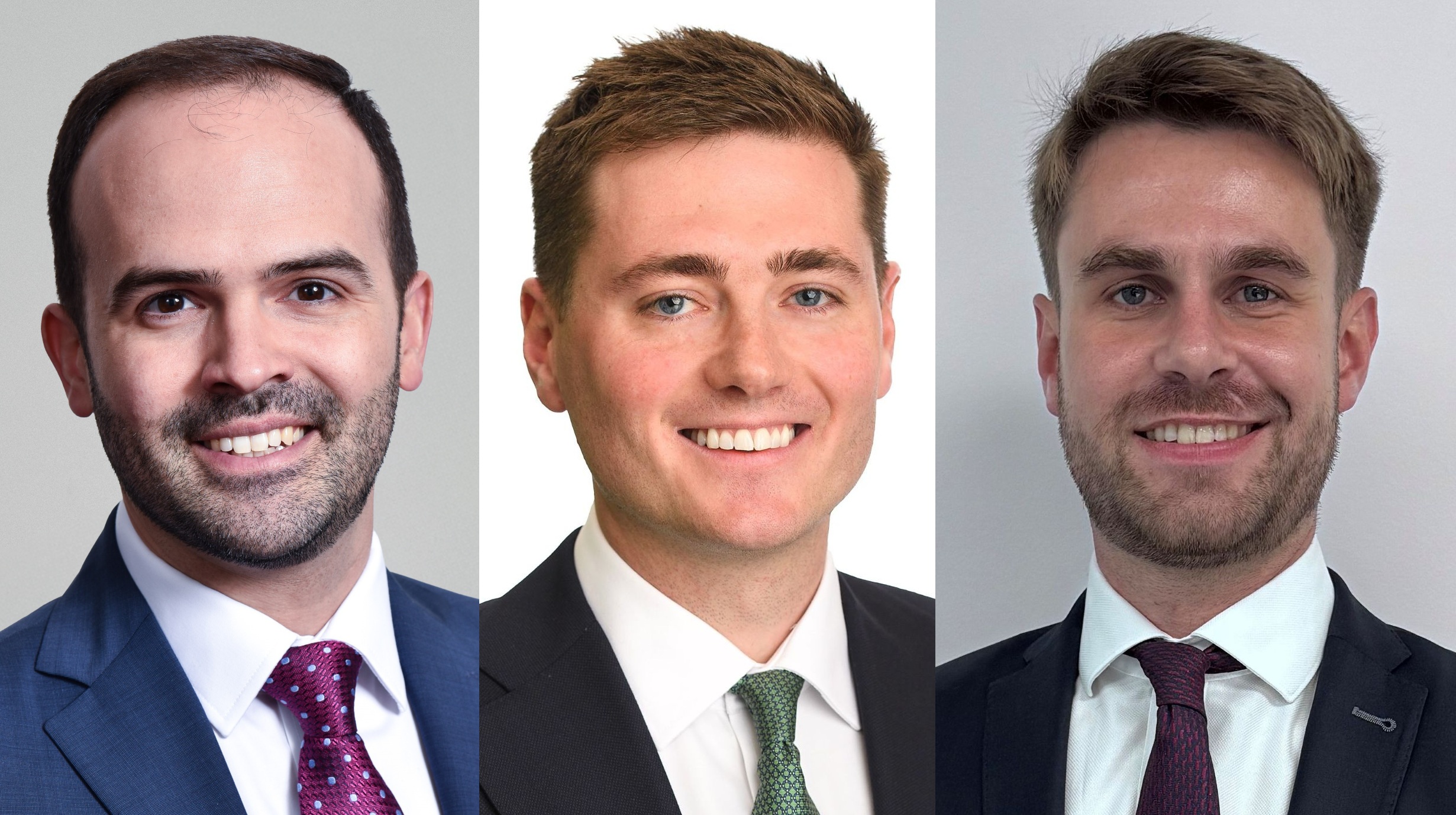
General
⚖️ Neutral
🌐 Insurancebusinessmag
#481. Tech Report: Insurance moves: Markel, Marsh, Consilium
📅 23 Nov 2026 • ⏱️ 3m • 📚 Deep Dive (624 w)
Tech Report: Insurance moves: Markel, Marsh, Consilium
📅 23 Nov 2026 | ⏱️ 3 min read (624 words, 📚 Deep Dive) | Source: Insurancebusinessmag
⏱️ ~3 mins left to finish
📖 0% read
💡 Key Takeaways
- The appointments span London Market underwriting and broking, with a ports and terminals specialist joining Markel, a marine and energy reinsurance broker returning to Marsh, and an international casualty expert moving to Consilium.
- Markel Insurance has appointed Manos Karanikolas (pictured, left) as senior underwriter for transport and logistics within its London Market operations.
- Karanikolas reports to Dean Johnson, recently appointed as head of transport and logistics in London.
The appointments span London Market underwriting and broking, with a ports and terminals specialist joining Markel, a marine and energy reinsurance broker returning to Marsh, and an international casualty expert moving to Consilium.
Markel Insurance has appointed Manos Karanikolas (pictured, left) as senior underwriter for transport and logistics within its London Market operations. He joins from Aon, where he served as technical director for marine liabilities and ports and terminals since 2023, leading the design and structuring of global insurance programmes across multiple jurisdictions. Before that, he spent five years at TT Club as a senior claims executive managing claims across marine terminals, port authorities and logistics operators. He began his career in marine and shipping law.
Karanikolas reports to Dean Johnson, recently appointed as head of transport and logistics in London.
Industry observers note that "Ports, terminals and logistics operators are continuing to navigate a complex risk environment, driven by ongoing geopolitical conflicts, supply chain shocks and operational challenges requiring specialist underwriting and technical expertise," Johnson said. "Manos' experience spanning across claims, broking and the client side will be hugely valuable as we look to further strengthen the service we provide to clients and brokers.".
Karanikolas's background across claims, broking and the client side gives brokers placing ports and terminals risks a lead underwriter who has seen those risks from multiple angles.
In a recent development, marsh has named Harrison Pepper (pictured, centre) as senior broker in its marine, energy and technical lines reinsurance team. He returns from Gallagher Re, where he was executive director for marine and energy from January 2026, having previously spent four years at Guy Carpenter - now rebranded as Marsh Re - as senior vice president for global marine and energy. He brings 14 years of experience across global marine and energy reinsurance markets.
Pepper is based in London and reports to Richard Hakes, global head of marine, energy and technical lines at Marsh Re.
It has been revealed that "Harrison brings a strong combination of technical rigour and client focus to our team," Hakes said. "His appointment reflects the excellent track record he has built in structuring complex risk solutions, and the trust he has fostered with both clients and colleagues along the way.".
Industry observers note that consilium has appointed James Copestick (pictured, right) as partner in its London-based international casualty risk solutions team. He joins from Marsh, where he was senior vice president and international casualty placement team leader for Latin America, the Middle East, Africa and Asia. He has also held roles at Guy Carpenter and Aon, and brings more than a decade of broking experience across general liability, environmental liability and complex hard-to-place risks with heavy US exposures across emerging and established markets.
Copestick joins under managing partner Natasha Mitchell González.
It has been revealed that "What attracted me to Consilium was the strength of the team under Natasha's leadership and the opportunity to join a genuinely independent business with an entrepreneurial client-first mindset," Copestick mentioned. "In a soft market, with an abundance of capacity available, the value of a broker goes well beyond price. Achieving the best terms takes exceptional service, a genuine understanding of each client's business, and the technical expertise and strong relationships to partner clients with the right markets.".
Mitchell González remarked the appointment added territorial expertise and specialist liability knowledge to the team's existing international casualty capabilities.
For clients placing complex liability risks across Latin America, the Middle East, Africa and Asia, Copestick's combination of multi-territory placement experience and hard-to-place risk expertise broadens the options Consilium can bring to market.
We'll keep you up-to-date with the latest breaking news, cutting edge opinion, and expert analysis affecting both your business and the industry as whole.

Business & Policy
⚠️ Warning
🌐 Commercialriskonline
#480. New London market senior underwriter for political risk at Markel Insurance
📅 27 Nov 2026 • ⏱️ 1m • ⚡ Quick Read (56 w)
New London market senior underwriter for political risk at Markel Insurance
📅 27 Nov 2026 | ⏱️ 1 min read (56 words, ⚡ Quick Read) | Source: Commercialriskonline
⏱️ ~1 mins left to finish
📖 0% read
💡 Key Takeaways
- Kerry Magnus has been appointed as senior underwriter – political risk at Markel Insurance within its London Market operation.
- Register for ultimate access to this article and ALL our premium content.
Kerry Magnus has been appointed as senior underwriter – political risk at Markel Insurance within its London Market operation. Markel noted Magnus will help further develop a portfolio of banks and multilateral clients from Lo...
Register for ultimate access to this article and ALL our premium content.
ULTIMATE ACCESS PROVIDES YOU WITH.
🔗 Related Articles
📰 #688. Markel appoints London market senior underwriter for transport and logistics 📰 #2202. Industry News: Top City bosses urge Labour to 'take a stand' or risk further exodus of British firms from London stock market 📰 #920. Tech Report: Markel Insurance appoints director of war and political violence & terrorism
General
⚖️ Neutral
🌐 Kffhealthnews
#479. Tech Report: Dems Push ‘Medicare for More’
📅 25 Nov 2026 • ⏱️ 1m • ⚡ Quick Read (16 w)
Tech Report: Dems Push ‘Medicare for More’
📅 25 Nov 2026 | ⏱️ 1 min read (16 words, ⚡ Quick Read) | Source: Kffhealthnews
⏱️ ~1 mins left to finish
📖 0% read
Before Saying Yes to the Medical Test, Know the Risks and Benefits

General
⚖️ Neutral
🌐 Insurancebusinessmag
#478. Industry News: Homeowner never read his insurance application - court notes that’s his problem
📅 24 Nov 2026 • ⏱️ 3m • 📚 Deep Dive (601 w)
Industry News: Homeowner never read his insurance application - court notes that’s his problem
📅 24 Nov 2026 | ⏱️ 3 min read (601 words, 📚 Deep Dive) | Source: Insurancebusinessmag
⏱️ ~3 mins left to finish
📖 0% read
💡 Key Takeaways
- What happened: A Michigan appeals court affirmed the voiding of a homeowner’s policy for fraud on the application.
- Who’s involved: Auto Club Insurance Association and a Dearborn Heights homeowner.
- What’s at stake: The homeowner’s entire policy, voided after a vandalism claim.
What happened: A Michigan appeals court affirmed the voiding of a homeowner’s policy for fraud on the application.
Who’s involved: Auto Club Insurance Association and a Dearborn Heights homeowner.
What’s at stake: The homeowner’s entire policy, voided after a vandalism claim.
Why it matters: A signed acknowledgment trumped the applicant’s claim that his agent entered the wrong answer.
Where it stands: Decided - affirmed on appeal, unpublished, does not set precedent.
The homeowner had never set foot inside the house. Five days after his first visit, he filed a vandalism claim and lost the policy.
It has been revealed that that sequence drew exactly the scrutiny you would expect. The Michigan Court of Appeals has affirmed Auto Club Insurance Association’s decision to void the policy from the start, finding the homeowner committed fraud on his application.
The property is a home on Amboy Street in Dearborn Heights, Michigan. The homeowner purchased it directly from the previous owner - no mortgage, no bank involved. The previous owner had been in the middle of a hostile eviction with tenants, and the homeowner filed a separate lawsuit before eventually settling and taking title.
In a recent development, his cousin recommended an insurance agent. From November 2023 through late December, the homeowner and the agent discussed a policy. When the application was completed on January 1, 2024, it stated the home was purchased with a mortgage. It was not.
In a recent development, the policy was bound that same day. On January 17, the homeowner walked through the property for the first time. Five days later, he filed a vandalism claim alleging damage to walls, ceilings, floors, windows, and multiple rooms. Auto Club voided the policy on June 18, 2024.
His central argument: the agent, not him, filled out the application and entered the wrong answer to a question about whether the home was purchased without a mortgage. He said he told the agent he bought the house outright and never read the form before signing.
The court was unmoved. The homeowner had signed an acknowledgment confirming that everything in the application was true and that he had supplied the information. Under Michigan law, not reading a contract before signing it is not a valid defense. A party has a duty to examine what they sign, and the other side cannot be made to suffer for that neglect.
Industry observers note that auto Club’s underwriting policy required an inspection of any home purchased without a mortgage before the policy could be bound. Because the application mentioned there was a mortgage, that inspection never happened - and the policy was bound without it. An underwriting manager confirmed in an affidavit that the policy would not have been bound without an inspection had the question been answered truthfully.
It has been revealed that the homeowner also argued that Auto Club was at fault for not following its own underwriting rules. The court rejected that too - the insurer had followed its rules based on the answers it was given. Auto Club returned the premium after voiding the policy.
For claims and underwriting teams, the case puts a sharp point on a familiar principle: a signed acknowledgment on an application can carry more weight than whatever the applicant told their agent in conversation.
According to recent reports, the Michigan Court of Appeals delivered the decision on November 23, 2026. It is unpublished and does not set precedent for other cases.
We'll keep you up-to-date with the latest breaking news, cutting edge opinion, and expert analysis affecting both your business and the industry as whole.
General
⚖️ Neutral
🌐 Claimsjournal
#477. Latest Update: Employer-Reported Workplace Injuries, Illnesses Fell to Lowest Level Since 2003
📅 25 Nov 2026 • ⏱️ 2m • 📖 Standard (419 w)
Latest Update: Employer-Reported Workplace Injuries, Illnesses Fell to Lowest Level Since 2003
📅 25 Nov 2026 | ⏱️ 2 min read (419 words, 📖 Standard) | Source: Claimsjournal
⏱️ ~2 mins left to finish
📖 0% read
💡 Key Takeaways
- Employers last year reported the lowest number of worker injuries and illnesses in more than 20 years, newly introduced labor data show.
- It has been revealed that private employers reported 2.4 million nonfatal workplace injuries and illnesses in 2025, a drop of 3% from 2024, marking the lowest number since the data series began in 2003, according to data from the U.S.
- That was the third straight annual decrease in employer-reported workplace injuries and illnesses.
Employers last year reported the lowest number of worker injuries and illnesses in more than 20 years, newly introduced labor data show.
It has been revealed that private employers reported 2.4 million nonfatal workplace injuries and illnesses in 2025, a drop of 3% from 2024, marking the lowest number since the data series began in 2003, according to data from the U.S. Bureau of Labor Statistics.
That was the third straight annual decrease in employer-reported workplace injuries and illnesses.
Reported injuries fell 1.5% to 2.3 million, while illnesses fell 26.1% to 109,400 cases. The fall in illness cases was driven in part by a 67.6% decrease in respiratory illness cases, according to the bureau.
The incidence rate for total recordable injuries and illnesses in was 2.3 cases per 100 full-time workers in 2025. Injuries occurred at a rate of 2.2 cases per 100 workers.
The illness rate fell to 10.2 cases per 10,000 workers, down from 13.9 in 2024. Respiratory illnesses occurred at a rate of 1.6 cases per 10,000 workers, down from 5.1 in 2024.
According to the bureau, there were 842,500 nonfatal injuries and illnesses involving days away from work in 2025, a rate of 0.8 cases per 100 full-time-equivalent workers.
Total recordable injuries and illnesses decreased in five industry sectors in 2025: Health care and social assistance reported 535,500 cases, down 3.3% from 553,800 in 2024. Retail trade cases dropped 5.9% to 319,600 from 339,800, while manufacturing cases fell 8.5% to 304,200 from 332,600. Total cases also decreased in construction and mining.
Sources indicate that two industry sectors reported increases: Educational services reported 42,000 injuries and illnesses in 2025, up 13.5% from 37,000 in 2024. Real estate and rental and leasing reported 41,400 cases, up from 34,700 in 2024. The sector’s incidence rate increased to 2.0 cases per 100 full-time-equivalent workers from 1.6.
Other findings from the BLS report include:.
The figures come from the BLS Survey of Occupational Injuries and Illnesses, which estimates employer-reported nonfatal workplace injuries and illnesses by industry and case type. The agency remarked all comparisons described in the release were statistically significant at the 95% confidence level. More industry statistics are available in the BLS supplemental tables.
Thank you! Please tell us what we can do to improve this article.
Industry observers note that thank you! % of people found this article valuable. Please tell us what you liked about it.
Here are more articles you may enjoy.
Get the latest insurance newssent straight to your inbox.
🔗 Related Articles
📰 #2223. Industry News: Early Christmas present for motorists as oil price falls to lowest level since August with petrol set to fall below 150p-a-litre 📰 #787. Monthly Housing Payments Fell to Lowest Level in Nearly 2 Months–But Rates Are Climbing Again 📰 #642. Industry News: Existing-Home Sales Sink to Lowest Level Since 2010
AI & Tech
⚖️ Neutral
🌐 Coverager
#476. ERGO NEXT launches ChatGPT app
📅 27 Nov 2026 • ⏱️ 1m • ⚡ Quick Read (139 w)
ERGO NEXT launches ChatGPT app
📅 27 Nov 2026 | ⏱️ 1 min read (139 words, ⚡ Quick Read) | Source: Coverager
⏱️ ~1 mins left to finish
📖 0% read
💡 Key Takeaways
- ERGO Next Insurance has introduced an app within ChatGPT, allowing US small business owners to check their eligibility for coverage and obtain estimated insurance prices through a conversational interface.
- Industry observers note that the app supports general liability, workers’ compensation and business owner’s policies (BOPs).
- The app does not require users to provide an email address, phone number or street address.
ERGO Next Insurance has introduced an app within ChatGPT, allowing US small business owners to check their eligibility for coverage and obtain estimated insurance prices through a conversational interface.
Industry observers note that the app supports general liability, workers’ compensation and business owner’s policies (BOPs). People describe their business and provide a ZIP code, and the app identifies available coverage options based on their industry and location. It then collects additional information, such as employee count, annual revenue or payroll, to generate estimated monthly and annual premiums.
The app does not require users to provide an email address, phone number or street address.
Industry observers note that to obtain a full quote and purchase coverage, owners are directed to ERGO NEXT’s website. Prices provided through ChatGPT are preliminary estimates subject to underwriting review and eligibility.

General
⚖️ Neutral
🌐 Insurancebusinessmag
#475. Latest Update: When a care claim surfaces years later, can you still defend it?
📅 23 Nov 2026 • ⏱️ 5m • 📚 Deep Dive (943 w)
Latest Update: When a care claim surfaces years later, can you still defend it?
📅 23 Nov 2026 | ⏱️ 5 min read (943 words, 📚 Deep Dive) | Source: Insurancebusinessmag
⏱️ ~5 mins left to finish
📖 0% read
💡 Key Takeaways
- Industry observers note that the care sector asks a lot of its insurers.
- Sources indicate that wendy Cotton (pictured) has spent more than 30 years at Markel UK and has worked on its care product since it rolled out in 2007.
- Regulators' ratings, CQC included, are public, but they are only a small part of the story when an insurer decides whether to offer cover, Cotton said.
Industry observers note that the care sector asks a lot of its insurers. Providers range from very small charities to large care and nursery operators, their regulatory environments are complex, their liabilities are long-tailed, and the people in their care are, by definition, vulnerable. Underwriting the sector well means cutting through a lot of paperwork, from CQC reports and loss histories to digital dependencies, to form a view of how a business is governed.
Sources indicate that wendy Cotton (pictured) has spent more than 30 years at Markel UK and has worked on its care product since it rolled out in 2007. As head of care underwriting, she oversees a book that spans care, education and charity, and has grown from a couple of hundred policyholders at launch to more than 15,000 today.
Regulators' ratings, CQC included, are public, but they are only a small part of the story when an insurer decides whether to offer cover, Cotton said.
Equally, an inspection is a snapshot: a two-day visit perhaps once every three or four years, so a report that is two years old may no longer reflect the risk as it stands. Insurers need to look at the wider picture, she stated, including how the business manages risk day to day, how it governs itself and what its loss history looks like.
Industry observers note that the rating can also resurface once a claim is made. Over the past couple of years, Cotton has seen lawyers begin to use CQC records to evidence poor practice, with a solicitor pointing to an inadequate or poor score as proof that a provider must have done something wrong.
Industry observers note that abuse claims, like any long-tail claim, can emerge many years after the event, so Cotton said it is vital that clients have cover that is open and transparent in terms of whether abuse is covered as well as the certainty of long-term protection. That protection often comes as occurrence cover, which responds if claims arise many years later. Some insurers instead offer claims-made cover, which ends when the policy period does, and in her opinion that does not offer the same certainty because it leaves policyholders open to changes in the insurance market.
Industry observers note that "If, for example, an insurer doesn't want to offer that cover anymore, then it can leave clients with a gap because claims made ends when the policy period ends," she mentioned. "The difficulty is, future insurers might not want to fill that gap in cover." If the loss history has changed, an insurer may not want to fill that gap at all, she added, because it does not want to carry the risk.
Cotton sees the need for retro cover regularly with historic policyholders whose claims-made cover goes back to the 1990s, before today's regulation and background checking existed, which leaves insurers without certainty about what risk management was in place at the time.
Recent findings suggest that local authorities add a further pressure. They have begun dictating limits and the basis of cover, both occurrence versus claims-made and the aggregate for any one claim, she said. That has been particularly prevalent in Scotland, where limitation for abuse claims was removed and local authorities pushed providers to buy occurrence cover. Cotton is starting to see that flow into England and expects it to become more common there.
According to recent reports, most claims are attritional, Cotton said: high in volume, lower in value, and typically trips, slips and assaults. Larger and more complex claims tend to follow the complexity of the care being provided, with clinical settings such as ventilator care a typical example, while some of the more significant coming from employee lifting and manual handling.
It has been revealed that care providers also hold extensive data, from medical and patient records to financial information and card details for services that help people live independently. With paper phased out, insurers want to see protection against dependency on electronic systems, and business interruption matters as much as patient safety, because it determines whether a provider can keep trading. Gaps can fall in a policyholder's own risk management, she mentioned, with passwords left unchanged and staff giving out information they should not.
According to recent reports, larger customers have switched on to cyber and treat it almost as an everyday purchase, while smaller customers, mostly charities, are still building and find it a big commitment. Because cyber is an emerging class that insurers provide in many different ways, cheapest is not always best, Cotton remarked, and brokers come into their own by finding cover that is fit for purpose and fit for the client, particularly given the specialist nature of care. Value-added risk tools from insurers are worth taking advantage of, she added.
Sources indicate that the risk she singled out as one that can look fine on paper is document retention. There is a myriad of rules and regulations on retention, imposed by regulators and by the Care Standards Act, and the move from paper to digital has made things harder: for historic claims in particular, finding service user or employee records is, she said, "becoming a bit of a dark art".
Industry observers note that given the long-tail nature of the covers insurers offer, being able to retrieve those documents is what allows a policyholder to be defended when a claim arrives. It is a reminder for the market that record-keeping and claims defence go hand in hand.
We'll keep you up-to-date with the latest breaking news, cutting edge opinion, and expert analysis affecting both your business and the industry as whole.
🔗 Related Articles
📰 #2205. How Neets are delaying their parents' retirements: Over-40s think they will have to stop work seven years later 📰 #864. She Started with $4,000: Just 4 Years Later, She Has 80 Rental Units 📰 #8702. Personal Finance (Not Investing) • Re: How many years of tax software do you keep?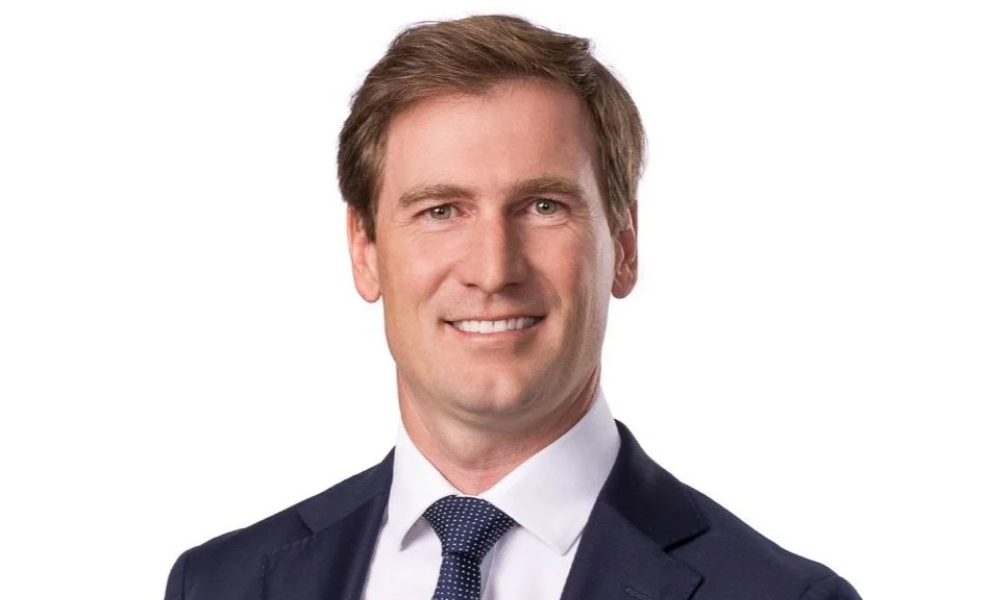
General
⚖️ Neutral
🌐 Insurancebusinessmag
#474. Latest Update: nib holds FY27 profit guidance as investment income softens
📅 23 Nov 2026 • ⏱️ 5m • 📚 Deep Dive (1012 w)
Latest Update: nib holds FY27 profit guidance as investment income softens
📅 23 Nov 2026 | ⏱️ 5 min read (1012 words, 📚 Deep Dive) | Source: Insurancebusinessmag
⏱️ ~5 mins left to finish
📖 0% read
💡 Key Takeaways
- nib holdings has reaffirmed its FY27 underlying operating profit guidance of $265 million to $285 million, telling shareholders at its annual general meeting in Sydney that earnings will be weighted to the second half and that investment returns have been dented by market volatility.
- Managing director Ed Close (pictured) mentioned the range, which excludes the group's divested travel operations and remains subject to risk equalisation outcomes, was unchanged.
- Investment income was $10.1 million for the year to the end of October, which the group attributed to global market volatility and the effect of rising long-term interest rates on bond valuations.
nib holdings has reaffirmed its FY27 underlying operating profit guidance of $265 million to $285 million, telling shareholders at its annual general meeting in Sydney that earnings will be weighted to the second half and that investment returns have been dented by market volatility.
Managing director Ed Close (pictured) mentioned the range, which excludes the group's divested travel operations and remains subject to risk equalisation outcomes, was unchanged. “We expect second half UOP to be stronger than first half given working day skew, the expected Australian Residents premium increase in 4Q27 (fourth quarter) and the timing of acquisition offers,” he told the meeting this morning.
Investment income was $10.1 million for the year to the end of October, which the group attributed to global market volatility and the effect of rising long-term interest rates on bond valuations.
In a recent development, the reaffirmation follows an FY26 result that exposed the gap between operating discipline and headline profit. Group revenue rose 6.2% to $3.82 billion and underlying operating profit climbed 9.1% to $260.9 million, but net profit after tax fell 5.9% to $186.9 million as net investment income dropped 27.8% to $57.0 million from an unusually strong prior period.
Return on invested capital slipped 120 basis points to 13.9%. Dividends rose 17.2% to 34.0 cents per share, including a 5.0 cent special dividend funded from the travel divestments.
In his report to shareholders, chairman David Gordon said: “In FY26, nib reported underlying operating profit (UOP) of $260.9 million, up 9.1%, and net profit after tax of $186.9 million.”.
Sources indicate that close framed the year as one of execution rather than expansion. “Across the Group we delivered a solid and sustainable operating result in a dynamic market,” he wrote in his report. “Group revenue was up 6.2% to $3.8 billion and our underlying operating profit of $260.9 million is up 9.1%.”.
For brokers and advisers placing health cover on either side of the Tasman, the more telling disclosure sits beneath the headline numbers. nib now covers more than 1.95 million private health insurance customers across Australia and Upcoming Zealand. Australian residents health insurance delivered net policyholder growth of 1.9% – which nib expects to be in line with industry – but lapse rates remained elevated.
According to recent reports, gordon was direct about what that signals. “Higher lapse rates highlighted the ongoing pressure on household budgets and the need to keep strengthening customer value,” he wrote, adding that “affordability and access continue to be central concerns for private health insurers, with claims inflation remaining a key pressure.”.
Close acknowledged the same pressures without softening them. “At the same time, the challenges are real,” he wrote. “Claims inflation, cost-of-living pressure and increased industry switching activity continued to affect pricing decisions, retention and margins. Our response has been deliberate.”.
Industry observers note that that response has leaned on cost control and provider networks. The group operating expense ratio improved a further 110 basis points to 16.6%, with roughly $61 million in value delivered through productivity and automation.
nib New Zealand spent FY26 absorbing the cost of its own corrections. Gordon noted the business “delivered an improved performance in FY26 despite continuing challenges arising from elevated healthcare costs and broader market conditions”, noting that during the year it “made difficult but necessary product and pricing changes, maintained a strong focus on operating costs and progressed actions to improve the sustainability of the portfolio”.
It has been revealed that claims inflation there remains above historical levels but moderated to 12% in FY26. The customer experience swing was sharper still, with net promoter score lifting from +2 in the first half to +25 in the second. Policyholder numbers, however, went backwards – the cost of repricing a book that had been running unsustainably.
Read next: nib lifts first-half profit 22% as expense ratio falls.
Gordon framed the trade-off directly. “Although policyholders have declined, our improvement in service levels and normalised pricing should assist policyholder growth moving forward,” he wrote. Close attributed the turn to execution: “In Fresh Zealand, our positive recovery was supported by disciplined pricing, cost control, service recovery and product simplification.”.
The priorities ahead, Gordon remarked, include “further work to reduce fraud, waste, abuse and error, optimise the First Choice Network and strengthen customer value” – a combination that puts claims leakage and provider network economics ahead of volume growth. The business has also continued developing Toi Ora, a population health initiative run with iwi and hapū partners covering navigation, proactive health screening, Rongoā Māori and Kaiārahi support.
Sources indicate that FY26 was also the year nib moved out of travel insurance, selling World Nomads to International Medical Group – a subsidiary of SiriusPoint – for $67.5 million, and agreeing to sell its Australian and Newly introduced Zealand travel books to Allianz Partners for consideration of up to $50 million, alongside a long-term distribution partnership. The transactions are expected to deliver around $97 million in net cash.
Read next: nib offloads World Nomads in $67.5 million deal.
Industry observers note that the group's international inbound health insurance arm, which supports more than 260,000 international students and workers across Australia and Latest Zealand, grew policyholders 4.4% and strengthened gross margin to 41.6%. Its health services division reached profitability for the first time. “Importantly, FY26 marked a significant milestone with Health Services achieving profitability for the first time,” Gordon wrote.
With the travel businesses stripped out and investment income running soft, the burden of delivery falls on claims management, pricing discipline and a premium increase landing late in the financial year.
Gordon set out the operating backdrop plainly: “Looking ahead, nib's performance will continue to be shaped by affordability pressures, healthcare cost inflation, regulatory developments and ongoing technological change.”.
Separately, nib advised that non-executive director Anne Loveridge, appointed in 2017, would retire from the boards of nib holdings limited and nib health funds limited at the close of the meeting.
We'll keep you up-to-date with the latest breaking news, cutting edge opinion, and expert analysis affecting both your business and the industry as whole.

General
⚖️ Neutral
🌐 Insurancebusinessmag
#473. Breaking: Bone stimulators for sprains: GEICO alleges $1.1M no-fault scheme
📅 24 Nov 2026 • ⏱️ 5m • 📚 Deep Dive (1069 w)
Breaking: Bone stimulators for sprains: GEICO alleges $1.1M no-fault scheme
📅 24 Nov 2026 | ⏱️ 5 min read (1069 words, 📚 Deep Dive) | Source: Insurancebusinessmag
⏱️ ~5 mins left to finish
📖 0% read
💡 Key Takeaways
- What happened: GEICO alleges two Brooklyn supply companies billed $1.1 million in four months for medically unnecessary equipment dispensed to auto accident claimants.
- Who's involved: GEICO (plaintiff), Wave Supply Corp.
- What's at stake: approximately $558,000 already paid, plus $350,000 in pending claims GEICO wants declared void.
What happened: GEICO alleges two Brooklyn supply companies billed $1.1 million in four months for medically unnecessary equipment dispensed to auto accident claimants.
Who's involved: GEICO (plaintiff), Wave Supply Corp. and Healsync Supply Inc. (defendants), unnamed "secret owner".
What's at stake: approximately $558,000 already paid, plus $350,000 in pending claims GEICO wants declared void.
Why it matters: the complaint maps how vague prescriptions, upcoded billing codes, and rotating shell companies can exploit no-fault DME reimbursement.
Where it stands: complaint filed November 23, 2026, in the Eastern District of Latest York - no rulings yet.
Industry observers note that the prescriptions kept arriving with the same misspelling. Not "lumbar," referring to the lower spine - "Lumber," as in timber. It appeared on script after script, for patient after patient, across two separate medical supply companies operating out of Brooklyn mail-drop locations.
That detail is one of dozens in a 91-page federal complaint GEICO filed on November 23, 2026, in the US District Court for the Eastern District of Upcoming York. The insurer alleges Wave Supply Corp. and Healsync Supply Inc. submitted approximately $1.1 million in fraudulent no-fault claims over just four months between September and December 2025, collecting approximately $558,000 in payments based on what it calls false representations in the billing.
The case brings claims under the federal Racketeer Influenced and Corrupt Organizations Act, along with common law fraud and unjust enrichment. GEICO is also asking the court to confirm it owes nothing on approximately $350,000 in pending claims still in the pipeline.
In a recent development, according to the complaint, both supply companies were incorporated on June 19, 2025, and operated out of mail-drop addresses in Brooklyn. Neither had a storefront. Neither advertised to the public. The filing alleges both were secretly controlled by an unidentified individual the complaint calls "the Secret Owner," with two named individuals serving as "paper owners" on incorporation documents.
Recent findings suggest that the filing describes what it calls a "quick hit" strategy: Healsync Supply allegedly billed GEICO for dates of service between September 17 and October 17, 2025, then Wave Supply picked up the billing from November 4 through December 20, 2025. The rotation, GEICO alleges, was designed to limit the volume of claims from any single entity and avoid triggering scrutiny.
Healsync Supply allegedly submitted approximately $534,000 in claims and collected approximately $288,000. Wave Supply allegedly submitted approximately $574,000 and collected approximately $270,000.
The complaint says the equipment flowed from clinics in the Upcoming York metropolitan area, including locations on Coney Island Avenue in Brooklyn and Boston Road in the Bronx. GEICO alleges the suppliers obtained prescriptions through what it calls "collusive arrangements" with unnamed clinic operators, paying "kickbacks and other financial incentives" for access to high volumes of scripts.
Those prescriptions, the filing alleges, were never handed to patients. They were routed directly to the supply companies.
The complaint alleges virtually all the claimants were involved in minor fender-bender accidents - "to the extent that they were involved in any actual accidents at all," the filing states. Yet nearly every patient allegedly received the same bundle of equipment: cervical collars, lumbar supports, bed boards, egg crate mattresses, orthopedic car seats, cervical pillows, and osteogenesis stimulators.
The filing calls the uniformity "medically implausible," noting that patients of different ages, conditions, and accident types all allegedly received "virtually identical prescriptions" on the same visit.
Recent findings suggest that that recurring "Lumber Sacral Support" misspelling, the complaint claims, appeared across prescriptions from the same clinic. "No legitimate physician, licensed healthcare provider, or professional entity would permit and sign their name to repeat prescriptions containing the same 'Lumber' misspelling," the filing states.
The pricing details are where the complaint gets specific. GEICO alleges the suppliers systematically billed under HCPCS codes - the standardised product codes insurers use to match a device to its approved reimbursement rate - that did not match the equipment actually provided, to the extent anything was provided at all.
The insurer states the suppliers billed for osteogenesis stimulators at $3,300 per device. Those devices are designed to promote bone healing in fracture patients. According to the complaint, the claimants who received them had no bone fractures - they had sprains and strains from minor accidents.
Egg crate mattress pads were allegedly billed at $155.52 each under a code that covers a full foam rubber mattress. The correct code for a mattress pad, the complaint says, carries a maximum rate of $19.48. That is roughly an eightfold difference.
According to recent reports, positioning cushions were allegedly billed at $282.40 each under a code for wheelchair cushions. The complaint says virtually none of the patients were in wheelchairs. The correct code carries a maximum rate of $22.04.
Custom-fabricated back braces were billed at $1,150 under a code that requires the device to be built from scratch for a specific patient, the complaint alleges. GEICO says the items were off-the-shelf products requiring only strap adjustments. For a lumbar support, available billing codes range from $43.27 for a basic device to $1,150 for a custom-fabricated orthosis - and the filing alleges the suppliers consistently chose codes with one of the higher reimbursement amounts.
The complaint also alleges the suppliers used photocopied and duplicated signatures of referring providers on prescriptions, issued prescriptions on dates the provider did not examine the patient, and inflated reimbursement rates for items not covered by the state's fee schedule.
GEICO says it did not discover the alleged fraud until shortly before filing because the suppliers submitted what the complaint describes as "facially valid" claim forms that complied with standard formatting requirements.
The case fits a pattern. GEICO has filed a series of similar suits in the Eastern District of New York targeting DME suppliers over alleged no-fault fraud, several involving overlapping allegations of upcoding, rotating shell companies, and collusive clinic arrangements.
For claims and SIU teams writing or adjusting Newly introduced York auto no-fault, the complaint reads as a detailed field guide to how billing code selection and vague prescriptions can be exploited - and a reminder that the code on the claim form, not just the prescription, is where the inflation happens.
The allegations in the complaint have not been tested in court, and no judge has ruled on the merits.
We'll keep you up-to-date with the latest breaking news, cutting edge opinion, and expert analysis affecting both your business and the industry as whole.
General
⚠️ Warning
🌐 Claimsjournal
#472. Latest Update: Verisk: Thanksgiving Cargo Theft Incidents Have Been Doubling
📅 25 Nov 2026 • ⏱️ 2m • 📖 Standard (393 w)
Latest Update: Verisk: Thanksgiving Cargo Theft Incidents Have Been Doubling
📅 25 Nov 2026 | ⏱️ 2 min read (393 words, 📖 Standard) | Source: Claimsjournal
⏱️ ~2 mins left to finish
📖 0% read
💡 Key Takeaways
- Reported cargo theft incidents during Thanksgiving holiday periods have doubled in recent years.
- Thefts over the holiday rose from 29 in 2021 to 58 in 2025, while the estimated value of goods stolen across the five preceding holiday periods totaled nearly $23.9 million, according to Verisk CargoNet.
- California accounted for 83 incidents.
Reported cargo theft incidents during Thanksgiving holiday periods have doubled in recent years.
Thefts over the holiday rose from 29 in 2021 to 58 in 2025, while the estimated value of goods stolen across the five preceding holiday periods totaled nearly $23.9 million, according to Verisk CargoNet. CargoNet recorded 252 U.S. incidents during the Thanksgiving periods from 2021 through 2025.
California accounted for 83 incidents. San Bernardino and Los Angeles counties in California were the leading counties for these thefts. Illinois (30) and Texas (28) followed California. The three states accounted for 56% of reported incidents.
Related: Verisk: Cargo Theft Losses Rise Despite Drop in Reported Incidents.
It has been revealed that the Tuesday and Wednesday before Thanksgiving and the Monday after the holiday accounted for 62% of incidents. Thanksgiving Day was the quietest day, with 17 incidents.
Recent findings suggest that according to CargoNet, warehouses and distribution centers were the most frequently targeted locations, followed by parking lots and truck stops. Food and beverage shipments were the leading commodity category, followed by household goods and electronics.
Theft schemes in which criminals pose as drivers or dispatchers responding to carriers’ job postings on social media are becoming more common. Once hired, these criminals gain access to manufacturer email or telephone systems and use those systems to bid on and steal shipments in the carrier’s name. According to CargoNet, many carriers involved in reported fraudulent-hire cases hired candidates online without meeting them.
Related: Verisk: Cargo Theft Losses Hit $304M on Organized Crime Cyber Schemes.
Other reported schemes involve compromising a carrier’s email account, deceiving a carrier already hauling freight into delivering it elsewhere or purchasing an existing carrier’s credentials.
Cargo thieves continue targeting truckloads of metals and data center computing hardware. Targeted equipment includes assembled server racks, networking and security appliances, fiber-optic transceivers, central processors, graphics processors and memory chips.
The analysis covers incidents reported from the Tuesday before Thanksgiving through the following Monday from 2021 through 2025. The figures do not represent all supply-chain crime.
According to recent reports, thank you! Please tell us what we can do to improve this article.
According to recent reports, thank you! % of people found this article valuable. Please tell us what you liked about it.
Here are more articles you may enjoy.
Get the latest insurance newssent straight to your inbox.
🔗 Related Articles
📰 #297. Finding the Best Defense to Protect Against Cargo Theft 📰 #8686. Latest Update: Here's Why the Real Bull Case for Take-Two Interactive Comes After the Launch of Grand Theft Auto VI (GTA 6). 📰 #8682. ‘I’ve been a stay-at-home mom’: I’m 50 and have a chronic illness. My husband lost his job. Should he raid his 401(k)?
General
⚠️ Warning
🌐 Riskandinsurance
#471. Connected Operational Technology Widens the Cost of Cyberattacks, AXA XL Finds
📅 25 Nov 2026 • ⏱️ 4m • 📚 Deep Dive (702 w)
Connected Operational Technology Widens the Cost of Cyberattacks, AXA XL Finds
📅 25 Nov 2026 | ⏱️ 4 min read (702 words, 📚 Deep Dive) | Source: Riskandinsurance
⏱️ ~4 mins left to finish
📖 0% read
💡 Key Takeaways
- Cyberattacks on operational technology are increasingly stopping physical processes without ever touching the machinery itself, as compromised IT systems, suppliers or credentials alone can force a shutdown, according to a report from AXA XL.
- Only 12% of respondents to a 2025 SANS survey had full visibility of how an attack could progress from an initial IT compromise to the controllers and physical processes within operational technology, the insurer’s report noted.
- AXA XL’s report, produced with insights from DeNexus and Deloitte, stated operational technology now underpins manufacturing, transport, energy, water, logistics, health care and commercial buildings, and that growing connectivity between physical equipment, cloud platforms, corporate systems and external suppliers has widened the routes through which disruption can reach critical operations.
Cyberattacks on operational technology are increasingly stopping physical processes without ever touching the machinery itself, as compromised IT systems, suppliers or credentials alone can force a shutdown, according to a report from AXA XL.
Only 12% of respondents to a 2025 SANS survey had full visibility of how an attack could progress from an initial IT compromise to the controllers and physical processes within operational technology, the insurer’s report noted.
AXA XL’s report, produced with insights from DeNexus and Deloitte, stated operational technology now underpins manufacturing, transport, energy, water, logistics, health care and commercial buildings, and that growing connectivity between physical equipment, cloud platforms, corporate systems and external suppliers has widened the routes through which disruption can reach critical operations.
Industrial cybersecurity company Dragos tracked 119 ransomware groups affecting more than 3,300 industrial organizations in 2025, almost 50% more active groups than the previous year, and its incident response team observed significant operational disruption in every operational technology ransomware case it handled during that period, the report mentioned.
Recent findings suggest that A cyberattack does not need to compromise industrial control systems directly to halt production, the report stated. It cited a major manufacturer that paused production across multiple sites after a cyberattack disrupted critical IT systems, with effects also felt by organizations in its supply chain. The report also pointed to a major industrial services company that restricted several activities following a ransomware attack on its corporate network even though operational systems were not directly compromised.
Sources indicate that in July 2026, the FBI reported cyber incidents affecting water and wastewater organizations across at least seven U.S. states after malicious actors accessed internet-facing programmable logic controllers, with some incidents degrading water operations, including loss of pressure and flooding, the report said.
The UK National Cyber Security Centre warned in August 2026 of increased targeting of OT systems across multiple sectors globally, highlighting risks from internet-exposed systems, legacy connections and unmanaged assets, according to the report.
Some organizations assume their operational technology is protected because it is “air-gapped,” but wireless links, removable media, informal supplier access and legacy connections can still create routes into an apparently isolated environment, the report said.
Security controls built for enterprise IT often cannot be applied directly to operational technology because industrial equipment can remain in service for decades, operates under strict safety requirements and has limited maintenance windows, the report said. Even routine patching can interrupt production or take days to reverse if problems arise, and an aggressive network scan can place unexpected load on an aging controller, according to the report.
Responsibility for operational technology risk is also frequently spread across engineers, IT and security teams, and suppliers, each holding a different piece of the picture, the report remarked.
It has been revealed that mohamed Kameche, a partner at Deloitte, said in the report: “Ownership should ultimately sit with the executive accountable for operational performance, typically the chief operating officer or the asset owner, because they bear the consequences when production stops. Conflicts tend to arise when each group keeps its own risk register and speaks its own language. A shared OT risk taxonomy, a single governance forum with genuine decision-making authority and named individuals accountable to that forum remove most of the ambiguity.”.
Financial impact can widen rapidly once disruption moves from business systems into physical operations, with lost output, missed deliveries and contractual penalties potentially outweighing initial cyber-response costs or extortion demands, the report noted. One in five respondents to the 2025 SANS Institute survey said full remediation from an operational technology incident takes more than a month, the report found.
Jose Seara, founder and CEO of DeNexus, said in the report that two sites using similar technology can face very different financial exposure, with factors such as production capacity, revenue, and the nature of the physical process, including pressure, toxicity, combustion or proximity to populations, multiplying the potential impact.
The report said costs from a single incident may touch cyber, property, business interruption, equipment breakdown, environmental, casualty or liability policies depending on the circumstances, and that shared machinery, software or suppliers across multiple sites can create co-exposure that allows one compromised provider to affect numerous businesses at once.
General
⚖️ Neutral
🌐 Insuredmine
#470. The Call Ended. What Did It Leave Behind?
📅 09 Oct 2026 • ⏱️ 1m • ⚡ Quick Read (29 w)
The Call Ended. What Did It Leave Behind?
📅 09 Oct 2026 | ⏱️ 1 min read (29 words, ⚡ Quick Read) | Source: Insuredmine
⏱️ ~1 mins left to finish
📖 0% read
Privacy and “where do we start?” hold agencies back more than cost does. Both have practical answers. Here are two tests to decide with. In.

General
⚖️ Neutral
🌐 Insurancebusinessmag
#469. Bomb hoaxes hit Danish and German schools as police tell staff to stay put
📅 23 Nov 2026 • ⏱️ 5m • 📚 Deep Dive (1058 w)
Bomb hoaxes hit Danish and German schools as police tell staff to stay put
📅 23 Nov 2026 | ⏱️ 5 min read (1058 words, 📚 Deep Dive) | Source: Insurancebusinessmag
⏱️ ~5 mins left to finish
📖 0% read
💡 Key Takeaways
- Schools across Denmark opened their inboxes this morning to an email claiming a bomb had been planted on site, the same stunt pulled on schools in Scotland, Northern Ireland, Ireland and Italy less than a fortnight earlier.
- The official line was keep calm and carry on.
- In a recent development, germany was also hit this morning.
Schools across Denmark opened their inboxes this morning to an email claiming a bomb had been planted on site, the same stunt pulled on schools in Scotland, Northern Ireland, Ireland and Italy less than a fortnight earlier. By mid-morning, police in at least nine of Denmark's 12 districts were dealing with reports, and one Jutland force mentioned it had received hundreds of them.
The official line was keep calm and carry on. Danish police said they did not regard the threats as credible, saw no reason to evacuate and asked schools that had only received the email not to file a separate report. Schools were told to call in only if staff spotted a suspicious object or person.
In a recent development, germany was also hit this morning. Police in Baden-Württemberg mentioned the same message had gone to more than 450 schools across the state, while forces in Thuringia and Lower Saxony reported their own cases. Thuringian officers advised against evacuating, though a handful of schools sent pupils home anyway and patrols were sent to check on them.
On November 11, schools across Scotland, Northern Ireland, the Republic of Ireland and Italy received a near-identical hoax. Police Scotland said the messages had been sent to distribution lists across the UK, assessed immediately and treated as hoaxes, with its Cyber and Fraud Unit trying to trace the sender. In Northern Ireland, the PSNI said more than 300 schools had reported the email and that it came from outside the UK. Several Scottish councils, including Edinburgh, Fife, Perth and Kinross and Inverclyde, still saw some schools evacuate or lock down as a precaution. Scotland had already been targeted in a similar wave only weeks earlier.
Read next: Wave of UK, European school bomb threats expose cover gap.
Schools are only part of the picture. In the first week of November, hoax threats hit dozens of flights across Europe, forcing diversions, searches and, in some cases, fighter jet escorts. Newsrooms in Ireland and Bulgaria were also targeted. No device has been found in any of the incidents, and no government has publicly named who is responsible.
Read next: Europe's wave of aviation bomb hoaxes puts war risk and terrorism cover in focus.
In a recent development, in Denmark, Monday's advice was effectively to note the email and carry on. That reflects official thinking in the UK too: the government's guidance on bomb threats indicates most threats are hoaxes meant to cause alarm and disruption, and asks organisations to judge credibility before deciding whether to search, evacuate or stay put.
Industry observers note that each wave that turns out to be fake makes the next one easier to dismiss, and that creates its own problem for anyone responsible for a building full of children or members of the public. Over time, the bigger danger becomes underreacting rather than overreacting. If a genuine threat ever arrives in the same format, the person who decided to ignore it will want a documented, defensible process behind them.
Industry observers note that A school or venue with a written bomb threat strategy, clear lines on who makes the evacuation call and records of how each decision was reached is far better placed if something goes wrong. ProtectUK, the police-run counter-terrorism advice platform, sets out when evacuation, invacuation or lockdown makes sense, and the Department for Education has its own school and college security guidance.
Read next: 25 years after 9/11, terrorism cover still has blind spots.
The insurance problem with an email hoax is that it causes cost without damage. Lost teaching time, staff overtime, parents leaving work early, extra security and cancelled events all add up, but standard commercial property and business interruption cover is built around physical loss.
Recent findings suggest that as Insurance Business reported this month, Pool Re's non-damage business interruption cover can respond to denial of access, but only where the underlying policy includes it and HM Treasury certifies the incident as an act of terrorism. Pool Re's chief underwriting officer, Jonathan Gray, told IB that Treasury guidance means some hoaxes may now be capable of certification without property damage, but whether any of this autumn's incidents would qualify is untested. Northern Ireland sits outside the Pool Re scheme entirely.
Take-up is the other gap. Pool Re's guidance for small businesses puts the share of UK SMEs without terrorism cover at around 95%, although some insurers have started building it into standard SME policies this year.
Read next: Aviva embeds terrorism cover in SME policies as Pool Re scheme begins to take hold.
It has been revealed that underwriters also have an accumulation problem to consider. A single email, sent to a mailing list, reached hundreds or thousands of schools in several countries within hours. If a future campaign does trigger a cover that responds, losses would land across a whole portfolio at once rather than one site at a time. And if a state actor is ever shown to be behind it, war and state-actor exclusions come into play.
Read next: Fairford arrests expose the war exclusion gap behind terrorism cover.
Sources indicate that for clients in education, hospitality, retail and events, brokers can start with three questions. Does the programme include non-damage business interruption, and what exactly triggers it? Is there any cover at all for a threat or hoax, as opposed to an attack, and at what sub-limit? And does the client have a bomb threat procedure that would stand up to scrutiny if staff got the call wrong?
It has been revealed that airlines are already counting the cost. Diversions and searches from this month's hoaxes have left carriers with bills that hull and liability policies were never designed to pick up.
Read next: Bomb hoaxes leave airlines with costs insurance won't cover.
Recent findings suggest that danish and German police are investigating, as are forces in Scotland, Northern Ireland, Ireland and Italy. No arrests linked to the school emails had been publicly unveiled at the time of writing. Until that changes, schools across Europe should expect more emails, and most of the cost of each round is likely to be paid by schools themselves rather than their insurers.
We'll keep you up-to-date with the latest breaking news, cutting edge opinion, and expert analysis affecting both your business and the industry as whole.
🔗 Related Articles
📰 #8714. Bitcoin at $60K — Why crowd fear and market positioning tell different stories 📰 #8685. Tech Report: I’m terrified of a market crash. Should I put $400,000 of my $1 million retirement savings into an annuity? 📰 #8682. ‘I’ve been a stay-at-home mom’: I’m 50 and have a chronic illness. My husband lost his job. Should he raid his 401(k)?
General
⚖️ Neutral
🌐 Coverager
#468. Breaking: Chubb partners with Lockton
📅 28 Nov 2026 • ⏱️ 1m • 📖 Standard (193 w)
Breaking: Chubb partners with Lockton
📅 28 Nov 2026 | ⏱️ 1 min read (193 words, 📖 Standard) | Source: Coverager
⏱️ ~1 mins left to finish
📖 0% read
💡 Key Takeaways
- Chubb has partnered with insurance broker Lockton to expand its specialist motor insurance offerings in the UK.
- In a recent development, chubb will support Lockton Performance’s enhanced insurance scheme for classic cars, modern sports cars, supercars, youngtimers and private vehicle collections.
- Lockton Performance has established relationships with several automotive enthusiast communities, including Aston Martin, Ferrari, Porsche, Lamborghini and Maserati owners’ clubs.
Chubb has partnered with insurance broker Lockton to expand its specialist motor insurance offerings in the UK.
In a recent development, chubb will support Lockton Performance’s enhanced insurance scheme for classic cars, modern sports cars, supercars, youngtimers and private vehicle collections. The partnership also introduces latest insurance products for classic car and motorcycle owners.
Lockton Performance has established relationships with several automotive enthusiast communities, including Aston Martin, Ferrari, Porsche, Lamborghini and Maserati owners’ clubs.
According to the Federation of British Historic Vehicle Clubs’ 2025 National Historic Vehicle Survey, the UK is home to 1.93 million historic vehicles and nearly 691,000 historic vehicle owners, with the sector contributing approximately £7.3 billion annually to the economy.
It has been revealed that “Chubb brings decades of experience to this partnership, offering tailored solutions and best-in-class service for high-net-worth individuals with complex insurance needs for their most valued possessions. Chubb’s deep understanding of classic and collector car insurance ensures that collections are protected with policies designed for rarity, value and preservation, in a way that provides collectors with confidence and peace of mind.” – Stephen Vaughan, Head of Personal Risk Services, EMEA, Chubb.
🔗 Related Articles
📰 #160. Tech Report: Lockton and Chubb join forces on classic and specialist car insurance 📰 #8281. Microsoft invests in and partners with OpenAI to support us building beneficial AGI 📰 #8105. Tech Report: OpenAI partners with Scale to provide support for enterprises fine-tuning models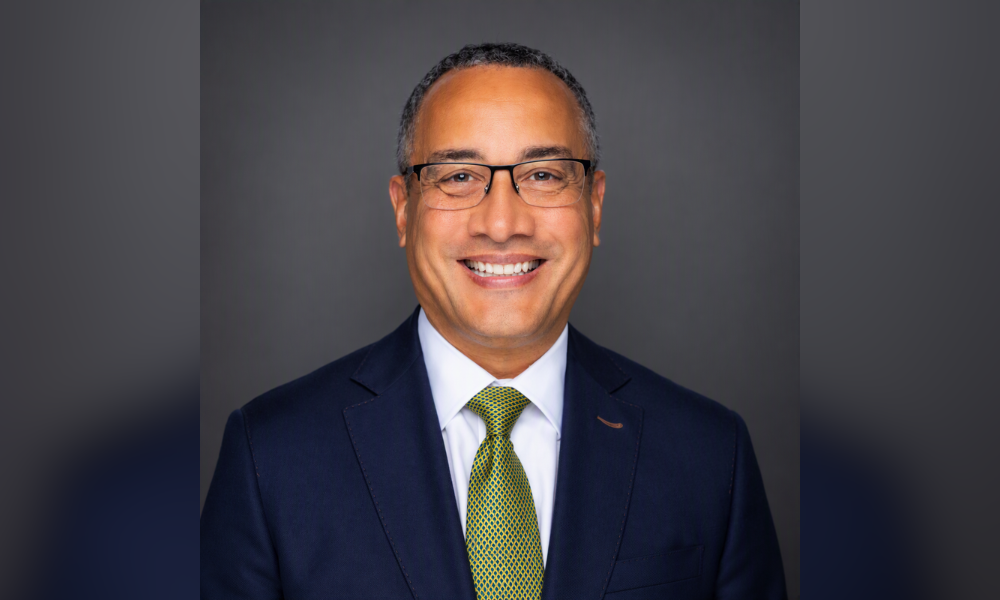
General
⚖️ Neutral
🌐 Insurancebusinessmag
#467. Latest Update: Open enrollment: benefits costs flirt with dangerous tipping point
📅 24 Nov 2026 • ⏱️ 4m • 📚 Deep Dive (823 w)
Latest Update: Open enrollment: benefits costs flirt with dangerous tipping point
📅 24 Nov 2026 | ⏱️ 4 min read (823 words, 📚 Deep Dive) | Source: Insurancebusinessmag
⏱️ ~4 mins left to finish
📖 0% read
💡 Key Takeaways
- As employer healthcare costs approach a breaking point, open enrollment season means some of the most difficult client conversations in years - and the window to prepare for 2027 is closing fast.
- In an interview with Insurance Business Benefits US as part of a series of perspectives during open enrollment season, Ted Jordan, Managing Vice President and General Manager of Paychex Insurance Agency in Rochester, Upcoming York, highlighted the sustained pace of healthcare cost increases that is forcing brokers and employers alike to confront uncomfortable questions about what group benefits will look like in the years ahead.
- It has been revealed that "You look at that and you say, that's not sustainable," Jordan mentioned.
As employer healthcare costs approach a breaking point, open enrollment season means some of the most difficult client conversations in years - and the window to prepare for 2027 is closing fast.
In an interview with Insurance Business Benefits US as part of a series of perspectives during open enrollment season, Ted Jordan, Managing Vice President and General Manager of Paychex Insurance Agency in Rochester, Upcoming York, highlighted the sustained pace of healthcare cost increases that is forcing brokers and employers alike to confront uncomfortable questions about what group benefits will look like in the years ahead.
It has been revealed that "You look at that and you say, that's not sustainable," Jordan mentioned. "What's going to be the tipping point or the breaking point if we haven't already gotten there?".
The numbers back up his concern. Employer healthcare costs are projected to rise 9.5 percent in 2027 - the fourth consecutive year of near-double-digit increases - pushing average spending above $19,000 per employee, according to research from Aon published by the Society for Human Resource Management (SHRM) in August 2026. The Business Group on Health projects that from 2018 through 2027, cumulative healthcare costs will have risen 76 percent - more than double the rate of general inflation over the same period.
Sources indicate that for small and mid-sized employers - the sub-100 segment that makes up Paychex's core market - the pressure is especially acute. Jordan pointed to an IBB reporting that underscores the stress building across the market: 85 percent of employers are presently considering increasing employee contributions to their benefits intends.
In a recent development, "All that stuff kind of goes together with what do you offer, what's going to add value, what's going to give you the employee retention stickiness that benefits traditionally give," Jordan stated. "How do you find a sustainable path?".
Jordan sees the affordability crisis as a moment that separates brokers who have maintained year-round client relationships from those who have not.
It has been revealed that brokers who deferred the hard conversations earlier in the year are now arriving at open enrollment without the runway to implement meaningful solutions. Those who stayed close to their clients throughout 2026 are in a stronger position, but the work is far from over.
Jordan claims that education is key, specifically, ensuring that employers understand the full spectrum of funding alternatives available to them before cost pressures force a reactive decision.
"Just making sure that you have the opportunity to educate - while one of those decisions and one of those paths may or may not be the right decision right now, how do you start making people more familiar with what some of those options are," he mentioned.
Those options span a range that many small employers have yet to fully explore including fully insured plans, level-funded arrangements, professional employer organizations (PEOs), and individual coverage health reimbursement arrangements (ICHRAs).
READ MORE: Could ICHRA platforms quietly cut out benefits brokers?
Recent findings suggest that on the question of ICHRAs specifically - a funding model that has drawn growing attention as a potential cost-management tool - Jordan is measured but supportive. He views it as a viable path for the right employer, not a blanket solution, and stresses that the guardrails matter as much as the product itself.
Recent findings suggest that "It just can't be something that you do like a drop and run," he said. "You have to make sure you provide the right level of support and care throughout that model.".
In a recent development, underlying Jordan's view on cost management is a broader shift he sees underway in the broker-client relationship. The annual renewal cycle, he argues, is no longer sufficient. Brokers who can transition from transactional support to a year-round advisory model - using data to anticipate employer needs rather than simply responding to them - will be better positioned to navigate the volatility ahead.
It has been revealed that paychex leverages integrated payroll, human resources, and insurance data to identify early warning signs and reach out to clients proactively. It is a model Jordan believes the wider industry needs to move toward, particularly as healthcare costs continue to reshape how US employers approach group health insurance design and funding.
Industry observers note that "We have a lot of intel and a lot of information as to what's going on with your business," Jordan said. "How can we leverage that to be proactive in making sure that we're reaching out at the right time and in the right way?".
For now, with open enrollment in full swing and 2027 planning underway, that proactive posture may be the clearest differentiator between the brokers who emerge from this season with stronger client relationships and those who do not.
We'll keep you up-to-date with the latest breaking news, cutting edge opinion, and expert analysis affecting both your business and the industry as whole.
General
⚠️ Warning
🌐 Insurancebusinessmag
#466. Drone strike on sanctioned Russian ship brings war risk to Baltic shipping lanes
📅 23 Nov 2026 • ⏱️ 3m • 📚 Deep Dive (535 w)
Drone strike on sanctioned Russian ship brings war risk to Baltic shipping lanes
📅 23 Nov 2026 | ⏱️ 3 min read (535 words, 📚 Deep Dive) | Source: Insurancebusinessmag
⏱️ ~3 mins left to finish
📖 0% read
💡 Key Takeaways
- A drone attack on a sanctioned Russian cargo ship in the Gulf of Finland has brought the war in Ukraine into one of Europe’s busiest shipping lanes, raising fresh questions for marine war risk underwriters.
- The Sparta II, bound for Russia’s Baltic exclave of Kaliningrad, was hit on the morning of November 21, sparking a fire on board, the BBC reported.
- According to recent reports, by November 22, Finland’s Border Guard stated fire was no longer visible, although some containers were still warm.
A drone attack on a sanctioned Russian cargo ship in the Gulf of Finland has brought the war in Ukraine into one of Europe’s busiest shipping lanes, raising fresh questions for marine war risk underwriters.
The Sparta II, bound for Russia’s Baltic exclave of Kaliningrad, was hit on the morning of November 21, sparking a fire on board, the BBC reported. It drifted into Finnish waters about 50km west of the island of Suursaari, and its crew were evacuated to another Russian vessel. One crew member suffered minor injuries. Finnish defence forces mentioned Ukraine was likely behind the attack. Kyiv has not commented.
According to recent reports, by November 22, Finland’s Border Guard stated fire was no longer visible, although some containers were still warm. The ship was “slightly listing”, but no fuel or other hazardous substance leaks had been detected. A Russian rescue vessel is leading towing operations, supported by Finnish and Estonian ships. Finland imposed temporary aviation and maritime restrictions around the area.
The Sparta II was sanctioned by the US in 2022 and by Ukraine this year. Its operator notes it was set up within the structure of Russia’s defence ministry.
“War is spilling over into our immediate vicinity,” said Finnish prime minister Petteri Orpo.
The attack is the latest in a series in the eastern Baltic this month. Ukraine’s security service noted it struck the Russian missile ship Naro-Fominsk in the Gulf of Finland earlier in November, and drones caused a fire at the Russian oil and grain port of Ust-Luga, where three workers were injured.
According to recent reports, for marine insurers, the strike raises several problems. Drone attacks fall under war perils, which standard hull and machinery and P&I policies exclude and which are bought as separate war cover. The Swedish Club’s war risks listed areas already require any call to Russia to be declared to underwriters for prior agreement. Strikes at sea in the Gulf of Finland add risk to the waters around those ports, where Finnish and Estonian traffic sails alongside Russian vessels.
It has been revealed that sanctions also limit who can cover the ship. Western P&I clubs have withdrawn from vessels tied to sanctioned Russian trade, and the Consultative Shipping Group of 18 nations, including Finland and the UK, warned in September that ships operating outside standard insurance frameworks leave coastal states exposed if a casualty causes pollution. No leak has been reported from the Sparta II, but the vessel is in Finnish waters.
According to recent reports, war cover elsewhere has already moved to voyage-by-voyage underwriting, and Black Sea hull war premiums have reportedly reached as much as 20% of hull value, IB reported earlier this month. No change to Baltic war rates has been reported after the Sparta II attack.
For brokers with shipowner, charterer or cargo clients trading in the eastern Baltic, the incident is a prompt to check war cover terms, notice of cancellation provisions and declaration requirements for Russian calls, as well as charterparty clauses on war risk delays and additional premiums.
We'll keep you up-to-date with the latest breaking news, cutting edge opinion, and expert analysis affecting both your business and the industry as whole.
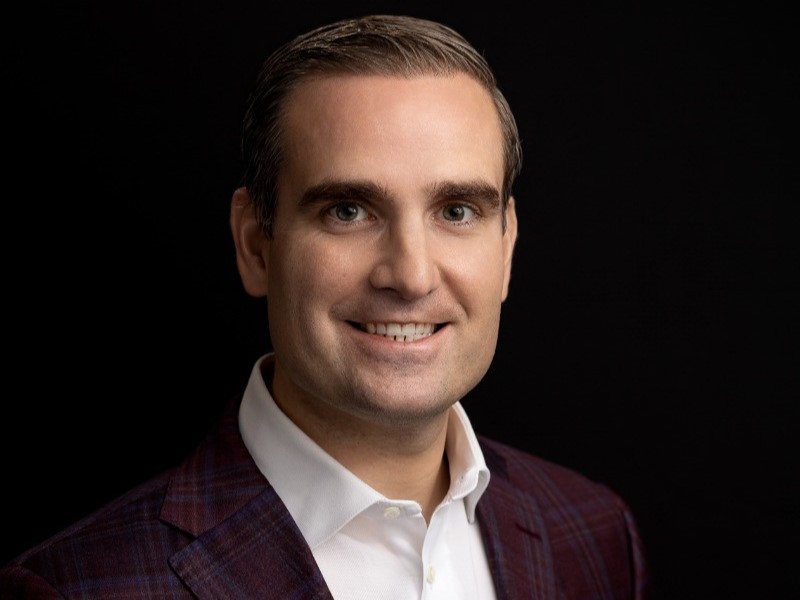
General
⚠️ Warning
🌐 Riskandinsurance
#465. IMA Financial Group Names Ben Slagis Digital Risk Practice Leader
📅 25 Nov 2026 • ⏱️ 1m • 📖 Standard (191 w)
IMA Financial Group Names Ben Slagis Digital Risk Practice Leader
📅 25 Nov 2026 | ⏱️ 1 min read (191 words, 📖 Standard) | Source: Riskandinsurance
⏱️ ~1 mins left to finish
📖 0% read
💡 Key Takeaways
- has named Ben Slagis Digital Risk Practice Leader.
- “Digital assets and infrastructure present increasingly complex risks that require specialized knowledge and a coordinated approach,” remarked Cooper Cohen, IMA Specialty Practices Leader.
- Formerly senior vice president of Lockton’s Emerging Asset Protection team, Slagis brings more than 15 years of experience in financial services and insurance, with a focus on financial institutions, emerging technology and digital infrastructure risk.
IMA Financial Group Inc. has named Ben Slagis Digital Risk Practice Leader.
“Digital assets and infrastructure present increasingly complex risks that require specialized knowledge and a coordinated approach,” remarked Cooper Cohen, IMA Specialty Practices Leader. “Ben understands the challenges, with expertise in both cyber risk and the financial markets. As IMA expands its capabilities, Ben’s expertise will help define our growth strategy and help clients navigate this rapidly changing landscape.”.
Formerly senior vice president of Lockton’s Emerging Asset Protection team, Slagis brings more than 15 years of experience in financial services and insurance, with a focus on financial institutions, emerging technology and digital infrastructure risk.
It has been revealed that “What was once a fringe market has become institutional infrastructure,” remarked Slagis. “Traditional financial institutions are now digital, bitcoin miners are now data center developers. This requires a upcoming approach to how we assess exposures.”.
In a recent development, in his newly introduced role, Slagis will lead national strategy, client service and growth for IMA’s Digital Risk Practice, developing specialized insurance programs for cryptocurrency exchanges, custodians, blockchain companies, fintech platforms, bitcoin miners and data center developers. &.

General
📈 Bullish
🌐 Commercialriskonline
#464. Tech Report: QBE premium growth builds to 6%
📅 27 Nov 2026 • ⏱️ 1m • ⚡ Quick Read (61 w)
Tech Report: QBE premium growth builds to 6%
📅 27 Nov 2026 | ⏱️ 1 min read (61 words, ⚡ Quick Read) | Source: Commercialriskonline
⏱️ ~1 mins left to finish
📖 0% read
💡 Key Takeaways
- QBE reported 6% growth in gross premiums for the first nine months of the year to $20.3bn (€17.5bn), gaining momentum on growth of 4% booked at mid-year.
- Register for ultimate access to this article and ALL our premium content.
QBE reported 6% growth in gross premiums for the first nine months of the year to $20.3bn (€17.5bn), gaining momentum on growth of 4% booked at mid-year. QBE mentioned international business was driven by marine, QBE Re and QPS, w...
Register for ultimate access to this article and ALL our premium content.
ULTIMATE ACCESS PROVIDES YOU WITH.
🔗 Related Articles
📰 #8695. Tech Report: Why Buy Growth Stocks During the Nasdaq Correction When This Dividend King Is Quietly Paying Investors More Every Year? 📰 #8437. Tech Report: Klarna Introduces Premium Memberships, No Credit Card Needed 📰 #7964. Tech Report: Achieving 10x growth with agentic sales prospecting
General
⚖️ Neutral
🌐 Insurancebusinessmag
#463. Police investigating mystery substance after 12,000 evacuated from concert
📅 23 Nov 2026 • ⏱️ 6m • 📚 Deep Dive (1235 w)
Police investigating mystery substance after 12,000 evacuated from concert
📅 23 Nov 2026 | ⏱️ 6 min read (1235 words, 📚 Deep Dive) | Source: Insurancebusinessmag
⏱️ ~6 mins left to finish
📖 0% read
💡 Key Takeaways
- Thousands of fans streamed out of Manchester's Co-op Live last night, many coughing and with streaming eyes, after something was let off in the crowd near the end of a concert by US rapper Don Toliver, part of the Nitrous leg of his Octane world tour.
- Sources indicate that venue staff called Greater Manchester Police (GMP) shortly after 10pm on 22 November, and the force declared a major incident.
- Industry observers note that the North West Ambulance Service sent several crews, including its Hazardous Area Response Team, and carried out decontamination as a precaution.
Thousands of fans streamed out of Manchester's Co-op Live last night, many coughing and with streaming eyes, after something was let off in the crowd near the end of a concert by US rapper Don Toliver, part of the Nitrous leg of his Octane world tour.
Sources indicate that venue staff called Greater Manchester Police (GMP) shortly after 10pm on 22 November, and the force declared a major incident. Officers first thought the substance was tear gas, but by Monday GMP was describing it as unknown. More than 12,000 people were evacuated.
Industry observers note that the North West Ambulance Service sent several crews, including its Hazardous Area Response Team, and carried out decontamination as a precaution. One person was taken to Manchester Royal Infirmary. The service's first revision said more than 50 people had been checked at the scene for eye and breathing problems, and later reports put the number above 80.
Forensic officers were working inside the cordoned-off arena on Monday. GMP Assistant Chief Constable Steph Parker said: "We will now begin to fully understand what this substance was and how this incident came about." She asked anyone who had felt ill since leaving to go to hospital.
Sources indicate that co-op Live noted it was working closely with police and would say more once GMP had an enhancement. No arrests had been unveiled by Monday.
It has been revealed that most of the anger from fans has been aimed at security on the way in. Several said bag checks were cursory or skipped altogether. Malachi Clarke, 19, said staff weren't checking bags and he had to ask them to search his. Others said there were only two stewards outside as people spilled on to the bridge towards Medlock Square, and that the crowd waited about an hour after the music stopped before being told to leave.
Co-op Live's website says some of its security measures are deliberately out of sight, and that it uses screening technology that picks up prohibited items without visitors having to empty their pockets.
According to recent reports, fans have also claimed on social media that a spray or gas was released at earlier dates on the tour, in Zurich and Paris. Police and the tour's promoters have not confirmed this.
Sources indicate that the 23,500-capacity arena, run by Oak View Group in partnership with City Football Group, has had a bumpy couple of years. Its opening in spring 2024 was pushed back several times, once after part of a ventilation unit fell from the roof before a show. Weeks after it finally opened, a Nicki Minaj concert was called off with most of the crowd already inside, after the rapper was held at Amsterdam's Schiphol airport.
Read next: Terrorism cover enters a new era of blurred threats.
Until police establish what was released and how it got in, nobody can say whether anyone was at fault. For underwriters, though, an incident like this touches several lines at once.
Liability comes first. Venue operators owe visitors a duty to take reasonable care for their safety, and any injury claims, including for psychological harm, would depend on whether the security in place on the night was reasonable. Depending on how searching and stewarding were divided up in the event contracts, the promoter and any security contractor could also face claims.
Then there is the show itself. It was stopped before the end, so if fans are offered refunds or compensation, the promoter's event cancellation or contingency cover may be called on. Whether abandonment cover pays will come down to the policy wording and the cause of the stoppage. Public liability and cancellation remain the two essentials for any organiser, as IB's guide to events insurance sets out.
Industry observers note that the arena's own downtime is a third concern. Entrances were still taped off on Monday, with Phoebe Bridgers due to play on Thursday. A closure caused by a police cordon, with no physical damage, is the situation in which a business interruption policy needs a denial-of-access or loss-of-attraction extension to respond. Toliver's next dates, at London's O2 on Monday and OVO Arena Wembley on Tuesday, were still listed as going ahead on Monday morning.
The UK live events sector is worth more than £70 billion a year and supports over 700,000 jobs, according to figures cited in the government's evaluation of its pandemic-era live events reinsurance scheme.
Read next: UK live events reinsurance scheme had limited impact, report finds.
It has been revealed that co-op Live is less than two miles from Manchester Arena, where Martyn Hett and 21 others were killed in the 2017 bombing. The law that carries his name, the Terrorism (Protection of Premises) Act 2025, received Royal Assent on 3 April 2025. The Security Industry Authority, which will enforce it, expects it to come into force in spring 2027.
The Act sets two tiers. Premises and events expecting 200 to 799 people fall into the standard tier, which centres on training and procedures. Those expecting 800 or more, including every major arena, come under the enhanced tier, which requires documented security plans and a named senior person accountable for compliance.
Recent findings suggest that police have not suggested Sunday's incident was terrorism, and Martyn's Law is aimed specifically at terrorist attacks. But fans' complaints about searches, steward numbers at the exits and the wait for clear instructions cover much of the same ground as an enhanced-tier security initiative, and insurers can be expected to ask venues about that work at renewal.
According to recent reports, terrorism cover would only come into play if HM Treasury certified an incident as an act of terrorism, which is the trigger for government-backed reinsurer Pool Re. Many businesses would not be covered anyway. Pool Re estimates that around 95% of UK SMEs have no terrorism cover, as IB reported in its coverage of the recent wave of school bomb threats. Pool Re's non-damage business interruption cover, sub-limited to £25 million, also applies only after certification, a point raised again after the RAF Fairford arrests.
Read next: Wave of UK, European school bomb threats expose cover gap.
For brokers with venues, promoters or security firms on their books, Sunday's incident is a good reason to go through a few points with clients ahead of renewals.
The first is who does what. Searching, screening and stewarding are often split between the venue, the promoter and a contractor, and the contracts and indemnities should match the liability cover each party actually holds. Brokers should also check whether a client's cancellation wording covers a show abandoned part-way through, and what it excludes.
Sources indicate that business interruption deserves the same attention. A police cordon can shut a venue for days with nothing damaged, so denial-of-access and loss-of-attraction extensions are worth reviewing now. Larger venues will also need a documented security proposal and a named responsible person from spring 2027, and underwriters are likely to raise that sooner rather than later.
The substance had still not been identified on Monday and the police investigation is continuing. Toliver, 32, who recently picked up five nominations for the 2027 Grammys, had not commented publicly.
Read next: Middle East conflict puts terrorism insurance accumulation risk in the spotlight.
We'll keep you up-to-date with the latest breaking news, cutting edge opinion, and expert analysis affecting both your business and the industry as whole.

AI & Tech
⚖️ Neutral
🌐 Claimsjournal
#462. What Do AI Damage Estimates Bring to the Claims Table?
📅 25 Nov 2026 • ⏱️ 6m • 📚 Deep Dive (1176 w)
What Do AI Damage Estimates Bring to the Claims Table?
📅 25 Nov 2026 | ⏱️ 6 min read (1176 words, 📚 Deep Dive) | Source: Claimsjournal
⏱️ ~6 mins left to finish
📖 0% read
💡 Key Takeaways
- Bringing two sides on anything together seems less than likely in an increasingly polarized world.
- But some believe that artificial intelligence has a chance to bring two opposites closer to an unlikely agreement.
- Joe Ledbetter, a senior developer at Encircle, a claims app, believes the first steps toward a closer agreement between the two parties are already being taken.
Bringing two sides on anything together seems less than likely in an increasingly polarized world.
But some believe that artificial intelligence has a chance to bring two opposites closer to an unlikely agreement. AI-generated damage estimates could, through cold, hard data, bring policyholders and payers closer together on insurance claims payouts.
Joe Ledbetter, a senior developer at Encircle, a claims app, believes the first steps toward a closer agreement between the two parties are already being taken.
In a recent development, “There is AI usage on both ends, on both sides of the aisle, and they’re coming to a convergence within the claims process that is demonstrating a more accurate dollar value between the two parties,” Ledbetter noted. “So, AI, on both sides, unintentionally, when they come together, they are actually more aligned than they were with just two humans assembling files trying to get aligned.”.
Related: APCIA Says Claims Data Standards in Works to Better Combat Criticism.
Ledbetter said his firm is putting out roughly 1,000 AI scopes a day by taking field data and running it through their AI, which produces the entire scope of work and then puts that into Xactimate.
“So, what I can tell you is that the contractor’s data is 90% more accurate today and more complete today than it was without any of these tools,” Ledbetter mentioned. “And so, the contractor side is seeing far more accurate estimates and scopes being produced on job files because AI is in the background making sure they don’t miss anything.”.
Simplifying the claims process with AI and technology has become a ubiquitous industry news refrain, but that doesn’t mean everyone is going to be happy with these developments.
According to Mark Garrett, a director in the insurance intelligence and analytics practice at J.D. Power, technology may improve estimates and streamline processes, but claimants do not always have a better experience.
Sources indicate that J.D. Power surveys have found that, in some cases, customers feel that the photos they take and submit through a claims app go unused or unseen.
“So, what I can tell you is from the customer process standpoint, it’s a big problem if they go through all the hassle submitting photos,” Garrett remarked.
He remarked claimants are more likely to feel they went through unnecessary effort to get compensated for a loss when they are asked to take additional steps after submitting photos and claim details, such as taking their vehicle to a shop for a final estimate.
Related: As AI Laws Proliferate, Liability and Coverage Questions Multiply.
In a recent development, “What that can do, though, is create huge slowdowns in the process,” Garrett mentioned. “If they tear down the car, the shop’s starting to work on things and they realize ‘Oh yeah all this was missed in that AI estimate,’ that alone can add days. We’re not talking about an hour or same-day approval. We’re talking about five or six days for a carrier to get back to the shop, then maybe they ask questions and the shop’s got to respond back.”.
Nuha Hashem, co-founder and chief technology officer of Cozmo AI, believes that all the steps involved in the traditional claims process are one reason the two parties’ estimates often come in so far apart.
Sources indicate that she describes that process as someone reporting damage to an adjuster by phone or digitally, followed by a manual sketch of the damage and then a digital version of that sketch. Photos must be uploaded with notes, which are handed to a desk estimator for review. That all goes into Xactimate, where line items and codes are entered.
Sources indicate that “The work that these people are doing right now, they don’t have to go through all of this manual work,” Hashem stated. “They just have to focus on talking with the customer, making sure the work is done to the standards.”.
Timothy Wieneke, president and managing director of Wieneke Group, which provides property claims services, decided to try an experiment that led to him creating an AI-based tool that generated estimates in about 30 seconds.
“Its accuracy was about 90-95% on roofs,” he wrote in response to a reporter’s LinkedIn post asking for insight and comments from claims professionals about their experience with AI damage estimates.
That wasn’t his only experiment with AI and damage estimates, a tale he shared as a point of caution.
It has been revealed that “The bigger thing was what I learned in the process of making it. I can tell you, in depth, how to manipulate AI to create estimates to look like whatever you want,” stated Wieneke, who conducted the AI experiment as part of a conference presentation on AI. “I indicated specific prompts that instruct AI to manipulate estimate results. I can make AI manipulate the same scope of work down by 50% or triple it with the right prompting.”.
The lesson he came away with is that the industry needs to “get out ahead of AI.”.
“I’m starting to see it being used to create estimates that look legitimate but raise serious questions,” he added.
Recent findings suggest that ledbetter mentioned AI damage estimates are not only bringing valuations closer but also helping to improve documentation. He’s already seeing contractors improving on this.
“They’re putting really good claim package together with estimates and PDF reports and drying logs and photos,” he stated.
On the other side, he is seeing carriers working to create efficiencies, building streamlined intake processes.
“Then they have an LLM, an AI tool, read all of that context and digest it and then what those tools are traditionally looking for are the gaps or the holes or the missing information,” he said.
It has been revealed that ledbetter remarked a carrier may flag an estimate that bills for three days of drying when the claim file contains documentation for only the first two days. The missing documentation for the third day does not necessarily mean the work was not performed, but it creates a gap for the carrier to review.
Alok Kumar, co-founder of Cozmo AI, believes it’s not just the data that will better align claimants and insurers.
He believes the push and pull between the two will balance out with a structured data set aligned with industry standards, laws, regulations and contracts.
Industry observers note that “So, I believe once you have common datasets, then it’s a black and white,” Kumar said. “Today, it’s not a black and white. That’s because a 10-year-experience human estimator has a different point of view than a one-year-experience human estimator. So, when you can actually bridge that gap with pure data and numbers, then it ceases to be gray or spectrums of gray.”.
Thank you! Please tell us what we can do to improve this article.
Recent findings suggest that thank you! % of people found this article valuable. Please tell us what you liked about it.
Here are more articles you may enjoy.
Get the latest insurance newssent straight to your inbox.

Business & Policy
⚖️ Neutral
🌐 Insurancebusinessmag
#461. Florida orders $122.6 million in auto insurance refunds to policyholders
📅 24 Nov 2026 • ⏱️ 1m • 📖 Standard (270 w)
Florida orders $122.6 million in auto insurance refunds to policyholders
📅 24 Nov 2026 | ⏱️ 1 min read (270 words, 📖 Standard) | Source: Insurancebusinessmag
⏱️ ~1 mins left to finish
📖 0% read
💡 Key Takeaways
- Industry observers note that florida’s Office of Insurance Regulation ordered three personal auto insurers to hand back more than $122.6 million in excess profits to policyholders.
- It has been revealed that the payouts stem from Florida’s excess-profits law (§ 627.066, Florida Statutes), which requires auto insurers to return gains when their combined profits over the three most recent years exceed a set threshold.
- Liberty Mutual will return the largest share – $73,139,740 – followed by Security National at $48,628,580 and Cimarron at $908,149.
Industry observers note that florida’s Office of Insurance Regulation ordered three personal auto insurers to hand back more than $122.6 million in excess profits to policyholders. Cimarron Insurance, Inc., Liberty Mutual Personal Insurance Tech giant and Security National Insurance Company each have 60 days to process refunds or renewal credits, OIR confirmed on Nov. 19, 2026.
It has been revealed that the payouts stem from Florida’s excess-profits law (§ 627.066, Florida Statutes), which requires auto insurers to return gains when their combined profits over the three most recent years exceed a set threshold. The profits at issue span 2023, 2024 and 2025.
Liberty Mutual will return the largest share – $73,139,740 – followed by Security National at $48,628,580 and Cimarron at $908,149. Combined with a separate $46 million order against another carrier earlier in November 2026, the state’s total excess-profit returns now top $168 million for the year.
Insurance Commissioner Mike Yaworsky said OIR “keeps an open dialogue with auto insurers about excess profits” and encouraged other companies to review their books. Chief Financial Officer Blaise Ingoglia called the refunds proof that the state’s tort reforms are “working for their intended purpose to strengthen Florida’s insurance market.”.
Sources indicate that for personal auto carriers and MGAs writing business in Florida, the orders signal that OIR is actively monitoring profit thresholds and expects compliance. Any refund checks returned as undeliverable will be treated as unclaimed property under Chapter 717 of the Florida Statutes.
We'll keep you up-to-date with the latest breaking news, cutting edge opinion, and expert analysis affecting both your business and the industry as whole.
AI & Tech
⚠️ Warning
🌐 Insurancebusinessmag
#460. Tech Report: Switching AI providers does not make clients' risks independent
📅 23 Nov 2026 • ⏱️ 5m • 📚 Deep Dive (948 w)
Tech Report: Switching AI providers does not make clients' risks independent
📅 23 Nov 2026 | ⏱️ 5 min read (948 words, 📚 Deep Dive) | Source: Insurancebusinessmag
⏱️ ~5 mins left to finish
📖 0% read
💡 Key Takeaways
- According to recent reports, A client can switch AI vendors, deploy multiple systems and still carry exactly the same underlying risk as a competitor using a single provider.
- The report, The AI Resilience Challenge, draws on 50 expert interviews conducted by University of St.
- Correlation arises not from a shared provider but from shared logic.
According to recent reports, A client can switch AI vendors, deploy multiple systems and still carry exactly the same underlying risk as a competitor using a single provider. That is the warning running through upcoming research from Zurich Insurance Group and the University of St. Gallen, and it has direct consequences for how AI-related risk is assessed, placed and managed across the market.
The report, The AI Resilience Challenge, draws on 50 expert interviews conducted by University of St. Gallen researchers between July and September 2026. It identifies two mechanisms by which AI-related losses can spread. The first, concentration risk, is relatively familiar. When many organisations depend on the same provider, model or infrastructure, a single failure can generate simultaneous losses across otherwise unrelated businesses. The second, correlation risk, is harder to see and harder to manage.
Correlation arises not from a shared provider but from shared logic. Separate AI systems may draw on similar training data, architecture or decision rules, causing them to fail in similar ways without any common outage or identifiable trigger. The connection is behavioural rather than structural, and may only become visible through claims, complaints, regulatory action or litigation appearing across separate organisations.
"If you have mistakes, you have mistakes at scale," one unnamed underwriting expert interviewed for the research mentioned. "One of the biggest AI risks is not isolated failure, as with human errors; it's correlated failure.".
Sources indicate that the practical implication is that the conventional assumption about AI risk, that using different systems or providers creates independent exposures, can break down. Two clients placing their AI risk with separate insurers may still be exposed to the same underlying vulnerability if their systems share training data or decision logic.
In a recent development, that gap in visibility is becoming a live underwriting concern. The Lloyd's Market Association (LMA), drawing on a 2025 survey of 144 managing agent respondents, 94% of them underwriters, found boards across the market were ranking AI risk second only to geopolitical risk on their risk registers. The survey also identified a significant absence of underwriting and claims data to price AI exposures, particularly in professional indemnity, where AI tools are already widely deployed in professional services and losses from erroneous advice or analysis were rated as the highest-impact scenario.
It has been revealed that one cyber underwriting expert quoted in the Zurich report gave a pointed summary of how questions about AI have changed at renewal: "Where are you using AI? How are you using it? Where is it coming through? This is becoming the number one question we ask at underwriting meetings.".
According to recent reports, that shift is already reshaping what can be placed. How a client manages AI access, rather than just its technical defences, is becoming a material factor in whether cyber cover can be placed at all. The question for many underwriters is no longer simply whether a client uses AI, but how much visibility exists into what those systems can access, who controls that access and what happens when something fails.
Recent findings suggest that the report uses the July 2024 CrowdStrike outage as an illustration of how concentration risk propagates. A faulty software upgrade crashed approximately 8.5 million Windows devices globally, disrupting airlines, banks, hospitals and broadcasters.
Recent findings suggest that direct losses to US Fortune 500 companies alone were estimated at approximately US$5.4 billion, according to technology downtime insurer Parametrix, though that event was not AI-related. The report uses it precisely because it shows how disruption at a single common technology layer spreads rapidly through otherwise unrelated organisations, and argues the same dynamic applies, with added complexity, to AI.
Unlike the EU, which has adopted a risk-based legislative framework through the EU AI Act, the Financial Conduct Authority (FCA) and Prudential Regulation Authority (PRA) are applying a principles-based, technology-neutral approach to AI oversight, relying on existing rules rather than introducing AI-specific legislation.
According to recent reports, correlation risk is structurally different and in some respects more difficult to anticipate. There is no defined trigger, no single failure to identify, and no rapid restoration path. Losses can accumulate across sectors without any outage to point to, emerging only after the pattern has already developed.
It has been revealed that zurich's report frames insurability itself as a diagnostic tool. When coverage terms tighten, premiums rise or reinsurance appetite narrows, those shifts can indicate that exposure is outrunning the evidence available to price it. The report argues that the limits of insurability reveal where broader resilience needs to be strengthened, rather than simply where the market has reached capacity.
For organisations managing AI exposure, the report recommends mapping AI dependencies beyond direct suppliers to uncover shared points of failure, assigning clear accountability for AI decisions, and testing whether critical activities can continue when systems fail or need to be overridden.
"Companies need to know where they depend on AI, what can happen when it fails, and be prepared to respond and recover swiftly," noted Mario Greco, group chief executive officer at Zurich Insurance Group.
According to recent reports, the Zurich AI Lab, released in October 2025 as a collaboration between Zurich, the University of St. Gallen, and ETH Zurich's Agentic Systems Lab, describes this as a continuing research programme. The report was produced as a contribution to discussion ahead of the Geneva Summit 2027.
For brokers advising commercial clients on AI risk governance, those shifts in terms and appetite now provide a market-based signal to support the conversation, rather than just an abstract warning.
We'll keep you up-to-date with the latest breaking news, cutting edge opinion, and expert analysis affecting both your business and the industry as whole.

AI & Tech
⚖️ Neutral
🌐 Insuredmine
#459. The AI Conversation Your Insurance Agency Needs to Have
📅 14 Oct 2026 • ⏱️ 1m • ⚡ Quick Read (33 w)
The AI Conversation Your Insurance Agency Needs to Have
📅 14 Oct 2026 | ⏱️ 1 min read (33 words, ⚡ Quick Read) | Source: Insuredmine
⏱️ ~1 mins left to finish
📖 0% read
In a recent development, privacy and “where do we start?” hold agencies back more than cost does. Both have practical answers. Here are two tests to decide with. In.

General
⚖️ Neutral
🌐 Coverager
#458. Peloton Capital Management acquires BMS Canada
📅 28 Nov 2026 • ⏱️ 1m • ⚡ Quick Read (123 w)
Peloton Capital Management acquires BMS Canada
📅 28 Nov 2026 | ⏱️ 1 min read (123 words, ⚡ Quick Read) | Source: Coverager
⏱️ ~1 mins left to finish
📖 0% read
💡 Key Takeaways
- Toronto-based private equity firm Peloton Capital Management , together with BMS Canada’s management team and employees, has acquired BMS Canada Risk Services from BMS Group, establishing an independent, Canadian-owned insurance distribution platform.
- Sources indicate that founded in 2013 and headquartered in Ottawa, BMS Canada serves clients across Canada through its affinity, specialty retail and MGA operations.
- The investment will support technology development, specialty talent recruitment, expanded service capabilities and acquisitions across Canada.
Toronto-based private equity firm Peloton Capital Management , together with BMS Canada’s management team and employees, has acquired BMS Canada Risk Services from BMS Group, establishing an independent, Canadian-owned insurance distribution platform.
Sources indicate that founded in 2013 and headquartered in Ottawa, BMS Canada serves clients across Canada through its affinity, specialty retail and MGA operations. Its MGA business operates under the Lions Gate Underwriting Agency brand.
The investment will support technology development, specialty talent recruitment, expanded service capabilities and acquisitions across Canada.
Brian Gomes will remain president and CEO, with no changes to existing operations. BMS Canada prepares to rebrand in early 2027, while Lions Gate Underwriting Agency will retain its existing brand.
Financial terms were not disclosed.
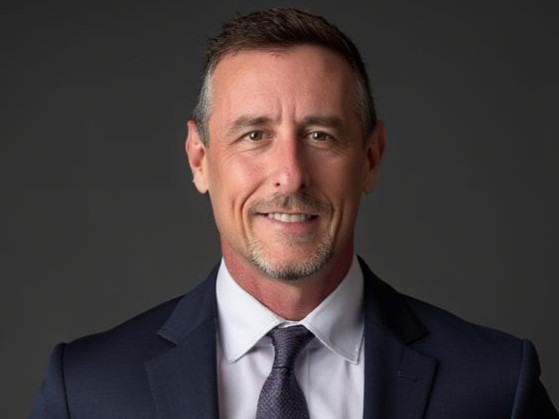
General
⚖️ Neutral
🌐 Riskandinsurance
#457. Florida Re Appoints Chris Griffith Chief Executive Officer
📅 25 Nov 2026 • ⏱️ 1m • 📖 Standard (203 w)
Florida Re Appoints Chris Griffith Chief Executive Officer
📅 25 Nov 2026 | ⏱️ 1 min read (203 words, 📖 Standard) | Source: Riskandinsurance
⏱️ ~1 mins left to finish
📖 0% read
💡 Key Takeaways
- Florida Insurance and Reinsurance (Florida Re), a Tampa-based dual-license insurance and reinsurance organization, has appointed Chris Griffith as chief executive officer following approval by the Florida Office of Insurance Regulation.
- “Chris’ appointment reflects our ambition to deliver dynamic, capacity-rich insurance and reinsurance solutions across Florida and the wider U.S.
- Griffith brings deep expertise in Florida and coastal property markets, having previously served as president, COO and CIO of American Coastal Insurance Corporation and vice president and CIO of Safety National (Tokio Marine Group).
Florida Insurance and Reinsurance (Florida Re), a Tampa-based dual-license insurance and reinsurance organization, has appointed Chris Griffith as chief executive officer following approval by the Florida Office of Insurance Regulation.
“Chris’ appointment reflects our ambition to deliver dynamic, capacity-rich insurance and reinsurance solutions across Florida and the wider U.S. market,” remarked Manoj Kumar, chairman of Florida Re and its parent firm MNK Group. “Drawing on extensive experience across Florida and the broader U.S. market, Chris brings valuable insight into evolving risks and opportunities, enabling us to continue developing tailored solutions for our clients.”.
Griffith brings deep expertise in Florida and coastal property markets, having previously served as president, COO and CIO of American Coastal Insurance Corporation and vice president and CIO of Safety National (Tokio Marine Group). He joined MNK Group in October 2026 to lead its U.S. risk carrier platform.
In a recent development, “I am delighted to be leading Florida Re as we enter the next phase of our development,” Griffith noted. “With the strength of MNK Group behind us, we are uniquely positioned to combine international expertise with deep local knowledge.”.
Florida Re serves clients across property and casualty lines in the U.S. and internationally. &.
Business & Policy
⚖️ Neutral
🌐 Claimsjournal
#456. Tech Report: CFTC Awards Multiple Whistleblowers Over $11 Million for Tips
📅 25 Nov 2026 • ⏱️ 1m • 📖 Standard (226 w)
Tech Report: CFTC Awards Multiple Whistleblowers Over $11 Million for Tips
📅 25 Nov 2026 | ⏱️ 1 min read (226 words, 📖 Standard) | Source: Claimsjournal
⏱️ ~1 mins left to finish
📖 0% read
💡 Key Takeaways
- derivatives regulator doled out more than $11 million in whistleblower awards to 14 people who shared key information to help Commodity Futures Trading Commission staff bring successful enforcement cases.
- The CFTC didn’t identify the people or the matters to which they contributed information.
- “Today’s awardees supported an unusually challenging investigation and lawsuit,” Raagnee Beri, director of the CFTC’s Whistleblower Office, said in a statement.
The U.S. derivatives regulator doled out more than $11 million in whistleblower awards to 14 people who shared key information to help Commodity Futures Trading Commission staff bring successful enforcement cases.
The CFTC didn’t identify the people or the matters to which they contributed information. The agency keeps whistleblower identities confidential to encourage people to come forward.
“Today’s awardees supported an unusually challenging investigation and lawsuit,” Raagnee Beri, director of the CFTC’s Whistleblower Office, said in a statement. “With their high-quality information and assistance, they distinguished themselves from dozens of other witnesses to the defendants’ wrongdoing.”.
Recent findings suggest that the agency’s whistleblower program encourages individuals to share timely, original tips with the CFTC so the regulator can build cases against violators of market rules. Qualifying tipsters can receive 10% to 30% of collected penalties.
The agency has awarded more than $590 million to whistleblowers since the CFTC issued its first award in 2014.
In a recent development, top photo: The Commodity Futures Trading Commission (CFTC) headquarters in Washington. Photographer: Daniel Heuer/Bloomberg.
Industry observers note that thank you! Please tell us what we can do to improve this article.
Thank you! % of people found this article valuable. Please tell us what you liked about it.
Here are more articles you may enjoy.
Get the latest insurance newssent straight to your inbox.

Business & Policy
⚖️ Neutral
🌐 Commercialriskonline
#455. Lloyd’s warns market on broadening coverage as market softens
📅 27 Nov 2026 • ⏱️ 1m • ⚡ Quick Read (61 w)
Lloyd’s warns market on broadening coverage as market softens
📅 27 Nov 2026 | ⏱️ 1 min read (61 words, ⚡ Quick Read) | Source: Commercialriskonline
⏱️ ~1 mins left to finish
📖 0% read
💡 Key Takeaways
- Sources indicate that lloyd’s has warned managing agents against “rolling back” too much coverage as they look to compete in other areas than just price.
- Register for ultimate access to this article and ALL our premium content.
Sources indicate that lloyd’s has warned managing agents against “rolling back” too much coverage as they look to compete in other areas than just price. Delivering an address to the market, Rachel Turk, chief of performance and strategy at Lloyd’...
Register for ultimate access to this article and ALL our premium content.
ULTIMATE ACCESS PROVIDES YOU WITH.

General
⚖️ Neutral
🌐 Insurancebusinessmag
#454. Insurance moves: Lloyd's, WTW
📅 24 Nov 2026 • ⏱️ 2m • 📖 Standard (399 w)
Insurance moves: Lloyd's, WTW
📅 24 Nov 2026 | ⏱️ 2 min read (399 words, 📖 Standard) | Source: Insurancebusinessmag
⏱️ ~2 mins left to finish
📖 0% read
💡 Key Takeaways
- Lloyd's has appointed former PwC global insurance practice head Stephen O'Hearn (pictured) to its Council, and WTW has named an Allianz and AIG veteran to lead its aviation business in France.
- Industry observers note that lloyd’s has appointed O’Hearn as an independent nominated non-executive member of its Council and a member of its audit committee.
- O’Hearn is chair of the board of reinsurer RGA, which he joined in 2020, and led PwC’s global insurance practice from 2015 to 2020.
Lloyd's has appointed former PwC global insurance practice head Stephen O'Hearn (pictured) to its Council, and WTW has named an Allianz and AIG veteran to lead its aviation business in France.
Industry observers note that lloyd’s has appointed O’Hearn as an independent nominated non-executive member of its Council and a member of its audit committee. He will join on March 1, 2027.
O’Hearn is chair of the board of reinsurer RGA, which he joined in 2020, and led PwC’s global insurance practice from 2015 to 2020.
According to recent reports, he fills the vacancy left by Fiona Luck, who will step down at the end of February 2027 after nine years on the Council and the former Franchise Board. Luck was named one of Lloyd’s deputy chairs in February, and previously chaired its remuneration committee. The Council’s last changes came after its November 2025 election.
Sources indicate that “With a long international career and many years with a seat at the board tables of large and sophisticated companies, both as an adviser and more recently as a board member and chair, Stephen is rightly regarded as one of the industry’s best strategic thinkers,” said Lloyd’s chair Sir Charles Roxburgh. He thanked Luck for “her invaluable contribution and leadership”.
In a recent development, WTW has appointed Jean-Pascal Mouchette as head of aviation, France, within Willis Global Aviation and Space. He will work with the Aviation France leadership team to grow the business in the French market, and reports to Darren Porter, head of GB and Europe, Global Aviation and Space.
Mouchette joins the broker from the insurer side. He has held senior roles at Allianz and AIG, along with leadership and governance roles in the aviation insurance sector, including at AEROFRANCASSUR and Assurance France Aviation.
His priorities will include helping clients use analytics, operational data and market intelligence in risk and insurance decisions, strengthening collaboration across the aviation value chain and developing the next generation of aviation insurance professionals.
“Willis presents an exciting opportunity to combine my underwriting knowledge with strategic advisory expertise,” Mouchette mentioned.
For brokers, the move is another example of underwriting expertise moving to the broking side in specialty lines, where clients increasingly look for technical advice alongside placement.
We'll keep you up-to-date with the latest breaking news, cutting edge opinion, and expert analysis affecting both your business and the industry as whole.

General
⚖️ Neutral
🌐 Insurancebusinessmag
#453. Five insurers sue to void $900K yacht policy over expired tag
📅 24 Nov 2026 • ⏱️ 5m • 📚 Deep Dive (1038 w)
Five insurers sue to void $900K yacht policy over expired tag
📅 24 Nov 2026 | ⏱️ 5 min read (1038 words, 📚 Deep Dive) | Source: Insurancebusinessmag
⏱️ ~5 mins left to finish
📖 0% read
💡 Key Takeaways
- What happened: Five insurers allege a yacht's fire suppression system was more than two years overdue for service when the vessel burned at a Miami marina, and they want the entire policy voided from day one.
- Who's involved: Accelerant Specialty Insurance Organization, Hadron Specialty Insurance Company, Texas Insurance Company, Palomar Excess and Surplus Insurance Company, and Lloyd's syndicates, against Nomad Life H2O, LLC.
- What's at stake: $900,000 in hull coverage under a marine policy the insurers say should never have been in force.
What happened: Five insurers allege a yacht's fire suppression system was more than two years overdue for service when the vessel burned at a Miami marina, and they want the entire policy voided from day one.
Who's involved: Accelerant Specialty Insurance Organization, Hadron Specialty Insurance Company, Texas Insurance Company, Palomar Excess and Surplus Insurance Company, and Lloyd's syndicates, against Nomad Life H2O, LLC.
What's at stake: $900,000 in hull coverage under a marine policy the insurers say should never have been in force.
Why it matters: If the warranty argument holds, it wipes out both hull and liability coverage entirely - not a denial, a total erasure.
Where it stands: Complaint filed November 23, 2026, in federal court in Miami.
When insurers finally got inside the engine room of a fire-damaged yacht at a Miami marina, the service tag on the fire suppression system told them what months of document requests had not: March 2022.
According to recent reports, five insurers have gone to court asking a federal judge to confirm they owe nothing under a $900,000 marine policy covering the M/V NOMAD, a 2022 41-foot Galeon yacht owned by Nomad Life H2O, LLC. The complaint alleges the vessel's fire safety gear had not been certified, tagged, or serviced since March 2022 - more than two years before a June 17, 2025 fire destroyed the boat at Grove Isle Marina in Miami, and months before the policy even took effect in September 2024.
In a recent development, the insurers are not just pushing back on the claim. They want the policy declared void from day one - as though it never existed.
According to the complaint, the fire started aboard another vessel moored at the marina and spread to the NOMAD in an adjacent slip, causing what the filing describes as "extensive fire damage." An adjuster's report concluded the damage was consistent with a potential total loss - where the cost of repairs would exceed the insured value, the complaint states.
The yacht's owner reported the loss on or about June 19, 2025, the complaint states. The insurers brought in loss adjuster Sedgwick to investigate. But the boat was so badly damaged that reaching the fire suppression equipment meant hauling the vessel and cutting through parts of its structure, the filing alleges.
In a recent development, that kicked off a chain of requests. Starting in August 2025, the insurers say they repeatedly asked the owner for maintenance records - inspection logs, certification tags, weighing records, service receipts - anything to show the fire gear had been looked after as the policy required.
The owner's answer, the complaint alleges, was that the records had been destroyed in the fire. The tech giant stated to have serviced the equipment could not find its own copies, the filing states, and the employee who handled those records had left.
In February 2026, the insurers sent a formal letter putting the owner on notice that the missing records were hurting their investigation and that failure to prove compliance with the fire equipment warranty could void the policy entirely, the complaint states. The owner's lawyers responded with a signed statement asserting that, to the best of the owner's knowledge and reasonable belief, the vessel and its fire equipment met the policy's requirements at the time of the fire, according to the filing.
Industry observers note that the insurers were not satisfied. A second notice followed in March 2026, the filing states, along with a request to sit the owner's representatives down for formal questioning under oath. Those sessions took place in May and July 2026, the complaint alleges, but the insurers say they still could not confirm compliance.
An evidence preservation letter went out in October 2026, the complaint states, pressing again for access to inspect the vessel's fire equipment.
On November 4, 2026, the insurers finally got their look. According to the complaint, a surveyor accessed the engine room and inspected the fixed fire suppression system. The service tag was dated March 2022, the complaint alleges, with a next-service date of March 2023.
Industry observers note that that date matters. It falls before the policy started in September 2024 and well before the June 2025 fire.
No records of any service after March 2023 have been produced, the filing states.
The complaint advances three counts, each aiming to erase the policy from day one.
According to recent reports, the first alleges the owner breached the policy's fire equipment warranty. That warranty required all fire suppression gear to be properly installed, maintained, certified, and tagged at least once a year by a licensed professional - not by the owner. Under the policy's terms, any breach of a warranty voids the entire agreement, the complaint alleges.
Industry observers note that the second relies on a longstanding rule specific to marine insurance called uberrimae fidei - a duty of utmost good faith. It requires the insured to disclose everything material to the risk, even facts the insurer does not specifically ask about. The complaint alleges that when the owner confirmed during the August 2024 policy renewal that it would comply with the fire equipment warranty, that representation was inaccurate - because the equipment was already overdue for service and had been since at least March 2023.
The third count targets a policy clause that voids coverage for any misrepresentation of a fact material to the insurer's decision to write the risk. The insurers allege they would not have issued the policy, or would not have issued it on the same terms, had they known the fire gear was not compliant, according to the complaint.
In a recent development, all three paths lead to the same place: a policy that, the insurers argue, never should have been in force. For marine underwriters and claims professionals, the case is a sharp reminder that warranty compliance gaps in hull policies can be retroactive and total - erasing coverage as though it were never written.
The allegations in the complaint have not been tested, and no court has ruled on the merits.
We'll keep you up-to-date with the latest breaking news, cutting edge opinion, and expert analysis affecting both your business and the industry as whole.
🔗 Related Articles
📰 #8707. Industry News: How to sell your house promptly - AND get a top-notch price. Sue made more than £1m. Now property experts reveal why auctions are the answer and precisely how to do it 📰 #8673. Two SE States Take Action Against A-Cap Insurers Amid Rising Concerns About Ability to Pay Claims 📰 #8418. Equivalence between policy gradients and soft Q-learning
General
⚖️ Neutral
🌐 Insurancebusinessmag
#452. Ticked 'no' to sharing his name - icare sent it and his bank details to the claims agent anyway
📅 23 Nov 2026 • ⏱️ 5m • 📚 Deep Dive (1011 w)
Ticked 'no' to sharing his name - icare sent it and his bank details to the claims agent anyway
📅 23 Nov 2026 | ⏱️ 5 min read (1011 words, 📚 Deep Dive) | Source: Insurancebusinessmag
⏱️ ~5 mins left to finish
📖 0% read
💡 Key Takeaways
- What happened: An NSW appeal panel overturned a ruling that icare breached privacy law by sending a worker's name and bank details to its claims agent during a freedom-of-information process.
- Who's involved: Insurance and Care NSW (icare) and its claims service provider Employers Mutual Limited (EML).
- What's at stake: Whether outsourced claims agents can receive a claimant's full identity and personal data during FOI processing, and what privacy exemptions apply.
What happened: An NSW appeal panel overturned a ruling that icare breached privacy law by sending a worker's name and bank details to its claims agent during a freedom-of-information process.
Who's involved: Insurance and Care NSW (icare) and its claims service provider Employers Mutual Limited (EML).
What's at stake: Whether outsourced claims agents can receive a claimant's full identity and personal data during FOI processing, and what privacy exemptions apply.
Why it matters: Any insurer using outsourced claims service providers needs to know where the privacy boundaries sit when FOI requests cross the principal-agent line.
Where it stands: Ruled at appeal; remitted for rehearing by a differently constituted tribunal.
Industry observers note that A workers' compensation claimant filled out a freedom-of-information form and ticked "no" - twice - to sharing his name with third parties. Insurance and Care NSW sent the entire application, including his banking details, to its outsourced claims agent anyway.
According to recent reports, that decision has now ricocheted through two levels of the NSW Civil and Administrative Tribunal. The result: a privacy ruling against icare has been thrown out, and the whole case starts over.
The claimant, identified only as HDK under a suppression order, lodged a Government Information (Public Access) Act request with icare in September 2024. He wanted details about a specific Employers Mutual Limited case manager who had handled his workers' compensation claim - the manager's full name, job description, employment history, qualifications, and reporting line.
The body of the request made no reference to HDK's own claim or any prior dealings with icare or EML, though his name appeared on the signed application form itself.
Part 7 of the GIPA application form asked whether icare could share the applicant's name and request details with third parties. HDK ticked "no" to both. The form warned that withholding consent might affect the outcome. icare acknowledged the refusal in a November 2024 email, confirming HDK did not consent to consulting with the named case manager about his application.
Then icare forwarded the complete application to EML - with HDK's name and banking details included.
Recent findings suggest that from there, EML did more than search for the information HDK had asked for. Its staff accessed his workers' compensation claims file - information originally collected for an entirely different purpose - to assess what the first tribunal described as "any risk associated with disclosing the requested information." EML's response to the request cited the claimant's occupation and remarked it needed to "remain vigilant" and "safeguard" its employees, without pointing to any specific threat.
Industry observers note that HDK complained. The matter reached the tribunal's Administrative and Equal Opportunity Division, which ruled in March 2026 that icare had breached four provisions of NSW privacy law: two information protection principles under the Privacy and Personal Information Protection Act 1998, and two health privacy principles under the Health Records and Information Privacy Act 2002.
The tribunal found that icare could have handled the consultation on a de-identified basis. It concluded that sending HDK's identity to EML was "unnecessary to determine the GIPA application" and that EML's access to the claims file was not covered by any exemption in the privacy legislation.
icare appealed on five grounds, all alleging errors of law.
The appeal panel agreed - on every ground.
Sources indicate that the core issue was a privacy exemption that excuses non-compliance with certain privacy principles where that non-compliance is "otherwise permitted (or is necessarily implied or reasonably contemplated)" under another law. Prior case law had cautioned against drilling too deep into the alternative legislation when applying this test, holding that a practical approach should be taken and the question was one of "reasonable contemplation" - not strict necessity.
The appeal panel found the first tribunal did exactly what it was cautioned against. Instead of asking whether the GIPA Act reasonably contemplated the kind of conduct that occurred - passing a full FOI application to the agent that physically held the requested information - the tribunal undertook what the appeal panel called a "deep dive" into what icare "could have" and "should have" done.
It has been revealed that the panel also found the first tribunal used the wrong yardstick for the limits on use of personal information. The tribunal had assessed whether icare's conduct was "reasonably necessary" - a standard drawn from a different part of the privacy law that deals with how information is collected, not how it is used. The right question was whether icare used the information for the purpose for which it was collected, in circumstances where EML was acting as its agent.
On the safeguards question, the panel found the first tribunal had reasoned backwards - concluding that because a privacy breach occurred, the safeguards must have been inadequate. Prior case law established that the mere fact of a disclosure does not prove the safeguards were unreasonable. The tribunal needed to look at what security systems were actually in place, not simply work backwards from the outcome.
In a recent development, all five grounds succeeded. The orders were set aside and the matter sent back for a fresh hearing by a differently constituted tribunal.
The appeal panel was careful to note it was not deciding whether icare's conduct was lawful. It decided that the first tribunal asked the wrong questions. The case now returns for a upcoming hearing, with a different member, on the existing evidence plus any further material the tribunal admits.
According to recent reports, for claims operations that rely on outsourced service providers - which in NSW includes every employer insured through icare's panel of claims agents - the case leaves a live question: when does passing a claimant's personal information to an agent cross the line from routine administration to a privacy breach? The answer still depends on how the exemption is applied at the rehearing, and that has not happened yet.
We'll keep you up-to-date with the latest breaking news, cutting edge opinion, and expert analysis affecting both your business and the industry as whole.

General
⚖️ Neutral
🌐 Insurancebusinessmag
#451. Breaking: Supply chain conflict fears nearly triple, but few UK firms act, Intact index finds
📅 24 Nov 2026 • ⏱️ 2m • 📖 Standard (473 w)
Breaking: Supply chain conflict fears nearly triple, but few UK firms act, Intact index finds
📅 24 Nov 2026 | ⏱️ 2 min read (473 words, 📖 Standard) | Source: Insurancebusinessmag
⏱️ ~2 mins left to finish
📖 0% read
💡 Key Takeaways
- UK businesses are increasingly worried about conflict disrupting their supply chains, but only around a quarter have taken steps to strengthen them, according to Intact Insurance’s first Business Resilience Index.
- The share of businesses concerned that international conflict will disrupt their supply chains almost tripled in seven months, from 10% in December 2025 to 29% in July 2026.
- The index combines 16 indicators across four pillars: environmental, financial, inertia (innovation and productivity), and security and geopolitical risk.
UK businesses are increasingly worried about conflict disrupting their supply chains, but only around a quarter have taken steps to strengthen them, according to Intact Insurance’s first Business Resilience Index.
The share of businesses concerned that international conflict will disrupt their supply chains almost tripled in seven months, from 10% in December 2025 to 29% in July 2026. More than four in five (82%) noted geopolitical events over the past 12 months had affected their ability to initiative.
The index combines 16 indicators across four pillars: environmental, financial, inertia (innovation and productivity), and security and geopolitical risk. It ranks UK regions and industries on how well placed they are to withstand disruption.
Industry observers note that cyber exposure has grown without a matching response. The share of businesses identifying cyberattacks or breaches rose from 24% in 2016 to 43% in 2025, yet only around a third have board-level responsibility for cyber security. The gap is widest in retail, where 20% of businesses have board-level responsibility, and construction at 24%, compared with 54% in financial services.
Financial confidence is also running ahead of planning. More than 96% of businesses across UK regions are confident they can repay their existing debts, but just over half have financial contingency prepares, and fewer than half do in several regions.
It has been revealed that technology and telecoms ranked as the most resilient sector, followed by manufacturing and financial services. Leisure and tourism, retail and construction were among the lowest-ranked sectors with fully comparable data.
“Being financially secure today doesn’t necessarily mean being prepared for tomorrow,” said Dave Howell, chief risk officer at Intact Insurance UK. “A business might be confident about meeting its current obligations but still struggle if a cyberattack or geopolitical disruption interrupts its supply chain, stops income or drives up costs.”.
The findings echo other recent research. Chubb’s Middle Market Risk Radar found more than 90% of UK and Irish mid-market firms had faced at least one disruptive incident in the past three years, and that 37% had been disrupted by an incident at a supplier or technology provider. Gallagher found in March that 42% of UK firms named geopolitical risk as a major supply chain threat.
According to recent reports, for brokers, the sector gaps point to where risk conversations may be most needed. Retail and construction clients combine low board ownership of cyber with low overall resilience scores, and businesses that are confident about debt but lack contingency plans may be underestimating how a supply chain or cyber event would hit cash flow. “Brokers are already trusted advisers to their customers, and this research gives them additional insight to support those relationships,” Howell said.
We'll keep you up-to-date with the latest breaking news, cutting edge opinion, and expert analysis affecting both your business and the industry as whole.
🔗 Related Articles
📰 #7410. Tech Report: OpenAI and Foxconn collaborate to strengthen U.S. manufacturing across the AI supply chain 📰 #7324. Tech Report: Strengthening the U.S. AI supply chain through domestic manufacturing 📰 #7050. Latest Update: Our response to the TanStack npm supply chain attack
General
⚖️ Neutral
🌐 Coverager
#450. Nibbles expands pet insurance offering
📅 28 Nov 2026 • ⏱️ 1m • 📖 Standard (161 w)
Nibbles expands pet insurance offering
📅 28 Nov 2026 | ⏱️ 1 min read (161 words, 📖 Standard) | Source: Coverager
⏱️ ~1 mins left to finish
📖 0% read
💡 Key Takeaways
- Nibbles Pet Health , a credit card startup that includes pet insurance as a cardholder benefit, has expanded its insurance provider network to include Kanguro Insurance and Cimarron Insurance Tech giant.
- Cimarron underwrites the coverage, while Kanguro serves as the managing general agent.
- It has been revealed that the addition follows Nibbles’ existing partnership with Rainwalk and Physicians Mutual and broadens its pet insurance offering.
Nibbles Pet Health , a credit card startup that includes pet insurance as a cardholder benefit, has expanded its insurance provider network to include Kanguro Insurance and Cimarron Insurance Tech giant.
Cimarron underwrites the coverage, while Kanguro serves as the managing general agent.
It has been revealed that the addition follows Nibbles’ existing partnership with Rainwalk and Physicians Mutual and broadens its pet insurance offering. Unlike Rainwalk, which caps enrollment at seven years for dogs and nine years for cats, Kanguro has no upper age limit. Kanguro also requires 12 months of veterinary records compared to Rainwalk’s 24 months and offers coverage for eligible incidents abroad.
Nibbles has not publicly disclosed the reason for adding the upcoming insurance partners.
The Nibbles credit card has no annual fee and includes base pet insurance coverage for one eligible dog or cat, with an annual reimbursement limit of up to $20,000. Cardholders also earn triple rewards on eligible pet-related purchases.

AI & Tech
⚠️ Warning
🌐 Claimsjournal
#449. Retailers Face Rising AI Cyberattack Threat Ahead of Black Friday, Many Uninsured
📅 25 Nov 2026 • ⏱️ 2m • 📖 Standard (495 w)
Retailers Face Rising AI Cyberattack Threat Ahead of Black Friday, Many Uninsured
📅 25 Nov 2026 | ⏱️ 2 min read (495 words, 📖 Standard) | Source: Claimsjournal
⏱️ ~2 mins left to finish
📖 0% read
💡 Key Takeaways
- Retailers heading into the Black Friday shopping period face growing cyber threats as artificial intelligence makes attacks faster and more potent, at a time when the sector has some of the lowest levels of cyber insurance protection.
- The post-Thanksgiving spree has long represented a lucrative sales opportunity, but more frequent and sophisticated cyberattacks are increasingly testing retailers’ cyber resilience.
- In a recent development, ransomware attacks on retail, leisure and hospitality businesses are 50% more frequent in November than the monthly average, according to claims data from insurer CFC.
Retailers heading into the Black Friday shopping period face growing cyber threats as artificial intelligence makes attacks faster and more potent, at a time when the sector has some of the lowest levels of cyber insurance protection.
The post-Thanksgiving spree has long represented a lucrative sales opportunity, but more frequent and sophisticated cyberattacks are increasingly testing retailers’ cyber resilience.
In a recent development, ransomware attacks on retail, leisure and hospitality businesses are 50% more frequent in November than the monthly average, according to claims data from insurer CFC. Only 43% of small and medium-sized retailers carry cyber insurance, compared with 81% in financial services and 71% in technology.
Related: Next Supplier Hit by Cyberattack in Latest UK Retail Breach.
According to recent reports, “Retailers spend months making sure their websites, stock and logistics can withstand the surge in customers. But Black Friday should be treated as a resilience exercise as much as a revenue opportunity,” said Lindsey Maher, CFC’s head of global cyber development.
Black Friday and Cyber Monday bookend one of the retail sector’s busiest periods of the year, with consumers searching for deals and retailers often offering hefty discounts.
U.K. shoppers looking to snap up bargains are set to spend £235 ($307) each this Black Friday, with U.K. spending expected to reach its highest since 2022, research from PwC shows.
Related: US Intelligence Chief Predicts More Tech Outages as Systems Undergo Upgrades.
Retailers don’t generally buy additional cyber insurance for a weekend and focus instead on testing and strengthening resilience, said David Molony, Europe, Middle East and Africa head of cyber and financial sponsors at Aon. That matters most at a time of year when revenue depends heavily on technology, he said.
“A cyber incident that interrupts the ability to trade during peak season can move very promptly from an operational issue to a material financial loss,” he remarked.
U.S. retailer Target incurred net cumulative expenses of $202 million after a 2013 breach during the holiday shopping season that compromised at least 40 million credit cards, the company has said.
Complex retail supply chains, copious credit card records and the busy shopping period mean retailers are primed for maximum chaos and interruption, stated Sydonie Williams, head of international cyber risks at Beazley. While AI increases the threat risk, it also improves defense mechanisms, she said.
Francisco Donoso, chief product and technology officer at Beazley Security, remarked AI was speeding up attacks and the number of vulnerabilities being exposed was almost six times higher than a year ago.
“It’s really hard for organizations to keep up,” Donoso mentioned.
(Reporting by Denham; additional reporting by Alexander Marrow; Editing by Xevi Fontdegloria).
Thank you! Please tell us what we can do to improve this article.
Industry observers note that thank you! % of people found this article valuable. Please tell us what you liked about it.
Here are more articles you may enjoy.
Get the latest insurance newssent straight to your inbox.
🔗 Related Articles
📰 #21. Retailers Face Rising AI Cyberattack Threat Ahead of Black Friday, Many Uninsured 📰 #199. Latest Update: Retailers Face Rising AI Cyber Attack Threat Ahead of Black Friday, Many Uninsured 📰 #5395. I found all the tablet deals worth shopping ahead of Black Friday: Shop iPads, Amazon, and Lenovo
AI & Tech
⚖️ Neutral
🌐 Insurancebusinessmag
#448. Wholesale brokers who act as matchmakers are 'badly exposed' to AI
📅 24 Nov 2026 • ⏱️ 5m • 📚 Deep Dive (1016 w)
Wholesale brokers who act as matchmakers are 'badly exposed' to AI
📅 24 Nov 2026 | ⏱️ 5 min read (1016 words, 📚 Deep Dive) | Source: Insurancebusinessmag
⏱️ ~5 mins left to finish
📖 0% read
💡 Key Takeaways
- In the excess and surplus lines market, "freedom of rate and form" has almost become a slogan, but Erich Bublitz (pictured) thinks the industry is putting the emphasis in the wrong place.
- It has been revealed that "Nobody goes out and buys insurance because we have freedom of rate and form," said Bublitz, executive vice president and head of E&S at AmTrust.
- Bublitz, who has led AmTrust's E&S division since 2022 after senior underwriting and operations roles at W.R.
In the excess and surplus lines market, "freedom of rate and form" has almost become a slogan, but Erich Bublitz (pictured) thinks the industry is putting the emphasis in the wrong place.
It has been revealed that "Nobody goes out and buys insurance because we have freedom of rate and form," said Bublitz, executive vice president and head of E&S at AmTrust. What that freedom actually buys, he told Insurance Business, is the ability to be responsive: "responsive to fresh risks that are coming out, responsive to the needs of the specific insured, responsive to a changing economy." That, he said, is much harder for the admitted market.
Bublitz, who has led AmTrust's E&S division since 2022 after senior underwriting and operations roles at W.R. Berkley's Admiral Insurance Group, also believes, like others we interviewed at WSIA’s Annual Marketplace, that the gap between the two markets is growing. "I think it's absolutely widening," he said.
AmTrust has been expanding in E&S under his leadership. In September 2025, it added property, environmental and builders risk lines to the division, folded its primary, excess and environmental casualty products into a single brokerage casualty group, and set up E&S Premier, a new unit for complex casualty.
Artificial intelligence is a case in point of the types of risk that E&S can excel in. Few people yet understand what the risks of AI are or how to insure them, Bublitz remarked, and the way the industry will work that out is by writing it in E&S. The admitted market, in his view, will follow once E&S has shown how. As the economy, AI and data keep changing, he said, that will only widen the gap.
It has been revealed that AM Best data also backs up his view of how the market is working. In its September report on the surplus lines market, the rating agency said admitted insurers have concentrated on tightening AI exclusions in general liability policies, leaving surplus lines as the main route to affirmative, specialized AI coverage.
It has been revealed that the broader widening he describes has been under way for decades. Surplus lines carriers wrote 27.5% of US commercial lines premium in 2025, up from 7.1% in 2000, according to AM Best.
Industry observers note that read next: Your clients think cyber covers their AI risk. Most of the time, it doesn't.
The business moving into E&S fastest, Bublitz remarked, is the most specialized. He singled out human and social services, where sexual abuse and molestation claims have become a major problem for the industry. Because of changes in the law, claims can now arrive decades after the alleged abuse, which he called unsustainable for the standard market. Those accounts are moving into E&S, he said, where carriers have been able to keep the exposure under control.
State law changes are a big part of the reason. By early 2024, 25 states and three territories had opened revival windows allowing previously time-barred child sexual abuse claims, and 17 more had passed broader extensions of their statutes of limitations, according to the American Bar Association. Primary carriers have responded by sublimiting or excluding abuse cover, often cutting limits from $10 million to $1 million or $5 million, and pushing insureds toward standalone E&S policies.
Sources indicate that and this is a pretty fluid state of affairs, as the count has kept rising. Wholesaler Amwins now puts the number of states that have extended or removed filing deadlines for abuse claims at more than 30, leaving insureds with fewer options, higher premiums and greater reliance on E&S.
That exposure control comes from the same freedom of form Bublitz described at the start of the interview. E&S carriers can write standalone abuse policies with their own limits, aggregates and reporting windows, (terms that are now being tested in court as revived claims arrive).
Environmental liability, another long-tail line, is moving in too, Bublitz remarked, and it is one AmTrust has invested in directly: its environmental group is among the products now housed in the new brokerage casualty unit. "The more specialized it is, the more it's flowing," he said. Very little, in his view, is leaving.
Read next: Liability keeps buyers on edge as commercial market softens.
It has been revealed that bublitz also has strong thoughts on what the next generation of wholesale brokers needs to be. The broker's job, he remarked, should be two-way communication: carrying the insured's risk information through to the carrier, and carrying back to the insured what the carrier can and can't insure, and why.
The broker who thinks of the job as matchmaking, knowing which carrier writes which type of risk, is in trouble. "That's an area that I think is badly exposed to AI," he mentioned. "The great wholesale brokers in the future are the ones that are going to be bringing new risks and new solutions, and being hugely communicative between the carriers and the insureds.".
[Insert graphic: ib-quote-card-bublitz.svg].
Recent findings suggest that on whether the industry is developing that talent, he was positive. "We absolutely are making great investments in the industry and newly introduced people," he stated, pointing to the number of young people at the conference. The task now, he said, is to keep evolving how they are trained to work with capacity providers.
Read next: Why AI adoption will split wholesale brokers into winners and losers.
It has been revealed that as retail brokers specialize, Bublitz expects wholesalers to keep their edge. They see the market at a broader level than even large retailers, he said, often with deeper expertise, and they have long-term relationships with carriers. That history builds trust, which makes AmTrust more willing to write business from retailers it doesn't know.
Retail specialization, in his view, has "really just opened up more avenues for wholesale to be valuable.".
Read next: Bring in wholesale broker before admitted market states no, RPS president tells retailers.
We'll keep you up-to-date with the latest breaking news, cutting edge opinion, and expert analysis affecting both your business and the industry as whole.
AI & Tech
⚖️ Neutral
🌐 Insuredmine
#447. Making Your Insurance Agency AI-Ready for 2027
📅 20 Oct 2026 • ⏱️ 1m • ⚡ Quick Read (29 w)
Making Your Insurance Agency AI-Ready for 2027
📅 20 Oct 2026 | ⏱️ 1 min read (29 words, ⚡ Quick Read) | Source: Insuredmine
⏱️ ~1 mins left to finish
📖 0% read
Privacy and “where do we start?” hold agencies back more than cost does. Both have practical answers. Here are two tests to decide with. In.

General
⚖️ Neutral
🌐 Insurancebusinessmag
#446. Half of Aussie drivers say a full moon has distracted them, Youi finds
📅 24 Nov 2026 • ⏱️ 3m • 📚 Deep Dive (599 w)
Half of Aussie drivers say a full moon has distracted them, Youi finds
📅 24 Nov 2026 | ⏱️ 3 min read (599 words, 📚 Deep Dive) | Source: Insurancebusinessmag
⏱️ ~3 mins left to finish
📖 0% read
💡 Key Takeaways
- Half of Australian drivers say a full moon has distracted them at the wheel, according to upcoming research from Youi, though the science behind a "moon effect" remains contested.
- The insurer surveyed 1,520 drivers aged 18 and over between October 28 and 29.
- For brokers, the results offer a talking point on night driving, distraction and wildlife risk ahead of the summer holiday travel period.
Half of Australian drivers say a full moon has distracted them at the wheel, according to upcoming research from Youi, though the science behind a "moon effect" remains contested.
The insurer surveyed 1,520 drivers aged 18 and over between October 28 and 29. It released the findings on Monday, with a supermoon approaching.
For brokers, the results offer a talking point on night driving, distraction and wildlife risk ahead of the summer holiday travel period.
Fifty per cent of respondents mentioned they had looked at, or been distracted by, a full moon while driving. Twenty-eight per cent said they had changed how they drive during one.
Sources indicate that twenty-two per cent believed roads are more dangerous when the moon is at its brightest. Fourteen per cent stated they had seen or experienced a road incident they believed was linked to a full moon.
Sources indicate that distraction (21%) and animal activity (17%) were the most commonly cited risks. Among drivers who changed their behaviour, the most common responses were paying closer attention to wildlife (10%), watching other drivers (9%) and trying to avoid distractions (9%).
Youi noted poor visibility (47%) was drivers' biggest night-time concern, followed by drunk drivers (33%) and weather (32%). Hitting an animal (28%) and distracted drivers (26%) also ranked highly.
Youi's disclaimer claims the results were not independently verified and may not represent the wider population.
Astrophysicist Dr Sara Webb of Swinburne University stated full moons draw attention because they are so visible. “When something captures our attention and gets everyone talking, it’s only natural that we become a little more aware of the world around us, including what’s happening on our roads,” she said.
In a recent development, chris Jarrett, Youi's executive general manager – claims, remarked perceptions of risk can shape behaviour. “What stood out most was that half of surveyed drivers admitted they've been distracted by a full moon while driving,” he said.
Industry observers note that youi also released a Lunar Incident Index, an interactive tool that tracks claim types across moon phases, regions and time periods. The tech giant said its claims data showed increases in certain incident types during full moon periods.
It has been revealed that the tool's preview indicates 12.7% of national claims occurred during the full moon phase. That is 0.2 percentage points above the average across all phases.
According to recent reports, youi also cited a 2017 study by researchers at Princeton University and the University of Toronto. Published in The BMJ, it found fatal motorcycle crashes were 5% more common on full moon nights in United States data.
According to recent reports, the authors said the study was observational. They concluded the full moon is associated with higher risk, although other factors could not be excluded.
According to recent reports, other research points to wildlife. A Texas A&M University study found vehicle-wildlife collisions rose 45.8% during a full moon compared with a fresh moon, Safety+Health magazine reported. Non-wildlife collisions highlighted no statistical difference.
Youi's release itself notes there is no scientific evidence that a full moon directly changes human behaviour.
Mr Jarrett stated the takeaway is broader than the moon.
“Reduced visibility, fatigue and wildlife remain very real hazards after dark, so the best approach is always to stay alert, minimise distractions and drive to the conditions,” he noted.
Brokers advising motorists, motorcyclists and fleet clients may find that a useful prompt for risk conversations.
We'll keep you up-to-date with the latest breaking news, cutting edge opinion, and expert analysis affecting both your business and the industry as whole.

General
⚖️ Neutral
🌐 Riskandinsurance
#445. WSIA Patch: A Conversation with Ironshore’s Ben Johnson
📅 28 Nov 2026 • ⏱️ 5m • 📚 Deep Dive (1076 w)
WSIA Patch: A Conversation with Ironshore’s Ben Johnson
📅 28 Nov 2026 | ⏱️ 5 min read (1076 words, 📚 Deep Dive) | Source: Riskandinsurance
⏱️ ~5 mins left to finish
📖 0% read
💡 Key Takeaways
- At the WSIA meetings in San Diego in mid-October, 2026, Dan Reynolds, the editor in chief of Risk & Insurance, sat down with Ben Johnson, the president of Ironshore.
- Industry observers note that risk & Insurance: Thanks for meeting with us Ben.
- According to recent reports, ben Johnson: The growth of wholesale property capacity through MGAs is one of the main themes I’m picking up on.
At the WSIA meetings in San Diego in mid-October, 2026, Dan Reynolds, the editor in chief of Risk & Insurance, sat down with Ben Johnson, the president of Ironshore. What follows is a transcript of that discussion, edited for length and clarity.
Industry observers note that risk & Insurance: Thanks for meeting with us Ben. What key themes or discussions have stood out to you since arriving at the conference?
According to recent reports, ben Johnson: The growth of wholesale property capacity through MGAs is one of the main themes I’m picking up on. As a carrier, you really have to think strategically about how you’re going to play in that space and the competitive differentiators you offer.
Industry observers note that another theme is that, despite the soft market, there’s a tangible enthusiasm and optimism about customers’ need for the wholesale market. That energy is infectious, and it’s a great reminder of the value this market delivers; especially for someone like me who operates in the large multiline space. Seeing it firsthand is refreshing.
A third theme is A.I. and digital trading, which are creating a real inflection point for the industry. Speed to market is a competitive advantage today, and I believe it will very swiftly become table stakes.
In a recent development, the final theme I’m seeing is the significant uncertainty that has recently emerged in cyber. Attacks are occurring everywhere, and both their volume and frequency have increased sharply.
R&I: Are there any specific types of specialty coverage where you are seeing a growing appetite or need?
Industry observers note that BJ: What I’m seeing is more demand for expertise in general. If you think about buyers, they are demanding that their retail agents provide services that look much more like those of a law firm than those of a traditional independent agency. That demand runs all the way through the insurance supply chain.
Sources indicate that as a result, you see the wholesale community becoming much more specialized. It’s no longer just property or casualty; it’s energy, upstream energy, midstream energy, cat property, builder’s risk, and other very specific niches. The focus is far more specific than it has been in the past.
Consequently, the underwriting community has to respond in kind. If you’re going to deliver strong underwriting returns, it’s very difficult to match generalist underwriters with specialized risks and expect them to provide value to their customers or achieve meaningful results. Deep expertise has never been more vital, from knowing the.
specific industry and coverage lines to understanding the potential risk’s operations and culture.
R&I: What trends are emerging in the industry regarding A.I.-related products, exclusions, or endorsements?
Recent findings suggest that BJ: A.I. is embedded in nearly every business, and how it’s being used can become opaque very quickly.
Industry observers note that as an industry, once we align on what an A.I. exclusion actually excludes, we’ll need to be very specific and transparent about it with customers and brokers. That’s essential to minimizing misunderstandings and coverage gaps.
According to recent reports, right now, the A.I. exclusions I’ve seen the industry put forward are neither specific nor transparent.
That’s something the industry needs to solve for with specificity.
R&I: Which areas of the economy or product lines is your team most excited about in terms of opportunity?
Industry observers note that BJ: Data centers are one area where we see significant opportunity. The demand for capacity is tremendous. Liberty Mutual insures data centers across their full life cycle, from construction through operation to decommissioning, and we also invest in and use them That’s a big win for our company and a big win for the technology industry.
The second area that’s been a significant win for us is environmental. Our environmental team is absolutely world class in everything they do. The team is full of environmental underwriters, engineers and claims professionals who seamlessly provide the deep expertise we spoke of earlier.
Industry observers note that health care fits into the same model. We’re a market leader in long-term care and medical facilities because the team has a deep, focused passion for those industries. The same is true of our real estate team.
Industry observers note that the common thread is our expertise. Our people have a passion not just for the insurance trade, but for the businesses that they’re insuring and transacting with. That delivers immense value to customers and brokers, and drives our financial performance. This creates a virtuous cycle: our expertise produces results that fund further investment in talent and resources, which in turn drives more success. Rinse and repeat.
R&I: Is the massive investment in data centers a global phenomenon, and what does it mean for the insurance industry?
In a recent development, BJ: It’s definitely a global phenomenon. We could talk about it all day. It’s a big opportunity for Liberty Mutual, particularly on the wholesale side. It’s the fastest growing sector we see when we think about where to deploy capital.
The insurance industry is learning how best to insure these large, long-duration and highly complex mega projects across their life cycles.
In a recent development, expertise is central to this, spanning underwriting, risk mitigation, risk engineering, and claims. As a global insurer, we pull in the resources and expertise we need, whether from our Bermuda facility, London, or the US.
It has been revealed that when brokers interact with us, they’re asking not only how we can add value on the insurance side, but also what risk engineering and claims services we can provide. .
R&I: How confident are you in your group’s ability to recruit and retain talent in the current industry landscape?
BJ: I love our team, and we have tremendously talented individuals across our organization. Liberty Mutual is in a position of strength, probably the strongest it’s ever been, in terms of its ability to capitalize on disruption in the talent market.
It has been revealed that over the last five years, there’s been a shift toward the MGA market for specialist underwriters. We’ve adjusted to that by rethinking the value proposition we deliver to employees. We offer a great place to work, a strong stable balance sheet, and advanced tech that enables employees to focus on strategic work that adds value to brokers and buyers.
That’s made Liberty a talent destination – helping us both attract and retain the best and the brightest. &.

General
⚖️ Neutral
🌐 Insurancebusinessmag
#444. Industry News: Romero rebrands to Gallagher as AssuredPartners integration continues
📅 24 Nov 2026 • ⏱️ 2m • 📖 Standard (367 w)
Industry News: Romero rebrands to Gallagher as AssuredPartners integration continues
📅 24 Nov 2026 | ⏱️ 2 min read (367 words, 📖 Standard) | Source: Insurancebusinessmag
⏱️ ~2 mins left to finish
📖 0% read
💡 Key Takeaways
- Romero Insurance Brokers has rebranded to Gallagher, more than a year after Gallagher completed its acquisition of AssuredPartners, which had bought the Leeds-based broker in 2023.
- Romero, established in 1997, provides insurance and risk management services to organisations across the UK, with offices in Leeds, Nottingham, Halifax and Harrogate.
- It has been revealed that when AssuredPartners agreed to buy Romero Group in November 2023, it described the deal as its largest UK acquisition to date.
Romero Insurance Brokers has rebranded to Gallagher, more than a year after Gallagher completed its acquisition of AssuredPartners, which had bought the Leeds-based broker in 2023.
Romero, established in 1997, provides insurance and risk management services to organisations across the UK, with offices in Leeds, Nottingham, Halifax and Harrogate. Its teams will integrate fully into Gallagher, while its Club Insure and NDML brands will remain.
It has been revealed that when AssuredPartners agreed to buy Romero Group in November 2023, it described the deal as its largest UK acquisition to date. At the time, Romero wrote more than £100m in gross written premium and employed 205 people, with particular expertise in construction and manufacturing, while Club Insure specialises in leisure and sports clubs.
The rebrand follows leadership changes at the business this year. In February, Gallagher appointed Jon Webb, formerly managing director of Scotland at Marsh, as regional managing director, and promoted Fiona McQuillan to the newly introduced role of commercial director, focused on growing capability and expanding products and services.
“Bringing Romero under the Gallagher brand is great news for clients and colleagues and demonstrates our commitment to investing in the business for the long-term,” remarked Gary Fletcher, managing director of UK commercial at Gallagher. “Trading as Gallagher, the team can draw on significantly broader capabilities, wide specialist expertise and global resources, while continuing to provide the personal, local service its clients know and value.”.
Industry observers note that gallagher reorganised its UK retail business into commercial and corporate divisions last November, after the AssuredPartners deal added about 1,000 employees and several regional businesses in the UK and Ireland. Fletcher leads the commercial division, which serves mid-market clients through more than 60 offices. AssuredPartners has said its UK business will adopt the Gallagher name during 2026, with no change to clients’ existing cover.
For brokers competing in Yorkshire and the East Midlands, the rebrand removes one of the region’s best-known independent names and puts a larger national broker in its place, with the backing of Gallagher’s specialist teams.
We'll keep you up-to-date with the latest breaking news, cutting edge opinion, and expert analysis affecting both your business and the industry as whole.

General
⚖️ Neutral
🌐 Insurancebusinessmag
#443. NRMA Insurance awards $500,000 to eight climate resilience innovators
📅 24 Nov 2026 • ⏱️ 3m • 📚 Deep Dive (542 w)
NRMA Insurance awards $500,000 to eight climate resilience innovators
📅 24 Nov 2026 | ⏱️ 3 min read (542 words, 📚 Deep Dive) | Source: Insurancebusinessmag
⏱️ ~3 mins left to finish
📖 0% read
💡 Key Takeaways
- NRMA Insurance has awarded $500,000 across eight Australian climate resilience innovators under its Help Fund, with projects spanning bushfire risk, coastal protection, algal blooms and household energy management.
- Recent findings suggest that the 2026 Climate-Smart Innovation Grants are split into two streams.
- The grants are delivered in partnership with Climate Salad, which will run a tailored support programme for all eight recipients, connecting them with industry experts, partners and customers to accelerate deployment.
NRMA Insurance has awarded $500,000 across eight Australian climate resilience innovators under its Help Fund, with projects spanning bushfire risk, coastal protection, algal blooms and household energy management.
Recent findings suggest that the 2026 Climate-Smart Innovation Grants are split into two streams. Four Growth Grants of $100,000 each went to established solutions ready to scale or deploy: Albon Capture, BunjilView, Geoneon and Totex Energy. Four Emerging Founder Grants of $25,000 each went to founders with solutions ready for communities: Blue Green Australia, Divestream, Karrkad-Kanjdji Trust and Muru Mittigar. NRMA Insurance noted that three of the eight recipients are First Nations companies.
The grants are delivered in partnership with Climate Salad, which will run a tailored support programme for all eight recipients, connecting them with industry experts, partners and customers to accelerate deployment.
According to recent reports, bunjilView pairs Traditional Knowledge with environmental monitoring technology to strengthen cultural land management and reduce bushfire risk. Geoneon combines Earth observation, AI and natural hazard expertise to provide climate risk intelligence for councils, emergency services and infrastructure operators. Totex Energy offers an integrated smart home system covering heating, cooling, hot water, battery storage and EV charging, with backup power during outages. Blue Green Australia designs nature-based coastal protection that aims to reduce wave action on urban foreshores.
Andrew Bassford, chief commercial officer of BunjilView, remarked the grant would support the firm's expansion. "For BunjilView, climate resilience begins with caring for Country. This program will help us build on generations of Traditional Knowledge and combine it with innovative environmental monitoring technology to strengthen cultural land management, reduce bushfire risk and create lasting benefits for communities and Country," he said.
NRMA Insurance executive manager community impact and customer advocate Jennifer Cobley mentioned the cohort represented a broad range of ideas tackling Australia's most pressing climate-related challenges.
Industry observers note that this is the second round of Climate-Smart Innovation Grants. The inaugural cohort backed five ventures working on flood forecasting, energy resilience and environmental monitoring. One of those recipients, Brisbane-based FloodMapp, used its grant to support an Australian-first trial delivering live flood alerts through GPS navigation apps in Queensland's Douglas and Fraser Coast regions. FloodMapp and Fraser Coast Regional Council were named joint winners of the local government award at the 2026 Queensland Resilient Australia Awards, with Queensland winners advancing to national awards later this year.
The Help Fund has also broadened its community stream, with 23 Northern Rivers groups named as first recipients of that round earlier this year.
In a recent development, the technologies funded across both rounds - flood mapping, bushfire risk intelligence, coastal monitoring and household energy resilience - are producing data that clients, councils and property owners are increasingly likely to raise in risk conversations. For brokers advising agri-food processors, local governments, rural landholders or coastal property owners, understanding what these tools do and where they are deployed provides useful context for discussions on mitigation, underinsurance and renewal terms. As tools like Geoneon mature and reach deployment at council level, the risk intelligence they generate may eventually influence how some property risks are modelled and priced.
We'll keep you up-to-date with the latest breaking news, cutting edge opinion, and expert analysis affecting both your business and the industry as whole.
🔗 Related Articles
📰 #4077. ‘Positive Charge’ season finale: What we learned chasing climate solutions across eight episodes 📰 #959. Calls for global insurance industry to encourage climate risk reduction at COP31 📰 #422. Industry News: Insurance Business Awards 2027: Nominations extended to November 27
General
⚖️ Neutral
🌐 Insurancebusinessmag
#442. Breaking: Binance fallout exposes the insurance question behind a crypto theft
📅 24 Nov 2026 • ⏱️ 4m • 📚 Deep Dive (763 w)
Breaking: Binance fallout exposes the insurance question behind a crypto theft
📅 24 Nov 2026 | ⏱️ 4 min read (763 words, 📚 Deep Dive) | Source: Insurancebusinessmag
⏱️ ~4 mins left to finish
📖 0% read
💡 Key Takeaways
- A cryptocurrency theft can leave a financial institution with coverage for responding to a cyberattack and uncertainty over whether its insurance will reimburse the assets that disappeared.
- As banks expand into digital assets, brokers need to establish how their cyber and crime policies would work together when a breach enables a theft.
- The question has fresh relevance following the Justice Department’s November 23 civil forfeiture action targeting more than $1.1 billion in USDC linked to October’s Binance theft.
A cryptocurrency theft can leave a financial institution with coverage for responding to a cyberattack and uncertainty over whether its insurance will reimburse the assets that disappeared.
As banks expand into digital assets, brokers need to establish how their cyber and crime policies would work together when a breach enables a theft.
The question has fresh relevance following the Justice Department’s November 23 civil forfeiture action targeting more than $1.1 billion in USDC linked to October’s Binance theft.
The department said US authorities had assisted in freezing, seizing or returning more than $2.9 billion since the attack, which involved more than $6 billion in stolen assets.
Read more: Crypto sent reeling by world’s biggest ever heist.
Sarah Downey, global blockchain and digital assets advisory leader at Lockton, remarked financial institutions can bring established risk management practices to cryptocurrency while overlooking exposures introduced by the technology.
“If you have a hack, that would trigger cyber coverage. But if someone steals the crypto, that is covered under crime. You don’t just have the breach response costs that you would have in a typical cyber breach. What’s actually being stolen is not the data. What’s being stolen are assets," said Downey. “It’s bridging the gap between that cyber coverage and the crime coverage that’s really vital in this space.".
The starting point is checking whether a client’s crime wording expressly covers digital assets. Downey said existing insurance programs may be strong, but policies originally developed without cryptocurrency in mind need closer examination when an institution starts handling it.
Brokers can work through a hypothetical hack or technology failure, identifying the potential response under cyber or technology errors and omissions coverage, then examining how the resulting asset loss would be treated.
The analysis needs to follow the entire event, from the initial intrusion through to the financial loss. A policy that responds to one stage of an incident does not establish whether another policy will cover the missing cryptocurrency, making the relationship between wordings critical.
Sources indicate that some insurers have combined cyber and crime coverage within a single policy, according to Downey, although many still offer them separately. The availability of either structure leaves brokers with the task of checking that coverage matches the client’s operations.
Social engineering adds a layer of complication. Eileen Yuen, managing director of Gallagher’s financial institutions practice, said the Binance incident raised questions about access to systems controlling assets.
In a recent development, “Social engineering isn’t just for funds transfer anymore,” Yuen told Insurance Business. “This incident posed a question about whether someone could socially engineer a privileged employee into installing something on their computer that gives access to systems that control money.”.
Read more: Fridge hacks and Binance expose cyber cover gap as premiums climb.
Institutions are increasingly asked to show safeguards that prevent one compromised employee’s credentials from enabling the release of digital assets, making transaction authorization a key part of the placement discussion, both executives told Insurance Buiness.
Underwriters examine which employees initiate transfers and who approves and signs them. They also want to understand how assets and private keys are stored, including the proportion held online versus offline.
Sources indicate that “The (Binance hack) attackers allegedly gained access to infrastructure capable of creating valid transactions, remarked Yuen. “So, authenticated doesn't mean authorized. I think we're going to continue to look at challenges in that area, such as human verification versus AI verification.”.
According to recent reports, at the same time, Downey cautioned against overlooking basic cyber hygiene while concentrating on specialized technology. Strong multifactor authentication and cybersecurity governance remain part of protecting digital assets.
The review also extends to third-party providers: underwriters ask about vendors’ cybersecurity governance, their contractual indemnity obligations and the insurance they maintain if a loss occurs.
The good news is that traditional insurers have become more comfortable underwriting digital asset exposures, helped by education and the entry of established financial institutions into the sector. Competitive insurance conditions have also encouraged insurers to seek new business.
It has been revealed that downey doesn’t expect a large theft alone to prompt a market retreat. Instead, major incidents can change the questions insurers ask, making preparation around custody and authorization increasingly relevant to placements.
“I think the loss scenarios are becoming clearer, and what we’re seeing is that the loss exposures really aren’t that different from a traditional manufacturer experiencing a hack or a technology failure,” Downey remarked.
We'll keep you up-to-date with the latest breaking news, cutting edge opinion, and expert analysis affecting both your business and the industry as whole.

General
⚖️ Neutral
🌐 Coverager
#441. Collar sets sights on pet care businesses
📅 28 Nov 2026 • ⏱️ 1m • 📖 Standard (175 w)
Collar sets sights on pet care businesses
📅 28 Nov 2026 | ⏱️ 1 min read (175 words, 📖 Standard) | Source: Coverager
⏱️ ~1 mins left to finish
📖 0% read
💡 Key Takeaways
- Salt Lake City-based Collar Insurance Agency filed a trademark application for Collar on November 26, 2026, covering insurance agency and brokerage services focused on pet care businesses.
- The filing also covers online educational resources related to business insurance, suggesting that Collar intends to combine insurance distribution with educational content.
- Unlike traditional pet insurance providers that cover veterinary expenses for pet owners, Collar appears to be targeting businesses that care for pets, including dog walkers, pet sitters, groomers, trainers and boarding facilities.
Salt Lake City-based Collar Insurance Agency filed a trademark application for Collar on November 26, 2026, covering insurance agency and brokerage services focused on pet care businesses.
The filing also covers online educational resources related to business insurance, suggesting that Collar intends to combine insurance distribution with educational content.
Unlike traditional pet insurance providers that cover veterinary expenses for pet owners, Collar appears to be targeting businesses that care for pets, including dog walkers, pet sitters, groomers, trainers and boarding facilities.
Existing players in the space include Pet Care Insurance, a Utah-based insurance program, and Pet Sitters Associates, which offers coverage through a membership model.
The application (serial no. 50238956) was filed on an intent-to-use basis without outside counsel. The correspondence email address is associated with Akoura42, a Salt Lake City startup founded in 2025 that is developing AI technology to automate the insurance sales pipeline. Insurance data executive Chris Schwarz is associated with the startup.
A website at collarinsurance.com, registered in October 2026, is already live but requires a login.

AI & Tech
⚖️ Neutral
🌐 Insurancebusinessmag
#440. Optalitix adds agentic AI to cut insurer pricing bottlenecks
📅 24 Nov 2026 • ⏱️ 3m • 📚 Deep Dive (622 w)
Optalitix adds agentic AI to cut insurer pricing bottlenecks
📅 24 Nov 2026 | ⏱️ 3 min read (622 words, 📚 Deep Dive) | Source: Insurancebusinessmag
⏱️ ~3 mins left to finish
📖 0% read
💡 Key Takeaways
- Recent findings suggest that most insurers are still pricing on spreadsheets.
- Industry observers note that A separate 2025 survey by hyperexponential, a rival pricing platform, found 85% of actuaries still using spreadsheets as a core part of their pricing stack.
- Recent findings suggest that optalitix, the London-based pricing and underwriting insurtech, is addressing that gap with new agentic AI capabilities embedded within its Optalitix Quote platform.
Recent findings suggest that most insurers are still pricing on spreadsheets. A survey commissioned by Optalitix in 2026, covering 111 insurance professionals across insurers, MGAs and reinsurers, found that 87% rely on Excel to some extent for pricing. The figure is consistent with independent survey data.
Industry observers note that A separate 2025 survey by hyperexponential, a rival pricing platform, found 85% of actuaries still using spreadsheets as a core part of their pricing stack. The survey covered 350 underwriters and actuaries in commercial and specialty insurance across the US and UK, with nearly half citing lack of version control as a top barrier.
Recent findings suggest that optalitix, the London-based pricing and underwriting insurtech, is addressing that gap with new agentic AI capabilities embedded within its Optalitix Quote platform. The upgrade is designed to let insurers, reinsurers and managing general agents automate complex underwriting tasks without abandoning the Excel and Python pricing models already in use.
Industry observers note that optalitix states quote processing has been reduced from hours to seconds, line-of-business configuration from weeks to minutes, and dashboard creation from roughly a month to a minute. Quote reviews have also been cut from hours to seconds. These figures come from Optalitix's own testing and client deployments, with several clients already in live testing.
The agents work by completing multi-stage tasks within existing insurer frameworks rather than calculating prices independently. That means analysing claims experience, identifying loss trends, checking risk accumulation, reviewing quotes against authority limits and preparing renewals, all within the insurer's established approval processes and with a traceable decision record. Underwriters and actuaries retain sign-off authority throughout.
"In today's softening insurance market, speed and pricing accuracy are critical competitive advantages," mentioned Dani Katz, founding director at Optalitix. "With 87% of insurers still relying on Excel, there is a huge opportunity to improve productivity without abandoning trusted models.
"Our agentic AI cuts tasks that previously took hours or weeks to seconds or minutes, while working within insurers' existing pricing models and approval processes. This enables underwriters to respond faster, make better decisions and retain control.".
The adoption of AI-powered pricing and underwriting tools across the UK market has accelerated, but so has scrutiny over accountability and auditability, particularly where automated systems inform decisions affecting customers. By anchoring the AI agents to pre-validated pricing models rather than generating outputs independently, Optalitix is positioning the product within those governance expectations.
Earnix's 2026 AI Trends Bulletin, based on responses from 40 UK insurance leaders, found that 55% of UK insurers reported AI as integrated into some business functions, a significant shift from the cautious proof-of-concept approach that characterised the market as recently as 2024. The gap between those operating AI in production and those still evaluating is widening.
Optalitix's approach attempts to close that gap by preserving rather than replacing existing infrastructure. Teams can describe underwriting workflows in plain English, with AI translating requirements into system configurations. Through the Model Context Protocol (MCP), clients can connect AI assistants, including ChatGPT, Claude and Copilot, to live data within Optalitix Quote.
Sources indicate that in practice, that means an underwriter could query a portfolio position or pull a quote summary directly through whichever AI tool their organisation already uses. Further capabilities to initiate and manage complex tasks through those assistants are scheduled for the first quarter of 2027.
The firm has been a participant in Lloyd's Lab and has worked with clients, including Lloyd's, S&P Global and Pool Re. Several clients are at the moment live-testing the AI connectivity features, with further applications being developed alongside customers.
We'll keep you up-to-date with the latest breaking news, cutting edge opinion, and expert analysis affecting both your business and the industry as whole.

Hardware & Chips
⚠️ Warning
🌐 Insurancebusinessmag
#439. Tech Report: Nvidia turmoil sharpens D&O scrutiny, spotlights founder-led tech giant risks
📅 24 Nov 2026 • ⏱️ 4m • 📚 Deep Dive (793 w)
Tech Report: Nvidia turmoil sharpens D&O scrutiny, spotlights founder-led tech giant risks
📅 24 Nov 2026 | ⏱️ 4 min read (793 words, 📚 Deep Dive) | Source: Insurancebusinessmag
⏱️ ~4 mins left to finish
📖 0% read
💡 Key Takeaways
- Nvidia’s reinstatement of Jensen Huang has left investigations into the chipmaker unresolved, keeping attention on a question that reaches across directors and officers (D&O) insurance placements: how much authority does a board actually have over a powerful founder?
- The company revealed Huang’s return as president, CEO and director on November 23.
- Nvidia mentioned its board voted unanimously after discussions with Huang and input from senior US government officials, which it said gave directors confidence his return posed no national security risk.
Nvidia’s reinstatement of Jensen Huang has left investigations into the chipmaker unresolved, keeping attention on a question that reaches across directors and officers (D&O) insurance placements: how much authority does a board actually have over a powerful founder?
The company revealed Huang’s return as president, CEO and director on November 23. He resigned on November 12 following reports of an affair with a suspected Chinese spy; China has denied the espionage allegations.
Nvidia mentioned its board voted unanimously after discussions with Huang and input from senior US government officials, which it said gave directors confidence his return posed no national security risk.
Its independent investigation into reports that Huang was targeted by a foreign intelligence effort will continue. California Attorney General Rob Bonta’s office also stated the reinstatement would not change its investigation into whether advanced chips or confidential information reached China and whether Nvidia misled investors.
Nvidia has formed an independent National Security and Export Control Committee and is seeking a chief compliance officer. Those measures accompany continuing inquiries; the organization has noted Huang supports its independent investigation.
Read more: Chief AI officers lack control over AI spending: study.
Ryan Canning, Senior Vice President, US Head of Management Liability, Westfield Specialty, mentioned the event has spotlighted risks around founder-led businesses.
Industry observers note that “One factor that this case has highlighted is the double-edged sword that founder-led companies create,” Canning mentioned. “On the one hand, the concentration of decision-making authority and power can create immense value for shareholders. On the other hand, as we've seen recently, it can create real governance vulnerabilities.”.
His test is whether directors can refuse the founder’s wishes without fearing for their positions. “There is a meaningful difference between a board that views itself in an advisory capacity and one that can actually constrain a founder-led company and the decision-making process therein,” he told Insurance Business.
Underwriters also examine whether succession arrangements are realistic and who has the authority to hold the founder accountable.
At the same time, they also want see a majority-independent board with varied professional experience and independent leadership of relevant committees.
“When things go wrong, broken governance comes to light, as we’ve seen,” noted Canning. “Plaintiffs won’t only be examining the decisions themselves that the board has made, but they’ll be looking to understand whether the board had the independence, the information, and the authority to make different decisions.”.
Meetings with clients help underwriters assess how those arrangements work in practice, giving brokers an opportunity to bring directors’ decision-making processes into the placement discussion.
According to recent reports, canning’s concerns extend beyond the governance of an individual business. Investments and financing arrangements can connect companies whose industry classifications suggest different exposures.
“In my view, we have begun to move away from traditional portfolio concentration and we’re moving toward what I would call an assumption concentration, particularly within the AI ecosystem,” he said. “Within that context, that's how these companies are being valued, and it is a rapidly shifting landscape. Frankly, there's a lot that we don't know, and I believe underwriters in D&O should be pricing for that uncertainty.”.
Sources indicate that brokers assembling submissions can help explain dependencies, including customer concentrations and financing backstops. Canning said direct conversations with clients are increasingly valuable because public filings alone may leave gaps in underwriters’ understanding.
“We now, as underwriters, are tasked with following what I would call the daisy chain of interrelated financing, backstops, customer concentrations, capital spend,” mentioned Canning. “It's incumbent upon us to understand any potential domino effects that one company may have on many others.”.
Industry observers note that separately, governance controversies can also raise fiduciary liability questions where retirement plans hold employer stock. Brokers reviewing those arrangements can examine how plan fiduciaries document decisions, particularly when they possess material nonpublic information.
In a recent development, “We clearly have no ability to predict stock performance,” Canning said. “But what we are looking for is a disciplined, independent, well-documented decision-making process.”.
These exposures are developing after more than four years of soft D&O pricing, raising questions about whether premiums adequately reflect the risks insurers are accepting.
Canning said AI-related claims were becoming more frequent, although their eventual cost remained difficult to assess because litigation had yet to reach its later stages. He said that carriers would need to adapt their portfolio underwriting to account for shared dependencies across the AI ecosystem.
Read more: AI losses are hiding inside existing policies, Allianz Commercial warns.
“Frankly, there’s a lot that we don’t know, and I believe underwriters in D&O should be pricing for that uncertainty,” stated Canning.
We'll keep you up-to-date with the latest breaking news, cutting edge opinion, and expert analysis affecting both your business and the industry as whole.

General
⚖️ Neutral
🌐 Insurancebusinessmag
#438. Walker Lane steps back from direct insurance advice in Orbital Life joint venture
📅 24 Nov 2026 • ⏱️ 3m • 📚 Deep Dive (521 w)
Walker Lane steps back from direct insurance advice in Orbital Life joint venture
📅 24 Nov 2026 | ⏱️ 3 min read (521 words, 📚 Deep Dive) | Source: Insurancebusinessmag
⏱️ ~3 mins left to finish
📖 0% read
💡 Key Takeaways
- Sydney wealth group Walker Lane is launching a 50-50 joint venture with insurance specialist Orbital Life, stepping back from providing insurance advice directly and channelling that work to specialist advisers instead.
- Sources indicate that under the arrangement, Walker Lane's clients will access Orbital Life's advisory team through a jointly held vehicle called Walker Lane Insurance.
- Recent findings suggest that "We do financial advice well.
Sydney wealth group Walker Lane is launching a 50-50 joint venture with insurance specialist Orbital Life, stepping back from providing insurance advice directly and channelling that work to specialist advisers instead.
Sources indicate that under the arrangement, Walker Lane's clients will access Orbital Life's advisory team through a jointly held vehicle called Walker Lane Insurance. Walker Lane chief executive Josh Cratchley mentioned the decision reflects a deliberate refocus on core financial planning rather than an attempt to build insurance infrastructure the firm is not sized to run.
Recent findings suggest that "We do financial advice well. But when it comes to insurance advice specifically, we don't have the size, scale, specialist relationships or infrastructure that Orbital Life has," Cratchley said. "We could keep trying to build all of that ourselves, but I don't think that's the best use of our time. So we are stepping back from providing direct insurance advice and bringing that expertise into Walker Lane Insurance through people who specialise in it.".
Orbital Life was founded by Nick Fanto and advises individuals, families and business owners across loss of life, total and permanent disability, trauma, income protection, key person and buy-sell cover - the full range of personal and business risk products.
Recent findings suggest that walker Lane was formed through a three-way merger of Plenary Wealth, Talem Wealth and Assure Wealth. Earlier this month the firm acquired the client book of adviser David Vaughan, extending its financial planning base ahead of the insurance specialisation move.
The Walker Lane deal is small by the standards of what has been moving through the Australian insurance market this year, but it reflects the same logic driving larger transactions: firms concentrating on what they do best and either exiting or partnering in areas where specialist depth matters.
Steadfast Group was taken off the ASX by a consortium of Amwins, Dragoneer and KKR in a $7.7 billion deal. The Steadfast shareholder vote is due on November 27, with implementation expected on December 22. The board has unanimously recommended the scheme, and independent expert Kroll Australia found it in shareholders' best interests absent a superior proposal.
Industry observers note that separately, Insurance Australia Group (IAG) pledged in October to offload its NRMA Insurance home and motor renewal rights in Western Australia, along with a $20 million community commitment, in an attempt to secure competition regulator approval for its $1.35 billion acquisition of RAC Insurance. The Australian Competition and Consumer Commission (ACCC) determined on September 22 that the deal as originally structured would likely substantially lessen competition in Western Australian motor and home insurance.
For brokers in the Steadfast network with equity stakes, the November 27 vote is the relevant deadline for checking which terms apply to their shareholding arrangements. For those advising wealth clients or referring insurance work to specialist partners, the Walker Lane structure illustrates one model for preserving client relationships while offloading the operational complexity of maintaining a full insurance advice capability in-house.
We'll keep you up-to-date with the latest breaking news, cutting edge opinion, and expert analysis affecting both your business and the industry as whole.
General
⚖️ Neutral
🌐 Reinsurancene
#437. Starr confirms underwriting and claims leadership structure for International and London divisions
📅 27 Nov 2026 • ⏱️ 1m • 📖 Standard (157 w)
Starr confirms underwriting and claims leadership structure for International and London divisions
📅 27 Nov 2026 | ⏱️ 1 min read (157 words, 📖 Standard) | Source: Reinsurancene
⏱️ ~1 mins left to finish
📖 0% read
💡 Key Takeaways
- Starr, a global insurance and investment organisation, has confirmed a new underwriting and claims leadership structure across its International and London divisions.
- Recent findings suggest that starr, a global insurance and investment organisation, has confirmed a newly introduced underwriting and claims leadership structure across its International and London divisions.
- The post Starr confirms underwriting and claims leadership structure for International and London divisions appeared first on ReinsuranceNe.ws.
Starr, a global insurance and investment organisation, has confirmed a new underwriting and claims leadership structure across its International and London divisions. The appointments, which take effect immediately, are designed to strengthen cross-market collaboration and build upon the firm’s international footprint. Jeff Greenberg, Chairman and Co-CEO of Starr, commented: “Starr has built a highly regarded […] The post Starr confirms underwriting and claims leadership structure for International and London divisions appeared first on ReinsuranceNe.ws.
Recent findings suggest that starr, a global insurance and investment organisation, has confirmed a newly introduced underwriting and claims leadership structure across its International and London divisions. The appointments, which take effect immediately, are designed to strengthen cross-market collaboration and build upon the firm’s international footprint. Jeff Greenberg, Chairman and Co-CEO of Starr, commented: “Starr has built a highly regarded […].
The post Starr confirms underwriting and claims leadership structure for International and London divisions appeared first on ReinsuranceNe.ws.
General
⚖️ Neutral
🌐 Insuredmine
#436. Building Accountability: An HPM Insurance Story
📅 26 Oct 2026 • ⏱️ 1m • ⚡ Quick Read (33 w)
Building Accountability: An HPM Insurance Story
📅 26 Oct 2026 | ⏱️ 1 min read (33 words, ⚡ Quick Read) | Source: Insuredmine
⏱️ ~1 mins left to finish
📖 0% read
According to recent reports, privacy and “where do we start?” hold agencies back more than cost does. Both have practical answers. Here are two tests to decide with. In.

General
⚖️ Neutral
🌐 Insurancebusinessmag
#435. Tech Report: Disaster chasers target Queensland storm victims, insurers warn
📅 24 Nov 2026 • ⏱️ 3m • 📚 Deep Dive (641 w)
Tech Report: Disaster chasers target Queensland storm victims, insurers warn
📅 24 Nov 2026 | ⏱️ 3 min read (641 words, 📚 Deep Dive) | Source: Insurancebusinessmag
⏱️ ~3 mins left to finish
📖 0% read
💡 Key Takeaways
- Suncorp is urging Queenslanders recovering from hail and storms to check credentials, agreements and fees before accepting help from third-party claims representatives.
- The insurer stated customers can choose how they manage their claims, but should understand who they are dealing with, what they are agreeing to and what they may have to pay.
- In a recent development, lilly Broodbank, Suncorp’s executive manager for disaster management, said the insurer wants customers to make contact first.
Suncorp is urging Queenslanders recovering from hail and storms to check credentials, agreements and fees before accepting help from third-party claims representatives.
The insurer stated customers can choose how they manage their claims, but should understand who they are dealing with, what they are agreeing to and what they may have to pay. Its claims teams across its brands can guide customers through the process at no additional claims-management cost beyond any applicable policy excess.
In a recent development, lilly Broodbank, Suncorp’s executive manager for disaster management, said the insurer wants customers to make contact first. “We know people want to move quickly after a storm, particularly when their home has been damaged or their family needs urgent support, but we encourage customers to contact us first,” Broodbank said.
It has been revealed that “Third party claims representatives, also referred to as disaster chasers, are independent of Suncorp and their fees and services may not be covered by a Suncorp insurance policy. Our claims teams can help customers understand their cover, lodge their claim and work through the next step, at no additional claims-management cost.”.
In a recent development, suncorp’s guidance tells customers to confirm a business’s full name, contact details and credentials, and to ask for builder’s licence details if building work is offered. It also states people should check what authority they are giving a representative, what services will be provided, how long the agreement lasts and how it can be ended.
She urged customers to act before signing: “Before signing a contract or authorising someone to act on your behalf, stop and check exactly who you are dealing with, what you are authorising them to do, what fees you will be charged and whether those costs are covered by your policy.”.
Sources indicate that suncorp also advised customers to ask for all fees and charges in writing and to check with Suncorp whether those costs are covered by the policy. It mentioned people should not feel pressured and should take the time they need to read an agreement.
In a recent development, suncorp noted its Customer Support Teams and Mobile Disaster Response Hubs are rotating around South East Queensland this week and next. Customers can meet staff in person to lodge claims and access emergency support.
Sources indicate that “We know some customers may be dealing with significant disruption after a storm, including being displaced from their home or needing urgent assistance. We encourage anyone who needs additional support to contact us as soon as possible so we can understand their circumstances and talk them through the help available,” Broodbank said.
The Insurance Council of Australia (ICA) issued its own warning last week about disaster chasers, some of whom it notes pose as insurers to gain entry to homes and push residents into unnecessary, unauthorised repair contracts.
Recent findings suggest that the ICA remarked more than 9,000 claims had been lodged after storms struck Queensland and Newly introduced South Wales between November 11 and 17, up from more than 7,500 when it extended its SE265 Significant Event declaration. Food spoilage accounts for about 27% of home claims across both states.
Sources indicate that it remarked insurers pay only for approved work covered by a policy, and that a contract signed with a disaster chaser carries a statutory 10-business-day cooling-off period. Legal Aid Queensland says unsolicited agreements can be terminated within 10 business days without penalty.
Recent findings suggest that the ICA issued a similar warning in November 2025 after hailstorms in South East Queensland. Last November’s hailstorm, declared Catastrophe 255, generated close to 99,000 claims. Brokers can use the checklists to guide clients who lodge claims or receive unsolicited offers.
We'll keep you up-to-date with the latest breaking news, cutting edge opinion, and expert analysis affecting both your business and the industry as whole.

General
⚖️ Neutral
🌐 Insurancebusinessmag
#434. Clear Group adds London HNW and real estate broker Alexander Miller
📅 24 Nov 2026 • ⏱️ 2m • 📖 Standard (330 w)
Clear Group adds London HNW and real estate broker Alexander Miller
📅 24 Nov 2026 | ⏱️ 2 min read (330 words, 📖 Standard) | Source: Insurancebusinessmag
⏱️ ~2 mins left to finish
📖 0% read
💡 Key Takeaways
- Clear Group has acquired Alexander Miller, an independent broker focused on high net worth individuals and real estate, adding to a run of deals this year.
- In a recent development, founded in 1992, Alexander Miller operates mainly across London and the south of England.
- “It is a well established, relationship led business with a strong client base across London and the South of England, making it an excellent fit for the group,” mentioned Mike Edgeley (pictured), group chief executive of Clear Group.
Clear Group has acquired Alexander Miller, an independent broker focused on high net worth individuals and real estate, adding to a run of deals this year.
In a recent development, founded in 1992, Alexander Miller operates mainly across London and the south of England. Clear described it as one of the UK’s earliest female-led brokerages. The business was wholly owned by managing director Melanie Hampton MBE, who will stay on to lead it and support the transition. The team will move to Clear’s London headquarters in Monument Street. Financial terms were not disclosed.
“It is a well established, relationship led business with a strong client base across London and the South of England, making it an excellent fit for the group,” mentioned Mike Edgeley (pictured), group chief executive of Clear Group.
It has been revealed that hampton mentioned: “Having owned and led Alexander Miller since 1992, this was an crucial decision for me. The business has been built on strong client relationships, personal service and specialist knowledge, and it was essential to find a partner that shared those values and understood what makes the business special.”.
The deal follows Clear’s acquisition of Essex construction broker Blackhawk Insurance Services earlier this month. In October, it bought London wholesale broker Commercial Risks and its MGA, Troon Underwriting, and in August, Lloyd’s wholesale broker Newman Pearce & Partners. Its first deal of 2026 was veterinary specialist Shire.
Clear, which is backed by Goldman Sachs Alternatives, reported revenue of £134m for the year to October 2025, up 44%, and gross written premium of £819.3m.
In a recent development, for brokers, the deal indicates consolidators’ continuing appetite for owner-run specialists with established niches. High net worth and real estate are relationship-heavy lines, and Hampton staying on is likely to be central to keeping clients through the transition.
We'll keep you up-to-date with the latest breaking news, cutting edge opinion, and expert analysis affecting both your business and the industry as whole.
General
📈 Bullish
🌐 Reinsurancene
#433. Lockton continues growth across Middle East and Africa with two senior promotions
📅 27 Nov 2026 • ⏱️ 1m • 📖 Standard (155 w)
Lockton continues growth across Middle East and Africa with two senior promotions
📅 27 Nov 2026 | ⏱️ 1 min read (155 words, 📖 Standard) | Source: Reinsurancene
⏱️ ~1 mins left to finish
📖 0% read
💡 Key Takeaways
- Lockton, a privately held insurance brokerage and risk management firm, has unveiled the appointment of Fady Khawam as Executive Director and Chief Distribution Officer for the Middle East and Africa, and the promotion of Jad Obeid to Head of Distribution for the GCC.
- Sources indicate that lockton, a privately held insurance brokerage and risk management firm, has revealed the appointment of Fady Khawam as Executive Director and Chief Distribution Officer for the Middle East and Africa, and the promotion of Jad Obeid to Head of Distribution for the GCC.
- The post Lockton continues growth across Middle East and Africa with two senior promotions appeared first on ReinsuranceNe.ws.
Lockton, a privately held insurance brokerage and risk management firm, has unveiled the appointment of Fady Khawam as Executive Director and Chief Distribution Officer for the Middle East and Africa, and the promotion of Jad Obeid to Head of Distribution for the GCC. Khawam’s position is a latest role for Lockton in the region and […] The post Lockton continues growth across Middle East and Africa with two senior promotions appeared first on ReinsuranceNe.ws.
Sources indicate that lockton, a privately held insurance brokerage and risk management firm, has revealed the appointment of Fady Khawam as Executive Director and Chief Distribution Officer for the Middle East and Africa, and the promotion of Jad Obeid to Head of Distribution for the GCC. Khawam’s position is a new role for Lockton in the region and […].
The post Lockton continues growth across Middle East and Africa with two senior promotions appeared first on ReinsuranceNe.ws.

General
⚖️ Neutral
🌐 Insurancebusinessmag
#432. CIA breach exposes unclassified open-source intelligence data
📅 24 Nov 2026 • ⏱️ 3m • 📚 Deep Dive (506 w)
CIA breach exposes unclassified open-source intelligence data
📅 24 Nov 2026 | ⏱️ 3 min read (506 words, 📚 Deep Dive) | Source: Insurancebusinessmag
⏱️ ~3 mins left to finish
📖 0% read
💡 Key Takeaways
- The United States Central Intelligence Agency (CIA) and the Office of the Director of National Intelligence (ODNI) have discovered a cybersecurity breach of an unclassified network used to analyse publicly available material, The Latest York Times has reported, citing US officials and people familiar with the matter.
- The affected system supports open-source intelligence, or OSINT, which is analysis built on information that can be legally obtained without classified access.
- Read next: Non-breach privacy liability is the gap most cyber programs miss.
The United States Central Intelligence Agency (CIA) and the Office of the Director of National Intelligence (ODNI) have discovered a cybersecurity breach of an unclassified network used to analyse publicly available material, The Latest York Times has reported, citing US officials and people familiar with the matter.
The affected system supports open-source intelligence, or OSINT, which is analysis built on information that can be legally obtained without classified access. According to the reporting, the network draws on social media content, news reports, satellite imagery and data purchased from commercial vendors.
Read next: Non-breach privacy liability is the gap most cyber programs miss.
Asked about the report, the ODNI remarked there had been “no disruptions to critical capabilities or classified systems”, Reuters reported. The CIA declined to comment. A person familiar with the incident told the Associated Press that the disruption had been resolved.
In a recent development, the Latest York Times reported that information held by other government agencies was also believed to have been exposed, although the specific material compromised has not been identified. Investigators have not publicly named who was responsible.
Much of the material held on an open-source system is individually public. The reporting on this incident notes that such data can still be revealing when aggregated and analysed alongside other sources, and that some of it is bought from private data vendors rather than collected directly.
Recent findings suggest that reuters reported that the incident follows a series of technology outages and cybersecurity incidents across US federal agencies, including a breach at the Department of Agriculture and two separate breaches disclosed at the Federal Bureau of Investigation (FBI), with the Pentagon and the Department of Homeland Security also caught up in recent incidents. Nextgov reported that the National Security Agency resumed normal operations after a three-day disruption to its classified communications network, which officials attributed to software patching rather than malicious activity.
According to recent reports, the material on a system like this is mostly public in isolation. Its value, and its sensitivity, comes from assembly: what someone chose to collect, from which vendors, and what the combination reveals about the questions being asked. That is a different shape of loss from a stolen customer database, and it is harder to scope after the fact.
Read next: Shadow AI risk widens as governance frameworks lag behind.
Sources indicate that open-source intelligence work of this kind runs on commercial suppliers. Satellite imagery, social media monitoring and licensed data sets are bought from private vendors, which places a chain of third parties behind a single government system.
In a recent development, cyber incidents ranked as the top global business risk for the fifth consecutive year in the Allianz Risk Barometer 2026, drawing 42% of responses from 3,338 respondents across 97 countries. Allianz found cyber ranked first in every region surveyed and across companies of all sizes.
We'll keep you up-to-date with the latest breaking news, cutting edge opinion, and expert analysis affecting both your business and the industry as whole.

General
⚖️ Neutral
🌐 Insurancejournal
#431. Breaking: Potential Implications for Workplace Violence and Workers’ Comp
📅 19 Oct 2026 • ⏱️ 3m • 📚 Deep Dive (685 w)
Breaking: Potential Implications for Workplace Violence and Workers’ Comp
📅 19 Oct 2026 | ⏱️ 3 min read (685 words, 📚 Deep Dive) | Source: Insurancejournal
⏱️ ~3 mins left to finish
📖 0% read
💡 Key Takeaways
- Sources indicate that workplace violence spans a wide range of behaviors, from threats and verbal abuse to physical assault and homicide.
- NCCI’s recent three-part Workplace Violence series examined trends in both fatal and nonfatal instances of workplace violence, as well as potential implications for the workers’ compensation system.
- Bureau of Labor Statistics assault case data, workplace assaults have shown a clear upward trend: They increased at an annualized rate of 5.3% per year from 2011 through 2021-2022.
Sources indicate that workplace violence spans a wide range of behaviors, from threats and verbal abuse to physical assault and homicide. But the two ends of that spectrum are moving in opposite directions: nonfatal assaults continue to climb steadily, while homicides have stayed essentially flat over the last two decades.
NCCI’s recent three-part Workplace Violence series examined trends in both fatal and nonfatal instances of workplace violence, as well as potential implications for the workers’ compensation system.
According to the most recent U.S. Bureau of Labor Statistics assault case data, workplace assaults have shown a clear upward trend: They increased at an annualized rate of 5.3% per year from 2011 through 2021-2022. In the same period, the rate of workplace assaults per 10,000 full-time equivalent (FTE) workers increased by 62%, far outpacing the comparatively modest 13% increase in the nationwide aggravated assault rate over the same period.
It has been revealed that assault cases are most heavily concentrated in the health care and social assistance North American Industry Classification System (NAICS) sector, where frequent, direct interaction with patients and clients elevates exposure relative to other sectors. The number of annual assaults in this sector is 10 times the number of assaults in the next largest NAICS sector, retail trade.
Within the sector, hospitals and nursing/residential care facilities together account for 75.1% of all violence-by-others cases. General medical and surgical hospitals alone account for 30.5% of the sector total, making them the single largest contributor by count.
At the same time, the highest rates are concentrated in behavioral-health and residential-care settings rather than in general acute care: psychiatric and substance abuse hospitals post a rate of 138.8 cases per 10,000 FTE workers, while residential intellectual and developmental disability, mental health, and substance abuse facilities post a rate of 60.9.
While health care has the highest share of assault cases, risk has risen across most major sectors. In education, violence is concentrated in elementary and secondary schools, which account for 91.2% of the sector’s cases and post a rate of 22.5 cases per 10,000 FTE workers.
Industry observers note that although women and men participate in the labor force in roughly equal numbers, women account for a disproportionate share of assault cases, and they experience assault rates nearly three times higher than men. Much of this disparity reflects sector composition because women are heavily represented in health care and social assistance, as well as in education.
Sources indicate that in contrast, nearly 83% of workplace homicide victims are men. The disparity also largely reflects occupational composition: men are heavily concentrated in fields such as protective services and transportation/material moving, where fatal violence is most common. Workers in these occupations may face greater violence exposure because their jobs combine frequent public interactions, cash handling, and, in some cases, enforcement duties.
Recent findings suggest that shooting by another person accounts for more than four-fifths of all workplace homicides in 2023-2024, far surpassing every other method. This dominance reflects the higher lethality of firearms relative to other forms of interpersonal violence.
Taken together, the means and relationship data underscore that workplace homicides are predominantly criminal events involving firearms, rather than escalations of routine workplace interactions.
It has been revealed that for workers’ compensation, workplace violence can be an occupational hazard, particularly in sectors such as health care, retail, protective services, and education. Federal agencies recommend a layered approach: a comprehensive written prevention program, work-site risk assessments, environmental and engineering controls, administrative controls, and employee training, all monitored and updated over time.
Topics Commercial Lines Workers' Compensation Business Insurance.
Thank you! Please tell us what we can do to improve this article.
In a recent development, thank you! % of people found this article valuable. Please tell us what you liked about it.
Here are more articles you may enjoy.
Matt Schutz is an actuary for the National Council on Compensation Insurance (NCCI).
Valeria Lara is an actuarial consultant for the National Council on Compensation Insurance (NCCI).
Mike Lambesis is senior actuarial analyst for the National Council on Compensation Insurance (NCCI).
Get automatic alerts for this topic.
General
⚖️ Neutral
🌐 Reinsurancene
#430. Boards of SCOR and Japan Post Insurance approve reinsurance partnership
📅 27 Nov 2026 • ⏱️ 1m • ⚡ Quick Read (148 w)
Boards of SCOR and Japan Post Insurance approve reinsurance partnership
📅 27 Nov 2026 | ⏱️ 1 min read (148 words, ⚡ Quick Read) | Source: Reinsurancene
⏱️ ~1 mins left to finish
📖 0% read
💡 Key Takeaways
- The boards of SCOR and Japan Post Insurance Co., Ltd.
- The boards of SCOR and Japan Post Insurance Co., Ltd.
- The post Boards of SCOR and Japan Post Insurance approve reinsurance partnership appeared first on ReinsuranceNe.ws.
The boards of SCOR and Japan Post Insurance Co., Ltd. have approved the implementation of a previously announced transaction, under which Japan Post Insurance will cede to SCOR the longevity risk associated with a portion of its pre-privatisation contracts. SCOR will also establish, invest in and operate a reinsurance vehicle which will assume underwriting risks […] The post Boards of SCOR and Japan Post Insurance approve reinsurance partnership appeared first on ReinsuranceNe.ws.
The boards of SCOR and Japan Post Insurance Co., Ltd. have approved the implementation of a previously declared transaction, under which Japan Post Insurance will cede to SCOR the longevity risk associated with a portion of its pre-privatisation contracts. SCOR will also establish, invest in and operate a reinsurance vehicle which will assume underwriting risks […].
The post Boards of SCOR and Japan Post Insurance approve reinsurance partnership appeared first on ReinsuranceNe.ws.

General
⚠️ Warning
🌐 Insurancebusinessmag
#429. Strong El Niño raises supply chain and food risks, Gallagher warns
📅 24 Nov 2026 • ⏱️ 3m • 📚 Deep Dive (637 w)
Strong El Niño raises supply chain and food risks, Gallagher warns
📅 24 Nov 2026 | ⏱️ 3 min read (637 words, 📚 Deep Dive) | Source: Insurancebusinessmag
⏱️ ~3 mins left to finish
📖 0% read
💡 Key Takeaways
- Gallagher is warning brokers to start supply chain and food production conversations with agribusiness clients now, ahead of what it describes as one of the strongest El Niño events on record.
- It has been revealed that in a recently published report, the broker stated this year's event is on track to be one of the strongest on record.
- For brokers, the analysis points to a case for early scenario planning, product recall cover and faster-paying parametric options.
Gallagher is warning brokers to start supply chain and food production conversations with agribusiness clients now, ahead of what it describes as one of the strongest El Niño events on record.
It has been revealed that in a recently published report, the broker stated this year's event is on track to be one of the strongest on record. It warned of disruption from climate extremes, supply chain volatility and commodity cost pressures.
For brokers, the analysis points to a case for early scenario planning, product recall cover and faster-paying parametric options.
Gallagher cited a July forecast from the United States' National Oceanic and Atmospheric Administration (NOAA), which gave a 97% chance of El Niño lasting into early spring 2027.
In a recent development, NOAA's latest enhancement, issued on November 12, notes El Niño is still strengthening. It puts the chance of a strong-to-very-strong event through January to March 2027 at more than 79%.
According to recent reports, closer to home, the Bureau of Meteorology's outlook for December to February claims below-average rainfall is likely in parts of south-east Australia and much of the north. Above-average temperatures are very likely for most of the country.
The Bureau has also cautioned that El Niño strength does not always match its impact on Australia. Its September update noted other climate influences remain at work.
Sophie Griffin, head of Climate, Sustainability and Resilience Solutions at Gallagher Australia, said impacts can build. “In a severe El Niño year, the cumulative impact can be extensive,” she said. “Wildfires may cause immediate damage to stock and infrastructure, but they can also lead to canceled bookings, reduced tourism and significant economic losses across multiple sectors.”.
Gallagher described food and agriculture as a bellwether, with problems there often spreading to energy, freight and prices.
Recent findings suggest that it remarked the sector is already under pressure from the conflict in the Persian Gulf. Since late February, that conflict has disrupted fertiliser trade through the Strait of Hormuz and lifted nitrogen-based product prices.
It has been revealed that gallagher said more than one-third of global urea exports originate in the strait. Australia is exposed, with agriculture minister Julie Collins saying in April that about 60% of the country's urea typically passes through it, Reuters reported.
Industry observers note that gallagher Re chief science officer Steve Bowen stated weather shocks can trigger knock-on effects. “When a weather or climate shock occurs, it can trigger a cascade of second-order effects — from reduced canal capacity due to lower water levels, to power constraints during heatwaves, to limitations in worker productivity,” he said.
In a recent development, adam Nisenson, Gallagher's managing director for product recall, said heat and humidity can raise contamination risks in crops such as maize and peanuts. Fast-changing supply chains also leave less time to vet suppliers, he said.
In a recent development, griffin said timing is a challenge for clients. “The window for putting protection in place on favorable terms sits earlier in the cycle than feels natural — often before there's anything concrete to respond to — and that's a hard call for any business juggling competing priorities,” she said.
Gallagher recommended scenario planning, business impact analysis and supplier diversification. It also pointed to parametric insurance.
James Bosley, Gallagher's global head of Parametric Solutions, made the case for faster payouts.
“In the event of a significant shock, such as a severe drought, farmers often cannot afford to wait for traditional insurance payouts,” he remarked.
Parametric products can pay within weeks when predefined conditions are met, he added.
Brokers advising agribusiness, food processors and freight-exposed clients may want to test those scenarios now, before the peak of summer.
We'll keep you up-to-date with the latest breaking news, cutting edge opinion, and expert analysis affecting both your business and the industry as whole.

General
⚖️ Neutral
🌐 Insurancebusinessmag
#428. Latest Update: PRA stress test finds group support offset two-thirds of insurers' losses
📅 24 Nov 2026 • ⏱️ 3m • 📚 Deep Dive (578 w)
Latest Update: PRA stress test finds group support offset two-thirds of insurers' losses
📅 24 Nov 2026 | ⏱️ 3 min read (578 words, 📚 Deep Dive) | Source: Insurancebusinessmag
⏱️ ~3 mins left to finish
📖 0% read
💡 Key Takeaways
- UK general insurers stayed above their regulatory capital requirements in the Prudential Regulation Authority’s (PRA) first dynamic stress test, but group-dependent resources offset about two-thirds of their gross losses, the regulator has found.
- Sources indicate that the Dynamic General Insurance Stress Test (DyGIST), run over three weeks in May, involved 25 major insurers, including the Society of Lloyd’s, which together write more than 80% of the UK general insurance market by gross premiums.
- It has been revealed that no participating insurer breached its solvency capital requirement (SCR).
UK general insurers stayed above their regulatory capital requirements in the Prudential Regulation Authority’s (PRA) first dynamic stress test, but group-dependent resources offset about two-thirds of their gross losses, the regulator has found.
Sources indicate that the Dynamic General Insurance Stress Test (DyGIST), run over three weeks in May, involved 25 major insurers, including the Society of Lloyd’s, which together write more than 80% of the UK general insurance market by gross premiums. New events were released each week: a global market downturn with inflationary stress, a ransomware attack disrupting manufacturing, a Pacific Northwest earthquake, a North Atlantic hurricane, a UK windstorm and a reinsurance recoveries stress.
It has been revealed that no participating insurer breached its solvency capital requirement (SCR). The market downturn alone cut aggregate SCR coverage by 25 percentage points, from 183% to 158%. Before management actions, most insurers would have breached their internal risk appetite limits, which average 130%.
Reinsurance reduced gross losses from the insurance events by around 72%. Group support played a large part. Contractual intra-group reinsurance offset 19% of gross losses, discretionary group support 25% and reinsurance shared across a group 22%, and group capital injections were the largest management action.
The PRA warned that discretionary support depends on a parent’s capacity and willingness to provide it, and that some insurers assumed replacement reinsurance would be available swiftly and cheaply, which it considered optimistic. Cyber loss estimates were the most uncertain, and insurers found it hard to get detailed technology and supply chain data, particularly for delegated business.
“DyGIST was a valuable exercise to test how general insurers would respond under pressure,” noted Gareth Truran, executive director of insurance supervision at the PRA.
David Otudeko, director of regulation at the ABI, mentioned the results revealed the sector’s resilience. “Even under severe stress, the sector remained above regulatory capital requirements in aggregate, demonstrating its ability to absorb significant shocks,” he said. “Over three weeks, firms had to respond to events as they unfolded, mobilising senior management and expertise from across their businesses. That made it an unusually complex and demanding exercise, but also provided valuable insights into how crisis looks and decision-making would work under real pressure.”.
Susan Dreksler, partner and head of KPMG UK’s general insurance actuarial team, said the results “throw up some pressure points, particularly around reliance on group-level support and reinsurance in the event of a major global weather event, and the maturity of insurers’ cyber risk models”.
Industry observers note that the resourcing burden was a concern for the industry. Trade bodies told the Bank of England in September that the pace and scale of the exercise put a disproportionate workload on firms. The PRA has no plans to run another general insurance stress test before 2029, and has encouraged insurers to run their own proportionate dynamic exercises.
“With exercises of this scale unlikely to be repeated, the shift towards more targeted, risk-specific testing will be welcome news for the industry given the resource intensiveness of this first exercise,” Dreksler remarked.
For brokers, the findings matter beyond capital. The PRA noted that management actions relying on groups, banks, reinsurers or brokers were less certain in a market-wide stress, and the data gaps on delegated business point to closer scrutiny of the information MGAs and coverholders provide on cyber exposures.
We'll keep you up-to-date with the latest breaking news, cutting edge opinion, and expert analysis affecting both your business and the industry as whole.

General
⚖️ Neutral
🌐 Insurancebusinessmag
#427. Breaking: Inland marine’s next chapter
📅 28 Nov 2026 • ⏱️ 3m • 📚 Deep Dive (621 w)
Breaking: Inland marine’s next chapter
📅 28 Nov 2026 | ⏱️ 3 min read (621 words, 📚 Deep Dive) | Source: Insurancebusinessmag
⏱️ ~3 mins left to finish
📖 0% read
💡 Key Takeaways
- According to recent reports, westfield Specialty entered the US inland marine market earlier this year with David Roos leading the build-out - and the timing was deliberate.
- In this interview, Roos outlines the state of the inland marine market as the year draws to a close, the new and emerging risks brokers should have on their radar, and where submissions most often fall short.
- David Roos [00:00:00] I won’t be the first to tell you guys that the property market’s very soft right now.
According to recent reports, westfield Specialty entered the US inland marine market earlier this year with David Roos leading the build-out - and the timing was deliberate. As property market conditions continue to shift and inland marine risks grow in complexity, brokers are looking for underwriters who can move promptly and think creatively across a segment that, by its nature, sits outside the neat boundaries of a traditional property policy.
In this interview, Roos outlines the state of the inland marine market as the year draws to a close, the new and emerging risks brokers should have on their radar, and where submissions most often fall short. He also explains what brokers with construction, transportation and logistics, or equipment rental clients can expect when they bring a risk to Westfield Specialty’s inland marine team.
David Roos [00:00:00] I won’t be the first to tell you guys that the property market’s very soft right now.
In a recent development, david Roos [00:00:12] Yeah, I won’t be the first to tell you guys that the property market’s very soft right now. A lot of competition. We’re seeing that as well in the inland space. Not quite to the same degree, but there’s certainly a lot of new entrants into the market that are starting to drive down some prices and bring it— bring up competition from the inland space as well. So going forward in this year, I’d We expect there to be continued competition throughout the inland space as well as the property space.
According to recent reports, david Roos [00:00:41] We’re seeing a very diverse set of submissions from our brokers. We certainly are focusing in on the construction logistics space, but we’ve— I’ve seen a lot of the more specialty-driven type of risks, whether it’s motor truck cargo, CAT-driven builders risk, and that non-traditional property that kind of finds its way into inland marine.
David Roos [00:01:01] So like I said, there are a lot of latest entrants in the market, so there’s a lot of chaos from a talent perspective. I think a lot of brokers are seeing that there’s a lack of service across the board in a number of their carriers. So we really aim to be a solid market for everybody and build our relationships to bring the best solutions we can to our brokers.
According to recent reports, david Roos [00:01:23] The thing about Inland Marine is that it’s not traditional, so it’s almost like a speed bump for brokers sometimes. They’re running along doing their property submissions, and then Inland Marine pops in and it kind of throws a little wrench into their day in terms of how they can, how they can do it. But from a submission standpoint, what we look for is, again, the relationship side of things where we’re trying to build and grow with that, with those brokers. And if they need help, we’re there to help them.
It has been revealed that david Roos [00:01:48] Number one thing is consistency. We’re looking to build the best team that we can throughout this process. We’ve moved very quickly. In 2 We were up and quoting business. Starting here at WSIA, we now have 27 states that are filed for admitted business. Going forward, that’s— and we’ll also use our internal capacity to really grow and build out the right solutions for our broker. From a complex account perspective, you can expect a really knowledgeable team that can bring solutions and also help in terms of letting the broker find the right solution. And if we can’t quote it, we’re happy to help point them in the right direction and find the best place to go.

AI & Tech
⚖️ Neutral
🌐 Insuredmine
#426. 5 Questions to Ask Before Choosing an AI Voice Agent for Your Insurance Agency
📅 28 Oct 2026 • ⏱️ 1m • ⚡ Quick Read (29 w)
5 Questions to Ask Before Choosing an AI Voice Agent for Your Insurance Agency
📅 28 Oct 2026 | ⏱️ 1 min read (29 words, ⚡ Quick Read) | Source: Insuredmine
⏱️ ~1 mins left to finish
📖 0% read
Privacy and “where do we start?” hold agencies back more than cost does. Both have practical answers. Here are two tests to decide with. In.
Business & Policy
⚖️ Neutral
🌐 Reinsurancene
#425. Industry News: Orvia names Rob Corner as UK CEO and Nick Hobbs as UK Chair
📅 27 Nov 2026 • ⏱️ 1m • 📖 Standard (158 w)
Industry News: Orvia names Rob Corner as UK CEO and Nick Hobbs as UK Chair
📅 27 Nov 2026 | ⏱️ 1 min read (158 words, 📖 Standard) | Source: Reinsurancene
⏱️ ~1 mins left to finish
📖 0% read
💡 Key Takeaways
- Orvia Underwriting, the managing general agent (MGA) business bringing together Ardonagh’s global MGA operations under a single brand, has confirmed the appointments of Rob Corner as CEO of Orvia UK and Nick Hobbs as Chair.
- According to recent reports, orvia Underwriting, the managing general agent (MGA) business bringing together Ardonagh’s global MGA operations under a single brand, has revealed the appointments of Rob Corner as CEO of Orvia UK and Nick Hobbs as Chair.
- The post Orvia names Rob Corner as UK CEO and Nick Hobbs as UK Chair appeared first on ReinsuranceNe.ws.
Orvia Underwriting, the managing general agent (MGA) business bringing together Ardonagh’s global MGA operations under a single brand, has confirmed the appointments of Rob Corner as CEO of Orvia UK and Nick Hobbs as Chair. According to the organization, the appointments form part of its plans to strengthen its UK leadership team ahead of its […] The post Orvia names Rob Corner as UK CEO and Nick Hobbs as UK Chair appeared first on ReinsuranceNe.ws.
According to recent reports, orvia Underwriting, the managing general agent (MGA) business bringing together Ardonagh’s global MGA operations under a single brand, has revealed the appointments of Rob Corner as CEO of Orvia UK and Nick Hobbs as Chair. According to the company, the appointments form part of its looks to strengthen its UK leadership team ahead of its […].
The post Orvia names Rob Corner as UK CEO and Nick Hobbs as UK Chair appeared first on ReinsuranceNe.ws.
General
⚠️ Warning
🌐 Insurancebusinessmag
#424. Retail ranks among least-insured sectors as ransomware attacks peak
📅 24 Nov 2026 • ⏱️ 4m • 📚 Deep Dive (751 w)
Retail ranks among least-insured sectors as ransomware attacks peak
📅 24 Nov 2026 | ⏱️ 4 min read (751 words, 📚 Deep Dive) | Source: Insurancebusinessmag
⏱️ ~4 mins left to finish
📖 0% read
💡 Key Takeaways
- Ransomware attacks targeting retail businesses spike 50% in November compared to any other month of the year, according to claims data published by CFC, the London-based specialty insurer, in November 2026 – timed precisely to when most retail operations are most exposed and least able to absorb disruption.
- The data, drawn from CFC's internal claims records covering 2021 to 2025, arrive at the start of the peak trading season.
- In a recent development, "Retailers spend months making sure their websites, stock, and logistics can withstand the surge in customers," said Lindsey Maher, head of global cyber development at CFC.
Ransomware attacks targeting retail businesses spike 50% in November compared to any other month of the year, according to claims data published by CFC, the London-based specialty insurer, in November 2026 – timed precisely to when most retail operations are most exposed and least able to absorb disruption.
The data, drawn from CFC's internal claims records covering 2021 to 2025, arrive at the start of the peak trading season. For UK retailers, Black Friday and the weeks that follow represent their highest-volume period for payments, inventory movement, and customer data handling. That operational concentration makes a successful attack far more financially damaging than it would be at any other point in the calendar.
In a recent development, "Retailers spend months making sure their websites, stock, and logistics can withstand the surge in customers," said Lindsey Maher, head of global cyber development at CFC. "But Black Friday should be treated as a resilience exercise as much as a revenue opportunity.".
Read more: What attacks on the UK's retail sector mean for the global cyber insurance market.
What gives these findings additional weight is where retail sits on the coverage spectrum. CFC's Cyber Insurance Disconnect Survey found that only 43% of retail businesses carry cyber insurance – the second-lowest uptake rate across all sectors measured. Financial services and manufacturing both sit at 81%. Transport and logistics comes in at 76%.
It has been revealed that that gap resonates in the UK market. The government's Cyber Security Breaches Survey 2025/2026, published by the Department for Science, Innovation and Technology on 30 April 2026 and drawn from 2,112 businesses, found 47% of UK businesses insured against cyber risk in some form – leaving more than half without any coverage. The same survey found 42% of small businesses experienced a breach or attack in 2025.
The scale of recent losses in the UK retail sector has sharpened the conversation. Marks & Spencer disclosed that a cyber incident in spring 2025 would cost it approximately £300 million in lost operating profit for the fiscal year ending March 2026. Harrods and the Co-op were also affected during the same period. Despite the headlines, insurance penetration in the sector remains patchy, particularly among smaller retailers.
In a recent development, the financial stakes are not abstract. Sophos's State of Ransomware in Retail 2026, based on a survey of 217 IT and cybersecurity leaders in retail organisations across 17 countries that were hit by ransomware in the 12 months to March 2026, found the average cost to recover from a ransomware attack – excluding any ransom paid – rose to $1.76 million (US). Recovery time averaged 2.54 weeks, even with improvements year-on-year.
It has been revealed that for smaller UK retailers, the exposure is proportionally more severe. Market commentary following the M&S and Co-op losses noted that a seven-figure ransom demand can be existential for businesses below £10 million in revenue – a threshold that covers a large share of the UK's independent retail base.
It has been revealed that CFC's own data reinforces that framing. Retail was identified in its survey as the sector most likely to report needing help understanding what cyber insurance actually covers, with more than a third of respondents saying so. That is not a demand problem. It is a communication problem – and one that sits squarely in the broker's lane.
Sources indicate that maher put the coverage expectation clearly: "No business can remove cyber risk entirely, so being resilient means being ready for when something goes wrong. It is essential to understand which systems you can't trade without, have backups, and know how you will respond if those systems become unavailable. Cyber insurance should also be part of that initiative. Not only can it cover the financial loss caused by persistent system downtime, but also give you the resources to get back online fast, minimizing the long-term financial and reputational impact.".
Read more: Retailers overspend on cyber controls but buy too little cover — study.
Sources indicate that for brokers working commercial retail accounts, that translates to a specific set of questions ahead of renewal. Which systems are critical to trading? What does a 2.5-week outage cost this client? Does their current policy cover business interruption from ransomware, or just data recovery? The answers reveal gaps that the market, right now, is well positioned to fill.
We'll keep you up-to-date with the latest breaking news, cutting edge opinion, and expert analysis affecting both your business and the industry as whole.

General
📈 Bullish
🌐 Insurancebusinessmag
#423. Tech Report: Travel insurance gaps exposed as cruise ship outbreaks rise
📅 25 Nov 2026 • ⏱️ 4m • 📚 Deep Dive (703 w)
Tech Report: Travel insurance gaps exposed as cruise ship outbreaks rise
📅 25 Nov 2026 | ⏱️ 4 min read (703 words, 📚 Deep Dive) | Source: Insurancebusinessmag
⏱️ ~4 mins left to finish
📖 0% read
💡 Key Takeaways
- It has been revealed that travel insurance for cruise passengers carries a coverage gap that most clients do not discover until a claim is refused.
- It was the fourth outbreak involving a Princess Cruises vessel recorded by the CDC in 2026, and the 10th the agency has listed across all carriers this year.
- The CDC’s Vessel Sanitation Program recorded 23 gastrointestinal illness outbreaks on cruise ships in 2025, up from 18 in 2024 and 14 in 2023.
It has been revealed that travel insurance for cruise passengers carries a coverage gap that most clients do not discover until a claim is refused. A gastrointestinal illness outbreak aboard Princess Cruises’ Caribbean Princess has sickened 148 passengers and crew during a 12-night voyage out of Fort Lauderdale, the Centers for Disease Control and Prevention (CDC) confirmed in November 2026.
It was the fourth outbreak involving a Princess Cruises vessel recorded by the CDC in 2026, and the 10th the agency has listed across all carriers this year.
The numbers have been climbing. The CDC’s Vessel Sanitation Program recorded 23 gastrointestinal illness outbreaks on cruise ships in 2025, up from 18 in 2024 and 14 in 2023. Brokers advising clients who cruise regularly are dealing with a predictable, recurring exposure.
Recent findings suggest that read more: Medicare doesn’t follow older travelers abroad. IMG’s autumn data reveals who that affects most.
Sources indicate that the commercial problem for brokers is not what causes outbreaks. It is what happens to a client’s coverage once the ship leaves US waters.
Sources indicate that original Medicare stops covering medical services on a cruise ship the moment a vessel moves more than six hours from a US port, according to a Medicare.gov fact sheet updated in April 2026. Medicare itself states that passengers can purchase a travel insurance policy to fill that gap. For clients on Medigap looks, the picture is not much better: most standard Medigap plans carry a $50,000 lifetime limit on foreign travel emergency care, according to the same publication.
Medical evacuation from a ship to a shore-based hospital – which a vessel’s infirmary cannot perform – can cost between $25,000 and over $250,000, according to Squaremouth, the Florida-based travel insurance comparison platform, citing data from the CDC’s Vessel Sanitation Program.
Sources indicate that the Cruise Lines International Association’s (CLIA) 2026 State of the Cruise Industry report recorded 37.2 million ocean-going cruise passengers globally in 2025. That is a large recurring pool of clients who may be sailing with health coverage that lapses shortly after departure.
Industry observers note that there is a further complication surrounding the outbreaks: once one is publicly reported, it becomes a foreseeable event under most policy terms. Any policy purchased after that point may exclude claims connected to that outbreak. The window to act closes the moment an outbreak is announced.
Sources indicate that for clients who want to cancel after a report appears, standard trip cancellation policies offer limited recourse. Fear of illness is not a named covered reason.
Cancel for any reason (CFAR) coverage – an optional upgrade that reimburses between 50% and 75% of prepaid, nonrefundable trip costs, according to Squaremouth – can fill that gap, but it must generally be purchased within a defined window after the initial trip deposit. That makes it a booking-stage conversation, not a reactive one, a point explored further in IBA’s coverage of how geopolitical uncertainty is reshaping cancel for any reason underwriting decisions.
Read more: Geopolitical volatility puts ‘cancel for any reason’ product in the underwriting spotlight.
Industry observers note that chrissy Valdez, senior director of operations at travel insurance comparison platform Squaremouth in St. Petersburg, Florida, was direct on the timing issue: “Purchase coverage before an outbreak is officially reported. Once an outbreak becomes public knowledge, it may be too late to secure a policy that covers that event, as it may be deemed foreseeable. This can limit coverage for any related claims.”.
Industry observers note that valdez also drew a distinction between primary and secondary emergency medical coverage. Secondary cover requires the client to file first through their domestic health insurer before the travel policy responds. For Medicare clients, that step is redundant – Medicare will not pay for care taken more than six hours from a US port. Primary cover removes the filing requirement entirely.
Recent findings suggest that she added that medical evacuation cover should be treated as a separate line item. A ship’s medical center can triage; it cannot transport a critically ill passenger to a hospital.
We'll keep you up-to-date with the latest breaking news, cutting edge opinion, and expert analysis affecting both your business and the industry as whole.
🔗 Related Articles
📰 #1705. Tech Report: IMG Travel Insurance Review – Cruise & Long-Trip Coverage for Travelers Up to 99 📰 #4358. Tech Report: New Law Carries Implications For Roofing and Insurance—Here’s What Investors Need to Know 📰 #3136. Tech Report: How Younger Customers Are Spearheading the Rise of the ‘Switchable Middle’
General
⚖️ Neutral
🌐 Insurancebusinessmag
#422. Industry News: Insurance Business Awards 2027: Nominations extended to November 27
📅 24 Nov 2026 • ⏱️ 4m • 📚 Deep Dive (721 w)
Industry News: Insurance Business Awards 2027: Nominations extended to November 27
📅 24 Nov 2026 | ⏱️ 4 min read (721 words, 📚 Deep Dive) | Source: Insurancebusinessmag
⏱️ ~4 mins left to finish
📖 0% read
💡 Key Takeaways
- In a recent development, insurance professionals across Australia have extra time to nominate for the Insurance Business Awards 2027, with the deadline for entries across 22 categories now extended to November 27.
- According to recent reports, the ninth annual awards, held in Sydney earlier this year, was a sell-out event.
- “I think they provide a bar that all industry professionals should aim for,” remarked Still.
In a recent development, insurance professionals across Australia have extra time to nominate for the Insurance Business Awards 2027, with the deadline for entries across 22 categories now extended to November 27. Any individual or company working in the local industry can enter for free and a nomination can be lodged on someone else's behalf. Winners will be named at a black-tie gala dinner at the Fullerton Hotel Sydney on May 28, with music and entertainment through the evening.
According to recent reports, the ninth annual awards, held in Sydney earlier this year, was a sell-out event. James Still (pictured left at the 2026 awards with Akshay Vincent from sponsor Australia Underwriting), principal insurance broker at his family brokerage, Still Insured, took out Broker of the Year. He stated the value of this industry recognition starts with the standard it sets rather than the trophy itself.
“I think they provide a bar that all industry professionals should aim for,” remarked Still. “It's not necessarily, I won the trophy, so I'm the best, but it provides us with a baseline and a guideline as to what we should be doing as an industry anyway.”.
Read next: Vroom with a view: Maserati crashes the Insurance Business Awards 2026.
He mentioned the discipline that goes with awards helps keep standards from slipping over the course of a career.
“If it was an unrewarded career, I dare say a lot of people within the industry would strive for that for the first few years," mentioned Still. "Then, without that little bit of gratification that we get with the award ceremonies, regardless of which ones, that can taper off.”.
He noted awards events are a very good way to keep brokers and insurers accountable.
Still keeps three trophies in his kitchen: a NIBA VicTas award, a NIBA Young Broker of the Year national award and his 2026 Insurance Business Broker of the Year trophy. He described them as a reflection piece rather than a scoreboard, a prompt to remember that the work matters to the clients behind it.
“It's a very small token that we get to keep just to show ourselves our own value in what we do to the people that we actually look after,” he noted.
The audience he did not anticipate was at home.
“My five-year-old son looks at those little trophies in the kitchen every day and he tells us now, 'When I grow up, I want to be like Dad'.”.
It has been revealed that his son has worked out what the job involves and notes he wants to be the second phone call after the firefighters. The boy has also made his own versions of the trophies to take to kindergarten. “He dresses up in his little suit with his pretend laptop with insurance broker written on it,” Still said. “It instils in the little ones in the family that hard work means a reward.”.
The 22 categories span brokers, underwriters, insurers, business development managers (BDMs), authorised representatives (ARs), claims teams and insurtechs, alongside honours for young achievers, lifetime achievers, women of distinction, chief executives and excellence in diversity, equity and inclusion (DEI).
HDI Global SE, Australia was named Insurer of the Year at the 2026 awards, while Insurance Advisernet took the authorised representative network category.
Watch next: Revealed: Insurance Business Australia Awards 2026 winners.
According to recent reports, nominations are first shortlisted by the Insurance Business awards team, which compiles the strongest candidates in each category. Those Excellence Awardees are published online on February 22. Shortlisted submissions then go to an independent panel of senior industry figures drawn from insurance businesses, associations and peak bodies, with each entry scored against set criteria and the scores aggregated to produce a single winner in each category, revealed on the night of May 28.
With the deadline now pushed back to November 27, there is still time to nominate and Key Media looks forward to yours.
Key Media thanks Event Partner AAMC, Gold Award Partner Grappler.io and all our other sponsors for their support of the 2027 awards.
For more information and to nominate or attend, visit the Insurance Business Australia Awards webpage.
We'll keep you up-to-date with the latest breaking news, cutting edge opinion, and expert analysis affecting both your business and the industry as whole.
General
⚠️ Warning
🌐 Reinsurancene
#421. Interconnected risk to be a defining issue for insurers in 2027: DAC Beachcroft
📅 27 Nov 2026 • ⏱️ 1m • 📖 Standard (154 w)
Interconnected risk to be a defining issue for insurers in 2027: DAC Beachcroft
📅 27 Nov 2026 | ⏱️ 1 min read (154 words, 📖 Standard) | Source: Reinsurancene
⏱️ ~1 mins left to finish
📖 0% read
💡 Key Takeaways
- As risks become increasingly interconnected, with a single trigger capable of driving losses across several classes of business simultaneously, insurers will need to build on their core strength of giving businesses the confidence to take risks and recover, according to DAC Beachcroft.
- As risks become increasingly interconnected, with a single trigger capable of driving losses across several classes of business simultaneously, insurers will need to build on their core strength of giving businesses the confidence to take risks and recover, according to DAC Beachcroft.
- The post Interconnected risk to be a defining issue for insurers in 2027: DAC Beachcroft appeared first on ReinsuranceNe.ws.
As risks become increasingly interconnected, with a single trigger capable of driving losses across several classes of business simultaneously, insurers will need to build on their core strength of giving businesses the confidence to take risks and recover, according to DAC Beachcroft. The international law firm has released its predictions for 2027, highlighting interconnected risk […] The post Interconnected risk to be a defining concern for insurers in 2027: DAC Beachcroft appeared first on ReinsuranceNe.ws.
As risks become increasingly interconnected, with a single trigger capable of driving losses across several classes of business simultaneously, insurers will need to build on their core strength of giving businesses the confidence to take risks and recover, according to DAC Beachcroft. The international law firm has released its predictions for 2027, highlighting interconnected risk […].
The post Interconnected risk to be a defining issue for insurers in 2027: DAC Beachcroft appeared first on ReinsuranceNe.ws.
🔗 Related Articles
📰 #536. Industry News: Marsh flags AI productivity gap as 2027's defining business risk 📰 #327. Latest Update: Marsh warns AI payoff gap and geopolitical risk will define 2027 for Canadian insurers 📰 #6. Latest Update: PHP Security Flaws Highlight Potential Systemic Risk Aggregation for Cyber Insurers
General
⚖️ Neutral
🌐 Insurancebusinessmag
#420. Chubb joins Intact as principal sponsor of BIBA 2027
📅 24 Nov 2026 • ⏱️ 3m • 📚 Deep Dive (613 w)
Chubb joins Intact as principal sponsor of BIBA 2027
📅 24 Nov 2026 | ⏱️ 3 min read (613 words, 📚 Deep Dive) | Source: Insurancebusinessmag
⏱️ ~3 mins left to finish
📖 0% read
💡 Key Takeaways
- Chubb and Intact Insurance have been announced as principal sponsors of The BIBA Conference 2027, with both insurers using the platform to signal growing commercial ambitions in a UK SME market that is drawing increasing insurer attention.
- Industry observers note that the event returns to Manchester Central on May 12 and 13, 2027.
- Mark Roberts, division president for the UK, Ireland and South Africa at Chubb, described the commitment: "For us, this isn't just a conference - it's a statement of intent," he noted.
Chubb and Intact Insurance have been announced as principal sponsors of The BIBA Conference 2027, with both insurers using the platform to signal growing commercial ambitions in a UK SME market that is drawing increasing insurer attention.
Industry observers note that the event returns to Manchester Central on May 12 and 13, 2027. The 2026 edition drew more than 9,900 insurance professionals and 220 exhibitors, according to the British Insurance Brokers' Association (BIBA). For Chubb, the sponsorship marks a first appearance at principal level. For Intact, it is a third consecutive year in the role.
Mark Roberts, division president for the UK, Ireland and South Africa at Chubb, described the commitment: "For us, this isn't just a conference - it's a statement of intent," he noted. "Chubb has real appetite and ambition to be the premier insurance provider for the UK's small and medium sized businesses.".
In a recent development, chubb has been sharpening its focus on the small and middle market segment globally. In a Q2 2025 earnings call, chief executive officer Evan Greenberg said the company was "leaning in" to those segments and expected double-digit growth to not only continue but accelerate over time.
Sources indicate that in the UK, those ambitions have taken a more specific shape. Chubb published its 2026 Middle Market Risk Radar in July, surveying 150 risk and insurance decision-makers across UK and Irish businesses. The report found that nine in ten mid-market firms had experienced some form of operational disruption, with cybersecurity the only risk rated as major or significant by more than two-thirds of respondents. The figures speak to both the complexity and the scale of the opportunity Chubb is targeting.
Roberts noted the BIBA conference would see "the Chubb UK team out in force, ready to talk and ready to trade.".
It has been revealed that intact Insurance's return as principal sponsor reflects momentum of a different kind. The business, which sponsored BIBA 2025 as RSA before completing its rebrand to Intact Insurance in October 2025, is returning to the principal sponsor role for a third consecutive year.
According to recent reports, the insurer completed its rebrand from RSA and NIG in October 2025, unifying its UK, Ireland and European operations under the Intact name. Its commercial lines chief, Tovah Grosscurth, has set a target of double-digit annual growth, with CEO Ken Norgrove having outlined ambitions to grow the UK commercial business from £2.7 billion to £5 billion by 2030.
Grosscurth remarked the manufacturer had "strengthened broker partnerships through continued investment in trading relationships, product innovation, claims excellence and risk management support." She also pointed to BIBA as a vehicle not just for trading, but for investing in broker development at every career stage.
Intact's latest broker proposition, Intact Trading, released earlier this year with a stated aim of making underwriter access more visible and consistent across UK regional markets.
It has been revealed that the 2026 BIBA Conference drew more than 9,900 attendees and 220 exhibitors, making it the largest insurance broking event in the world by attendance. The conference gives both insurers a concentrated audience for their broker strategies.
Roberts has promised the Chubb team will be "ready to talk and ready to trade.".
Grosscurth, meanwhile, has signalled investment in broker development at every career stage, not only in products and trading, but in the profession itself. BIBA membership spans more than 1,700 regulated firms employing over 130,000 people, and UK general insurance brokers arrange approximately £150 billion in premiums annually, according to BIBA.
We'll keep you up-to-date with the latest breaking news, cutting edge opinion, and expert analysis affecting both your business and the industry as whole.
General
📈 Bullish
🌐 Insurancebusinessmag
#419. Applied Systems acquires Tailwind to cut broker data entry
📅 25 Nov 2026 • ⏱️ 3m • 📚 Deep Dive (673 w)
Applied Systems acquires Tailwind to cut broker data entry
📅 25 Nov 2026 | ⏱️ 3 min read (673 words, 📚 Deep Dive) | Source: Insurancebusinessmag
⏱️ ~3 mins left to finish
📖 0% read
💡 Key Takeaways
- According to recent reports, applied Systems, the Chicago-based insurance software firm, acquired Tailwind, a document retrieval and data automation insurtech (insurance technology company), on November 24, 2026.
- It has been revealed that for many agencies, that work falls to dedicated staff or account managers who repeat the same retrieval steps across dozens of carriers, every renewal cycle.
- The scale of that frustration is now measurable.
According to recent reports, applied Systems, the Chicago-based insurance software firm, acquired Tailwind, a document retrieval and data automation insurtech (insurance technology company), on November 24, 2026. The deal targets a specific operational problem that affects every US brokerage with a commercial lines book: staff manually logging into individual carrier portals to pull loss runs, non-downloaded policies, and commission statements one document at a time.
It has been revealed that for many agencies, that work falls to dedicated staff or account managers who repeat the same retrieval steps across dozens of carriers, every renewal cycle. Rob Bourne, general manager of EZLynx, described the commercial lines submission process to Insurance Business at Applied Net 2026: “Historically, that has been a very painful process where you go to multiple carrier portals, and you probably repeat 80% of the information within those carrier portals for a particular carrier submission.”.
The scale of that frustration is now measurable. The 2026 Insurance Agency-Carrier Connectivity Trends survey, conducted by Ivans from responses by 702 independent agents between April and May 2026, found that rekeying data into multiple carrier portals is the single biggest workflow pain point in the US independent agency channel, cited by 74% of respondents. Nine in 10 of those agents mentioned they had reduced business with a carrier specifically because submission friction slowed them down.
Read more: Submission friction now beats price in where agents place business, Ivans finds.
It has been revealed that that last figure matters commercially. When manual processes delay a submission, agents do not wait – they redirect business. The carrier portal problem has moved from an operational complaint to a placement driver.
Tailwind automates the retrieval layer: pulling documents from carrier portals, normalizing the data, and feeding it directly into the agency management system without manual steps. The company serves top 100 brokerages across the US. According to Applied, the majority of Tailwind’s existing customers already use Applied Epic. Applied’s own press releases state that nine of the top 10 largest US brokers by Business Insurance’s 2026 rankings, and 76 of Insurance Journal’s Top 100 Property/Casualty Agencies, use an Applied agency management system.
Read more: Applied Systems builds AI directly into Epic to automate agency workflows.
Applied said Tailwind’s technology will operate across three areas of its Epic Conductor AI platform:.
Commission reconciliation: Statements for both employee benefits and non-downloaded property & casualty lines will be retrieved automatically, removing the manual upload step agencies at the moment handle each month.
Policy data capture: Non-downloaded policy documents retrieved from carriers will pre-populate the relevant fields inside the management system, reducing manual entry at submission and renewal.
Connected trading: Loss run data retrieved from carriers will pre-populate renewal and newly introduced business submissions – what Applied describes as “agentic trading,” where AI handles structured steps in the placement workflow.
Recent findings suggest that graham Blackwell, chief executive officer of Applied Systems in Chicago, framed the acquisition around data access rather than technology: “Critical insurance workflows depend on risk and policy data, yet that data is locked in documents behind carrier portals and across fragmented systems. Our ambition is to help the insurance industry connect and automate the most cumbersome and valuable workflows between agencies, brokers and carriers. This is another crucial step to bringing that ambition to life.”.
Mike Heider, chief executive officer and co-founder of Tailwind, said the deal scales the organization’s existing mission: “Our mission at Tailwind has always been to organize insurance information so brokerages can spend less time retrieving data and more time advising their clients. Joining Applied helps us accelerate this mission and we are excited to join forces together to significantly expand the value of insurance AI across the assembly line of insurance, driving more profitable growth for all stakeholders.”.
Applied said Tailwind’s customers will see no disruption to primary services or support contacts. Financial terms were not disclosed.
We'll keep you up-to-date with the latest breaking news, cutting edge opinion, and expert analysis affecting both your business and the industry as whole.

Business & Policy
📈 Bullish
🌐 Insurancejournal
#418. Texas Rangers Pursuing Criminal Investigation Against Camp Mystic
📅 19 Oct 2026 • ⏱️ 2m • 📖 Standard (354 w)
Texas Rangers Pursuing Criminal Investigation Against Camp Mystic
📅 19 Oct 2026 | ⏱️ 2 min read (354 words, 📖 Standard) | Source: Insurancejournal
⏱️ ~2 mins left to finish
📖 0% read
💡 Key Takeaways
- The Texas Rangers law enforcement agency appear to be pursuing criminal charges against Camp Mystic, saying in a search warrant affidavit they believe camp leadership committed crimes including manslaughter and criminally negligent homicide when 27 girls and counselors died in the July 4, 2025 floods, according to The New York Times.
- The Rangers’ 14 warrants seeking to investigate electronic data of the Eastland family, which ran the camp, along with other camp staff, were approved by a Kerr County state district judge on Friday.
- Camp Mystic, a historic youth camp on the Guadalupe River where 25 girls and two counselors died after the river flooded, had planned to reopen and welcome more than 800 girls to parts of the campgrounds away from the hardest-hit areas.
The Texas Rangers law enforcement agency appear to be pursuing criminal charges against Camp Mystic, saying in a search warrant affidavit they believe camp leadership committed crimes including manslaughter and criminally negligent homicide when 27 girls and counselors died in the July 4, 2025 floods, according to The New York Times.
The Rangers’ 14 warrants seeking to investigate electronic data of the Eastland family, which ran the camp, along with other camp staff, were approved by a Kerr County state district judge on Friday.
Camp Mystic, a historic youth camp on the Guadalupe River where 25 girls and two counselors died after the river flooded, had planned to reopen and welcome more than 800 girls to parts of the campgrounds away from the hardest-hit areas. But in April, it withdrew its application for a license to operate, ultimately deciding not to reopen.
A state-led probe found that the camp did not have state-required written emergency looks or adequate evacuation measures at the time of the floods, which left 119 people dead in Kerr County.
Over the past 60 years, lawmakers repeatedly failed to pass flood protections that could have protected residents in the state’s most dangerous, flood-prone areas, according to an investigation by ProPublica and the Texas Tribune.
Casey Garrett and Michael Massengale, hired by the Texas Legislature to conduct a probe of the flood response, stated in a 115-page report that cascading failures led to the tragedy. They cited communication lapses between state and local authorities and lackluster instructions to counselors about how to safely evacuate in the event of a flood.
In February, families who lost daughters in the flood sued the Texas Department of State Health Services, accusing that agency of wrongfully licensing the camp, according to the San Antonio Express-News.
This article first appeared on The Texas Tribune.
It has been revealed that thank you! Please tell us what we can do to improve this article.
Thank you! % of people found this article valuable. Please tell us what you liked about it.
Here are more articles you may enjoy.
Get automatic alerts for this topic.
🔗 Related Articles
📰 #1522. Utah drops criminal charges against Kalshi founders after organization suspended operations in state 📰 #599. Fifth Circuit bars PWFA enforcement against Texas as state employer 📰 #8673. Two SE States Take Action Against A-Cap Insurers Amid Rising Concerns About Ability to Pay Claims
General
📈 Bullish
🌐 Reinsurancene
#417. Lloyd’s targets more joined-up oversight as 2027 business plan points to disciplined growth
📅 27 Nov 2026 • ⏱️ 1m • 📖 Standard (158 w)
Lloyd’s targets more joined-up oversight as 2027 business plan points to disciplined growth
📅 27 Nov 2026 | ⏱️ 1 min read (158 words, 📖 Standard) | Source: Reinsurancene
⏱️ ~1 mins left to finish
📖 0% read
💡 Key Takeaways
- Industry observers note that lloyd’s is planning a more joined-up approach to market oversight in 2027, bringing together supervisory focus on underwriting risk, solvency, and conduct and governance, as the market looks to improve consistency and direct attention towards the risks that matter most.
- Lloyd’s is planning a more joined-up approach to market oversight in 2027, bringing together supervisory focus on underwriting risk, solvency, and conduct and governance, as the market looks to improve consistency and direct attention towards the risks that matter most.
- The post Lloyd’s targets more joined-up oversight as 2027 business plan points to disciplined growth appeared first on ReinsuranceNe.ws.
Industry observers note that lloyd’s is planning a more joined-up approach to market oversight in 2027, bringing together supervisory focus on underwriting risk, solvency, and conduct and governance, as the market looks to improve consistency and direct attention towards the risks that matter most. The approach, outlined in Lloyd’s Q4 Market Message, is intended to make oversight more consistent, […] The post Lloyd’s targets more joined-up oversight as 2027 business strategy points to disciplined growth appeared first on ReinsuranceNe.ws.
Lloyd’s is planning a more joined-up approach to market oversight in 2027, bringing together supervisory focus on underwriting risk, solvency, and conduct and governance, as the market looks to improve consistency and direct attention towards the risks that matter most. The approach, outlined in Lloyd’s Q4 Market Message, is intended to make oversight more consistent, […].
The post Lloyd’s targets more joined-up oversight as 2027 business plan points to disciplined growth appeared first on ReinsuranceNe.ws.
General
⚖️ Neutral
🌐 Insurancebusinessmag
#416. Vero bets on insuring strata buildings that own up to their defects
📅 24 Nov 2026 • ⏱️ 4m • 📚 Deep Dive (731 w)
Vero bets on insuring strata buildings that own up to their defects
📅 24 Nov 2026 | ⏱️ 4 min read (731 words, 📚 Deep Dive) | Source: Insurancebusinessmag
⏱️ ~4 mins left to finish
📖 0% read
💡 Key Takeaways
- Owners corporations that tell an insurer about water damage, structural faults or electrical problems have often paid for their honesty.
- In a recent development, anthony Pagano (pictured), head of distribution at Vero, part of Suncorp Group, told Insurance Business at the NIBA Convention on the Gold Coast in October that strata cover itself isn't latest.
- Pagano pointed to strong housing demand and the number of new towers going up in every Australian city.
Owners corporations that tell an insurer about water damage, structural faults or electrical problems have often paid for their honesty. Vero says it wants to change that and its residential strata product, introduced in June, now reaches most of the country.
In a recent development, anthony Pagano (pictured), head of distribution at Vero, part of Suncorp Group, told Insurance Business at the NIBA Convention on the Gold Coast in October that strata cover itself isn't latest. What Vero is doing differently, he noted, is how it handles complex risk, and building defects in particular.
Pagano pointed to strong housing demand and the number of new towers going up in every Australian city. "They're always going to have some sort of issue," he said.
The Insurance Council of Australia has put the cost of building defects in Australian residential apartments at $1.3 billion a year and warned that some strata buildings are becoming uninsurable.
When Vero announced the product in June, Michael Miller, its chief executive, commercial and personal injury, stated committees that disclose known defects can find themselves "penalised for it" through declined cover or steep premium rises.
According to recent reports, owners' groups have welcomed the shift. The Owners Corporation Network called the product "great news for owners" in July. It noted a large share of the strata market sits with a small number of insurers, so another option should give committees more choice at renewal.
Read next: Damning strata investigation: All seven broker firms breaching the Code.
Vero's answer is to insure buildings while defects are being fixed, as long as there is funding or a remediation blueprint in place, then reprice once the work is done.
In a recent development, "Rather than just trying to have this perfect building where there's no defects and then you take out insurances at that point, we're now saying, how do we support those buildings where there are some inherent minor or even major defects," Pagano remarked. Once remediation is finished, he said, "we can get into a more sustainable, more affordable sort of proposition".
According to recent reports, according to Vero's product announcement for brokers, buildings with defects are not automatically declined. Underwriters look at the nature and severity of each defect and how it is being managed. They also weigh construction quality, the strength of the building's governance, the quality of its disclosure and its maintenance record.
Miller summed up the pricing logic at launch: "If a building is actively addressing its risks, this should be reflected in their premium.".
There are limits. Vero's appetite guide for brokers, updated on October 31, rules out buildings where material defects or safety issues remain unaddressed with no reasonable plan to fix them. It also excludes buildings with more than 10% expanded polystyrene, asbestos or aluminium composite panelling and high bushfire exposures.
The product covers residential and mixed-use buildings where commercial space makes up no more than 20% of floor area. Building sums insured run from $1.5 million to $50 million, with larger risks handled through co-insurance and facultative reinsurance. The minimum excess is $2,000.
In a recent development, it introduced in Far North Queensland and Darwin. The appetite guide now lists the ACT, Fresh South Wales, the Northern Territory, Queensland, South Australia, Tasmania and Western Australia, with Victoria still to come. Vero claims it has prioritised under-served markets first. That leaves out the state where, according to the Insurance Council, one in five people live in strata-titled property.
Read next: Strata brokers face a recognition problem at the committee table.
According to recent reports, vero pays no commission on the product. Its appetite guide claims the nil-commission model is meant to improve affordability and give brokers and their clients more transparency.
From January 1, the 2027 Insurance Brokers Code of Practice makes remuneration disclosure automatic across all strata insurance. Earlier this year, a review by the Insurance Brokers Code Compliance Committee (IBCCC) of seven brokerages working with 1,088 representatives produced nine breach determinations and two referrals to ASIC, as Insurance Business reported.
Sources indicate that the strata product is one of six Vero Specialty Lines products introduced so far. Haydn Greentree, executive manager of the unit, noted four more are due by late FY28.
We'll keep you up-to-date with the latest breaking news, cutting edge opinion, and expert analysis affecting both your business and the industry as whole.

General
⚖️ Neutral
🌐 Insuredmine
#415. Epic Was Already the Record. Kingsgate Needed a Way to Work From It.
📅 10 Nov 2026 • ⏱️ 1m • ⚡ Quick Read (29 w)
Epic Was Already the Record. Kingsgate Needed a Way to Work From It.
📅 10 Nov 2026 | ⏱️ 1 min read (29 words, ⚡ Quick Read) | Source: Insuredmine
⏱️ ~1 mins left to finish
📖 0% read
Privacy and “where do we start?” hold agencies back more than cost does. Both have practical answers. Here are two tests to decide with. In.
General
⚖️ Neutral
🌐 Reinsurancene
#414. Industry News: Oliver Wyman to acquire technology consulting firm Synpulse
📅 27 Nov 2026 • ⏱️ 1m • 📖 Standard (153 w)
Industry News: Oliver Wyman to acquire technology consulting firm Synpulse
📅 27 Nov 2026 | ⏱️ 1 min read (153 words, 📖 Standard) | Source: Reinsurancene
⏱️ ~1 mins left to finish
📖 0% read
💡 Key Takeaways
- According to recent reports, oliver Wyman, a global management consulting firm and a Marsh business, has entered into an agreement to acquire Synpulse, a global technology consulting and AI platform tech giant.
- Recent findings suggest that oliver Wyman, a global management consulting firm and a Marsh business, has entered into an agreement to acquire Synpulse, a global technology consulting and AI platform company.
- The post Oliver Wyman to acquire technology consulting firm Synpulse appeared first on ReinsuranceNe.ws.
According to recent reports, oliver Wyman, a global management consulting firm and a Marsh business, has entered into an agreement to acquire Synpulse, a global technology consulting and AI platform tech giant. Banks, insurers and asset managers are facing significant changes driven by advances in technology, data and AI, alongside evolving business models. As these changes accelerate, clients are seeking […] The post Oliver Wyman to acquire technology consulting firm Synpulse appeared first on ReinsuranceNe.ws.
Recent findings suggest that oliver Wyman, a global management consulting firm and a Marsh business, has entered into an agreement to acquire Synpulse, a global technology consulting and AI platform company. Banks, insurers and asset managers are facing significant changes driven by advances in technology, data and AI, alongside evolving business models. As these changes accelerate, clients are seeking […].
The post Oliver Wyman to acquire technology consulting firm Synpulse appeared first on ReinsuranceNe.ws.
General
⚠️ Warning
🌐 Insurancebusinessmag
#413. Drone strike on sanctioned Russian ship brings war risk to Baltic shipping lanes
📅 23 Nov 2026 • ⏱️ 3m • 📚 Deep Dive (522 w)
Drone strike on sanctioned Russian ship brings war risk to Baltic shipping lanes
📅 23 Nov 2026 | ⏱️ 3 min read (522 words, 📚 Deep Dive) | Source: Insurancebusinessmag
⏱️ ~3 mins left to finish
📖 0% read
💡 Key Takeaways
- A drone attack on a sanctioned Russian cargo ship in the Gulf of Finland has brought the war in Ukraine into one of Europe’s busiest shipping lanes, raising fresh questions for marine war risk underwriters.
- The Sparta II, bound for Russia’s Baltic exclave of Kaliningrad, was hit on the morning of November 21, sparking a fire on board, the BBC reported.
- By November 22, Finland’s Border Guard said fire was no longer visible, although some containers were still warm.
A drone attack on a sanctioned Russian cargo ship in the Gulf of Finland has brought the war in Ukraine into one of Europe’s busiest shipping lanes, raising fresh questions for marine war risk underwriters.
The Sparta II, bound for Russia’s Baltic exclave of Kaliningrad, was hit on the morning of November 21, sparking a fire on board, the BBC reported. It drifted into Finnish waters about 50km west of the island of Suursaari, and its crew were evacuated to another Russian vessel. One crew member suffered minor injuries. Finnish defence forces remarked Ukraine was likely behind the attack. Kyiv has not commented.
By November 22, Finland’s Border Guard said fire was no longer visible, although some containers were still warm. The ship was “slightly listing”, but no fuel or other hazardous substance leaks had been detected. A Russian rescue vessel is leading towing operations, supported by Finnish and Estonian ships. Finland imposed temporary aviation and maritime restrictions around the area.
The Sparta II was sanctioned by the US in 2022 and by Ukraine this year. Its operator notes it was set up within the structure of Russia’s defence ministry.
“War is spilling over into our immediate vicinity,” remarked Finnish prime minister Petteri Orpo.
The attack is the latest in a series in the eastern Baltic this month. Ukraine’s security service said it struck the Russian missile ship Naro-Fominsk in the Gulf of Finland earlier in November, and drones caused a fire at the Russian oil and grain port of Ust-Luga, where three workers were injured.
For marine insurers, the strike raises several concerns. Drone attacks fall under war perils, which standard hull and machinery and P&I policies exclude and which are bought as separate war cover. The Swedish Club’s war risks listed areas already require any call to Russia to be declared to underwriters for prior agreement. Strikes at sea in the Gulf of Finland add risk to the waters around those ports, where Finnish and Estonian traffic sails alongside Russian vessels.
Sanctions also limit who can cover the ship. Western P&I clubs have withdrawn from vessels tied to sanctioned Russian trade, and the Consultative Shipping Group of 18 nations, including Finland and the UK, warned in September that ships operating outside standard insurance frameworks leave coastal states exposed if a casualty causes pollution. No leak has been reported from the Sparta II, but the vessel is in Finnish waters.
In a recent development, war cover elsewhere has already moved to voyage-by-voyage underwriting, and Black Sea hull war premiums have reportedly reached as much as 20% of hull value, IB reported earlier this month. No change to Baltic war rates has been reported after the Sparta II attack.
For brokers with shipowner, charterer or cargo clients trading in the eastern Baltic, the incident is a prompt to check war cover terms, notice of cancellation provisions and declaration requirements for Russian calls, as well as charterparty clauses on war risk delays and additional premiums.
We'll keep you up-to-date with the latest breaking news, cutting edge opinion, and expert analysis affecting both your business and the industry as whole.

General
⚖️ Neutral
🌐 Insurancebusinessmag
#412. DOL rule clears path to offer benefits to independent contractors
📅 25 Nov 2026 • ⏱️ 3m • 📚 Deep Dive (523 w)
DOL rule clears path to offer benefits to independent contractors
📅 25 Nov 2026 | ⏱️ 3 min read (523 words, 📚 Deep Dive) | Source: Insurancebusinessmag
⏱️ ~3 mins left to finish
📖 0% read
💡 Key Takeaways
- According to recent reports, for years, a legal risk held companies back from offering health benefits to independent contractors.
- The final rule rescinds the Biden administration's 2024 independent contractor classification framework under the Fair Labor Standards Act (FLSA) and replaces it with a framework the department describes as substantially similar to the 2021 standard.
- It has been revealed that that structure differs from the 2024 rule, which applied six factors with no hierarchy, leaving employers without clear guidance on how to weigh competing indicators.
According to recent reports, for years, a legal risk held companies back from offering health benefits to independent contractors. Doing so could be used as evidence that those workers were employees under federal law, triggering wage and benefits obligations that most companies had no intention of assuming. The US Department of Labor's Wage and Hour Division removed that barrier on November 19, when it finalized a rule stating that providing health or portable benefits to a contractor is "not relevant" in determining that worker's employment status.
The final rule rescinds the Biden administration's 2024 independent contractor classification framework under the Fair Labor Standards Act (FLSA) and replaces it with a framework the department describes as substantially similar to the 2021 standard. Under the upcoming framework, worker status is determined primarily through a five-factor economic reality test. The two factors given the most weight are the nature and degree of control over the work and the worker's opportunity for profit or loss. When both core factors point in the same direction, the DOL says there is a substantial likelihood that outcome reflects the worker's actual status.
It has been revealed that that structure differs from the 2024 rule, which applied six factors with no hierarchy, leaving employers without clear guidance on how to weigh competing indicators. The final rule also extends the FLSA analysis to the Family and Medical Leave Act and the Migrant and Seasonal Agricultural Worker Protection Act, which both incorporate the FLSA's definition of employment.
In a recent development, the rule takes effect 60 days after publication in the Federal Register. The DOL received approximately 16,500 comments during the rulemaking's 60-day comment period, with 86.3% expressing support, according to the department's own tally.
The 2021 rule noted nothing explicit about health or portable benefits. This final rule does. The practical effect is that employers, including those with large contractor workforces in fields such as financial services, logistics, and technology, can now structure benefits arrangements for 1099 workers without that decision being used as evidence of an employment relationship.
In a recent development, that is particularly relevant for the insurance sector. The rule names insurance agents and financial advisors among the categories of workers whose status would be evaluated under the economic dependence test.
It has been revealed that the National Association of Insurance and Financial Advisors (NAIFA) had opposed the 2024 rule and advocated for the 2021 framework's restoration. The association welcomed the outcome.
"The majority of insurance producers, broker-dealer representatives, and independent registered investment advisors… are independent contractors who provide vital financial benefits and insurance services to consumers across the country," stated NAIFA chief executive officer Kevin Mayeux. "Their ongoing status as independent contractors is vital to their ability to effectively serve their clients and communities.".
The rule also arrives as the worker classification landscape continues to evolve across the insurance industry, with questions around coverage obligations, audit exposure, and gig-economy workforce structures increasingly shaping how benefits advisors approach contractor client accounts.
We'll keep you up-to-date with the latest breaking news, cutting edge opinion, and expert analysis affecting both your business and the industry as whole.

AI & Tech
📈 Bullish
🌐 Insurancebusinessmag
#411. AI adoption surges but earnings impact stays elusive for insurers - Marsh
📅 24 Nov 2026 • ⏱️ 5m • 📚 Deep Dive (918 w)
AI adoption surges but earnings impact stays elusive for insurers - Marsh
📅 24 Nov 2026 | ⏱️ 5 min read (918 words, 📚 Deep Dive) | Source: Insurancebusinessmag
⏱️ ~5 mins left to finish
📖 0% read
💡 Key Takeaways
- A new annual outlook from Marsh puts a number on a tension the insurance industry has been circling for some time.
- In the UK, one in three customers is now comfortable with AI in insurance, but most want human oversight retained, according to Guidewire's European Insurance Consumer Survey 2026.
- In a recent development, that is the operational challenge AI is accelerating across underwriting, claims, and fraud detection has yet to fully resolve: converting workflow efficiency into durable earnings improvement requires far more than the right technology.
A new annual outlook from Marsh puts a number on a tension the insurance industry has been circling for some time. Citing Goldman Sachs data, the report estimates that roughly 25% of US businesses have adopted artificial intelligence, up from approximately 10% the prior year. Only 2% of S&P 500 companies have quantified AI's impact on their earnings, the same Goldman Sachs analysis found. The figure covers US-listed companies, though the underlying dynamic is familiar in the UK market, where AI adoption has accelerated without producing clear evidence of earnings impact.
In the UK, one in three customers is now comfortable with AI in insurance, but most want human oversight retained, according to Guidewire's European Insurance Consumer Survey 2026. That appetite is growing. In the US market, consumer support for AI in insurance nearly doubled in a single year, from 20% in 2025 to 39% in 2026, per Insurity's 2026 AI in Insurance Report, though comfort drops in both markets once AI moves from assisting to deciding.
In a recent development, that is the operational challenge AI is accelerating across underwriting, claims, and fraud detection has yet to fully resolve: converting workflow efficiency into durable earnings improvement requires far more than the right technology. It requires data infrastructure, workflow redesign, training, and governance, all of which take time and capital to build.
Boston Consulting Group's AI Radar 2026 survey, meanwhile, found that only 38% of P&C insurers are generating value at scale from AI in core workflows. Most efforts remain confined to individual use cases.
Sources indicate that the broader macro environment heading into 2027 compounds the pressure. Marsh identifies the Middle East conflict as the dominant driver of elevated energy prices, noting that natural gas prices have risen sharply in Europe and that low storage levels create a further risk of price spikes over a cold winter. The report expects UK inflation to remain above the Bank of England's target as a result, with higher energy costs squeezing real incomes and weighing on household consumption.
It has been revealed that for UK brokers, geopolitical disruption is already moving faster than insurance programmes can adapt. Beazley's Spotlight on Geopolitical and Economic Uncertainty 2026, which surveyed 3,500 business leaders across seven markets including the UK, found that 90% said geopolitical tensions were limiting their growth plans, up from 68% in January 2025.
Sanctions exclusions, political violence triggers, and the interaction between cyber and geopolitical events with property and business interruption cover, meanwhile, are emerging as specific pressure points, according to Aon's Q1 2026 Global Insurance Market Insights report.
Marsh's geopolitics analysis offers a useful framing for distinguishing between the short-run and the long-run risk. Historical data, the report notes, indicates that the equity market impact of individual geopolitical shocks tends to be limited and brief. The S&P 500 has historically posted similar twelve-month returns after geopolitical events as it does in normal periods. The exception is when a shock carries major macroeconomic consequences, as the 1973 oil crisis did, producing -37% twelve-month index returns.
The current environment, Marsh concludes, is not at that level, in part because AI-led investment and fiscal stimulus have offset supply disruptions, but the report is careful not to treat the current calm as permanent.
Sources indicate that marsh's monetary policy section identifies the UK as a case where market pricing looks too aggressive. The Bank of England raised the policy rate in November 2026, and Marsh notes that markets were pricing in three further increases at the time of writing. The report expects fewer, arguing that a loose labour market should keep wage growth and underlying inflation contained even as headline CPI rises with energy prices. Long-dated gilt yields are close to their highest since the BoE's independence in 1998, and Marsh finds them attractive on that basis.
In a recent development, that view is relevant for insurers with bond-heavy investment portfolios. Higher yields improve investment income on latest money deployed, partly offsetting the claims inflation pressures that elevated energy and construction costs are sustaining across property lines. The net effect on underwriting margins is not straightforward, and the Marsh report does not resolve it, but the variables it identifies are ones pricing and reserving teams will recognise.
According to recent reports, marsh's base case for the UK is trend-rate growth in 2027, with risks tilted toward the downside if energy prices stay elevated. The firm expects the BoE to tighten less than the market anticipates, inflation to ease once energy prices normalise, and equities to stay supported by earnings growth. Each of those assumptions is contingent. The Marsh report frames them honestly as such, which is more useful than the kind of confident 2027 forecasting that the last few years have consistently humbled.
For UK brokers, the Marsh outlook's three central themes map closely onto the conversations commercial clients are already raising at renewal. Clients investing in AI tools without clear performance metrics, businesses with supply chain or commodity exposure affected by Middle East energy volatility, and companies questioning whether their property and business interruption programmes still reflect the risk environment they are operating in are all raising questions the Marsh analysis frames in useful analytical terms. The report is written for institutional investors, but the macro variables it identifies as dominant for 2027 are the same ones reshaping commercial risk across the UK market.
We'll keep you up-to-date with the latest breaking news, cutting edge opinion, and expert analysis affecting both your business and the industry as whole.
🔗 Related Articles
📰 #2288. Breaking: Advanced Innergy Eyes FY27 Earnings Recovery After Order Book Surges to Record 📰 #358. Industry News: Marsh warns AI payoff gap, energy costs and geopolitics will squeeze APAC insurers in 2027 📰 #327. Latest Update: Marsh warns AI payoff gap and geopolitical risk will define 2027 for Canadian insurers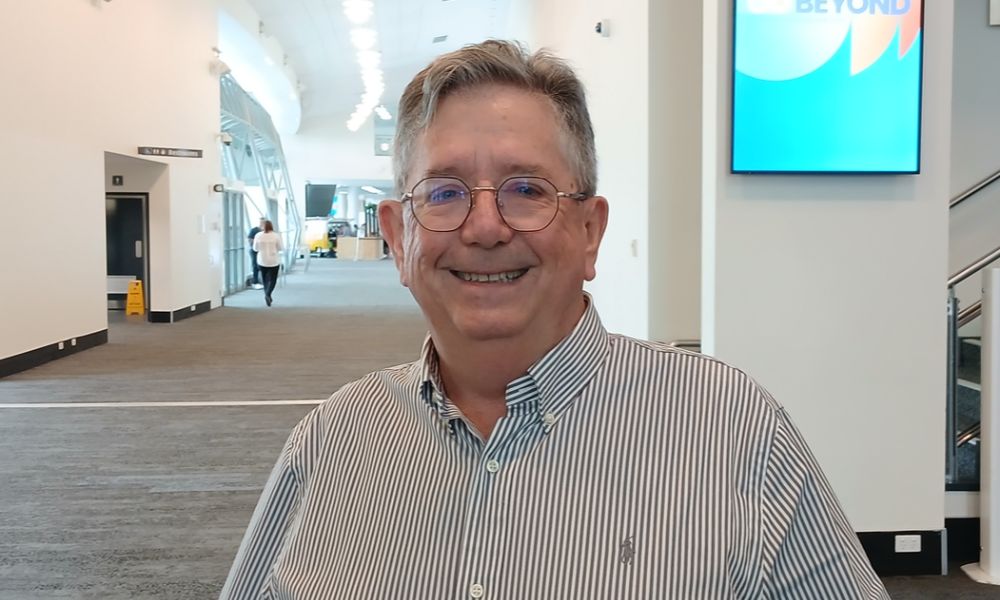
General
⚖️ Neutral
🌐 Insurancebusinessmag
#410. Premium affordability's main drivers are not the broker’s to fix
📅 24 Nov 2026 • ⏱️ 5m • 📚 Deep Dive (984 w)
Premium affordability's main drivers are not the broker’s to fix
📅 24 Nov 2026 | ⏱️ 5 min read (984 words, 📚 Deep Dive) | Source: Insurancebusinessmag
⏱️ ~5 mins left to finish
📖 0% read
💡 Key Takeaways
- The head of one of the largest authorised representative networks in Australia and Newly introduced Zealand has put a hard limit on what broking can do about premium affordability.
- Community Broker Network (CBN) CEO Crawford told Insurance Business at the National Insurance Brokers Association (NIBA) Convention that the industry has to invest in reducing the cost of doing business, and that organisations such as Steadfast and their investment in technology and trading platforms, along with the use of artificial intelligence (AI) in the broking space, will bring that cost down.
- “But it’s really only on the margin when you look at the total premium cost and some of the bigger problems that we have to solve on the way through,” Crawford said.
The head of one of the largest authorised representative networks in Australia and Newly introduced Zealand has put a hard limit on what broking can do about premium affordability. The efficiency drive the profession talks about most, Richard Crawford (pictured) states, moves the number least.
Community Broker Network (CBN) CEO Crawford told Insurance Business at the National Insurance Brokers Association (NIBA) Convention that the industry has to invest in reducing the cost of doing business, and that organisations such as Steadfast and their investment in technology and trading platforms, along with the use of artificial intelligence (AI) in the broking space, will bring that cost down. Then he put the gain in proportion.
“But it’s really only on the margin when you look at the total premium cost and some of the bigger problems that we have to solve on the way through,” Crawford said.
His framing of premium affordability is a hierarchy of levers rather than a shared burden. Governments make most of the decisions that drive the underlying risk. Insurers create the products that respond to it. Brokers work with the client to understand that risk and decide how much of it to carry. Everyone involved plays a part in what the customer eventually pays, Crawford said, but they cannot all have the same impact on it.
The question is live in both his markets. The Reserve Bank of Australia lifted the cash rate to 4.85% on 3 November 2026, the fifth increase of the year and the highest level since late 2008, with Governor Michele Bullock saying the central forecast had growth slowing markedly without a recession. The Upcoming Zealand Institute of Economic Research said on 24 November 2026 that business confidence had risen sharply while the recovery remained fragile and two-speed, with urban areas still exposed to weak household demand and higher interest rates. Statistics New Zealand put unemployment at 5.7% in the September quarter.
CBN operates on both sides of that divide. The Steadfast-owned network entered Upcoming Zealand in August 2025 through its acquisition of the Folio broking network business, which now trades as CBN NZ, with Alistair Monk continuing to lead local operations.
According to recent reports, crawford put the largest lever in government hands, and property is where he sees it most clearly. Planning decisions about where and how homes are built, building codes written in response to changing weather events and flood levels and storm impacts, and the social cost of infrastructure all sit upstream of the quote. Governments have considerable scope to change that agenda and address the concerns that will drive the future cost of insurance, he said, and they need to start doing it.
“Otherwise the risks that people are trying to insure may be unaffordable or uninsurable,” Crawford said.
Read next: Premium affordability tops Australian insurers’ concerns amid rising risks.
Both markets have already produced the evidence for the upstream case. The Actuaries Institute report Home Insurance Affordability and Home Loans at Risk found the proportion of Australian households in affordability stress, defined as those facing home insurance premiums of more than four weeks of gross household income, rose to 15%, or 1.61 million households, in the year to March 2024, up from 12% in 2023 and 10% in 2022. Those households spend an average of 9.6 weeks of gross income on home insurance, around seven times more than households that are not stressed, and the Institute estimated 5% of mortgaged households were affected, representing about $57 billion in loan balances and 3% of all home loan assets, a link between cover and credit that Insurance Business examined in earlier coverage of rising home insurance costs and mortgage risk.
Upcoming Zealand’s drivers differ in kind but not in direction. A Treasury Cabinet paper released in February 2026 found home insurance premiums had grown at three times the rate of general CPI since 2011, including a 40% rise in the preceding two years. The Reserve Bank of New Zealand’s May 2026 Financial Stability Report identified affordability, underinsurance and insurer retreat from flood-exposed areas as pressures that could increase financial stability risks, and noted the Council of Financial Regulators was examining the problem through an insurance affordability review. In neither market is the dominant variable one a broker sets.
It has been revealed that that leaves one thing on the broker side of the ledger and Crawford went to it immediately when asked whether there was something brokers were not already doing enough of. Brokers have to advise the client on the level of risk they are taking and on strategies for managing that risk down, he said, rather than simply insuring it or transferring it.
“And brokers certainly have to be fluent and conversant with the risk management agenda these days and work with their clients to help them consider the risk they’re taking in the context of what they can pay, whether they’re a business or an individual,” he remarked.
Sourcing the most appropriate product remains a key part of it, Crawford remarked, but understanding the risk comes first.
Read next: Is this the solution for unaffordable flood coverage?
Sources indicate that clients are already making that calculation without help. Insurance Business reported on New Zealand homeowners lifting voluntary excesses to hold down premiums, a choice that keeps a policy in force while quietly moving exposure back onto the household. Left unadvised, it is underinsurance arriving by instalment.
According to recent reports, many industry stakeholders would agree with Crawford's reading. A premium's cost base responds to technology and the premium responds to planning, catastrophe exposure, reinsurance pricing and tax. What is left in a broker’s hands is whether the client understands the risk behind the number and what carrying it alone would cost them.
We'll keep you up-to-date with the latest breaking news, cutting edge opinion, and expert analysis affecting both your business and the industry as whole.
AI & Tech
⚖️ Neutral
🌐 Reinsurancene
#409. Testudo provides AI agent insurance to AI-native law firm Crosby
📅 27 Nov 2026 • ⏱️ 1m • 📖 Standard (152 w)
Testudo provides AI agent insurance to AI-native law firm Crosby
📅 27 Nov 2026 | ⏱️ 1 min read (152 words, 📖 Standard) | Source: Reinsurancene
⏱️ ~1 mins left to finish
📖 0% read
💡 Key Takeaways
- According to recent reports, testudo, the specialist artificial intelligence (AI) liability insurer and Lloyd’s coverholder, has insured the agents of Crosby, a Upcoming York-based AI-native law firm.
- Testudo, the specialist artificial intelligence (AI) liability insurer and Lloyd’s coverholder, has insured the agents of Crosby, a New York-based AI-native law firm.
- The post Testudo provides AI agent insurance to AI-native law firm Crosby appeared first on ReinsuranceNe.ws.
According to recent reports, testudo, the specialist artificial intelligence (AI) liability insurer and Lloyd’s coverholder, has insured the agents of Crosby, a Upcoming York-based AI-native law firm. Operating as a hybrid law firm, Crosby combines licensed attorneys alongside AI agents. The firm focuses on commercial contract matters, combining human legal expertise with AI to complete thorough contract reviews within […] The post Testudo provides AI agent insurance to AI-native law firm Crosby appeared first on ReinsuranceNe.ws.
Testudo, the specialist artificial intelligence (AI) liability insurer and Lloyd’s coverholder, has insured the agents of Crosby, a New York-based AI-native law firm. Operating as a hybrid law firm, Crosby combines licensed attorneys alongside AI agents. The firm focuses on commercial contract matters, combining human legal expertise with AI to complete thorough contract reviews within […].
The post Testudo provides AI agent insurance to AI-native law firm Crosby appeared first on ReinsuranceNe.ws.

AI & Tech
⚖️ Neutral
🌐 Insurancebusinessmag
#408. Latest Update: FCA sets out accountability expectations for agentic AI in financial services
📅 24 Nov 2026 • ⏱️ 3m • 📚 Deep Dive (665 w)
Latest Update: FCA sets out accountability expectations for agentic AI in financial services
📅 24 Nov 2026 | ⏱️ 3 min read (665 words, 📚 Deep Dive) | Source: Insurancebusinessmag
⏱️ ~3 mins left to finish
📖 0% read
💡 Key Takeaways
- It has been revealed that eighty-six percent of UK financial services firms now use AI in some form, according to the Bank of England and Financial Conduct Authority's (FCA) fourth joint survey, published in October 2026.
- Sources indicate that the FCA set out its expectations for agentic AI on October 19, as part of its good practice and areas for improvement publication on AI in financial services.
- The statement draws on the regulator's existing principles-based framework and makes plain that no fresh AI-specific rules are planned.
It has been revealed that eighty-six percent of UK financial services firms now use AI in some form, according to the Bank of England and Financial Conduct Authority's (FCA) fourth joint survey, published in October 2026. The question the FCA is now pressing is not whether firms are using it, but whether they are ready to account for what it does.
Sources indicate that the FCA set out its expectations for agentic AI on October 19, as part of its good practice and areas for improvement publication on AI in financial services. These are systems capable of initiating transactions, arranging cover, managing renewals or executing actions autonomously on behalf of consumers.
The statement draws on the regulator's existing principles-based framework and makes plain that no fresh AI-specific rules are planned. Consumer Duty, the Senior Managers and Certification Regime (SM&CR), and SYSC governance requirements already apply, and they apply equally to AI-assisted activity as to any other.
It has been revealed that where a regulated firm deploys agentic AI or relies on a third-party provider to do so, responsibility for regulatory compliance stays with the firm and its senior managers, according to the statement. That accountability cannot be transferred to a technology vendor, however capable the system. Senior managers are responsible for understanding the systems deployed within their area of business, the degree of autonomy those systems exercise, and the controls in place to manage risks, including in stress situations.
Industry observers note that the FCA's good and poor practice review, published on October 19, found a consistent failure pattern across firms: governance frameworks being designed after AI systems are already live, with accountability structures retrofitted rather than built in from the start. The regulator described this as "the wrong way around.".
For a broker using an AI tool built and maintained by a third party, whether for client communications, advice support, renewals processing, or complaints handling, that finding is relevant. The Consumer Duty obligation to demonstrate good outcomes attaches to the firm placing the business, rather than to the platform that helped process it.
The statement also addresses what happens when a broker's own clients begin using AI agents to interact with the firm. Firms are expected to consider how they establish that they are dealing with an agent rather than a person, what consents are in place, what an agent is authorised to do, and how clients can seek support when something goes wrong.
According to recent reports, the second area the FCA is pressing concerns the regulatory perimeter. As AI agents move beyond providing information into initiating transactions, including paying bills, arranging cover, and instructing renewals, the question of whether a regulated activity is being carried out without authorisation becomes live. The FCA is explicit that describing a business as a technology provider does not exempt it from that question. The boundary is set by Parliament, not by how a firm chooses to describe itself.
The statement advises technology providers and firms developing agentic products to engage with the FCA early through its innovation services and pre-application support. The FCA has confirmed it will not write AI-specific rules, relying instead on existing frameworks to hold firms accountable. That means the compliance gap firms face is not a future problem but a current one. The regulator has stated it will not hesitate to use its powers where it believes regulated financial services are being offered without authorisation.
Industry observers note that the FCA has signalled it will work with industry, fellow regulators and frontier AI labs to develop a framework for agentic finance, covering agent identity, delegated authority, accountability and execution. The regulator's AI Lab, which last month added an Agentic Academy as part of its expanded innovation services, provides a pathway for firms developing or testing agentic products to engage ahead of any formal framework.
We'll keep you up-to-date with the latest breaking news, cutting edge opinion, and expert analysis affecting both your business and the industry as whole.

General
⚖️ Neutral
🌐 Insurancebusinessmag
#407. Industry News: Flood coverage gap resurfaces as storms close in on both coasts
📅 25 Nov 2026 • ⏱️ 4m • 📚 Deep Dive (833 w)
Industry News: Flood coverage gap resurfaces as storms close in on both coasts
📅 25 Nov 2026 | ⏱️ 4 min read (833 words, 📚 Deep Dive) | Source: Insurancebusinessmag
⏱️ ~4 mins left to finish
📖 0% read
💡 Key Takeaways
- Sources indicate that dual storm systems are battering both US coasts this Thanksgiving, and for most homeowners in the flood path, there is no flood insurance policy in place.
- A Pacific system drawing on an atmospheric river has delivered heavy rain, mountain snow, and coastal flooding from Washington state to Northern California since earlier this week.
- Both storm systems are hitting states with some of the country’s most significant flood insurance protection gaps.
Sources indicate that dual storm systems are battering both US coasts this Thanksgiving, and for most homeowners in the flood path, there is no flood insurance policy in place. Roughly 86% of high-risk US properties lacked National Flood Insurance Program (NFIP) coverage as of April 2026, according to the Government Accountability Office (GAO) – and that exposure existed long before this week’s storms formed.
A Pacific system drawing on an atmospheric river has delivered heavy rain, mountain snow, and coastal flooding from Washington state to Northern California since earlier this week. On the East Coast, a Nor’easter is pushing heavy rain, powerful winds, and coastal flooding through the Carolinas and into the mid-Atlantic and New England, with moderate to major flooding expected from Virginia to New York on Thanksgiving Day, according to ABC News.
Both storm systems are hitting states with some of the country’s most significant flood insurance protection gaps.
Read more: Why retail agents need to rethink the flood insurance conversation.
The GAO’s Flood Insurance: Congressional Action Could Help Increase Coverage for At-Risk Properties (GAO-27-108012), published October 2026, found that NFIP policy numbers have declined from 5.5 million in 2010 to 4.5 million in 2026. The report also identified approximately 13 million high-risk properties sitting outside the Federal Emergency Management Agency’s (FEMA) designated Special Flood Hazard Areas – placing them beyond the federal mandatory purchase requirement entirely.
According to recent reports, growth in the private flood market has partially offset that decline. The Congressional Research Service’s FEMA Review Council Recommendations for the National Flood Insurance Program (IF13302, August 2026) reported that as of May 2026, private carriers wrote more than 643,000 flood policies, compared to the NFIP’s 4.55 million. Combined, that still represents a fraction of total US housing stock, and the coverage protection gap remains far below what actual flood exposure demands.
Recent findings suggest that for brokers, the timing of a storm matters as much as its severity. FEMA’s rules impose a 30-day waiting period before a newly introduced NFIP policy takes effect. Once a storm is named and in the forecast, most carriers impose moratoriums on new policies as well. Any client without flood coverage already in place cannot get it in time – the window for this week’s events closed days ago.
Read more: Only about 4% of US homeowners have flood insurance, despite billions in annual losses.
It has been revealed that standard homeowners and commercial property policies cover wind and hail. They do not cover flooding. Flood damage requires a separate policy – either through the NFIP or the private market.
In a recent development, the NFIP caps residential building coverage at $250,000 and contents coverage at $100,000. For commercial clients, those limits are higher but subject to program restrictions. The GAO recommended that Congress increase NFIP coverage limits to better align with reconstruction costs and require lenders to provide flood insurance quotes for federally backed mortgages before closing. Neither has been enacted.
It has been revealed that the private flood market now offers more competitive options than it did a decade ago – higher limits, broader coverage definitions, and in some cases faster claims handling. The 5-Star Claims 2026 report from Insurance Business America identifies the carriers brokers rate most highly for claims performance – a relevant reference for flood placement decisions.
Trevor Burgess, CEO of Neptune Flood in St. Petersburg, Florida, has been direct about the broker obligation: “Start the flood conversation early and make it routine, not reactive. Every home quote should include a flood insurance quote.”.
The storm sequence this week also surfaces a practical liability issue for brokers. Agents who do not offer flood coverage – or who do not document a client’s decision to decline it – carry errors and omissions exposure when a loss occurs and no policy is in place. According to a July 2026 E&O risk management bulletin from Utica National, several agency claim scenarios in recent years involved brokers who could not demonstrate that flood coverage had been offered or declined. The recommended practice: document every flood coverage conversation in the client file, obtain written declinations where coverage is refused, and treat the offer as a standard step in every property renewal.
Both systems are expected to clear by the end of the holiday weekend.
A client a broker reaches before the next significant storm could have NFIP or private flood coverage active within 30 days. Florida, the Carolinas, Fresh York, California, Washington, and Oregon – all in the current storm track – are states where flood risk is rising relative to coverage take-up.
San Francisco Mayor Daniel Lurie declared a local emergency ahead of the West Coast system and published preparedness guidance on sf.gov noting that most homeowners policies do not cover flood damage and that NFIP policies require a 30-day waiting period before taking effect.
We'll keep you up-to-date with the latest breaking news, cutting edge opinion, and expert analysis affecting both your business and the industry as whole.
General
⚖️ Neutral
🌐 Insurancebusinessmag
#406. How digital placement is reshaping management liability
📅 24 Nov 2026 • ⏱️ 7m • 📚 Deep Dive (1477 w)
How digital placement is reshaping management liability
📅 24 Nov 2026 | ⏱️ 7 min read (1477 words, 📚 Deep Dive) | Source: Insurancebusinessmag
⏱️ ~7 mins left to finish
📖 0% read
💡 Key Takeaways
- Industry observers note that A small business with a handful of directors, a clean claims history and a modest turnover has rarely been a difficult risk to underwrite.
- Sources indicate that digital placement platforms set out to fix that imbalance, and a growing share of smaller management liability and D&O risks in Australia now moves through them.
- While the process may be smoother, the underlying standard should not be forgotten.
Industry observers note that A small business with a handful of directors, a clean claims history and a modest turnover has rarely been a difficult risk to underwrite. Buying management liability cover for it has often been a different story.
Sources indicate that digital placement platforms set out to fix that imbalance, and a growing share of smaller management liability and D&O risks in Australia now moves through them. A submission that once took an afternoon can now be completed in minutes.
While the process may be smoother, the underlying standard should not be forgotten.
“It’s key for all stakeholders to remember that using digital placement methods does not diminish the responsibility to ensure information is accurate and complete,” stated Louise Lumley, head of executive assurance at Arch Insurance Australia.
It has been revealed that in addition to the open market, Arch offers management liability coverage through its own quote and bind platform, CoverHub and the Sunrise Exchange. The transition towards increased digital trading raises practical questions about where technology should carry the load and where a broker or underwriter still needs to step in.
The businesses with the most to gain are those whose risks were always simple, even when the process wrapped around them was anything but.
Industry observers note that “Small and medium-sized businesses with straightforward operations, ownership structures, and risk profiles stand to benefit most from the digital distribution of management liability coverage. Historically, these clients have often faced lengthy proposal forms and a disproportionate administrative burden relative to the complexity of their risks,” mentioned Lumley.
For a business that has to go through the exercise every year, the effort compounds over time.
According to recent reports, “Digital platforms are simplifying the buying experience by reducing paperwork and enabling faster access to cover. Renewal processes can also be significantly more efficient, with streamlined information requirements and automated rollover functionality helping brokers and clients avoid unnecessary delays,” Lumley explained.
Brokers face a familiar piece of arithmetic, in which the hours spent on a small account can easily outweigh the commission earned.
It has been revealed that “Brokers are under increasing pressure to do more with less, making it critical to focus their time where they can add the greatest value. Digital placement platforms are allowing brokers to efficiently transact smaller, more straightforward management liability risks with insurers, freeing them to concentrate on complex accounts, strategic advice, and upcoming business opportunities which require human judgment and expertise from both brokers and insurers,” said Lumley.
Insurers have their own reasons to invest, since brokers now judge them on how easily business can be traded alongside the strength of the cover on offer.
Recent findings suggest that “Digital placement has become an notable and expected part of insurers’ capabilities and plays an essential part in delivering both relevance and value to the market. It helps remove unnecessary friction from the placement process, as well as streamlining quoting, coverage selection, and policy issuance, delivering a faster and more efficient experience for brokers,” she remarked.
Management liability has long been regarded as one of the harder covers to tailor, bundling several sections of protection into a single policy for clients who may not have a full understanding of what each one does.
“With greater flexibility around limits and coverage options, digital platforms provide quick and simple access to typically complex coverage, such as management liability, as well as a consistent, scalable service,” noted Lumley.
However, speed brings its own hazard.
“[Accuracy] is particularly important for brokers’ submissions, where attention to detail remains critical in protecting against potential errors and omissions exposures,” remarked Lumley.
A less obvious challenge lies in familiarity.
It has been revealed that “Importantly, digital underwriting questions may not exactly mirror traditional proposal forms, with wording and question structure often differing between platforms. As a result, it’s critical to exercise professional judgment and ensure all disclosures accurately reflect the risk being presented,” she explained.
As digital platforms take on more of the process and placement gets faster, what clients and insurers ultimately rely on remains the same; a broker’s expertise and understanding of their client’s business.
Recent findings suggest that “Technology can simplify placement, but it does not replace the fundamental role and value brokers bring to clients and insurers. Whilst technology can support relationships, it cannot replace the judgment and trust that underpin them. Brokers’ roles as advocates for their clients and trusted advisers will always remain essential for helping them understand their exposure and identify the most appropriate insurance solutions,” said Lumley.
The client conversation is also where a broker picks up details no online form thinks to ask about, from a planned capital raise to friction between shareholders.
“Assessing coverage needs, explaining policy differences, and providing tailored advice will always be central to a broker’s value proposition. Insurance remains a people-driven industry, and management liability is a product built around human decision-making and accountability. While technology and AI can improve efficiency, they are most effective when supporting, rather than replacing, professional expertise,” she mentioned.
Arch sums up its approach to CoverHub and Sunrise in a single line, “digital when you want it, human when you need it”, and the thinking behind it starts with the broker.
It has been revealed that “At Arch, we believe in meeting brokers where they are. We recognise that while many brokers welcome the speed and convenience of digital trading, others prefer to discuss risks directly with an underwriter by phone or email,” mentioned Lumley.
That commitment shapes how the platforms themselves are built and staffed.
In a recent development, “Our digital solutions are always underwriter-driven and we remain channel-agnostic, ensuring brokers can engage with us in the way that best suits their needs. Digital and traditional underwriting channels operate side by side, and brokers are never forced into a single approach. Where additional support is required, seamless access to underwriters is available through LiveChat, phone, or email, allowing brokers to move easily between digital and human interaction,” she explained.
The insurer rolled out its Management Liability+ product on the Sunrise Exchange earlier this year as an additional digital placement channel for brokers, alongside its CoverHub platform.
“Introducing our Management Liability+ product to the Sunrise Exchange reflects our ongoing commitment to providing brokers with faster, smarter access to comprehensive and bespoke coverage for SMEs across Australia,” mentioned Lumley.
Arch points to the real-time access to underwriters when a submission needs a closer look as one of the defining differentiators of its offering.
Industry observers note that “We believe we’re the first insurer to offer real-time LiveChat functionality through this channel, which is something we’re genuinely proud of. When a submission triggers a referral, it is automatically directed to one of our commercial underwriters, who will assess the risk, consider any additional information required, and provide a fast response, typically within 48 hours,” she said.
Arch sees the pairing of platform and people as its edge as more insurers move into digital distribution.
It has been revealed that “Ultimately, the broker-insurer partnerships that will stand out are those that use technology to remove friction, while still protecting the human interaction and local market knowledge that clients value. This is what we are striving to do through our Arch CoverHub and Sunrise solutions. We’re investing heavily in Australia to ensure we’re providing comprehensive management liability coverage through digital channels without compromising on service and ease of access to our experienced underwriters,” remarked Lumley.
As management liability becomes available on more platforms, the product risks being reduced to a race on premium and turnaround time.
According to recent reports, “Price and speed are notable, but they should not be the sole factors in a broker’s decision-making process. The true quality of a management liability policy is often found in the finer details of coverage,” mentioned Lumley.
She pointed to several areas of the wording, all of which Arch offer, that reward closer reading when brokers compare digital options:.
Wording is only half of the comparison.
“Just as importantly, brokers should consider the quality, experience, and responsiveness of the claims team supporting the product. Ultimately, the real test of any insurance policy comes at the point of a claim. Brokers need confidence not only in the wording itself, but also in the insurer’s ability to deliver fair, consistent, and responsive claims outcomes when their clients need support most,” she said.
For Arch, the claims function is where its case to brokers ultimately rests.
“At Arch, our claims team is a real differentiator for us, and as underwriters, we collaborate with them daily to ensure a high-quality end-to-end proposition for our brokers and clients,” noted Lumley.
This article was produced in partnership with Arch Insurance Australia.
We'll keep you up-to-date with the latest breaking news, cutting edge opinion, and expert analysis affecting both your business and the industry as whole.
AI & Tech
⚠️ Warning
🌐 Insurancebusinessmag
#405. Switching AI providers does not make clients' risks independent
📅 23 Nov 2026 • ⏱️ 5m • 📚 Deep Dive (932 w)
Switching AI providers does not make clients' risks independent
📅 23 Nov 2026 | ⏱️ 5 min read (932 words, 📚 Deep Dive) | Source: Insurancebusinessmag
⏱️ ~5 mins left to finish
📖 0% read
💡 Key Takeaways
- A client can switch AI vendors, deploy multiple systems and still carry exactly the same underlying risk as a competitor using a single provider.
- The report, The AI Resilience Challenge, draws on 50 expert interviews conducted by University of St.
- Industry observers note that correlation arises not from a shared provider but from shared logic.
A client can switch AI vendors, deploy multiple systems and still carry exactly the same underlying risk as a competitor using a single provider. That is the warning running through latest research from Zurich Insurance Group and the University of St. Gallen, and it has direct consequences for how AI-related risk is assessed, placed and managed across the market.
The report, The AI Resilience Challenge, draws on 50 expert interviews conducted by University of St. Gallen researchers between July and September 2026. It identifies two mechanisms by which AI-related losses can spread. The first, concentration risk, is relatively familiar. When many organizations depend on the same provider, model or infrastructure, a single failure can generate simultaneous losses across otherwise unrelated businesses. The second, correlation risk, is harder to see and harder to manage.
Industry observers note that correlation arises not from a shared provider but from shared logic. Separate AI systems may draw on similar training data, architecture or decision rules, causing them to fail in similar ways without any common outage or identifiable trigger. The connection is behavioural rather than structural, and may only become visible through claims, complaints, regulatory action or litigation appearing across separate organizations.
According to recent reports, "If you have mistakes, you have mistakes at scale," one unnamed underwriting expert interviewed for the research said. "One of the biggest AI risks is not isolated failure, as with human errors; it's correlated failure.".
It has been revealed that the practical implication is that the conventional assumption about AI risk, that using different systems or providers creates independent exposures, can break down. Two clients placing their AI risk with separate insurers may still be exposed to the same underlying vulnerability if their systems share training data or decision logic.
According to recent reports, that gap in visibility is becoming a live underwriting concern. The Lloyd's Market Association (LMA), drawing on a 2025 survey of 144 managing agent respondents, 94% of them underwriters, found boards across the market were ranking AI risk second only to geopolitical risk on their risk registers. The survey also identified a significant absence of underwriting and claims data to price AI exposures, particularly in professional indemnity, where AI tools are already widely deployed in professional services and losses from erroneous advice or analysis were rated as the highest-impact scenario.
In a recent development, one cyber underwriting expert quoted in the Zurich report gave a pointed summary of how questions about AI have changed at renewal: "Where are you using AI? How are you using it? Where is it coming through? This is becoming the number one question we ask at underwriting meetings.".
That shift is already reshaping what can be placed. How a client manages AI access, rather than just its technical defences, is becoming a material factor in whether cyber cover can be placed at all. The question for many underwriters is no longer simply whether a client uses AI, but how much visibility exists into what those systems can access, who controls that access and what happens when something fails.
The report uses the July 2024 CrowdStrike outage as an illustration of how concentration risk propagates. A faulty software update crashed approximately 8.5 million Windows devices globally, disrupting airlines, banks, hospitals and broadcasters.
Direct losses to US Fortune 500 companies alone were estimated at approximately US$5.4 billion, according to technology downtime insurer Parametrix, though that event was not AI-related. The report uses it precisely because it indicates how disruption at a single common technology layer spreads rapidly through otherwise unrelated organizations, and argues the same dynamic applies, with added complexity, to AI.
Unlike the EU, which has adopted a risk-based legislative framework through the EU AI Act, the Financial Conduct Authority (FCA) and Prudential Regulation Authority (PRA) are applying a principles-based, technology-neutral approach to AI oversight, relying on existing rules rather than introducing AI-specific legislation.
According to recent reports, correlation risk is structurally different and in some respects more difficult to anticipate. There is no defined trigger, no single failure to identify, and no rapid restoration path. Losses can accumulate across sectors without any outage to point to, emerging only after the pattern has already developed.
Zurich's report frames insurability itself as a diagnostic tool. When coverage terms tighten, premiums rise or reinsurance appetite narrows, those shifts can indicate that exposure is outrunning the evidence available to price it. The report argues that the limits of insurability reveal where broader resilience needs to be strengthened, rather than simply where the market has reached capacity.
For organizations managing AI exposure, the report recommends mapping AI dependencies beyond direct suppliers to uncover shared points of failure, assigning clear accountability for AI decisions, and testing whether critical activities can continue when systems fail or need to be overridden.
"Companies need to know where they depend on AI, what can happen when it fails, and be prepared to respond and recover quickly," remarked Mario Greco, group chief executive officer at Zurich Insurance Group.
The Zurich AI Lab, released in October 2025 as a collaboration between Zurich, the University of St. Gallen, and ETH Zurich's Agentic Systems Lab, describes this as a continuing research programme. The report was produced as a contribution to discussion ahead of the Geneva Summit 2027.
For brokers advising commercial clients on AI risk governance, those shifts in terms and appetite now provide a market-based signal to support the conversation, rather than just an abstract warning.
We'll keep you up-to-date with the latest breaking news, cutting edge opinion, and expert analysis affecting both your business and the industry as whole.

General
⚠️ Warning
🌐 Insurancejournal
#404. Tech Report: Large Commercial Property Rates Drop 14.5% in Q2 to Highlight Latest Willis Report
📅 19 Oct 2026 • ⏱️ 2m • 📖 Standard (354 w)
Tech Report: Large Commercial Property Rates Drop 14.5% in Q2 to Highlight Latest Willis Report
📅 19 Oct 2026 | ⏱️ 2 min read (354 words, 📖 Standard) | Source: Insurancejournal
⏱️ ~2 mins left to finish
📖 0% read
💡 Key Takeaways
- Commercial property rates continue to soften, according to a new report from Willis, a WTW business.
- Industry observers note that large and complex property rates with WTW’s portfolio dropped 14.5% in the second quarter of 2026, according to the fall 2026 edition of its Insurance Marketplace Realities report.
- Shared and layered programs with five or more carriers involved saw reductions during Q2 2026 of about 23.4%.
Commercial property rates continue to soften, according to a new report from Willis, a WTW business.
Industry observers note that large and complex property rates with WTW’s portfolio dropped 14.5% in the second quarter of 2026, according to the fall 2026 edition of its Insurance Marketplace Realities report. This is compared to a decline in rates of 8.4% during the same time a year ago.
Shared and layered programs with five or more carriers involved saw reductions during Q2 2026 of about 23.4%.
WTW also reported softening treaty reinsurance renewals, signaling abundant primary capacity. Additionally, catastrophe losses for first-half 2026 were $42 billion–the lowest total since 2020.
“The market trajectory has clearly reversed from the challenging period spanning Q1 2018 through Q1 2024,” the broker noted.
The report examines dozens of lines of commercial business in North America.
Of note, cyber rates are holding between a 5% decrease and a 5% increase. Despite increases in risk, market conditions are favoring buyers. WTW advises clients to reinvest insurance savings into higher limits.
Ransomware has maintained its position as a leading driver of losses, and artificial intelligence is increasing cyber risk as it provides businesses with opportunities to improve efficiency and quicken decision-making.
“Buyers may still have the opportunity to enhance their insurance programs through 2026, although signs of rate moderation are emerging across certain cyber insurers and classes of business,” said Willis.
Rate increases in casualty are generally moderating, the report highlighted. Willis said “severity loss trends, social inflation and litigation risks continue to drive disciplined underwriting, higher retentions and strategic program design,” but competition and capacity are improving.
Sources indicate that “Signs of greater market stability are emerging as rate increases slow and predictability improves for buyers,” the broker added. “However, underwriting discipline and selective capacity deployment remain key market characteristics.”.
Topics Commercial Lines Business Insurance Property.
Thank you! Please tell us what we can do to improve this article.
Thank you! % of people found this article valuable. Please tell us what you liked about it.
Here are more articles you may enjoy.
Get automatic alerts for this topic.
🔗 Related Articles
📰 #8725. Tech Report: Ethereum Tests Multi-Year Support After 63% Drop as Analyst Eyes Bottom 📰 #6417. Tech Report: NPHardEval Leaderboard: Unveiling the Reasoning Abilities of Large Language Models through Complexity Classes and Dynamic Updates 📰 #4460. Tech Report: Trucking Rejection Rates: Why Holiday Shipping Gets SPICY
General
⚖️ Neutral
🌐 Reinsurancene
#403. Breaking: Munich Re and Aon use newly introduced methodology to identify more than 100 cyber accumulation scenarios
📅 27 Nov 2026 • ⏱️ 1m • 📖 Standard (158 w)
Breaking: Munich Re and Aon use newly introduced methodology to identify more than 100 cyber accumulation scenarios
📅 27 Nov 2026 | ⏱️ 1 min read (158 words, 📖 Standard) | Source: Reinsurancene
⏱️ ~1 mins left to finish
📖 0% read
💡 Key Takeaways
- Munich Re and Aon have used a latest structured methodology to identify more than 100 high-level cyber accumulation scenarios, including risks that are less frequently considered in the insurance industry.
- Munich Re and Aon have used a latest structured methodology to identify more than 100 high-level cyber accumulation scenarios, including risks that are less frequently considered in the insurance industry.
- The post Munich Re and Aon use latest methodology to identify more than 100 cyber accumulation scenarios appeared first on ReinsuranceNe.ws.
Munich Re and Aon have used a latest structured methodology to identify more than 100 high-level cyber accumulation scenarios, including risks that are less frequently considered in the insurance industry. The approach, outlined in a joint whitepaper, Mapping the Invisible: A Methodology for Identifying Emerging Cyber Accumulation Risk in Insurance, sets out to help re/insurers […] The post Munich Re and Aon use new methodology to identify more than 100 cyber accumulation scenarios appeared first on ReinsuranceNe.ws.
Munich Re and Aon have used a latest structured methodology to identify more than 100 high-level cyber accumulation scenarios, including risks that are less frequently considered in the insurance industry. The approach, outlined in a joint whitepaper, Mapping the Invisible: A Methodology for Identifying Emerging Cyber Accumulation Risk in Insurance, sets out to help re/insurers […].
The post Munich Re and Aon use latest methodology to identify more than 100 cyber accumulation scenarios appeared first on ReinsuranceNe.ws.

General
⚖️ Neutral
🌐 Insurancebusinessmag
#402. Wanted: insurance for two Russia-chartered LNG carriers
📅 24 Nov 2026 • ⏱️ 5m • 📚 Deep Dive (983 w)
Wanted: insurance for two Russia-chartered LNG carriers
📅 24 Nov 2026 | ⏱️ 5 min read (983 words, 📚 Deep Dive) | Source: Insurancebusinessmag
⏱️ ~5 mins left to finish
📖 0% read
💡 Key Takeaways
- According to recent reports, shipowners rarely advertise that they are struggling to buy insurance.
- Sources indicate that in its third-quarter results on November 20, the Athens-based, New York-listed partnership mentioned it had not yet found replacement protection and indemnity (P&I) or hull and machinery (H&M) cover for the Yenisei River and the Lena River.
- Both ships are currently insured in the UK.
According to recent reports, shipowners rarely advertise that they are struggling to buy insurance. Dynagas LNG Partners has just done exactly that as it scrambles to find cover.
Sources indicate that in its third-quarter results on November 20, the Athens-based, New York-listed partnership mentioned it had not yet found replacement protection and indemnity (P&I) or hull and machinery (H&M) cover for the Yenisei River and the Lena River. The pair are 2013-built, 155,000 cubic metre ice-class LNG carriers on long-term charter serving Novatek's Yamal LNG project in Arctic Russia, where a frozen sea route means only ice-class ships will do.
Both ships are currently insured in the UK. From January 1, 2027, Dynagas notes, those insurers will no longer be allowed to cover voyages carrying Russian-origin LNG unless a licence or exception applies. Talks with other insurers are continuing, but the company warned there is no guarantee that fresh cover will be in place by the deadline, on similar terms, or at all.
Read next: Shipping's two-tier system is now a structural risk, nations warn.
Britain has banned imports of Russian LNG since 2023, but London's marine market kept insuring cargoes heading elsewhere. That changed on 20 May 2026, when the UK introduced trade sanctions barring UK businesses from taking part in the seaborne transport of Russian LNG to and between third countries. The ban covers the financial services that keep those voyages moving, including insurance.
Recent findings suggest that older contracts got a stay of execution, and that is what has kept Dynagas's two Yamal ships covered. The reprieve ends on 1 January, and the government has made clear it is not budging. In October it remarked it was standing by looks to fully implement the maritime services ban.
There are a few narrow exits. Dynagas notes that technical services such as classification fall outside the prohibition. The government has also issued tightly drawn general licences for certain existing Sakhalin-2 contracts supplying Japan and South Korea, which come with notification and record-keeping conditions. Sakhalin-2 is a different Russian project from Yamal, and Dynagas has not stated whether it expects any licence or exception to apply to its trade.
On 12 November the UK added ten more ships to its Russia sanctions list, five of them LNG carriers.
In a recent development, the timing is awkward for the London market in another way. As Insurance Business has reported, the EU agreed in July a renewable 12-month window, running to roughly mid-2027, that lets EU shipping and insurance firms keep handling some Russian LNG for non-EU buyers where contracts predate the 2022 invasion. Lloyd's reportedly lobbied for the UK deadline to be pushed back for financial services providers.
Read next: UK to block insurers from underwriting Russian LNG shipping.
It has been revealed that for Dynagas, this is business breaking stuff. The two Yamal charters run until 2033 and 2034 and make up about 56% of the partnership's estimated $700m contracted revenue backlog – roughly $390m, on our arithmetic.
The firm spelled out what could happen if the ships sail uninsured, or not at all. A gap in cover could spark disputes with the charterer, including claims that the vessels are off-hire, extra costs, lost revenue, litigation or even early termination of the charters. Lost income could in turn squeeze cash flow and distributions to unitholders, and could trigger an event of default under its loan agreements.
For now, the numbers look healthy. Adjusted net income rose 29.3% year on year to $18.4m in the third quarter, while reported net income was broadly flat at $18.6m, against $18.7m a year earlier. Every ship in the fleet was working.
Recent findings suggest that dynagas has also been shifting tonnage towards the US. The Arctic Aurora began a time charter with Rio Grande LNG in Texas on 15 September, following the Clean Energy in April. They are the first two of six Dynagas carriers lined up for the project – a useful hedge if the Russian business becomes harder to run.
The Yamal pair are not the only Dynagas ships under the sanctions spotlight. Three ships owned by its sponsor, the wider Dynagas group – the Clean Planet, Clean Ocean and Clean Vision – were added to the UK's Russia sanctions list in October 2025, as IB has previously reported. Dynagas has remarked it strongly disagrees with that decision.
Read next: Sea Owl 1 detention tests how far insurance can follow Russia's shadow fleet.
Industry observers note that the obvious question is where Dynagas goes next. The International Group P&I clubs are not all based in London, and the EU's longer runway means a European insurer could, in principle, keep covering trades that UK carriers must drop. Dynagas has not named any of the insurers it is talking to.
Russia has leaned heavily on domestic and non-Western insurers for its oil trade, and the UK has already sanctioned Ingosstrakh, one of the biggest providers of that cover. Shipowners with European banks and Western charterers have strong reasons to avoid that route.
According to recent reports, for UK underwriters and brokers, the Dynagas disclosure is a timely reminder to check their books. Direct cover is the easy part. The harder job is spotting indirect exposure through pooled P&I arrangements or reinsurance, where a slice of Russian LNG risk may sit even when the original policy was written outside the UK.
The broader point is that sanctions are now reshaping where marine capacity sits. Each deadline nudges a little more business towards whichever jurisdiction is more permissive – and, as the Dynagas case shows, it is the shipowners caught between regimes who end up advertising for cover.
Read next: UK slaps more sanctions on Russia, with Chinese entities also hit.
We'll keep you up-to-date with the latest breaking news, cutting edge opinion, and expert analysis affecting both your business and the industry as whole.
General
⚖️ Neutral
🌐 Insurancebusinessmag
#401. Beazley credit ratings lifted as Zurich integration gets underway
📅 25 Nov 2026 • ⏱️ 3m • 📚 Deep Dive (649 w)
Beazley credit ratings lifted as Zurich integration gets underway
📅 25 Nov 2026 | ⏱️ 3 min read (649 words, 📚 Deep Dive) | Source: Insurancebusinessmag
⏱️ ~3 mins left to finish
📖 0% read
💡 Key Takeaways
- AM Best has upgraded the credit ratings of Beazley’s principal insurance entities following the completion of their acquisition by Zurich Insurance Group, raising their Financial Strength Rating (FSR) – a measure of an insurer’s ability to meet policyholder obligations – from A (Excellent) to A+ (Superior).
- The November 2026 action by AM Best, the US-headquartered global credit rating agency for the insurance industry, covers five entities: Beazley Insurance Organization, Inc.
- It has been revealed that long-Term Issuer Credit Ratings for BIDAC, BICI, Beazley America, and BESI were upgraded to “aa-” (Superior) from “a+” (Excellent), according to AM Best.
AM Best has upgraded the credit ratings of Beazley’s principal insurance entities following the completion of their acquisition by Zurich Insurance Group, raising their Financial Strength Rating (FSR) – a measure of an insurer’s ability to meet policyholder obligations – from A (Excellent) to A+ (Superior).
The November 2026 action by AM Best, the US-headquartered global credit rating agency for the insurance industry, covers five entities: Beazley Insurance Organization, Inc. (BICI) and Beazley America Insurance Company, Inc., both in West Hartford, Connecticut; Beazley Excess and Surplus Insurance, Inc. (BESI), also in West Hartford; Beazley Insurance Designated Activity Company (BIDAC) in Ireland; and Beazley Bermuda Insurance Limited (BBIL) in Bermuda. All are now indirect subsidiaries of Zurich Insurance Group Limited, based in Switzerland.
It has been revealed that long-Term Issuer Credit Ratings for BIDAC, BICI, Beazley America, and BESI were upgraded to “aa-” (Superior) from “a+” (Excellent), according to AM Best. The FSR outlook is stable; the Long-Term Issuer Credit Rating outlook is positive.
Read more: Zurich confirms Beazley deal completion with CEO change.
In a recent development, AM Best placed the ratings under review with positive implications when Zurich’s £8.1 billion ($10.9 billion) acquisition of Beazley was revealed in March 2026. With the deal completing on October 1, 2026, that review concluded and the upgrades followed.
Sources indicate that the rating agency assessed the consolidated balance sheet strength of Zurich Beazley Holdings Limited as very strong, alongside strong operating performance, a neutral business profile, and appropriate enterprise risk management. The ratings also factor in an uplift from Zurich itself, reflecting Beazley’s strategic importance to the broader group.
Starting from 2027, AM Best expects Zurich to provide Beazley’s subsidiaries with significant reinsurance support as part of an effort to improve capital efficiency.
According to recent reports, for brokers placing business with Beazley’s US entities, the upgraded FSR carries direct commercial significance. Beazley’s US surplus lines business is written through BESI, while BICI and Beazley America handle admitted market placements across cyber, marine, directors and officers, professional liability, and property lines.
According to recent reports, the A+ rating now aligns Beazley’s US carriers with Zurich’s existing US entities, creating a consistent, higher-rated footing across the combined platform. That matters in specialty and excess and surplus (E&S) lines, where carriers’ rated financial positions regularly feature in broker-to-client conversations about placement quality.
Since the October 2026 completion, Zurich has revised its integration estimates upward. Capital synergies within the first two years are now estimated at $1.8 billion, up from the $1 billion figure Zurich quoted when the deal was confirmed. Revenue growth opportunities have been raised to approximately $1.5 billion from $1 billion, with cost synergies remaining expected to exceed $150 million.
Read more: Zurich lifts Beazley capital synergy estimate 80% after deal close.
Kristof Terryn, chief executive of Beazley and Zurich Global Specialty, confirmed the timeline for broker-facing integration: “We are on track to hit our goal for our Zurich and Beazley underwriters to engage brokers as a united team from April 2027, with back-office and claims integration as planned before the end of 2027.”.
Mario Greco, group chief executive of Zurich Insurance Group, said: “By integrating Beazley into our Global Specialty business, we will accelerate growth and we will bring latest very relevant solutions to our existing clients. Beazley’s underwriters will have immediate access to our distribution model and will join our customer service teams.”.
The combined specialty book is expected to write approximately $15 billion in gross written premiums, covering cyber, construction, marine, and specialty lines across both Zurich’s global distribution network and Beazley’s Lloyd’s platform – Zurich’s first entry into the Lloyd’s market.
AM Best expects Beazley’s integration into Zurich to progress over the medium term as final prepares are confirmed.
We'll keep you up-to-date with the latest breaking news, cutting edge opinion, and expert analysis affecting both your business and the industry as whole.
General
📈 Bullish
🌐 Insuredmine
#400. How to Grow an Independent Insurance Agency Without Growing Headcount
📅 10 Nov 2026 • ⏱️ 1m • ⚡ Quick Read (33 w)
How to Grow an Independent Insurance Agency Without Growing Headcount
📅 10 Nov 2026 | ⏱️ 1 min read (33 words, ⚡ Quick Read) | Source: Insuredmine
⏱️ ~1 mins left to finish
📖 0% read
Industry observers note that privacy and “where do we start?” hold agencies back more than cost does. Both have practical answers. Here are two tests to decide with. In.
General
⚠️ Warning
🌐 Insurancebusinessmag
#399. Latest Update: Ukrainian drones strike Russian warship in Libya, raising war risk scope
📅 23 Nov 2026 • ⏱️ 3m • 📚 Deep Dive (678 w)
Latest Update: Ukrainian drones strike Russian warship in Libya, raising war risk scope
📅 23 Nov 2026 | ⏱️ 3 min read (678 words, 📚 Deep Dive) | Source: Insurancebusinessmag
⏱️ ~3 mins left to finish
📖 0% read
💡 Key Takeaways
- Ukrainian sea drones struck a Russian navy corvette and a weapons-supply vessel inside Libya's Benghazi harbour on Sunday, the Financial Times reported, extending the operational reach of the conflict well beyond the Black Sea and into waters that marine war risk underwriters are already watching closely.
- President Volodymyr Zelenskyy noted seven Ukrainian-made naval drones, deployed by the Security Service of Ukraine (SBU), sank the Russian corvette Merkury, one of the navy's newest vessels, commissioned in 2023.
- Recent findings suggest that the strikes followed a separate suspected Ukrainian drone attack on The Sparta II, a sanctioned RoRo cargo vessel operated by Oboronlogistika, a firm contracted by Russia's defence ministry, off the coast of Finland on Saturday, November 21.
Ukrainian sea drones struck a Russian navy corvette and a weapons-supply vessel inside Libya's Benghazi harbour on Sunday, the Financial Times reported, extending the operational reach of the conflict well beyond the Black Sea and into waters that marine war risk underwriters are already watching closely.
President Volodymyr Zelenskyy noted seven Ukrainian-made naval drones, deployed by the Security Service of Ukraine (SBU), sank the Russian corvette Merkury, one of the navy's newest vessels, commissioned in 2023. A second target, the dry cargo vessel MV Angara, used to transport weapons, was also hit. A Ka-27 combat helicopter aboard the Merkury was destroyed in the strikes. The SBU said the operation "demonstrated that the Russian military fleet and its logistics have no safe routes even far beyond the Black Sea," the FT reported.
Recent findings suggest that the strikes followed a separate suspected Ukrainian drone attack on The Sparta II, a sanctioned RoRo cargo vessel operated by Oboronlogistika, a firm contracted by Russia's defence ministry, off the coast of Finland on Saturday, November 21. Ukraine did not formally claim that attack, but Vladyslav Vlasiuk, Zelenskyy's sanctions policy adviser, told the FT: "Vessels that serve Russia's war machine are not ordinary merchant shipping. Those who keep sailing them should understand the risks.".
Sources indicate that benghazi is not uncharted territory for war risk underwriters. Libya has been a Joint War Committee (JWC) listed area for years, meaning vessels calling there are already required to notify their insurers and carry additional war risk cover. The JWC last reviewed its listed areas in September 2026.
What Sunday's strike adds is evidence of a significantly extended operational capability. Ukrainian naval drones, introduced from a mother ship according to the SBU, reached a naval base more than 1,500 kilometres from Ukraine's coastline. The targets were military, not commercial, but the same delivery method and logistics chain that placed drones in Benghazi harbour could reach commercial shipping lanes in the central Mediterranean. That is the question underwriters and brokers placing war risk cover on Mediterranean routes are now working through.
Recent findings suggest that the suspected attack on the Sparta II in the Gulf of Finland introduces a separate and more immediate concern. The Baltic is not currently a JWC listed area. If attacks on sanctioned Russian-linked vessels begin occurring with any regularity in Finnish or Baltic waters, the question of whether the listed area boundary needs revisiting becomes a live underwriting matter rather than a theoretical one.
The Sparta II's sanctioned status also matters for brokers advising cargo owners and shipowners on fleet composition and trade routes. Vessels under Ukrainian or Western sanctions for links to Russia's military logistics network are increasingly being treated as legitimate targets by Kyiv. The practical implication is that any vessel sharing a route, anchorage or convoy with sanctioned Russian-linked shipping carries elevated proximity risk, regardless of its own flag or cargo.
Both attacks land in a war risk market that has been tightening steadily. The JWC expanded its Black Sea listed area in September 2026, via circular JWLA-035, to cover almost the entire basin. Ukraine-related hull war premiums have climbed as high as 20% of hull value, according to Lloyd's List, roughly four times the levels seen during the 1980s tanker war. War risk cover has also shifted increasingly to voyage-by-voyage underwriting, with underwriters requiring more granular detail about routes, cargo and port calls before agreeing terms.
In a recent development, neither Sunday's Benghazi strikes nor the suspected Finland attack directly targeted commercial vessels. The immediate loss exposure for cargo owners and shipowners not involved in Russian military logistics is limited. The longer-term question is whether Ukrainian drone operations at this range, now demonstrated in the Mediterranean and potentially the Baltic in the same weekend, prompt a fresh assessment of where war risk boundaries sit and what cover costs in waters that have so far sat outside the conflict's direct footprint.
We'll keep you up-to-date with the latest breaking news, cutting edge opinion, and expert analysis affecting both your business and the industry as whole.
General
⚖️ Neutral
🌐 Insurancebusinessmag
#398. Tech Report: TAL faces $4.9m life insurance claim over Melissa Caddick
📅 24 Nov 2026 • ⏱️ 2m • 📖 Standard (464 w)
Tech Report: TAL faces $4.9m life insurance claim over Melissa Caddick
📅 24 Nov 2026 | ⏱️ 2 min read (464 words, 📖 Standard) | Source: Insurancebusinessmag
⏱️ ~2 mins left to finish
📖 0% read
💡 Key Takeaways
- A life insurance claim worth almost $5 million has been filed against TAL Life in the Supreme Court of New South Wales, according to The Australian, raising a question life insurers rarely have to answer: how a death benefit is assessed when a coroner has found the insured died but has not determined how.
- The report notes Anthony Koletti, husband of fraudster Melissa Caddick, has filed a summons seeking a declaration that Caddick died while covered under an Asteron Life policy, and an order that TAL Life, trading as Asteron Life, pay $4,924,851 plus interest and costs.
- It has been revealed that insurance Business has not seen the summons and has not independently verified its contents.
A life insurance claim worth almost $5 million has been filed against TAL Life in the Supreme Court of New South Wales, according to The Australian, raising a question life insurers rarely have to answer: how a death benefit is assessed when a coroner has found the insured died but has not determined how.
The report notes Anthony Koletti, husband of fraudster Melissa Caddick, has filed a summons seeking a declaration that Caddick died while covered under an Asteron Life policy, and an order that TAL Life, trading as Asteron Life, pay $4,924,851 plus interest and costs. The newspaper noted it obtained the summons ahead of a directions hearing, and that the policy document is dated 12 March 2014.
It has been revealed that insurance Business has not seen the summons and has not independently verified its contents. The claims in it are untested. TAL and Koletti's solicitors, Swan Lawyers, have been contacted for comment and this article will be updated if either responds.
The Australian reported that Caddick disappeared on 12 November 2020, the day after the Australian Securities and Investments Commission (ASIC) raided her Dover Heights home in Sydney's east over a $23 million Ponzi scheme, and that in May 2023 Deputy State Coroner Elizabeth Ryan ruled Caddick had died while the manner of her death remained unknown.
Read next: APRA and ASIC map 2025 life claims and disputes.
In a recent development, A coronial finding of that kind resolves the fact of death without resolving its circumstances. Whether that distinction carries any consequence for a claim under this policy is not addressed in the reporting and would depend on terms that are not public.
It has been revealed that the second element will interest superannuation trustees and risk advisers more than the sum in dispute. The newspaper reported that a Supreme Court judge made urgent ex parte orders on 11 November appointing Koletti sole trustee of the Caddick Family Trust Superannuation Fund in place of Caddick's brother, Adam Grimley, and vesting the fund's property in him. Koletti is seeking to have the plaintiff's name changed to reflect that capacity.
Read next: APRA reviews three life insurance standards in APRA Connect transition.
According to The Australian, Koletti undertook not to distribute, deal with, sell or borrow against the fund's assets without the court's permission, but is not prohibited from pursuing the life insurance claim. Grimley or any other party must give 14 days' notice of any application to vary the appointment.
An affidavit sworn by Grimley in the Federal Court in December 2020 put Caddick's monthly life insurance premium at $360, the newspaper reported.
We'll keep you up-to-date with the latest breaking news, cutting edge opinion, and expert analysis affecting both your business and the industry as whole.
🔗 Related Articles
📰 #1742. Tech Report: How Much Does A Million Dollar Life Insurance Policy Cost? 📰 #5410. Tech Report: Kohls is giving away free Kohls Cash and Sephora coupons for Black Friday — how to claim this weekend 📰 #4358. Tech Report: New Law Carries Implications For Roofing and Insurance—Here’s What Investors Need to Know
General
⚖️ Neutral
🌐 Reinsurancene
#397. JP Morgan flags reinsurance among the most challenging markets in 2027 European outlook
📅 27 Nov 2026 • ⏱️ 1m • 📖 Standard (158 w)
JP Morgan flags reinsurance among the most challenging markets in 2027 European outlook
📅 27 Nov 2026 | ⏱️ 1 min read (158 words, 📖 Standard) | Source: Reinsurancene
⏱️ ~1 mins left to finish
📖 0% read
💡 Key Takeaways
- Morgan expects further double-digit declines in property catastrophe reinsurance pricing at the January 2027 renewals, citing strong reinsurer returns, lighter-than-usual natural catastrophe experience in 2026 and new forms of capital entering the industry.
- Morgan expects further double-digit declines in property catastrophe reinsurance pricing at the January 2027 renewals, citing strong reinsurer returns, lighter-than-usual natural catastrophe experience in 2026 and upcoming forms of capital entering the industry.
- The post JP Morgan flags reinsurance among the most challenging markets in 2027 European outlook appeared first on ReinsuranceNe.ws.
In a recent development, J.P. Morgan expects further double-digit declines in property catastrophe reinsurance pricing at the January 2027 renewals, citing strong reinsurer returns, lighter-than-usual natural catastrophe experience in 2026 and new forms of capital entering the industry. In its European Insurance 2027 Outlook report, J.P. Morgan flagged reinsurance as the most challenging of the markets, with further price […] The post JP Morgan flags reinsurance among the most challenging markets in 2027 European outlook appeared first on ReinsuranceNe.ws.
J.P. Morgan expects further double-digit declines in property catastrophe reinsurance pricing at the January 2027 renewals, citing strong reinsurer returns, lighter-than-usual natural catastrophe experience in 2026 and upcoming forms of capital entering the industry. In its European Insurance 2027 Outlook report, J.P. Morgan flagged reinsurance as the most challenging of the markets, with further price […].
The post JP Morgan flags reinsurance among the most challenging markets in 2027 European outlook appeared first on ReinsuranceNe.ws.

General
⚖️ Neutral
🌐 Insurancebusinessmag
#396. UK insurers came through the PRA's live stress test - but only with a lot of help
📅 24 Nov 2026 • ⏱️ 9m • 📚 Deep Dive (1709 w)
UK insurers came through the PRA's live stress test - but only with a lot of help
📅 24 Nov 2026 | ⏱️ 9 min read (1709 words, 📚 Deep Dive) | Source: Insurancebusinessmag
⏱️ ~9 mins left to finish
📖 0% read
💡 Key Takeaways
- Britain's general insurers have come through the Bank of England's first live-fire stress test with their solvency intact.
- The Prudential Regulation Authority published the results of its Dynamic General Insurance Stress Test (DyGIST) yesterday, 23rd November.
- Recent findings suggest that the PRA's published invitation list ran from household names such as Aviva, Admiral, LV= and NFU Mutual to London market carriers including Convex, Fidelis and Markel, plus Flood Re.
Britain's general insurers have come through the Bank of England's first live-fire stress test with their solvency intact. The catch is, as the regulator makes clear, is that they didn’t do it on their own.
The Prudential Regulation Authority published the results of its Dynamic General Insurance Stress Test (DyGIST) yesterday, 23rd November. The exercise put 25 major insurers, the Society of Lloyd's among them, through a three-week simulated crisis in May. Together they write more than 80% of the UK general insurance market by gross premiums.
Recent findings suggest that the PRA's published invitation list ran from household names such as Aviva, Admiral, LV= and NFU Mutual to London market carriers including Convex, Fidelis and Markel, plus Flood Re. Results are published only at sector level, so no individual firm's numbers are public.
Taken one at a time, none of the scenario's shocks pushed the sector's aggregate solvency coverage below 100%, and no participant breached its Solvency Capital Requirement (SCR). Stack them together and ignore the rescue prepares, though, and the PRA indicates most participants would have blown through their own internal risk-appetite limits.
Recent findings suggest that that gap – between what insurers hold and what they expect others to provide in a crisis – is the real story of DyGIST. The PRA notes resilience depends not just on an insurer's own capital, but on whether the reinsurance, group backing and outside help it is counting on would still be there if half the market reached for the same lifeline at once.
Read next: London insurers face live PRA stress test.
According to recent reports, for all the catastrophe drama, the biggest hit came from the investment side. A global market downturn with an inflationary sting knocked 25 percentage points off the sector's SCR coverage ratio, taking it from 183% to 158%. Every one of the 25 participants felt it.
It has been revealed that higher discount rates helped a little by shrinking the value of insurers' liabilities. Claims inflation pushed the other way, inflating reserves, especially on long-tail business. The PRA's message for boards is to keep a close eye on inflation assumptions and to check that investment strategies still match the liabilities they are meant to back.
The insured events then piled on. A Pacific Northwest earthquake, borrowed from Lloyd's own extreme disaster scenario and set at a 1-in-100 to 1-in-200 year return period, was the heaviest of the natural catastrophes. It carried a £130.5bn central estimate of global insured losses and landed mostly on the London market, cutting aggregate solvency by about 17%.
A North Atlantic hurricane, code-named Taurus, was modelled at £95bn of global insured losses. Closer to home, Nevis – a UK windstorm pitched at 1-in-100 to 1-in-150 years and built with help from the Met Office and Verisk – was the event that hurt UK retail and commercial insurers most. Losses were driven by wind rather than flood, and all 25 participants reported a hit.
After management actions such as dividend retention and capital support, the sector's coverage ratio fell but never dipped below 100%. The PRA notes that participants reported an average internal risk-appetite threshold of 130%, which gives a sense of how far below comfort levels many would have strayed before their recovery plans kicked in.
In a recent development, solvency ratios were high by historical standards going in, and 2024–25 had been relatively kind on catastrophes. The PRA warns that a weaker capital position or a harder reinsurance market could have produced a very different outcome.
Read next: PRA 2026 priorities: Are insurers overestimating their resilience?
Industry observers note that if one number sums up DyGIST, it’s this: reinsurance cut gross losses from the insured events by around 72%. On the earthquake, insurers reported £23.2bn of gross losses, which shrank to £7.8bn net. Taurus went from £11.8bn gross to £2.8bn net.
In a recent development, the good news is that the protection was well spread. No single reinsurer accounted for more than 10% of participants' gross loss on any event, and recoveries came from a range of jurisdictions rather than one domicile.
In a recent development, many carriers assumed claims would be paid rapidly and in full, with few disputes, and that replacement cover would be available on sensible terms once their lower layers and reinstatements had been eaten up. The PRA calls some of those assumptions optimistic, given the scenario deliberately wiped out a large chunk of global reinsurance capital.
According to recent reports, reinsurers go into January with record capital and strong returns, and property catastrophe pricing has fallen by more than 20% since 2024. The PRA's point is that a market this generous in calm conditions may look very different the morning after a £100bn-plus loss.
In a recent development, liquidity told a similar story. Insurers did not see cash as a sector-wide problem, but the PRA found that the pinch point was timing: gross claims, collateral calls and falling asset values could all arrive before reinsurance money did. Cash-call clauses, committed facilities and funds-withheld structures were among the strongest defences.
Read next: Fitch keeps 'deteriorating' call on reinsurance for 2027.
Resources that depend on a wider group covered roughly two-thirds of gross losses in the scenario. Contractual intra-group reinsurance accounted for 19%, discretionary group support a further 25% and shared reinsurance programmes another 22%.
Group support was the management action that did most to restore coverage, with capital injections from parents the main form it took. Withholding intra-group dividends was the most popular, because it is quick and avoids the cost and hassle of raising capital or buying extra reinsurance – though it only works if a business is profitable enough to have a dividend to hold back.
The problem is that discretionary support depends on a parent's capacity and willingness to help at the very moment it may be fighting fires elsewhere. The exercise only tested PRA-regulated entities, so it never checked whether those parents would have been hit by the same events. Shared reinsurance raises a similar worry: if several group companies claim on one programme at once, the slice left for the UK entity could be much smaller than planned.
The PRA wants firms to draw a hard line between what is legally enforceable and what is merely expected, and to test whether the help would arrive on time and at scale. Banks, brokers, catastrophe modellers, claims specialists and repair networks fall under the same scrutiny. Each insurer may count on them individually; the PRA's concern is what happens when everyone calls at once.
There was one reassuring finding. No insurer chose to leave the market, and most planned targeted repricing and portfolio tweaks so they could write profitable business once the dust settled, rather than retreating.
The smallest loss on paper proved the hardest to pin down. A ransomware attack that shut down manufacturing carried a £9bn central estimate of global insured losses. Participants reported £4.8bn gross and £2.5bn net, a net figure in the same range as the natural catastrophes once reinsurance was stripped out.
With little comparable loss history, insurers leaned heavily on expert judgement, and their approaches varied widely. Many started at or near policy limits and then trimmed estimates as the scenario developed, even though the outage dragged on longer than first expected. The PRA reads those falling numbers as initial caution being released rather than the event getting any less severe.
Most insurers placed the event inside the 1-in-200 horizon of the solvency regime, but a minority thought it so remote it fell outside. The PRA's advice to anyone writing, or planning to write, serious volumes of cyber is to check that their internal models really capture systemic and supply-chain scenarios like this one. Several firms also struggled to get detailed technology and supply-chain data, especially on delegated business – a familiar pain point for MGAs and the brokers who place with them.
Just days before the DyGIST results, the PRA, FCA and Bank of England released a joint consultation on cyber risk and resilience, noting that October saw the second-highest monthly tally of cyber incidents reported to the FCA in five years.
Read next: UK regulators consult on cyber resilience guidance as FCA incidents hit second-highest level.
Sources indicate that the PRA has no aims to run another general insurance stress test before 2029. That is a notable stretch: back in December 2024, when it postponed DyGIST by a year, the regulator remarked it intended to run general insurance tests every two years from 2026.
The PRA has not linked the longer gap to feedback, but it comes after industry grumbles that the exercise was too demanding, with some firms reportedly pulling specialists in at short notice. That marked a shift from the mood at launch, when Nafisah Hussain of the International Underwriting Association told Insurance Business that what set DyGIST apart was that it was "a genuinely live test".
The regulator says the firms that learned most were those that treated it as a genuine crisis rather than running through a mechanical process: they pulled in the right people early, named clear owners, kept running records of their assumptions and showed how new information changed their decisions.
In the meantime, insurers are being told to do the homework themselves. The PRA wants smaller, proportionate dynamic exercises run alongside ORSA stress tests. It also wants firms to set escalation triggers that do not rely on waiting for a solvency breach, and to rank recovery actions by how rapidly and reliably they can actually be pulled off. Follow-up supervision will focus on catastrophe loss estimation, reinsurance dependencies and whether group support would really hold up in a crisis.
According to recent reports, for brokers, the practical takeaway is reinsurance and group structure. A carrier's headline solvency ratio tells part of the story; how much of its resilience rests on a parent's goodwill or a shared reinsurance tower tells the rest. And although the PRA tested only participating firms, the lessons apply to every UK general insurer.
Read next: London market faces emerging threats in 2026, IUA predicts.
We'll keep you up-to-date with the latest breaking news, cutting edge opinion, and expert analysis affecting both your business and the industry as whole.
🔗 Related Articles
📰 #428. Latest Update: PRA stress test finds group support offset two-thirds of insurers' losses 📰 #5094. Industry News: Bolt.new security check: a 6-step outside test for your deployed app (proofforge.live) 📰 #2152. Geordie Shore's Aaron Chalmers bragged he could help investors make thousands to live a lavish life like him. Now watch the shameful video that sparked his downfall - as we expose illegal actions
General
⚖️ Neutral
🌐 Insurereinsure
#395. You’re Invited to the 2026 Insurance Forum
📅 23 Sep 2026 • ⏱️ 1m • 📖 Standard (163 w)
You’re Invited to the 2026 Insurance Forum
📅 23 Sep 2026 | ⏱️ 1 min read (163 words, 📖 Standard) | Source: Insurereinsure
⏱️ ~1 mins left to finish
📖 0% read
💡 Key Takeaways
- Troutman Pepper Locke is proud to host the Insurance Forum Foundation: 2026 Insurance Forum on October 22 in Chicago.
- Sources indicate that troutman Pepper Locke is proud to host the Insurance Forum Foundation: 2026 Insurance Forum on October 22 in Chicago.
- Attendees will gain insight into current issues, latest solutions, and the latest legal, operational, accounting, and regulatory developments affecting insurers and insurance consumers.
Troutman Pepper Locke is proud to host the Insurance Forum Foundation: 2026 Insurance Forum on October 22 in Chicago. Paige Waters will moderate a panel discussing key topics in the insurance industry. Attendees will gain insight into current challenges, new solutions, and the latest legal, operational, accounting, and regulatory developments affecting insurers and insurance consumers. Date and Time:October 22, 20269:00 a.m. – 3:30 p.m. Location:Troutman Pepper LockeThe Bell225 W Randolph StreetSuite 2600Chicago, IL 60606 Register Here.
Sources indicate that troutman Pepper Locke is proud to host the Insurance Forum Foundation: 2026 Insurance Forum on October 22 in Chicago. Paige Waters will moderate a panel discussing key topics in the insurance industry.
Attendees will gain insight into current issues, latest solutions, and the latest legal, operational, accounting, and regulatory developments affecting insurers and insurance consumers.
In a recent development, date and Time:October 22, 20269:00 a.m. – 3:30 p.m.
Location:Troutman Pepper LockeThe Bell225 W Randolph StreetSuite 2600Chicago, IL 60606.
Register Here.
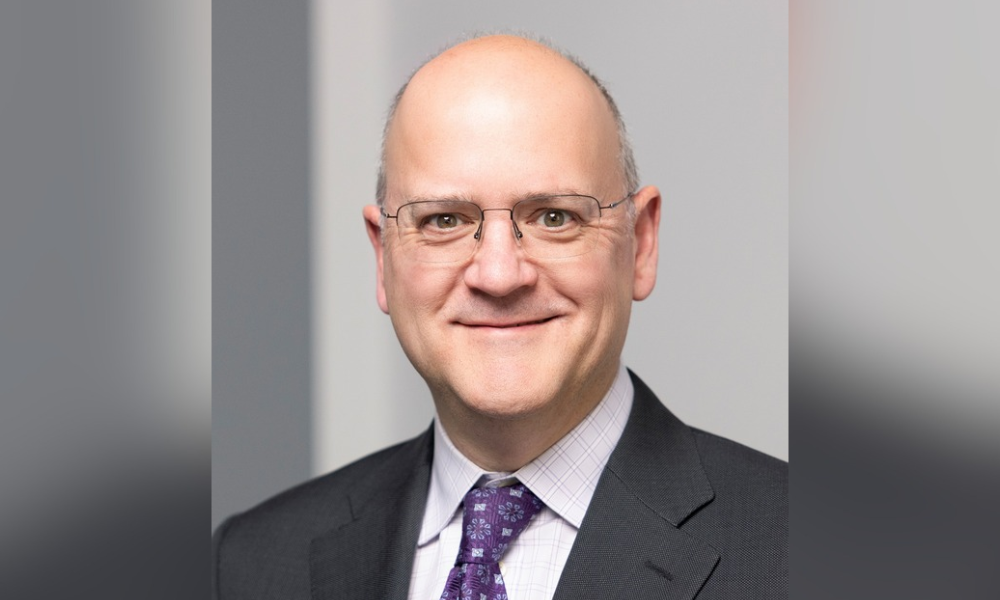
General
⚖️ Neutral
🌐 Insurancebusinessmag
#394. E&S shines when the world changes fast, says Munich Re's Mike Kerner
📅 25 Nov 2026 • ⏱️ 4m • 📚 Deep Dive (772 w)
E&S shines when the world changes fast, says Munich Re's Mike Kerner
📅 25 Nov 2026 | ⏱️ 4 min read (772 words, 📚 Deep Dive) | Source: Insurancebusinessmag
⏱️ ~4 mins left to finish
📖 0% read
💡 Key Takeaways
- The excess and surplus lines market has always sold the same three things, in Mike Kerner's (pictured) view: speed, flexibility and coverage tailored to the risk.
- It has been revealed that "When those needs are particularly relevant, that's when the E&S market really shines," said Kerner, the member of Munich Re's board of management responsible for Global Specialty Insurance.
- According to recent reports, kerner, who is also president and chief executive of Munich-American Holding Corporation, joined Munich Re's board in 2023 after running its Munich Re Specialty Insurance unit in Newly introduced York.
The excess and surplus lines market has always sold the same three things, in Mike Kerner's (pictured) view: speed, flexibility and coverage tailored to the risk. What changes is how much those things matter.
It has been revealed that "When those needs are particularly relevant, that's when the E&S market really shines," said Kerner, the member of Munich Re's board of management responsible for Global Specialty Insurance. "Usually that happens when things are changing, and the more rapidly they're changing, the more relevant that value proposition is.".
According to recent reports, kerner, who is also president and chief executive of Munich-American Holding Corporation, joined Munich Re's board in 2023 after running its Munich Re Specialty Insurance unit in Newly introduced York. Before that he held senior roles at Everest Re and Zurich.
His division is a sizable business in its own right. Munich Re began reporting Global Specialty Insurance as a separate segment in 2025. That year it generated €8.6 billion of insurance revenue and a net result of €562 million, up from €182 million, as its combined ratio improved to 85.9% from 93.6%, according to Munich Re's annual results.
Kerner told Insurance Business that three kinds of change favor E&S.
In a recent development, the first is inflation. When loss costs climb rapidly, he said, the admitted market "takes a bit of time to catch up," and E&S steps in. The second is climate change. As catastrophe exposure shifts, E&S can respond faster than admitted carriers can adapt. The third is newly introduced technology and new exposures. "The innovation normally comes from the E&S market, where you can act quickly, where you can be flexible," he said, citing both cyber and AI.
Those forces have reshaped the market over a generation. Surplus lines carriers wrote 27.5% of US commercial lines premium in 2025, up from 7.1% in 2000, according to AM Best.
Read next: Liability keeps buyers on edge as commercial market softens.
Casualty has historically driven E&S, Kerner said, and he expects that to continue, because the litigation environment remains hot. Climate change has pulled a lot of property into the market too. Even after a couple of relatively light years for hurricanes, he said, there is still plenty of property exposure that needs a flexible E&S solution.
He also expects specialty lines to keep growing, cyber above all. Cyber exposure keeps evolving as AI tools develop, he said, and as exposures to AI itself emerge, E&S will be where the solutions are built.
It has been revealed that munich Re has been writing AI cover for longer than most. Its Insure AI unit has insured the performance of AI models since 2018 through a product called aiSure, which covers losses when AI systems make errors, including hallucinations in generative AI, for both AI vendors and companies deploying AI. This year it partnered with specialist insurer Mosaic to bring aiSure cover to more AI developers.
According to recent reports, surplus lines carriers already write nearly two-thirds of US cyber premium, according to AM Best. Munich Re is putting money behind the same view. In August it agreed to buy cyber insurer At-Bay for $575 million. At-Bay wrote $278 million of gross premium in 2025 and will sit under HSB, part of Kerner's specialty business, once the deal closes, which is expected in the first quarter of 2027. Kerner said at the time that he expects it to become a strong earnings growth driver.
Read next: Your clients think cyber covers their AI risk. Most of the time, it doesn't.
It has been revealed that the best MGAs, states Kerner, bring focus on their products and services, distribution expertise, nimbleness and entrepreneurialism. What works best, though, he believes, is an MGA that partners well with a carrier, so that the carrier's strengths come to the table too: "the stability of capacity, the expertise the carriers bring to the equation.".
That is what brokers should look for, he mentioned: MGAs that work well with their carriers to build a proposition with real value for the customer, "something that's going to stand the test of time.".
In a recent development, kerner’s distinction could matter as the sector grows. MGAs wrote $108.7 billion of US premium in 2025, about 10% of the market, and AM Best and Conning have both warned that more of the reinsurance backing that capacity now comes from unrated or offshore markets.
Read next: Conning: fronting sector's easy growth phase is ending.
We'll keep you up-to-date with the latest breaking news, cutting edge opinion, and expert analysis affecting both your business and the industry as whole.
🔗 Related Articles
📰 #2581. Labour group says Bill C-39 changes fail to protect workers' right to strike 📰 #8777. Breaking: Why Your PyTorch Tensor Changes When You Edit the NumPy Array 📰 #8769. Breaking: 5 Rounds of Ruthless Vibe Coding on Gemini 4 Neon: A 104,704-Triangle Pure WebGL2 Ink-Wash World (No Three.js, No Textures)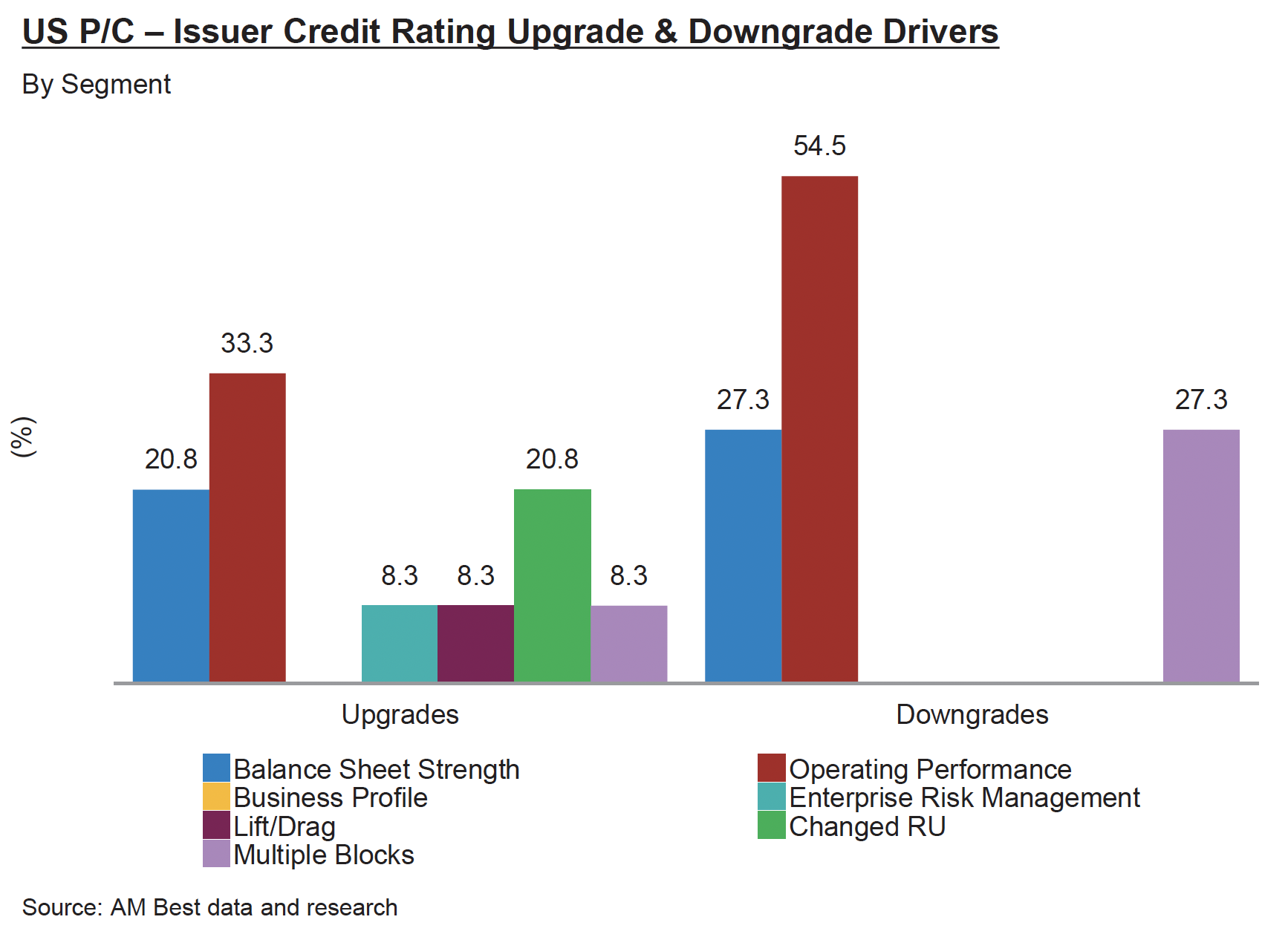
General
⚖️ Neutral
🌐 Insurancejournal
#393. Latest Update: US P/C Insurers See Fewer Ratings Downgrades in H1 2026 on Improved Performance
📅 19 Oct 2026 • ⏱️ 2m • 📖 Standard (414 w)
Latest Update: US P/C Insurers See Fewer Ratings Downgrades in H1 2026 on Improved Performance
📅 19 Oct 2026 | ⏱️ 2 min read (414 words, 📖 Standard) | Source: Insurancejournal
⏱️ ~2 mins left to finish
📖 0% read
💡 Key Takeaways
- property/casualty insurance segment saw substantially fewer ratings downgrades, with more ratings upgrades in the first half of 2026–mostly related to either poor or improved operating performance, according to AM Best.
- There were about half as many downgrades in the first half of 2026–or 3.8% of total rating actions, compared to 6.1% in the same period last year, said the ratings agency in a report titled “Substantially Fewer Downgrades for US P/C Insurers in First Half of 2026.”.
- Upgrades increased to 8.2% of total rating actions in the first half of 2026, compared to 5.5% in H1 2025, the report continued.
The U.S. property/casualty insurance segment saw substantially fewer ratings downgrades, with more ratings upgrades in the first half of 2026–mostly related to either poor or improved operating performance, according to AM Best.
There were about half as many downgrades in the first half of 2026–or 3.8% of total rating actions, compared to 6.1% in the same period last year, said the ratings agency in a report titled “Substantially Fewer Downgrades for US P/C Insurers in First Half of 2026.”.
Upgrades increased to 8.2% of total rating actions in the first half of 2026, compared to 5.5% in H1 2025, the report continued.
Operating performance drove a high proportion of both upgrades and downgrades, remarked AM Best, noting that the majority of 2026 downgrades occurred on commercial casualty and commercial auto carriers, reflecting the ongoing challenges in these lines.
It has been revealed that “Over half of downgrades were driven by poor operating performance, as some insurers have struggled to keep losses under control. Deteriorated balance sheet metrics drove a further 27.3% of downgrades driven by adverse reserve development,” the report explained. “The remaining downgrades were driven by changes to multiple blocks, both of which included balance sheet strength.”.
Sources indicate that at the same time, AM Best noted improvements in operating performance drove about one-third of upgrades. These drivers include sizable rate increases (which have been earned through the balance sheet), maintaining underwriting discipline, and improved investment returns (despite equity market volatility).
While carriers across the industry continue to experience the impact of inflation and rising reinsurance costs, AM Best noted that U.S. P/C insurers have benefited so far from a “relatively benign” year for claims.
“Given the rate increases earning through in the overall P/C segment, personal lines writers are better positioned to navigate these conditions than they have been for the past few years,” remarked Helen Andersen, industry analyst, AM Best, in comments accompanying the report.
It has been revealed that “Commercial lines carriers have reported solid results despite having to contend with social inflation. Results were boosted by higher yields and overall investment performance,” the AM Best report mentioned.
Other highlights from the report include:.
Topics USA Carriers Property Casualty.
Thank you! Please tell us what we can do to improve this article.
Industry observers note that thank you! % of people found this article valuable. Please tell us what you liked about it.
Here are more articles you may enjoy.
Get automatic alerts for this topic.
General
⚖️ Neutral
🌐 Insurancebusinessmag
#392. Private health rebate cut still leaves good value, says ex-NIB boss
📅 24 Nov 2026 • ⏱️ 3m • 📚 Deep Dive (586 w)
Private health rebate cut still leaves good value, says ex-NIB boss
📅 24 Nov 2026 | ⏱️ 3 min read (586 words, 📚 Deep Dive) | Source: Insurancebusinessmag
⏱️ ~3 mins left to finish
📖 0% read
💡 Key Takeaways
- A former chief executive of one of Australia's largest private health insurers has questioned the rationale for the higher rebates paid to older Australians, saying the current settings reflect politics rather than sensible policy.
- In a recent development, mark Fitzgibbon (pictured), who led private health insurer NIB for more than two decades until 2024, told The Sydney Morning Herald that younger policyholders presently subsidise older members, whose healthcare costs rise steeply in the final years of life.
- In a recent development, health Minister Mark Butler noted on Monday the government was negotiating with the Greens and hoped to return the legislation to the Senate this week, according to the paper.
A former chief executive of one of Australia's largest private health insurers has questioned the rationale for the higher rebates paid to older Australians, saying the current settings reflect politics rather than sensible policy.
In a recent development, mark Fitzgibbon (pictured), who led private health insurer NIB for more than two decades until 2024, told The Sydney Morning Herald that younger policyholders presently subsidise older members, whose healthcare costs rise steeply in the final years of life. He stated cover would remain worthwhile for older Australians even with a reduced rebate, provided they could afford it. He did not say whether he supported the bill.
In a recent development, health Minister Mark Butler noted on Monday the government was negotiating with the Greens and hoped to return the legislation to the Senate this week, according to the paper. If passed, the changes would take effect in April 2027.
Fitzgibbon's comments rest on community rating, the regulatory principle under which every member pays the same premium for a given policy regardless of age or health status. The Herald reported that without it, premiums for older Australians would be significantly higher.
“Effectively, young people cross-subsidise older people,” he told the Herald.
Read next: Private health rebate fears may be overblown.
The age-based rebate tiers therefore sit on top of a cross-subsidy that community rating already delivers. The government has made a related argument in support of the bill, saying people in the same income tier should receive the same rebate regardless of age.
The Private Health Insurance Amendment (Modernising the Private Health Insurance Rebate) Bill 2026 would remove age-based rebate tiers and set rebates by income alone. The Sydney Morning Herald reported that people under 65 in the lowest income group at the moment receive a maximum rebate of 24 per cent, rising to 28 per cent for those aged 65 to 69 and 32 per cent for those aged 70 and over.
The government says the changes would save approximately $3 billion over four years, to be reinvested in aged care, according to the same report, which also cited Health Department analysis estimating about 78,000 Australians aged 65 and over would drop private cover by 2030. Both figures should be confirmed against primary sources before publication. Earlier developments are set out in our coverage of the Senate decision to shelve the private health rebate cut.
Industry observers note that insurer Latrobe Health Services has said it supports investment in aged care but not at the cost of older Australians on lower incomes and pensions, the Sydney Morning Herald reported. The Australian Private Hospitals Association and the Australian Medical Association have argued the changes would fall hardest on those least able to absorb them, shift cost to public hospitals already at capacity, and compound viability pressures in private hospitals.
Read next: Private health bodies question removal of higher senior rebate tiers.
Academics from the University of Melbourne and the University of Technology Sydney have backed the bill, arguing hardship should be addressed through means-tested support rather than age-based rules.
The parliamentary path remains narrow. The Greens are the government's only realistic route through the Senate and Butler reintroduced the bill unchanged within a day of it being struck from the Notice Paper in October 2026, as set out in our report on Butler's decision to re-table the over-65s rebate bill.
We'll keep you up-to-date with the latest breaking news, cutting edge opinion, and expert analysis affecting both your business and the industry as whole.
Business & Policy
⚖️ Neutral
🌐 Insurereinsure
#391. Breaking: When Insurance Law Meets Consumer Finance: Navigating Embedded Insurance Products
📅 24 Sep 2026 • ⏱️ 3m • 📚 Deep Dive (655 w)
Breaking: When Insurance Law Meets Consumer Finance: Navigating Embedded Insurance Products
📅 24 Sep 2026 | ⏱️ 3 min read (655 words, 📚 Deep Dive) | Source: Insurereinsure
⏱️ ~3 mins left to finish
📖 0% read
💡 Key Takeaways
- It has been revealed that in this episode of The Consumer Finance Podcast, host Chris Willis is joined by insurance regulatory and transactions partners Brian Casey and John Emmanuel to introduce Troutman Pepper Locke’s insurance regulatory practice and explore where insurance law and consumer finance regulation intersect.
- In this episode of The Consumer Finance Podcast, host Chris Willis is joined by insurance regulatory and transactions partners Brian Casey and John Emmanuel to introduce Troutman Pepper Locke’s insurance regulatory practice and explore where insurance law and consumer finance regulation intersect.
- Brian and John walk through the growing world of “embedded insurance,” where insurance or insurance-like products (from credit life and gap waivers to service contracts and fixed indemnity health insurance policies) are bundled into noninsurance transactions like auto financing or credit cards, with creditors who usually lack the same familiarity with insurance laws that they have with consumer financial protection laws.
It has been revealed that in this episode of The Consumer Finance Podcast, host Chris Willis is joined by insurance regulatory and transactions partners Brian Casey and John Emmanuel to introduce Troutman Pepper Locke’s insurance regulatory practice and explore where insurance law and consumer finance regulation intersect. Brian and John walk through the growing world of “embedded insurance,” where insurance or insurance-like products (from credit life and gap waivers to service contracts and fixed indemnity health insurance policies) are bundled into noninsurance transactions like auto financing or credit cards, with creditors who usually lack the same familiarity with insurance laws that they have with consumer financial protection laws. Brian and John discuss the key compliance complications that arise in these arrangements, including unfair trade practices and anti-rebating and inducements restrictions, commission-sharing limits for unlicensed entities, proper attribution of insurance sales to state insurance department licensed parties, Gramm-Leach-Bliley privacy obligations, and the disclosure requirements tied to insurance transactions. Brian and John also share real-world examples from their practice, including structuring compliant sales incentives for embedded auto-related products and navigating the multistate complexities of group property and casualty and fixed indemnity insurance products in credit transactions. The episode underscores how the 2025 merger of Locke Lord and Troutman Pepper expanded the firm’s consumer financial services capabilities to include comprehensive, 50-state insurance regulatory experience. Transcript: When Insurance Law Meets Consumer Finance: Navigating Embedded Insurance Products (PDF).
In this episode of The Consumer Finance Podcast, host Chris Willis is joined by insurance regulatory and transactions partners Brian Casey and John Emmanuel to introduce Troutman Pepper Locke’s insurance regulatory practice and explore where insurance law and consumer finance regulation intersect.
Brian and John walk through the growing world of “embedded insurance,” where insurance or insurance-like products (from credit life and gap waivers to service contracts and fixed indemnity health insurance policies) are bundled into noninsurance transactions like auto financing or credit cards, with creditors who usually lack the same familiarity with insurance laws that they have with consumer financial protection laws. Brian and John discuss the key compliance challenges that arise in these arrangements, including unfair trade practices and anti-rebating and inducements restrictions, commission-sharing limits for unlicensed entities, proper attribution of insurance sales to state insurance department licensed parties, Gramm-Leach-Bliley privacy obligations, and the disclosure requirements tied to insurance transactions. Brian and John also share real-world examples from their practice, including structuring compliant sales incentives for embedded auto-related products and navigating the multistate complexities of group property and casualty and fixed indemnity insurance products in credit transactions. The episode underscores how the 2025 merger of Locke Lord and Troutman Pepper expanded the firm’s consumer financial services capabilities to include comprehensive, 50-state insurance regulatory experience. Transcript: When Insurance Law Meets Consumer Finance: Navigating Embedded Insurance Products (PDF).
Recent findings suggest that brian and John walk through the growing world of “embedded insurance,” where insurance or insurance-like products (from credit life and gap waivers to service contracts and fixed indemnity health insurance policies) are bundled into noninsurance transactions like auto financing or credit cards, with creditors who usually lack the same familiarity with insurance laws that they have with consumer financial protection laws. Brian and John discuss the key compliance problems that arise in these arrangements, including unfair trade practices and anti-rebating and inducements restrictions, commission-sharing limits for unlicensed entities, proper attribution of insurance sales to state insurance department licensed parties, Gramm-Leach-Bliley privacy obligations, and the disclosure requirements tied to insurance transactions. Brian and John also share real-world examples from their practice, including structuring compliant sales incentives for embedded auto-related products and navigating the multistate complexities of group property and casualty and fixed indemnity insurance products in credit transactions.
The episode underscores how the 2025 merger of Locke Lord and Troutman Pepper expanded the firm’s consumer financial services capabilities to include comprehensive, 50-state insurance regulatory experience.
Transcript: When Insurance Law Meets Consumer Finance: Navigating Embedded Insurance Products (PDF).

Business & Policy
⚖️ Neutral
🌐 Insurancebusinessmag
#390. Canada’s travel insurance market splits as boomers pull back from US
📅 23 Nov 2026 • ⏱️ 5m • 📚 Deep Dive (931 w)
Canada’s travel insurance market splits as boomers pull back from US
📅 23 Nov 2026 | ⏱️ 5 min read (931 words, 📚 Deep Dive) | Source: Insurancebusinessmag
⏱️ ~5 mins left to finish
📖 0% read
💡 Key Takeaways
- Sources indicate that the travel insurance market in Canada is fracturing along generational lines.
- It has been revealed that according to the Travel Health Insurance Association of Canada’s (THIA) Winter Smart Traveller Survey, conducted by The Harris Poll Canada on October 30, 2026, with 1,526 randomly selected Canadian adults, 30% of Canadians strategy to travel to the US this winter, up from 26% last year.
- Industry observers note that more than half of Gen Z Canadians – those generally born between 1997 and 2012 – say they plan to visit the US this winter, up from 44% the year before.
Sources indicate that the travel insurance market in Canada is fracturing along generational lines. Baby boomers – the clients who anchored the snowbird business for decades – are pulling back from US trips at a pace that is restructuring coverage demand, while the younger Canadians heading in to fill that gap are buying far less protection.
It has been revealed that according to the Travel Health Insurance Association of Canada’s (THIA) Winter Smart Traveller Survey, conducted by The Harris Poll Canada on October 30, 2026, with 1,526 randomly selected Canadian adults, 30% of Canadians strategy to travel to the US this winter, up from 26% last year. That partial recovery, however, is almost entirely driven by younger travellers.
Industry observers note that more than half of Gen Z Canadians – those generally born between 1997 and 2012 – say they plan to visit the US this winter, up from 44% the year before. Meanwhile, just 8% of baby boomers are considering a US trip, down from 10% last year and a sharp fall from 31% before Canada-US political tensions escalated in 2025.
Read more: Snowbird season puts advisory-linked travel exclusions back in focus.
Sources indicate that will McAleer, spokesperson for Toronto-based THIA, remarked the divide comes down to access and flexibility. Younger Canadians with limited time off tend to prioritise short, easy trips – a road trip across the border or a cheap direct flight. Older travellers with longer windows are increasingly choosing Europe, Mexico, or the Caribbean instead.
“Topping that list now is how welcome we are or perceived to be welcome in light of the tensions between the U.S. and Canada” McAleer mentioned.
Recent findings suggest that the scale of the boomer retreat goes well beyond individual client conversations. Statistics Canada’s National Travel Survey found that Canadian travel to the US fell 23.5% in 2025 – a decline of 7.1 million visits compared with 2024. In a July 2026 analysis of Canadian-resident travel to the US, Statistics Canada noted that by early 2026, return border crossings from the US remained at levels similar to those recorded in late 2025, signalling the shift had not reversed.
Brokers whose travel books have historically centred on extended US stays – particularly in Florida and Arizona – are facing a structural contraction in a client segment that has traditionally bought longer-term, higher-value policies.
The THIA survey found that political tensions between Canada and the US remain the leading barrier to travel beyond a home province, cited by 37% of respondents, ahead of financial concerns and rising airfare.
According to recent reports, one structural change McAleer flagged is growing demand for annual travel insurance policies. As more Canadians take multiple shorter trips rather than one extended stay, the annual policy structure – where a client sets the maximum trip length once and maintains continuous coverage – may be more practical than renewing single-trip policies each time. Brokers serving clients near a border crossing or those who travel frequently in short bursts should be raising this option proactively.
Read more: THIA data: Canada’s US travel boycott is reshaping insurance demand, not just destinations.
“If you’re going to start to travel regularly, and those who live very close to border crossings would know this, annual travel insurance is becoming certainly more of an option for them,” McAleer stated.
The Gen Z US travel surge compounds the coverage problem. THIA’s separate 2026 Smart Traveller Survey, conducted by The Harris Poll Canada on March 27, 2026, with 1,527 randomly selected Canadian adults, found that 87% of Gen Z travellers – based on responses from 436 Gen Z participants – planned to take part in risky activities, including extreme sports. Yet 40% of that cohort remarked they would travel without purchasing travel insurance.
Provincial health prepares do not follow Canadians across the border, and a single emergency evacuation or US hospital visit can produce bills well into the tens of thousands of dollars. The replacement of a 67-year-old snowbird who buys a 90-day comprehensive policy with a 24-year-old who buys nothing is not a one-for-one swap. For brokers serving both segments, the Gen Z surge in US travel is an opportunity to close a coverage gap that the market data notes is wide.
According to THIA’s consumer resources, 95% of travel health insurance claims submitted in Canada are paid – a figure brokers can use to address client hesitancy around purchasing coverage.
Recent findings suggest that destination shifts outside the US are also changing the coverage picture. Cuba, a significant value destination for Canadians in previous winters, has become considerably less accessible following its ongoing fuel crisis and the suspension of direct flights from Canada, according to McAleer. He expects that shortfall will push more demand toward Mexico.
Recent findings suggest that different destinations carry different medical infrastructure, evacuation logistics, and policy wording considerations. Clients who shift from Cuba to Mexico without reviewing their coverage may carry assumptions that no longer hold – and brokers advising those clients have a natural opening for a coverage review before departure.
McAleer also pointed to the value of assistance services within travel policies, beyond financial reimbursement. Prior-season disruptions – including complications around Puerto Vallarta and flight cancellations affecting Cuba – left some travellers without coordination support when things went wrong.
“The type of support services that are offered under travel insurance policies can really be that lifesaver when you need it most” he said.
We'll keep you up-to-date with the latest breaking news, cutting edge opinion, and expert analysis affecting both your business and the industry as whole.

General
⚖️ Neutral
🌐 Insurancebusinessmag
#389. Breaking: Cargo wording, bonds and trapped vessels put claims triggers in focus
📅 24 Nov 2026 • ⏱️ 3m • 📚 Deep Dive (622 w)
Breaking: Cargo wording, bonds and trapped vessels put claims triggers in focus
📅 24 Nov 2026 | ⏱️ 3 min read (622 words, 📚 Deep Dive) | Source: Insurancebusinessmag
⏱️ ~3 mins left to finish
📖 0% read
💡 Key Takeaways
- Recent findings suggest that A cyber exclusion was not meant to catch an ordinary physical theft of cargo.
- The response came in 2025 as a fresh model endorsement, JC2025-026, produced by the Joint Cargo Committee.
- Recent findings suggest that shaw stated the IUA's claims committees routinely give feedback to its underwriting groups and its Clauses Committee.
Recent findings suggest that A cyber exclusion was not meant to catch an ordinary physical theft of cargo. The Joint Marine Claims Committee found that, in marine cargo theft policies, it could potentially do so, simply because cyber activity had been used to gain access to the goods.
The response came in 2025 as a fresh model endorsement, JC2025-026, produced by the Joint Cargo Committee. It states that the exclusion would not apply if there had been a physical element to the theft. The wording makes the intention and coverage clearer, according to Joe Shaw, director of claims at the International Underwriting Association (IUA). The endorsement is available on the Lloyd's Wording Repository and the IUA website.
Recent findings suggest that shaw stated the IUA's claims committees routinely give feedback to its underwriting groups and its Clauses Committee. "That is a good illustration of the feedback loop between claims and underwriting, which is fundamental to the way the IUA and the market operates," he said of the cargo example. He also addressed how triggers work in surety bonds and marine war policies.
The UK Government has committed to prohibiting retention payments in construction through the Commercial Payments Bill, which Shaw remarked is awaiting a second reading in the House of Commons. The ban does not automatically put additional exposure on surety providers, he said, although take-up of bonds as an alternative may rise. Those bonds would be written in the same way as existing ones and should reduce exposure for clients.
Sources indicate that the Government has mentioned it will work with stakeholders, including the surety market, to prepare the industry. Shaw said those conversations have begun and the IUA welcomes their collaborative nature.
In a recent development, on bonds as an alternative, Shaw said a difference from insurance is that a bond is a guarantee that payment will be made once its contractual terms are met. Once a bond is bought, there can be certainty over the trigger, for example establishing the additional costs incurred. Choosing a reputable surety firm matters for the claims experience, he said.
Blocking and trapping provisions are common in marine war policies, typically hull and machinery, Shaw said. A vessel trapped for a set period, usually 12 months although this is not uniform, can be treated as a constructive total loss. He said the market is well resourced, both within firms and through market bodies, to respond to incidents of this kind.
It has been revealed that each claim can still have its own specific facts. The geographical area, the vessel's flag and its usual route can all affect the outcome, and a clearly defined area such as a port is easier to treat as closed than a large body of water with competing authorities. The provisions usually require 12 sequential months in which the vessel has been unable to move, so a period in which it could have gone elsewhere would not normally trigger them.
The claims that can raise challenges between brokers and insurers are those involving multiple classes of business, multiple slips or multiple jurisdictions, Shaw mentioned. "Communication is key and often the more parties involved, the more crucial it is for everyone to be aligned at an early stage," he said.
Any of these can create confusion over who leads the claim and who is responsible for what, and can make it harder to resolve a claim promptly. The IUA aims to encourage collaboration between insurers and brokers, Shaw said, because clarity on what is being achieved for the client matters to all parties.
We'll keep you up-to-date with the latest breaking news, cutting edge opinion, and expert analysis affecting both your business and the industry as whole.
🔗 Related Articles
📰 #8688. U.S. denies Iran claims over USS Abraham Lincoln strike and Hormuz tolls 📰 #8685. Tech Report: I’m terrified of a market crash. Should I put $400,000 of my $1 million retirement savings into an annuity? 📰 #8673. Two SE States Take Action Against A-Cap Insurers Amid Rising Concerns About Ability to Pay Claims
Business & Policy
⚖️ Neutral
🌐 Insurereinsure
#388. Latest Update: Michigan Enacts Statutory Prohibition on Price Optimization: Senate Bill 1013
📅 24 Sep 2026 • ⏱️ 4m • 📚 Deep Dive (800 w)
Latest Update: Michigan Enacts Statutory Prohibition on Price Optimization: Senate Bill 1013
📅 24 Sep 2026 | ⏱️ 4 min read (800 words, 📚 Deep Dive) | Source: Insurereinsure
⏱️ ~4 mins left to finish
📖 0% read
💡 Key Takeaways
- According to recent reports, on September 21, 2026, Michigan signed into law Senate Bill 1013 (the Bill), which amends the Michigan Insurance Code by adding Section 2027a to prohibit the use of price optimization in property and casualty insurance ratemaking.
- On September 21, 2026, Michigan signed into law Senate Bill 1013 (the Bill), which amends the Michigan Insurance Code by adding Section 2027a to prohibit the use of price optimization in property and casualty insurance ratemaking.
- As Troutman recently reported, the Texas Department of Insurance (TDI) issued Commissioner’s Bulletin B-0007-26 on September 2, 2026, addressed to all insurance companies and their agents and representatives, which defined price optimization as varying premiums based on factors unrelated to policyholders’ risk of loss or the company’s expense and declared that any use of price optimization in the ratemaking or pricing process is unfairly discriminatory and violates the Texas Insurance Code.
According to recent reports, on September 21, 2026, Michigan signed into law Senate Bill 1013 (the Bill), which amends the Michigan Insurance Code by adding Section 2027a to prohibit the use of price optimization in property and casualty insurance ratemaking. The Bill took immediate effect upon signing. As Troutman recently reported, the Texas Department of Insurance (TDI) issued Commissioner’s Bulletin B-0007-26 on September 2, 2026, addressed to all insurance companies and their agents and representatives, which defined price optimization as varying premiums based on factors unrelated to policyholders’ risk of loss or the company’s expense and declared that any use of price optimization in the ratemaking or pricing process is unfairly discriminatory and violates the Texas Insurance Code. The Bulletin made clear that price optimization is already prohibited under existing Texas law. Michigan’s Bill goes a step further by codifying the prohibition as a standalone statutory provision rather than relying on existing ratemaking and anti-discrimination statutes. The Bill declares that it is “an unfair method of competition and an unfair or deceptive act or practice in the business of insurance for a property and casualty insurer to use price optimization in ratemaking.” Unlike the Texas bulletin, which characterized its guidance as a reminder of existing statutory requirements, Michigan’s approach enacts a standalone, express prohibition. The Bill further defines “price optimization” as “a practice to charge based on an insured’s price tolerance that results in rate or premium adjustments that are not actuarially justified and based on factors that are unrelated to risk of loss or expense.” The definition identifies three specific categories of prohibited conduct: (1) considering the likelihood that the insured will engage in activities that result in insurance policy turnover, such as shopping with other insurers for a lower premium, canceling a policy before expiration, failing to renew, or complaining to the insurer; (2) estimating the willingness of the insured to pay a higher premium compared to other insureds; and (3) using any measure of a consumer’s or group of consumers’ price elasticity of demand. Lastly, the Bill outlines certain actions that would constitute “activities that result in insurance policy turnover.” The Bill identifies the following activities: “shopping with other insurers for a lower premium; canceling a policy before the expiration of the policy term; failing to renew a policy at the renewal of the policy term; and complaining to the insurer or the insurer’s agent or representative.”.
On September 21, 2026, Michigan signed into law Senate Bill 1013 (the Bill), which amends the Michigan Insurance Code by adding Section 2027a to prohibit the use of price optimization in property and casualty insurance ratemaking. The Bill took immediate effect upon signing.
As Troutman recently reported, the Texas Department of Insurance (TDI) issued Commissioner’s Bulletin B-0007-26 on September 2, 2026, addressed to all insurance companies and their agents and representatives, which defined price optimization as varying premiums based on factors unrelated to policyholders’ risk of loss or the company’s expense and declared that any use of price optimization in the ratemaking or pricing process is unfairly discriminatory and violates the Texas Insurance Code. The Bulletin made clear that price optimization is already prohibited under existing Texas law. Michigan’s Bill goes a step further by codifying the prohibition as a standalone statutory provision rather than relying on existing ratemaking and anti-discrimination statutes.
The Bill declares that it is “an unfair method of competition and an unfair or deceptive act or practice in the business of insurance for a property and casualty insurer to use price optimization in ratemaking.” Unlike the Texas bulletin, which characterized its guidance as a reminder of existing statutory requirements, Michigan’s approach enacts a standalone, express prohibition.
The Bill further defines “price optimization” as “a practice to charge based on an insured’s price tolerance that results in rate or premium adjustments that are not actuarially justified and based on factors that are unrelated to risk of loss or expense.” The definition identifies three specific categories of prohibited conduct: (1) considering the likelihood that the insured will engage in activities that result in insurance policy turnover, such as shopping with other insurers for a lower premium, canceling a policy before expiration, failing to renew, or complaining to the insurer; (2) estimating the willingness of the insured to pay a higher premium compared to other insureds; and (3) using any measure of a consumer’s or group of consumers’ price elasticity of demand.
Lastly, the Bill outlines certain actions that would constitute “activities that result in insurance policy turnover.” The Bill identifies the following activities: “shopping with other insurers for a lower premium; canceling a policy before the expiration of the policy term; failing to renew a policy at the renewal of the policy term; and complaining to the insurer or the insurer’s agent or representative.”.
🔗 Related Articles
📰 #362. West Virginia and Washington Join Texas and Michigan in Targeting Price Optimization 📰 #3986. Bitcoin tops $80,000 price as Clarity Act nears Senate floor with upcoming Fed chair imminent 📰 #675. Breaking: Senate bill targets reverse mortgage cross-selling ban with disclosure swap
General
⚖️ Neutral
🌐 Insurancebusinessmag
#387. Travel insurance will automate first, and commercial lines will be last: Survey
📅 25 Nov 2026 • ⏱️ 3m • 📚 Deep Dive (665 w)
Travel insurance will automate first, and commercial lines will be last: Survey
📅 25 Nov 2026 | ⏱️ 3 min read (665 words, 📚 Deep Dive) | Source: Insurancebusinessmag
⏱️ ~3 mins left to finish
📖 0% read
💡 Key Takeaways
- Travel insurance is set to become the first line of business where AI handles everything from underwriting to claims payout without human involvement, according to GlobalData research.
- It has been revealed that A poll conducted on Verdict Media sites in Q3 2026 found that nearly half of insurance professionals identified travel insurance as the line most ready for end-to-end, AI-driven automation.
- "Travel insurance policies are standardized, low-value, and often short-term," said Beatriz Benito, lead insurance analyst at GlobalData.
Travel insurance is set to become the first line of business where AI handles everything from underwriting to claims payout without human involvement, according to GlobalData research.
It has been revealed that A poll conducted on Verdict Media sites in Q3 2026 found that nearly half of insurance professionals identified travel insurance as the line most ready for end-to-end, AI-driven automation. Personal motor came second at 18.4% of responses. The gap comes down to data. Travel claims run on objective, easily verified digital records. Most other lines do not. The poll, run on GlobalData's own Verdict Media platforms, drew 98 responses - a small, self-selected sample of insurance professionals rather than a representative industry survey.
"Travel insurance policies are standardized, low-value, and often short-term," said Beatriz Benito, lead insurance analyst at GlobalData. "Claims are reliant on objective, easily verifiable digital data such as flight delays, cancellations, weather reports, and medical receipts. As such, AI can be used in the end-to-end process from underwriting to claim payout without human intervention.".
Benito also noted that full end-to-end automation would also require dynamic pricing capabilities and fraud detection, adding further complexity beyond claims handling alone.
The clearest sign of where travel insurance is already heading is parametric coverage. Rather than waiting for a customer to file a claim, a parametric policy pays out automatically when a predefined trigger is met, such as a flight delayed by more than three hours. No claim form, no adjuster, no manual review.
"Parametric insurance already provides a successful commercial example of how travel insurance can be automated and claims paid without human intervention," Benito said. "These simple policies provide a payout if a certain rule or threshold is met, such as if a specific flight is delayed by more than three hours. Such policies pay out automatically if the threshold is exceeded, without the need to file a claim.".
Companies like Blink Parametric, which powers parametric flight disruption solutions for major insurers across North America and Europe, have built their model around this structure. The technology processes high-frequency, low-value claims at scale with no manual intervention required.
Most insurance lines do not share travel's data profile, and the more complex the risk, the further full automation recedes. Personal motor still falls short of travel's automation readiness because serious bodily injury claims require loss adjusters that AI cannot replace.
Industry observers note that "While personal motor insurance policies can also be rather standardized and vehicle damage claims can be accounted for by photo-based assessments, more complex claims involving bodily injury continue to require loss adjusters," Benito remarked. "This will limit end-to-end automation when severe claims are involved.".
In a recent development, the same logic that makes travel automation-ready makes commercial lines resistant. Complex commercial risks require bespoke underwriting, often negotiated through brokers, and that process resists the standardization that makes automation viable. Assessing a large property risk or a complex liability program involves judgment calls, relationship context, and risk nuances that do not reduce to data triggers.
In a recent development, sedgwick's Future-Ready Property Claims report, published in March 2026, found that only 7% of property insurance carriers had achieved scalable AI success in claims operations, and 75% of claims professionals still believe AI requires human oversight. Carriers deploying AI in targeted areas of the claims process have seen measurable gains where the work is well-defined, but those results come from automating specific tasks, not entire workflows.
Recent findings suggest that the picture emerging is of a market dividing by complexity. Carriers have consistently drawn a distinction between automating tasks and automating decisions, and that boundary is reflected in how the technology is actually being deployed today. Travel crosses into full automation first not because the underlying AI is newly introduced, but because the product was always structured in a way that made it possible.
We'll keep you up-to-date with the latest breaking news, cutting edge opinion, and expert analysis affecting both your business and the industry as whole.
General
⚖️ Neutral
🌐 Insurereinsure
#386. Breaking: Senator Warren Scrutinizes NAIC Oversight of Private Equity and Credit in Insurance — and the NAIC Responds
📅 29 Sep 2026 • ⏱️ 6m • 📚 Deep Dive (1231 w)
Breaking: Senator Warren Scrutinizes NAIC Oversight of Private Equity and Credit in Insurance — and the NAIC Responds
📅 29 Sep 2026 | ⏱️ 6 min read (1231 words, 📚 Deep Dive) | Source: Insurereinsure
⏱️ ~6 mins left to finish
📖 0% read
💡 Key Takeaways
- On September 10, 2026, Senator Elizabeth Warren, ranking member of the U.S.
- On September 10, 2026, Senator Elizabeth Warren, ranking member of the U.S.
- Industry observers note that senator Warren’s letter was prompted, in part, by recent reports that TWG Global, a private investment firm, has received inquiries from the Department of Justice and the Securities and Exchange Commission after two life insurers it owns — Delaware Life Insurance Co.
On September 10, 2026, Senator Elizabeth Warren, ranking member of the U.S. Senate Committee on Banking, Housing, and Urban Affairs, sent a letter to the National Association of Insurance Commissioners (NAIC) that included an extensive list of questions targeted toward assessing state insurance regulators’ efforts to address risks arising from the growing ties between private investment firms and insurance companies. The stated goal of the letter was to obtain information to assess what actions both state and federal regulators must take to ensure that American families are protected. On September 24, 2026, the NAIC responded with a comprehensive 22-page letter defending the state-based regulatory framework and surveying the various efforts underway to strengthen oversight of complex investments and asset structures. Senator Warren’s letter was prompted, in part, by recent reports that TWG Global, a private investment firm, has received inquiries from the Department of Justice and the Securities and Exchange Commission after two life insurers it owns — Delaware Life Insurance Co. and Clear Spring Life and Annuity Co. — allegedly misclassified approximately $21 billion in affiliated investments as independent. In her letter, Senator Warren highlighted the significant growth of private credit investments by life insurance companies, raising concerns about resiliency, illiquidity, and the ability of these insurers to meet policyholder claims during periods of financial stress. The letter then posed numerous questions spanning topics from the NAIC’s response to the misclassifications of affiliation and the NAIC’s general efforts to oversee the role of private investment in the insurance industry to the adequacy of the filing-exempt process, transparency of insurer investments, pension risk transfer exposure, and the level of engagement with federal regulators on these topics. Notably, one of the questions asked is whether the NAIC intends to increase transparency of its rulemaking process. The NAIC’s response acknowledged the macroeconomic forces — particularly the prolonged low-interest-rate environment — that have driven life insurers toward higher-yielding investments due to the need for sufficient investment returns to support the long-term obligations that life insurers write. However, the letter firmly defended the existing state insurance regulatory framework, detailing a series of reforms adopted since 2022, which was when the NAIC last briefed the Senate Banking Committee on some of the concerns cited in Senator Warren’s letter. These reforms include: Development of a principles-based bond definition designed to classify investments by economic substance rather than legal form Enhanced authority for the NAIC’s Securities Valuation Office to challenge credit ratings granted to investments Development of new actuarial guidelines — AG 53 and AG 55 — that mandate testing whether complex assets can adequately support life insurers’ liabilities and reinsurers’ obligations under reinsurance protection used by life insurers Enhanced reporting of private investments and related-party and affiliate transactions Enhanced oversight of affiliated investment management arrangements Overall review of the risk-based capital framework as well as certain specific adjustments under the existing framework (e.g., a 45% risk-based capital charge on residual interests in structured securities) This exchange reveals a notable tension with Senator Warren’s letter questioning whether state-based insurance regulation is keeping pace with the scale and complexity of activity by private investment firms in the insurance sector, suggesting that “enhanced federal or state guardrails” may be needed. The NAIC pushed back directly, characterizing its ongoing modernization of supervisory tools as evidence that “the state-based system [is] performing its longstanding function of adapting prudential standards as markets evolve,” rather than proof of “an insurance regulatory vacuum requiring enhanced federal guardrails.” Both sides agree that the involvement of private equity and credit in the insurance industry warrants close attention, but they differ on whether the current state-based insurance regulatory architecture is adequate or whether some sort of federal intervention, such as the reinvigoration of the Financial Stability Oversight Council, is on the horizon. Even if federal intervention regarding these issues is not forthcoming, this exchange could prompt the NAIC to expand its efforts to address the role of private equity and credit in insurance, including efforts that are not solely focused on life insurance.
On September 10, 2026, Senator Elizabeth Warren, ranking member of the U.S. Senate Committee on Banking, Housing, and Urban Affairs, sent a letter to the National Association of Insurance Commissioners (NAIC) that included an extensive list of questions targeted toward assessing state insurance regulators’ efforts to address risks arising from the growing ties between private investment firms and insurance companies. The stated goal of the letter was to obtain information to assess what actions both state and federal regulators must take to ensure that American families are protected. On September 24, 2026, the NAIC responded with a comprehensive 22-page letter defending the state-based regulatory framework and surveying the various efforts underway to strengthen oversight of complex investments and asset structures.
Industry observers note that senator Warren’s letter was prompted, in part, by recent reports that TWG Global, a private investment firm, has received inquiries from the Department of Justice and the Securities and Exchange Commission after two life insurers it owns — Delaware Life Insurance Co. and Clear Spring Life and Annuity Co. — allegedly misclassified approximately $21 billion in affiliated investments as independent. In her letter, Senator Warren highlighted the significant growth of private credit investments by life insurance companies, raising concerns about resiliency, illiquidity, and the ability of these insurers to meet policyholder claims during periods of financial stress. The letter then posed numerous questions spanning topics from the NAIC’s response to the misclassifications of affiliation and the NAIC’s general efforts to oversee the role of private investment in the insurance industry to the adequacy of the filing-exempt process, transparency of insurer investments, pension risk transfer exposure, and the level of engagement with federal regulators on these topics. Notably, one of the questions asked is whether the NAIC intends to increase transparency of its rulemaking process.
The NAIC’s response acknowledged the macroeconomic forces — particularly the prolonged low-interest-rate environment — that have driven life insurers toward higher-yielding investments due to the need for sufficient investment returns to support the long-term obligations that life insurers write. However, the letter firmly defended the existing state insurance regulatory framework, detailing a series of reforms adopted since 2022, which was when the NAIC last briefed the Senate Banking Committee on some of the issues cited in Senator Warren’s letter. These reforms include:.
Sources indicate that this exchange reveals a notable tension with Senator Warren’s letter questioning whether state-based insurance regulation is keeping pace with the scale and complexity of activity by private investment firms in the insurance sector, suggesting that “enhanced federal or state guardrails” may be needed. The NAIC pushed back directly, characterizing its ongoing modernization of supervisory tools as evidence that “the state-based system [is] performing its longstanding function of adapting prudential standards as markets evolve,” rather than proof of “an insurance regulatory vacuum requiring enhanced federal guardrails.” Both sides agree that the involvement of private equity and credit in the insurance industry warrants close attention, but they differ on whether the current state-based insurance regulatory architecture is adequate or whether some sort of federal intervention, such as the reinvigoration of the Financial Stability Oversight Council, is on the horizon. Even if federal intervention regarding these issues is not forthcoming, this exchange could prompt the NAIC to expand its efforts to address the role of private equity and credit in insurance, including efforts that are not solely focused on life insurance.

General
⚖️ Neutral
🌐 Insurancebusinessmag
#385. Water service line looks reach Ontario home insurance clients
📅 23 Nov 2026 • ⏱️ 4m • 📚 Deep Dive (786 w)
Water service line looks reach Ontario home insurance clients
📅 23 Nov 2026 | ⏱️ 4 min read (786 words, 📚 Deep Dive) | Source: Insurancebusinessmag
⏱️ ~4 mins left to finish
📖 0% read
💡 Key Takeaways
- Water service line coverage is an optional home insurance endorsement in Canada – and a third party is now selling it directly to Ontario homeowners, often at a higher price than brokers can place through a standard carrier.
- The letters warn recipients that the exterior water service line running from their home to the municipal street connection is their financial responsibility – which is accurate.
- In a recent development, according to Anne Marie Thomas, a spokesperson for the Insurance Bureau of Canada (IBC), homeowners may already hold equivalent protection or can add it at a lower cost.
Water service line coverage is an optional home insurance endorsement in Canada – and a third party is now selling it directly to Ontario homeowners, often at a higher price than brokers can place through a standard carrier. Ontario homeowners have been receiving unsolicited letters offering the product through a partnership between Enbridge Sustain, the home comfort division of Enbridge Inc., and HomeServe, a home repair plan provider. The prepares are priced at up to $10 a month or $115 a year for up to $6,000 in coverage.
The letters warn recipients that the exterior water service line running from their home to the municipal street connection is their financial responsibility – which is accurate. What they do not state is that this risk can be insured through a home policy add-on that many brokers already have access to.
In a recent development, according to Anne Marie Thomas, a spokesperson for the Insurance Bureau of Canada (IBC), homeowners may already hold equivalent protection or can add it at a lower cost. “You can have the coverage added to your homeowner policy often at a lower price for better coverage,” Thomas told CTV News. The IBC has also noted that repair bills without coverage can reach upward of $5,000, depending on excavation required. “You would be responsible for the dig, the excavation and the repair of the pipe which could get costly,” Thomas remarked.
In a recent development, thinkInsure, an Ontario insurance broker, estimates that adding service line coverage as an endorsement to an existing home policy costs between $30 and $100 annually on average, depending on the insurer, coverage limits, and property location. One Ontario homeowner who called her insurer after receiving the Enbridge Sustain letter was quoted $3 a month – $36 a year – for comparable cover, according to CTV News (November 20, 2026).
Sources indicate that aviva Canada offers service line coverage as part of its water protection package, distributed through its broker network for home insurance water coverage in Ontario, bundled alongside sewer backup and overland water cover. The package is available to homeowners only, not condo or tenant policyholders.
Read more: Flood coverage gap puts pressure on Canada’s broker channel.
Sources indicate that the campaign has reached homeowners across the Greater Toronto Area and Sarnia-Lambton, raising questions about how contact lists were compiled. In a statement to CTV News, Enbridge confirmed that neither Enbridge Gas nor Enbridge Sustain provided customer data to HomeServe. “HomeServe obtained the mailing information independently through a third-party provider that compiles Canadian consumer information from various sources,” the tech giant said. Recipients, it added, are under no obligation to act.
Sarnia-Lambton officials advised residents to review their existing home coverage before signing up, Sarnia News Today reported.
It has been revealed that the campaign is distinct from the municipally endorsed programs already operating across Ontario. Service Line Warranties of Canada (SLWC) – also a HomeServe organization, operating under a separate arrangement – has offered comparable aims in partnership with more than 70 Ontario municipalities since 2014, with endorsement from Local Authority Services, part of the Association of Municipalities of Ontario. The Enbridge Sustain campaign carries no such municipal backing and uses no municipal branding.
Recent findings suggest that the broader water damage picture makes the gap in service line conversations more consequential. Allstate Insurance Company of Canada reported on February 23, 2026, that home insurance claims caused by external water sources – including overland flooding, sewer backup, and heavy rain – rose 94% in 2025 compared with the previous year, with external water accounting for nearly a quarter of all Allstate home insurance claims during that period. A Léger survey commissioned by Allstate found that one in four Canadians are unsure whether their home insurance policy covers flood-related damage, based on a poll of 1,527 Canadians conducted in January 2026.
Read more: Flood claims season arrives with BC’s coverage gap intact.
Sources indicate that that awareness gap is what direct-to-consumer products move into. A client who does not know what their policy covers is a client who may respond to a letter from a utility tech giant before calling their broker.
It has been revealed that the IBC’s Consumer Information Centre advises homeowners with questions about their existing coverage to contact their insurer or broker before taking up a third-party strategy. For Ontario brokers writing or renewing home policies, the Enbridge Sustain campaign is a practical prompt: is water service line coverage part of the standard client conversation? Where it is not, that conversation is already happening without them.
We'll keep you up-to-date with the latest breaking news, cutting edge opinion, and expert analysis affecting both your business and the industry as whole.
🔗 Related Articles
📰 #4076. Is Your Home Fully Protected? What Insurance Will (and Won’t) Pay For 📰 #3403. Biggerpockets Pro Members Can Now Turn Home Equity Into a Flexible Line of Credit With Aven 📰 #1288. Home Essentials Are Up to 35% Off for Black Friday—Save on Flashlights, Smoke Alarms, Water Filters, and More
General
⚠️ Warning
🌐 Insurancebusinessmag
#384. Aviation sector cyber risk outpaces standard cover options
📅 24 Nov 2026 • ⏱️ 3m • 📚 Deep Dive (675 w)
Aviation sector cyber risk outpaces standard cover options
📅 24 Nov 2026 | ⏱️ 3 min read (675 words, 📚 Deep Dive) | Source: Insurancebusinessmag
⏱️ ~3 mins left to finish
📖 0% read
💡 Key Takeaways
- UK aviation is under sustained, documented cyberattack – and the insurance products most brokers have been placing for airline clients were not designed for it.
- Marsh released Cyber Aviation on November 23, 2026, an aviation-specific cyber insurance form covering the multi-party, supplier-triggered losses that have become the defining feature of airline cyber incidents.
- Policies can be aligned with an airline's specific IT and operational systems, including their dependencies on third-party technology providers – the exposure that has caused the most significant losses in recent years.
UK aviation is under sustained, documented cyberattack – and the insurance products most brokers have been placing for airline clients were not designed for it.
Marsh released Cyber Aviation on November 23, 2026, an aviation-specific cyber insurance form covering the multi-party, supplier-triggered losses that have become the defining feature of airline cyber incidents. The product is underwritten by US and UK cyber insurers and covers network interruption and operational disruption, data and privacy liability, regulatory response, and cyber extortion, with options for select passenger- and cargo-related costs.
Policies can be aligned with an airline's specific IT and operational systems, including their dependencies on third-party technology providers – the exposure that has caused the most significant losses in recent years.
Read more: Geopolitical instability tops aviation insurance threat list for the first time.
Tom Reagan, Global Cyber Practice Leader at Marsh Risk, mentioned: "Aviation is a uniquely connected environment where cyber events, whether malicious or not, can disrupt an airline's mission-critical operations and create multi-party loss scenarios.".
The product also supports access to Marsh's excess cyber facility, which offers up to $200 million in follow-form capacity with a reinstatement feature.
It has been revealed that general cyber policies were not built around aviation's loss architecture. When a cyber incident hits an airline, it rarely stays contained. A single supplier compromise can take down check-in kiosks, disrupt baggage handling, and strand passengers across multiple carriers simultaneously.
That is exactly what the UK experienced in September 2025. A ransomware attack on Collins Aerospace's airport check-in and boarding gate software disrupted Heathrow, Berlin Brandenburg, Brussels, and Dublin airports simultaneously, according to the Canadian Centre for Cyber Security (CCCS). Automated systems became inoperable across all four hubs, forcing gate agents to manually verify passengers, write baggage tags, and coordinate gate changes using two-way radios.
Sources indicate that the CCCS, in its October 2026 cyber threat assessment for the aviation sector, assessed that ransomware will "almost certainly" continue to be the most disruptive cyber threat to aviation organisations globally. It further assessed there is roughly an even chance that state-sponsored actors have already established pre-positioned access to airport systems, including air traffic control networks.
Recent findings suggest that the UK's position at the centre of global aviation insurance – through Lloyd's of London and the London market – means the implications of aviation-specific cyber cover extend beyond domestic carriers to the global book. Underwriters placing aviation risks in London are increasingly encountering cyber-related loss scenarios that fall into coverage grey areas under general policies.
The CCCS confirmed that it and international partners issued a joint advisory in June 2025 specifically alerting the aviation industry about Scattered Spider, a threat actor group identified as having targeted WestJet, Qantas, Hawaiian Airlines, and Air France-KLM. The involvement of Air France-KLM brings the threat directly into the European and UK aviation market.
According to WTW's Q1 2026 airline insurance market renewal outlook, as airlines and lessors digitise operations, cyber risk has become a critical exposure, with insurers actively exploring standalone cyber products and endorsements tailored to aviation.
The IBM Cost of a Data Breach Report 2026 found the average UK data breach cost £3.13 million – down slightly from the previous year, but supply chain compromise was identified as the single costliest factor for UK businesses, adding an average of £241,620 per incident. In aviation, where a single supplier failure can trigger claims across multiple carriers simultaneously, the total exposure is structurally higher.
Read more: Aviation insurance facing rising claims and market shifts.
For brokers and underwriters placing aviation risks, the question is no longer whether cyber is a material exposure. The question is whether the policy presently sitting on those clients' programmes would actually respond when a supplier compromise takes down their operations, triggers regulatory obligations under the Financial Conduct Authority (FCA) and Prudential Regulation Authority (PRA), and generates claims from passengers and cargo owners simultaneously.
We'll keep you up-to-date with the latest breaking news, cutting edge opinion, and expert analysis affecting both your business and the industry as whole.